Legislative Activity
Track Gregorio's sponsored bills, co-sponsored legislation, and voting record
The African American History Act of 2026 authorizes the National Museum of African American History and Culture to develop and support educational programs, resources, and curricula to enhance the teaching of African American history nationwide.
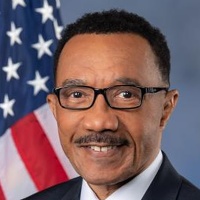
Kweisi Mfume
Representative
MD
Kweisi Mfume
Representative
MD
The African American History Act of 2026 authorizes the National Museum of African American History and Culture to develop and expand educational resources, curricula, and digital programming for students and educators nationwide. By providing $10 million in annual funding through 2030, the Act aims to promote a deeper understanding of African American history through a social justice and anti-bias lens. Additionally, the legislation encourages the development of similar educational initiatives across other Smithsonian museums dedicated to diverse American histories.
The Southeast Asian Deportation Relief Act of 2026 provides relief from detention and removal, grants work authorization, and establishes a process for reopening cases for certain long-term residents from Cambodia, Laos, and Vietnam.
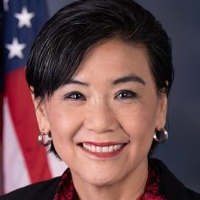
Judy Chu
Representative
CA
Judy Chu
Representative
CA
The Southeast Asian Deportation Relief Act of 2026 provides significant relief for long-term residents from Cambodia, Laos, and Vietnam facing deportation. It prohibits the detention and removal of eligible individuals who entered the U.S. before 2008 and grants them permanent work authorization. Furthermore, the Act establishes a streamlined process for those previously ordered removed to reopen and terminate their immigration cases, effectively vacating past removal orders.
The Head Start for America’s Children Act updates and expands the Head Start program by increasing funding, enhancing staff compensation and mental health support, and improving services for children with disabilities, English learners, and Native American communities.
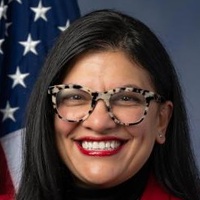
Rashida Tlaib
Representative
MI
Rashida Tlaib
Representative
MI
The "Head Start for America’s Children Act" updates and expands the federal Head Start program to better support the developmental, mental health, and educational needs of infants, toddlers, and children. The bill increases funding for core operations and specialized initiatives, establishes new requirements for staff compensation and professional development, and introduces pilot programs to improve access in high-poverty areas and on college campuses. Additionally, it strengthens support for Native American and migrant/seasonal programs, enhances services for children with disabilities, and mandates new standards to prevent the use of seclusion and restraint.
This bill establishes a tax credit for individuals caring for qualifying older relatives at home and creates a grant program for constructing multigenerational housing.
Debbie Dingell
Representative
MI
Debbie Dingell
Representative
MI
This bill establishes two key provisions to support family caregiving and housing. It creates a new, refundable tax credit for individuals who provide substantial at-home care for qualifying older relatives. Additionally, the legislation authorizes a grant program to fund the construction or renovation of housing specifically designed for multigenerational living arrangements.
This bill establishes a refundable tax credit for individuals to recover unlawfully collected tariffs while imposing a 100% excise tax on tariff refunds received by large corporations that passed those costs onto consumers.
Mike Thompson
Representative
CA
Mike Thompson
Representative
CA
This bill establishes a refundable tax credit for U.S. residents to recover revenues from unlawfully collected tariffs. It mandates that the IRS issue advance payments of these credits to eligible individuals and provides mechanisms for U.S. territories to distribute equivalent benefits. Additionally, the legislation imposes a 100% excise tax on tariff refunds received by large corporations, unless they can demonstrate that they did not pass the cost of those tariffs on to consumers through price increases.
The Healthy Families Act establishes a national standard requiring most employers to provide employees with earned paid sick leave for personal or family health needs and related safety issues.

Rosa DeLauro
Representative
CT
Rosa DeLauro
Representative
CT
The Healthy Families Act establishes a national standard requiring most employers to provide employees with earned paid sick leave. Employees will accrue a minimum of one hour of paid time for every 30 hours worked, usable for personal or family health needs, domestic violence, sexual assault, or stalking. The Act prohibits employer retaliation for using this leave and ensures existing, more generous leave policies are not diminished.
This bill restricts U.S. assistance to Israel if funds are used to support the military detention of Palestinian children, property seizure, or further annexation in the occupied West Bank.
Betty McCollum
Representative
MN
Betty McCollum
Representative
MN
This bill aims to defend the human rights of Palestinian children and families living under Israeli military occupation. It establishes policy prohibiting U.S. assistance funds from supporting specific Israeli actions, including the military detention of Palestinian children and the seizure of Palestinian property in violation of international law. The legislation also mandates annual reporting and oversight requirements regarding these activities and U.S. defense assistance to Israel.
This bill establishes an annual cap of 400,000 H-2A temporary agricultural worker visas, with an exception for positions filled by union-represented workers.

Pramila Jayapal
Representative
WA
Pramila Jayapal
Representative
WA
The U.S. Farmworker Protection Act aims to address the rapid growth of the H-2A agricultural guestworker program, which Congress finds threatens U.S. farmworker wages and employment. This bill establishes an annual cap of 400,000 H-2A worker certifications per fiscal year. However, any positions filled by workers represented by a certified bargaining representative (union) will not count toward this annual limit.
This Act repeals major U.S. sanctions against Cuba, normalizing trade, travel, and telecommunications while establishing a framework for property claims and human rights negotiations.
James McGovern
Representative
MA
James McGovern
Representative
MA
The United States-Cuba Trade Act of 2026 comprehensively repeals major U.S. sanctions laws against Cuba, effectively normalizing trade relations. This legislation removes restrictions on travel, exports, and financial remittances between the two nations. It also establishes a framework for the President to negotiate property claims and human rights protections with the Cuban government. The Act aims to promote democratic change in Cuba through the extension of nondiscriminatory trade treatment.
This bill appropriates funding and establishes operational rules for the Department of Homeland Security for Fiscal Year 2026 across management, security, preparedness, and research functions, while imposing strict oversight and spending restrictions.
Rosa DeLauro
Representative
CT
Rosa DeLauro
Representative
CT
This bill provides the funding and establishes the operational rules for the Department of Homeland Security (DHS) for Fiscal Year 2026 across all major components, including intelligence, security operations, emergency management, and research. It allocates billions for agencies like TSA, Coast Guard, FEMA, and CISA while imposing strict new requirements for congressional oversight, spending transparency, and management of federal grants. The legislation also includes specific policy directives, such as mandating security screening for senior officials and restricting certain intelligence and contracting activities.
This bill establishes a comprehensive Transgender Bill of Rights to codify and protect the rights of transgender and nonbinary people across healthcare, employment, legal recognition, and safety.
Pramila Jayapal
Representative
WA
Pramila Jayapal
Representative
WA
This resolution establishes a comprehensive Transgender Bill of Rights to codify and protect the rights of transgender and nonbinary people across the United States. It mandates federal action to ensure equal access to healthcare, employment, housing, legal recognition, and safety. The bill aims to eliminate discrimination and affirm bodily autonomy by amending existing federal civil rights laws.
This bill establishes a phased increase to the federal minimum wage, ultimately reaching $20.00 per hour with subsequent annual adjustments tied to inflation or GDP growth, while also phasing out subminimum wages for tipped employees, young new hires, and workers with disabilities.
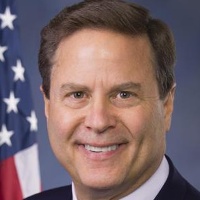
Donald Norcross
Representative
NJ
Donald Norcross
Representative
NJ
The "Give America a Raise Act" significantly increases the federal minimum wage, phasing it up to $20.00 per hour over three years, followed by annual adjustments tied to CPI or GDP growth. This legislation also phases out the subminimum wage for tipped employees and workers with disabilities, ultimately requiring both groups to receive the full federal minimum wage. Furthermore, it establishes new requirements for publishing wage increase notices and eliminates the special minimum wage category for young new hires after 90 days of employment.
This resolution calls for the annulment of the Monroe Doctrine and the establishment of a "New Good Neighbor" policy to foster improved, cooperative relations between the U.S. and its Latin American and Caribbean neighbors.
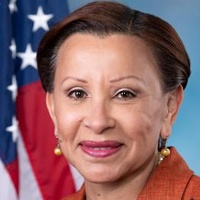
Nydia Velázquez
Representative
NY
Nydia Velázquez
Representative
NY
This resolution calls for the formal annulment of the historical Monroe Doctrine, citing decades of U.S. interventionism in Latin America and the Caribbean. It proposes replacing this doctrine with a "New Good Neighbor" policy focused on fostering genuine partnership and cooperation. Key elements include ending unilateral sanctions, reforming international financial institutions, and respecting regional sovereignty.
This bill imposes an immediate freeze on all hiring and transfers within U.S. Immigration and Customs Enforcement (ICE) until Congress passes a new law explicitly superseding this measure.
Lizzie Fletcher
Representative
TX
Lizzie Fletcher
Representative
TX
This bill immediately halts all hiring and transfers of personnel to U.S. Immigration and Customs Enforcement (ICE) using federal funds. The hiring freeze will remain in effect until Congress passes and enacts a new law specifically designed to supersede this provision.
The Rebuild America’s Schools Act of 2026 establishes federal grant and bond programs to provide billions of dollars for the long-term improvement, modernization, and repair of public school facilities, prioritizing health, safety, and environmental conditions in high-need districts.
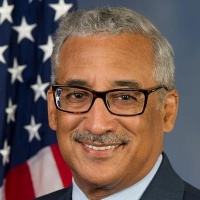
Robert Scott
Representative
VA
Robert Scott
Representative
VA
The **Rebuild America’s Schools Act of 2026** establishes major federal funding streams, including grants and tax-credit bonds, to modernize and repair public school facilities nationwide from 2027 through 2031. The legislation prioritizes districts with the greatest need, focusing on improving student health, safety, and environmental conditions in school buildings. It also mandates increased transparency through public databases tracking facility conditions and requires specific labor and "Buy America" standards for funded construction projects.
This bill ends the national emergency declared in July 2025 concerning imports from Brazil.
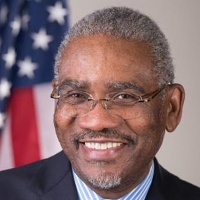
Gregory Meeks
Representative
NY
Gregory Meeks
Representative
NY
This bill officially ends the national emergency that was declared by the President in July 2025. This action specifically terminates the authority used to impose duties on articles imported from Brazil.
This act mandates a public report from the FBI and State Department detailing responsibility for the death of Shireen Abu Akleh and any U.S. involvement.
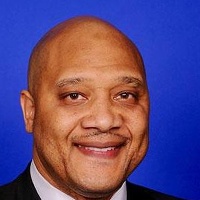
André Carson
Representative
IN
André Carson
Representative
IN
The Justice for Shireen Act mandates that the FBI Director and Secretary of State submit a comprehensive, unclassified report to Congress within 30 days regarding the death of Shireen Abu Akleh. This report must identify responsible parties and any U.S. materials implicated in the incident. The findings will also be made publicly available on the Department of State's website.
The TRAIN Act establishes a subpoena process allowing copyright owners to obtain records from generative AI developers regarding the use of their copyrighted works in AI training.
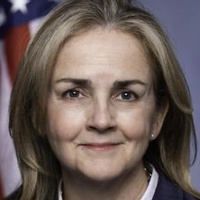
Madeleine Dean
Representative
PA
Madeleine Dean
Representative
PA
The TRAIN Act establishes a formal subpoena process allowing copyright owners to obtain information from generative AI developers. This mechanism enables copyright holders to request records regarding the use of their specific copyrighted works in training AI models. The bill aims to provide transparency and a means for copyright owners to protect their rights against unauthorized use in AI development.
This bill disallows certain tax deductions and imposes an excise tax on single-family home sales by large investors, while prohibiting federal mortgage assistance to these entities, with collected funds supporting low-income housing.
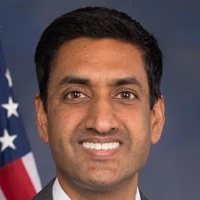
Ro Khanna
Representative
CA
Ro Khanna
Representative
CA
The Stop Wall Street Landlords Act of 2026 aims to curb large corporate ownership of single-family homes. It disallows key tax deductions, such as mortgage interest and depreciation, for investors holding over $100 million in assets who own these properties. The bill also imposes a full excise tax on the sale of these homes by such investors. Finally, it prohibits Fannie Mae, Freddie Mac, and Ginnie Mae from financing mortgages held by these specified large investors.
This Act mandates federal agencies to establish civil rights offices and report biennially on efforts to mitigate bias and discrimination in covered algorithmic systems that affect protected characteristics.
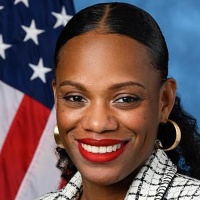
Summer Lee
Representative
PA
Summer Lee
Representative
PA
The Eliminating Bias in Algorithmic Systems Act of 2026 mandates that federal agencies address bias and discrimination in automated systems that materially affect individuals based on protected characteristics. This requires covered agencies to establish specialized civil rights offices focused on algorithmic harms. These offices must submit biennial reports to Congress detailing risks, mitigation efforts, stakeholder engagement, and legislative recommendations regarding biased algorithms.