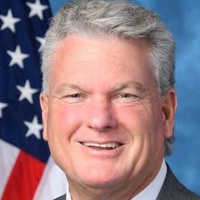
Legislative Activity
Track Mike's sponsored bills, co-sponsored legislation, and voting record
This bill imposes a one-year moratorium on federal funding for Planned Parenthood and redirects those funds to community health centers.
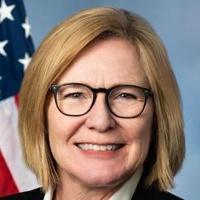
Michelle Fischbach
Representative
MN
Michelle Fischbach
Representative
MN
The Defund Planned Parenthood Act of 2025 imposes a one-year moratorium on federal funding for Planned Parenthood Federation of America, its affiliates, and its clinics unless they certify that they will not perform abortions. The bill redirects these funds to community health centers to ensure continued access to women’s health services. It includes specific exceptions for cases of rape, incest, or life-threatening medical conditions.
The Federal Employee Return to Work Act prohibits federal teleworkers from receiving annual pay adjustments and mandates that their basic pay be set to the "Rest of U.S." locality rate.

Dan Newhouse
Representative
WA
Dan Newhouse
Representative
WA
The Federal Employee Return to Work Act mandates that federal employees who telework at least one day per week are ineligible for annual pay adjustments. Additionally, the bill requires that these employees be compensated based on the "Rest of U.S." locality pay scale, regardless of their actual work location. Certain groups, including employees with disabilities and law enforcement officers, are exempt from these provisions.
This bill mandates the formal abolishment of the Bureau of Alcohol, Tobacco, Firearms and Explosives (ATF).
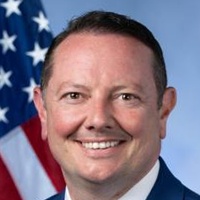
Eric Burlison
Representative
MO
Eric Burlison
Representative
MO
The Abolish the ATF Act is a legislative proposal that mandates the immediate dissolution of the Bureau of Alcohol, Tobacco, Firearms and Explosives. This bill seeks to formally terminate the agency and eliminate its federal oversight functions.
This bill proposes a constitutional amendment to limit members of the House of Representatives to three terms and Senators to two terms, with specific provisions for partial terms. Terms served before the amendment's ratification would not be counted towards these limits, and the amendment must be ratified within seven years to be valid.
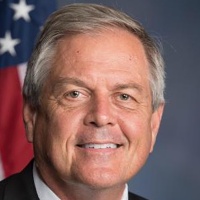
Ralph Norman
Representative
SC
Ralph Norman
Representative
SC
This bill proposes a constitutional amendment to limit the number of terms a member of Congress can serve. Representatives would be limited to 3 terms and Senators to 2 terms, with specific rules for partial terms. Terms served before the amendment's ratification would not be counted. The amendment must be ratified by three-fourths of the states within seven years to be valid.
The FairTax Act of 2025 proposes replacing federal income, payroll, and estate taxes with a national consumption-based sales tax, accompanied by monthly family rebates and the eventual sunsetting of the IRS.
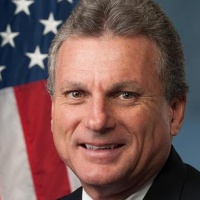
Earl Carter
Representative
GA
Earl Carter
Representative
GA
The FairTax Act of 2025 proposes a fundamental overhaul of the U.S. tax system by repealing federal income, payroll, estate, and gift taxes starting in 2027. In their place, the legislation establishes a national sales tax on new goods and services, supported by a monthly rebate for qualified families to offset the cost of basic necessities. The bill also transitions tax administration to the Treasury Department and includes a sunset provision that terminates the sales tax if the Sixteenth Amendment is not repealed within seven years.
The Stopping Border Surges Act implements stricter asylum eligibility requirements, accelerates deportation timelines for unaccompanied minors, and mandates family detention to deter unauthorized border crossings.

Andy Biggs
Representative
AZ
Andy Biggs
Representative
AZ
The Stopping Border Surges Act proposes comprehensive reforms to U.S. immigration policy by tightening asylum eligibility and accelerating the processing of unaccompanied minors. The bill mandates stricter screening standards, expands detention authority for families, and limits legal protections for those seeking asylum. Ultimately, the legislation aims to deter fraudulent claims and expedite removals through more restrictive border and interior enforcement measures.
The Federal Reserve Transparency Act of 2025 mandates a comprehensive audit of the Federal Reserve System by the Comptroller General, ensuring greater transparency and accountability. This act requires a detailed report to Congress with findings and recommendations, while also repealing audit limitations.

Thomas Massie
Representative
KY
Thomas Massie
Representative
KY
The Federal Reserve Transparency Act of 2025 mandates a comprehensive audit of the Federal Reserve System by the Comptroller General within one year. Following the audit, a detailed report must be submitted to Congress, including findings and recommendations. This act aims to increase transparency and accountability within the Federal Reserve System by repealing audit limitations.
The FIND Act prohibits federal agencies from contracting with entities that discriminate against the firearm and ammunition industry, ensuring fair access to government contracts for these businesses. Contractors must certify they do not discriminate against firearm entities, with violations leading to contract termination.
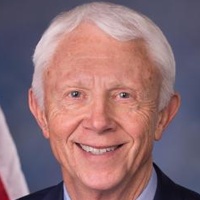
Jack Bergman
Representative
MI
Jack Bergman
Representative
MI
The FIND Act prohibits federal agencies from contracting with entities that discriminate against the firearm and ammunition industry. It requires federal contractors to certify they do not discriminate against firearm entities and prohibits them from awarding subcontracts to entities that do not provide a similar certification. Violations of these clauses will result in contract termination. The act defines "discriminate" as making judgments or refusing/limiting services based on biased criteria, rather than case-by-case evaluations, empirical data, financial risk, or legal non-compliance.