Legislative Activity
Track Salud's sponsored bills, co-sponsored legislation, and voting record
The RESULTS Act reforms how Medicare determines payment rates for clinical diagnostic laboratory tests by mandating the use of comprehensive, real-world private payor claims data collected from an independent entity.
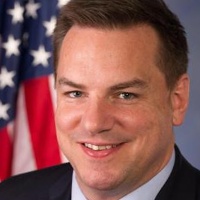
Richard Hudson
Representative
NC
Richard Hudson
Representative
NC
The Reforming and Enhancing Sustainable Updates to Laboratory Testing Services Act of 2025 (RESULTS Act) aims to improve Medicare payment rates for clinical lab tests by mandating the collection of more accurate, real-world payment data directly from large, independent private insurance claims databases. This legislation updates definitions, collection timelines, and calculation methods to ensure Medicare payments for widely available tests reflect current market rates. It also establishes default payment rules if sufficient private payor data cannot be secured.
This act modifies the Family and Medical Leave Act (FMLA) to establish specific eligibility criteria and leave calculation methods for paraprofessionals and other essential education support staff.
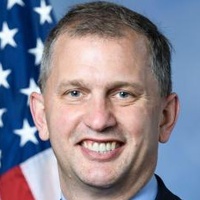
Sean Casten
Representative
IL
Sean Casten
Representative
IL
This bill, the ESP, Paraprofessional, and Education Support Staff Family Leave Act, updates eligibility requirements for certain school employees under the Family and Medical Leave Act (FMLA). It adjusts how paraprofessionals and education support staff meet the required hours of service by using a percentage of expected monthly hours worked during the school year. Furthermore, the bill mandates clear guidelines for calculating FMLA leave entitlement for these employees to account for non-standard school schedules.
The PART Act establishes new federal requirements for marking catalytic converters, creates a grant program for VIN stamping, tightens record-keeping for used parts dealers, and increases criminal penalties for theft and trafficking of catalytic converters.
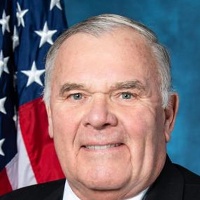
James Baird
Representative
IN
James Baird
Representative
IN
The PART Act aims to combat catalytic converter theft by requiring new vehicles to have traceable identifying markers on these parts. It establishes a federal grant program to help entities stamp identifying numbers onto existing converters. Furthermore, the bill imposes strict record-keeping requirements on businesses that buy used converters and creates new federal criminal penalties for stealing or trafficking stolen catalytic converters.
This resolution expresses support for designating September 9, 2025, as "National Firearm Suicide Prevention Day" to raise awareness about firearm suicide and promote safe and secure firearm storage as a key suicide prevention measure.
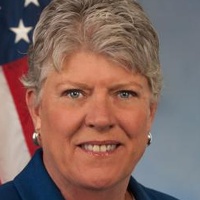
Julia Brownley
Representative
CA
Julia Brownley
Representative
CA
This resolution expresses support for designating September 9, 2025, as "National Firearm Suicide Prevention Day." The goal is to raise awareness about the growing crisis of firearm suicides across the United States. It emphasizes that safe and secure firearm storage is a critical component of suicide prevention efforts. The resolution encourages professionals to discuss gun safety and suicide prevention with their patients.
This resolution supports designating a week in September 2025 as "Malnutrition Awareness Week" to highlight the widespread impact of malnutrition and encourage better nutrition care and research.
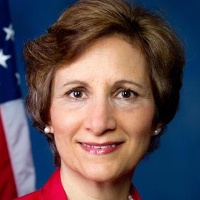
Suzanne Bonamici
Representative
OR
Suzanne Bonamici
Representative
OR
This resolution officially supports designating the week of September 8 through September 12, 2025, as "Malnutrition Awareness Week." It highlights the widespread and costly impact of malnutrition across all demographics, particularly among vulnerable populations. The bill recognizes the vital work of nutrition professionals and existing federal programs while encouraging better screening and early intervention to improve health outcomes.
The Mental Health in Aviation Act of 2025 mandates the FAA to update mental health regulations, improve medical clearance processes, fund more aviation medical examiners, and launch an anti-stigma campaign for aviation workers.
Sean Casten
Representative
IL
Sean Casten
Representative
IL
The Mental Health in Aviation Act of 2025 directs the FAA to update regulations to encourage aviation workers to seek mental health support without fear of stigma. The bill mandates annual reviews of the medical clearance process and allocates funding to hire more Aviation Medical Examiners. Furthermore, it requires the FAA to implement recommendations from a recent mental health task force and launch a public awareness campaign to reduce stigma.
This bill formally integrates Puerto Rico into the federal Supplemental Nutrition Assistance Program (SNAP) structure, outlining a transition plan away from its current block grant system.
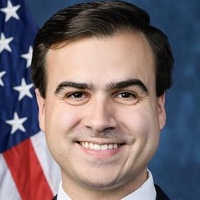
Pablo José Hernández Rivera
Representative
PR
Pablo José Hernández Rivera
Representative
PR
The Puerto Rico Nutrition Assistance Fairness Act aims to integrate Puerto Rico into the federal Supplemental Nutrition Assistance Program (SNAP) structure, aligning it with other territories like Guam. The bill mandates a transition period where Puerto Rico must submit a plan of operation to the Secretary of Agriculture for approval to join SNAP. During this transition, existing block grant funding may continue for up to five years while the territory moves toward full participation under federal SNAP rules.
This Act enables states to establish specialized Medicaid health homes for individuals with sickle cell disease, mandating dental and vision coverage for enrollees.
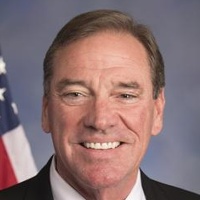
Neal Dunn
Representative
FL
Neal Dunn
Representative
FL
The Sickle Cell Disease Comprehensive Care Act enables states to establish specialized Medicaid health homes focused exclusively on individuals with sickle cell disease starting in 2026. If a state adopts this program, it must provide mandatory dental and vision coverage to enrolled patients, regardless of standard state Medicaid policies. States implementing these health homes will also be required to report on patient outcomes, access to care, and expenditures.
The Quiet Communities Act of 2025 reestablishes the EPA's Office of Noise Abatement and Control to combat noise pollution through research, technical assistance, and funding for state and local programs.

Grace Meng
Representative
NY
Grace Meng
Representative
NY
The Quiet Communities Act of 2025 addresses the growing public health crisis caused by noise pollution by reestablishing the Environmental Protection Agency's (EPA) Office of Noise Abatement and Control. This office will be tasked with researching noise impacts, supporting state and local noise control efforts through technical assistance and grants, and conducting a specific study on aircraft noise. The Act authorizes \$25 million annually through Fiscal Year 2030 to fund these critical national noise reduction initiatives.
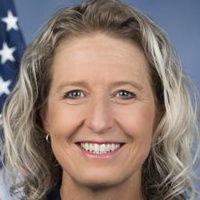
This bill extends enhanced financial assistance for purchasing health insurance through the Marketplace until the end of 2026.
Jennifer Kiggans
Representative
VA
Jennifer Kiggans
Representative
VA
The Bipartisan Premium Tax Credit Extension Act extends the enhanced financial assistance available for purchasing health insurance through the Marketplace. This legislation pushes the expiration date for these boosted premium tax credits, including those for higher earners, from the end of 2025 through the end of 2026. Essentially, it ensures continued, robust subsidies for Marketplace health coverage.
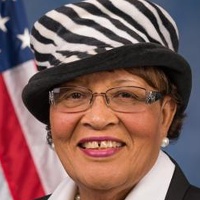
The Closing the Meal Gap Act of 2025 updates food assistance calculations by basing benefits on a "low-cost food plan," adjusts medical expense deductions, eliminates the cap on shelter expense deductions, and removes the time limit for receiving benefits.
Alma Adams
Representative
NC
Alma Adams
Representative
NC
The Closing the Meal Gap Act of 2025 updates federal food assistance by basing benefit calculations on a new, higher "low-cost food plan" standard. It also modifies income calculations by removing the cap on excess shelter deductions and establishing a standardized, inflation-adjusted medical expense deduction. Finally, this Act completely eliminates the time limit restrictions previously placed on receiving food assistance benefits.
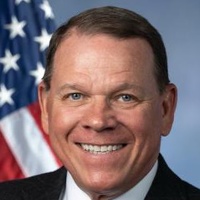
The FEMA Act of 2025 establishes FEMA as an independent, cabinet-level agency and enacts sweeping reforms across public assistance, individual aid, and mitigation programs to speed up recovery and increase transparency.
Sam Graves
Representative
MO
Sam Graves
Representative
MO
The FEMA Act of 2025 establishes the Federal Emergency Management Agency (FEMA) as an independent, cabinet-level agency to lead a unified, all-hazards approach to national emergency management. The bill enacts sweeping reforms across Public Assistance, Individual Assistance, and Mitigation programs to accelerate recovery, streamline funding, and reduce bureaucratic hurdles for disaster survivors and communities. Furthermore, it mandates significant new transparency measures, including public data reporting and GAO oversight, to ensure accountability for federal disaster spending.
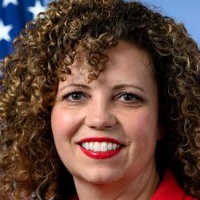
This bill provides hazard pay for federal employees carrying out prescribed burns and for smokejumpers.
Celeste Maloy
Representative
UT
Celeste Maloy
Representative
UT
This bill seeks to amend federal law to provide hazard pay for federal employees carrying out prescribed burns and for smokejumpers. It officially recognizes that performing prescribed burns and parachute jumping for firefighting duties involve unusual physical hardship or hazard comparable to fighting active wildfires. The Office of Personnel Management is tasked with implementing the necessary regulations to ensure this hazard pay takes effect promptly.
This act prohibits discrimination in federal jury service based on disability or age, ensuring individuals are not excluded if they can perform the essential functions of jury duty with reasonable accommodation.
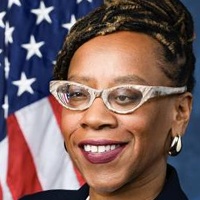
Lateefah Simon
Representative
CA
Lateefah Simon
Representative
CA
This Act prohibits discrimination against individuals based on disability or age in federal jury service. It amends federal law to ensure that a disability cannot be used as a basis for exclusion from a jury unless the individual cannot perform the essential functions of service even with a reasonable accommodation. The legislation updates existing jury qualification standards to reflect this nondiscrimination principle.
The MORE Act seeks to federally decriminalize cannabis, expunge past non-violent federal cannabis convictions, establish reinvestment programs, and open up SBA access for cannabis-related businesses.
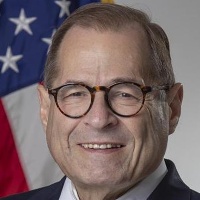
Jerrold Nadler
Representative
NY
Jerrold Nadler
Representative
NY
The Marijuana Opportunity Reinvestment and Expungement (MORE) Act seeks to federally decriminalize cannabis by removing it from the Controlled Substances Act, which will retroactively apply to past offenses. The bill establishes an Opportunity Trust Fund, financed by new cannabis taxes, to reinvest in communities harmed by prohibition. Furthermore, it mandates the expungement of non-violent federal cannabis convictions and opens up Small Business Administration (SBA) programs to legitimate cannabis businesses.
The SUN Act mandates timely and detailed congressional reporting and oversight for the domestic deployment of National Guard and reserve forces by the President, excluding deployments solely for natural disaster relief.
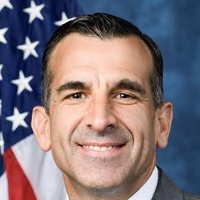
Sam Liccardo
Representative
CA
Sam Liccardo
Representative
CA
The Safeguarding the Use of the National Guard Act (SUN Act) enhances Congressional oversight of the President's domestic deployment of National Guard and reserve forces. It requires the President to submit a detailed report to Congress within 15 days outlining the legal justification, goals, costs, and impact of any domestic deployment. This reporting requirement is waived only when reserve forces are deployed specifically following a Presidential declaration under the Robert T. Stafford Act for a natural disaster.
This bill mandates a study to review and recommend improvements for protecting children in schools and childcare settings from wildfire smoke exposure.
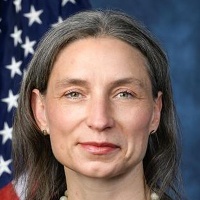
Maxine Dexter
Representative
OR
Maxine Dexter
Representative
OR
The Shielding Students from Wildfire Smoke Act directs the EPA to commission a comprehensive study on how K-12 schools and childcare facilities currently manage wildfire smoke exposure for children. This review will assess existing policies, identify gaps in protection, and recommend actionable strategies to Congress for improving safeguards, especially for resource-limited settings.
This Act prohibits grocery stores from price gouging, using personal surveillance data to set individualized prices, and mandates disclosure of facial recognition use, while banning electronic shelf labels in larger stores.
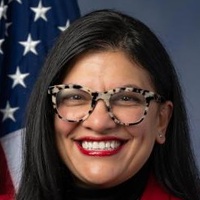
Rashida Tlaib
Representative
MI
Rashida Tlaib
Representative
MI
The Stop Price Gouging in Grocery Stores Act of 2025 aims to protect consumers by prohibiting grocery stores from charging "grossly excessive" prices for food items. The bill also bans stores from adjusting prices based on personal tracking data, such as facial recognition, and requires clear signage if facial recognition technology is used. Furthermore, it mandates that large physical grocery stores must use printed signs instead of electronic shelf labels for displaying prices.
This bill extends the federal regulations governing High Occupancy Vehicle (HOV) facilities from September 30, 2025, to September 30, 2031.
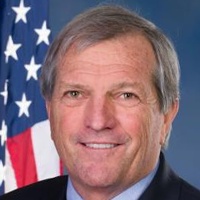
Mark DeSaulnier
Representative
CA
Mark DeSaulnier
Representative
CA
The High Occupancy Vehicle Lane Exemption Reauthorization Act extends the federal regulations governing High Occupancy Vehicle (HOV) facilities. Specifically, this bill pushes back the expiration date for these existing HOV facility rules from September 30, 2025, to September 30, 2031. This ensures the current federal guidelines remain in effect for an additional six years.
The Ending Homelessness Act of 2025 expands housing vouchers into an entitlement program, prohibits source-of-income discrimination, and provides dedicated funding streams to address unmet needs and align health and housing services.
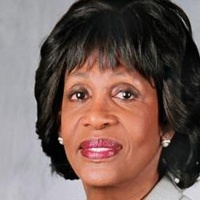
Maxine Waters
Representative
CA
Maxine Waters
Representative
CA
The Ending Homelessness Act of 2025 aims to significantly reduce homelessness by making housing choice vouchers an entitlement program starting in 2029 and immediately expanding the voucher supply for extremely low-income families. The bill also prohibits housing discrimination based on source of income and establishes new, dedicated funding streams for emergency relief and supportive services under the McKinney-Vento Act. Finally, it repeals certain ineligibility criteria for housing assistance and sets priorities for funding based on local policies that encourage affordable housing and decriminalize homelessness.