
Legislative Activity
Track Gus's sponsored bills, co-sponsored legislation, and voting record
This act establishes a pilot grant program through the EPA to fund infrastructure projects that specifically improve recycling access in underserved communities.
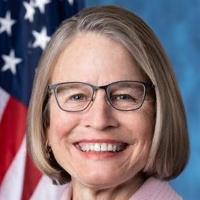
Mariannette Miller-Meeks
Representative
IA
Mariannette Miller-Meeks
Representative
IA
The Recycling Infrastructure and Accessibility Act of 2025 establishes a new EPA pilot grant program to improve recycling access, focusing specifically on underserved communities. These competitive grants will fund infrastructure projects, such as building transfer stations or expanding curbside service, using a "hub-and-spoke" model. Priority is given to projects located far from existing materials recovery facilities, with grants ranging from $\$500,000$ to $\$15$ million.
This bill expands Medicare Part B coverage to reimburse for specific pharmacist services related to testing and treatment for certain public health threats, effective January 1, 2026.
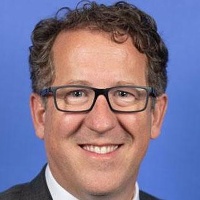
Adrian Smith
Representative
NE
Adrian Smith
Representative
NE
The Ensuring Community Access to Pharmacist Services Act expands Medicare Part B coverage to include services provided by pharmacists starting January 1, 2026. This coverage is specifically for testing or treatment related to COVID-19, the flu, RSV, strep throat, or during a declared public health emergency. The bill outlines payment structures, generally covering 80% of the cost, and prohibits pharmacists from balance billing Medicare patients for these covered services.
This bill establishes a national public awareness campaign, the SCREEN for Type 1 Diabetes Act, to promote the detection, screening, and management of type 1 diabetes among the public and healthcare providers.
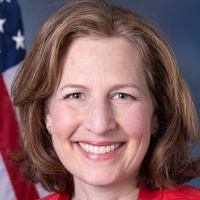
Kim Schrier
Representative
WA
Kim Schrier
Representative
WA
This bill, the SCREEN for Type 1 Diabetes Act of 2026, mandates the creation of a national public awareness campaign to promote the detection, screening, and management of type 1 diabetes. The campaign will utilize evidence-based materials and public service announcements targeted at both healthcare providers and the general public. It also authorizes funding for grants to support local efforts in increasing screening rates, particularly in highly affected communities.
This bill authorizes the minting and sale of commemorative gold and silver coins to honor the 25th anniversary of the September 11, 2001, terrorist attacks, with surcharges supporting the National September 11 Memorial and Museum.

Dan Goldman
Representative
NY
Dan Goldman
Representative
NY
This bill authorizes the Secretary of the Treasury to mint and issue commemorative gold and silver coins marking the 25th anniversary of the September 11, 2001, terrorist attacks. The coins will honor the victims, first responders, and survivors, with designs selected in consultation with the National September 11 Memorial and Museum. All surcharges from the sale of these coins will be paid directly to the Memorial and Museum to support its operations and maintenance.
The RECOVER Act establishes a three-year VA pilot program to grant funds to non-profit organizations providing culturally competent, evidence-based mental health care to eligible veterans.
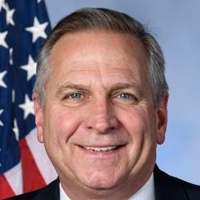
Mike Bost
Representative
IL
Mike Bost
Representative
IL
The Recognizing Community Organizations for Veteran Engagement and Recovery (RECOVER) Act establishes a three-year Department of Veterans Affairs (VA) pilot program to award grants to non-profit organizations. These grants fund the provision of culturally competent, evidence-based mental health care specifically for veterans. Recipients cannot charge veterans for this care and must encourage them to enroll in the VA system for ongoing services. The VA must report on the program's outcomes, including veteran engagement and care quality, after the pilot concludes.
This resolution designates specific dates to honor law enforcement officers killed in the line of duty and expresses support for all officers.
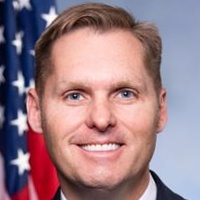
Michael Guest
Representative
MS
Michael Guest
Representative
MS
This resolution officially designates May 15, 2026, as Peace Officers Memorial Day and the week of May 10-16, 2026, as National Police Week. It honors the service and sacrifice of law enforcement officers killed in the line of duty, specifically recognizing 363 officers lost in 2025. The bill expresses unwavering support for law enforcement and acknowledges the need for proper resources to ensure officer safety.
This bill authorizes $1.8 million in annual funding from 2027 through 2031 to establish an International Military Education and Training program aimed at strengthening defense cooperation and interoperability between the United States and Greece.
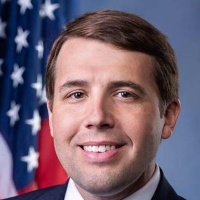
Chris Pappas
Representative
NH
Chris Pappas
Representative
NH
The U.S.-Greece Defense Cooperation Advancement Act establishes a dedicated International Military Education and Training (IMET) program to strengthen the strategic partnership between the two nations. This initiative aims to enhance military interoperability, professional development, and cooperation through authorized funding of $1.8 million annually from 2027 to 2031.
This act mandates the U.S. representative at international financial institutions to oppose funding for foreign shrimp farming, processing, or export projects, with a limited waiver option.
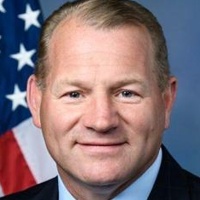
Troy Nehls
Representative
TX
Troy Nehls
Representative
TX
The Save Our Shrimpers Act mandates that the U.S. representative at international financial institutions must vote against and formally oppose any financial assistance for projects related to shrimp farming, processing, or exports in borrowing countries. This action aims to protect the domestic shrimping industry. The Treasury Secretary can waive this requirement if deemed in the U.S. national interest, and the mandate is set to expire after seven years.
This resolution reaffirms the foundational U.S. commitment to the Taiwan Relations Act, the three Joint Communiqués, and the Six Assurances, supporting Taiwan's self-defense and opposing any non-peaceful resolution of its future.
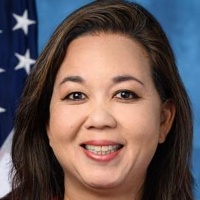
Jill Tokuda
Representative
HI
Jill Tokuda
Representative
HI
This resolution reaffirms the foundational U.S. commitment to the Taiwan Relations Act and longstanding bipartisan policy toward Taiwan. It underscores that peace and stability in the region are vital to U.S. interests and opposes any non-peaceful efforts to determine Taiwan's future. The bill affirms the U.S. commitment to providing Taiwan with defensive arms and maintaining the capacity to resist coercion.
The Never Fight Alone Act expands veterans' access to community-based mental health and substance use disorder residential treatment when the VA cannot provide timely care, while also restricting the VA's ability to limit community care options.
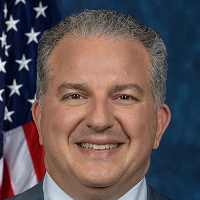
Jimmy Patronis
Representative
FL
Jimmy Patronis
Representative
FL
The Never Fight Alone Act aims to expand veterans' access to community-based mental health and substance use disorder treatment when the VA cannot provide timely residential care. It prohibits the VA from using restrictive wait times to deny eligibility for community care and ensures veterans have a choice among available care options. Furthermore, the bill mandates increased transparency through detailed reporting on community care metrics and requires Congressional approval for future changes to community care access standards.
This bill expands the Committee on Foreign Investment in the United States (CFIUS) authority to review and presume national security risks from real estate transactions involving foreign adversaries near sensitive sites and on agricultural land.
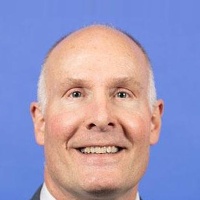
John Moolenaar
Representative
MI
John Moolenaar
Representative
MI
This Act strengthens national security by expanding the Committee on Foreign Investment in the United States (CFIUS) review of real estate transactions involving foreign adversaries. It specifically targets purchases of farmland and property near sensitive national security sites. The legislation introduces a presumption that such "elevated risk" transactions pose unresolvable risks, placing a high burden on CFIUS to prove otherwise. Furthermore, it mandates consideration of U.S. food security during transaction reviews and ensures state laws restricting foreign adversary land ownership remain in effect.
This resolution expresses support for designating the week of May 3, 2026, through May 9, 2026, as "Tardive Dyskinesia Awareness Week" to raise public and medical community awareness of this involuntary movement disorder.
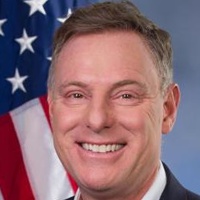
Scott Peters
Representative
CA
Scott Peters
Representative
CA
This resolution expresses support for designating the week of May 3–9, 2026, as "Tardive Dyskinesia Awareness Week." The goal is to raise public and medical community awareness about tardive dyskinesia (TD), a serious involuntary movement disorder affecting hundreds of thousands of Americans. This designation encourages education about TD, a condition often undiagnosed despite available treatments.
This bill establishes several initiatives to strengthen the community health workforce by improving recruitment, retention, training pipelines, and expanding services at Federally Qualified Health Centers.
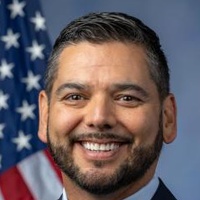
Raul Ruiz
Representative
CA
Raul Ruiz
Representative
CA
The Developing the Community Health Workforce Act of 2026 aims to strengthen healthcare access in underserved areas by boosting the workforce at Federally Qualified Health Centers (FQHCs). It establishes new grant programs for recruitment, loan repayment, and training pipelines, including apprenticeships and partnerships with higher education. Furthermore, the bill expands the services FQHCs can offer under Medicare and Medicaid and increases opportunities for graduate medical education training at these centers.
This Act clarifies that clergy are considered employees for Social Security and Medicare tax purposes, mandates employer withholding, and allows previously exempt clergy to revoke their opt-out status.
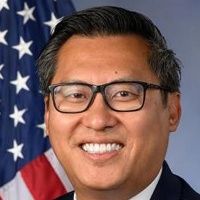
Vince Fong
Representative
CA
Vince Fong
Representative
CA
This bill amends federal law to reclassify clergy and religious workers as employees for Social Security and Medicare tax purposes, requiring churches to withhold these taxes. It also repeals the existing religious exemption that allows clergy to opt out of Social Security coverage. Furthermore, the Act establishes a process for currently exempt clergy to revoke their exemption and mandates the IRS to report on informing these workers of their new options.
The PRIMATE Act generally bans the importation of live nonhuman primates into the U.S., with a narrow exception for accredited zoos and aquariums that certify the animals will not be used for experiments or testing.
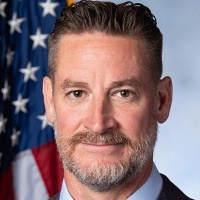
W. Steube
Representative
FL
W. Steube
Representative
FL
The PRIMATE Act generally bans the importation of live nonhuman primates into the United States to prevent toxic exposures. This prohibition includes a narrow exception allowing importation only by AZA-accredited facilities under strict conditions regarding the animal's future use. Violations of this ban are subject to significant civil penalties and forfeiture of the illegally imported primates.
This bill designates April as Community College Month to recognize the vital role of over 1,000 community colleges in advancing accessible higher education, workforce training, and national economic prosperity.
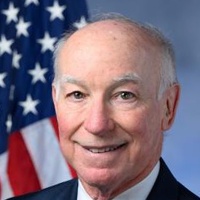
Joe Courtney
Representative
CT
Joe Courtney
Representative
CT
This resolution officially designates April as Community College Month to celebrate the vital role of over 1,000 community colleges nationwide. It recognizes these institutions for providing accessible higher education, workforce training, and significant contributions to the U.S. economy. The bill highlights their affordability, local presence, and impact on student success across the country.
This act mandates the FCC to report on its enforcement of existing laws requiring multi-line phone systems to allow direct dialing to 911.

Doris Matsui
Representative
CA
Doris Matsui
Representative
CA
The Kari's Law Reporting Act mandates that the Federal Communications Commission (FCC) issue a public report detailing its enforcement of existing requirements for multi-line telephone systems. This report must assess manufacturer and vendor compliance with Section 721 of the Communications Act of 1934. Furthermore, the FCC is required to outline any compliance obstacles and suggest policy improvements or legislative recommendations.
This Act repeals the federal beneficial ownership information reporting requirements for domestic persons and entities, limiting them only to foreign individuals and foreign-connected companies, and mandates the deletion of existing domestic data.
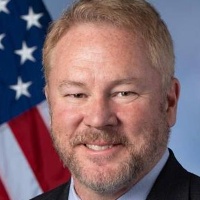
Warren Davidson
Representative
OH
Warren Davidson
Representative
OH
The Repealing Big Brother Overreach Act significantly narrows the federal beneficial ownership information reporting requirements. This legislation limits reporting obligations exclusively to foreign individuals and foreign-connected companies. Furthermore, it mandates the deletion of all previously collected data pertaining to domestic persons and entities.
This act mandates the FCC to hold public hearings and issue reports following activations of the Disaster Information Reporting System, while also improving network outage reporting procedures.
Doris Matsui
Representative
CA
Doris Matsui
Representative
CA
The Emergency Reporting Act mandates the FCC to hold annual public hearings and issue detailed reports following the activation of its Disaster Information Reporting System. This legislation also requires the FCC to investigate and recommend improvements for how network outages are reported to enhance public safety communications. The goal is to increase transparency and resilience of communications networks during emergencies.
This bill mandates comprehensive safety upgrades for civilian and military aviation, focusing on collision avoidance technology, air traffic control training, and enhanced airspace transparency, particularly around high-traffic airports.
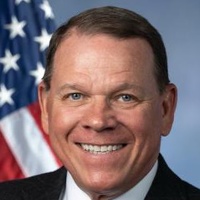
Sam Graves
Representative
MO
Sam Graves
Representative
MO
The Airspace Location and Enhanced Risk Transparency Act of 2026 mandates significant safety upgrades across both civilian and military aviation to prevent midair collisions. It requires the FAA to implement advanced collision avoidance systems and new air traffic controller training, while also compelling the Department of Defense to equip most military helicopters with transponders for increased visibility. The bill establishes new transparency measures, including public tracking of safety rule implementation and enhanced reporting on near-miss incidents, particularly around major airports like Reagan National.