
Legislative Activity
Track Gus's sponsored bills, co-sponsored legislation, and voting record
This resolution condemns the Iranian regime’s terrorism and human rights abuses while affirming support for the Iranian people’s right to establish a democratic, secular, and non-nuclear republic.

Tom McClintock
Representative
CA
Tom McClintock
Representative
CA
This resolution condemns the Iranian regime for its ongoing human rights abuses, state-sponsored terrorism, and regional instability. It expresses strong support for the Iranian people's struggle for a democratic, secular, and non-nuclear republic. Furthermore, the bill advocates for international accountability for the regime's crimes and calls for the protection of Iranian political refugees.
This resolution reaffirms the vital strategic partnership between the United States and Canada, emphasizing their shared commitment to economic prosperity, energy security, and national defense.
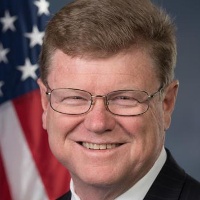
Mark Amodei
Representative
NV
Mark Amodei
Representative
NV
This resolution reaffirms the vital strategic partnership between the United States and Canada, emphasizing the deep ties that bolster North American economic prosperity and national security. It highlights the two nations' commitment to shared goals in energy independence, critical mineral supply chains, border management, and global defense. By strengthening this alliance, the bill aims to enhance regional competitiveness and ensure a unified front against common security threats.
The "Medical Device Electronic Labeling Act" allows medical device manufacturers to provide labeling electronically, provided it is easily accessible and paper copies are available upon request, while maintaining device safety and effectiveness.
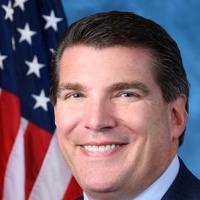
Jay Obernolte
Representative
CA
Jay Obernolte
Representative
CA
The "Medical Device Electronic Labeling Act" amends the Federal Food, Drug, and Cosmetic Act, permitting manufacturers to provide device labeling electronically, provided it is easily accessible. Paper copies must be available upon request without charge, and the device label itself must still comply with current regulations. The Secretary can implement additional requirements or exceptions for electronic labeling to ensure device safety and effectiveness.
The PREVENT DIABETES Act expands access to the Medicare Diabetes Prevention Program by allowing virtual-only providers to participate and serve beneficiaries across state lines from 2026-2030.

Diana DeGette
Representative
CO
Diana DeGette
Representative
CO
The PREVENT DIABETES Act aims to expand access to the Medicare Diabetes Prevention Program (MDPP) by allowing entities to participate solely through online services from January 1, 2026, through December 31, 2030. It requires the Secretary of Health and Human Services to update regulations by January 1, 2026, to accommodate virtual suppliers, ensuring they meet MDPP enrollment conditions. This act also ensures that these entities will not be denied claim payments for online MDPP services solely because the beneficiary was in a different state when the services were provided and places no limit on the number of times an individual may enroll in the MDPP.
The "Scientific EXPERT Act of 2025" aims to improve drug development for rare diseases by mandating science-focused meetings and public reporting to enhance collaboration and regulatory flexibility.

Doris Matsui
Representative
CA
Doris Matsui
Representative
CA
The Scientific EXPERT Act of 2025 aims to improve drug development for rare diseases by mandating science-focused meetings. These meetings, organized by the Reagan-Udall Foundation, will bring together experts to discuss challenges and opportunities in developing treatments for specific rare diseases. The FDA will participate in these meetings, and meeting outcomes will be published to inform future drug development efforts. The Act allocates funding for these meetings and requires reports to Congress on their impact.
The "Accelerating Kids’ Access to Care Act of 2025" streamlines Medicaid and CHIP enrollment for out-of-state providers, increasing healthcare access for children.
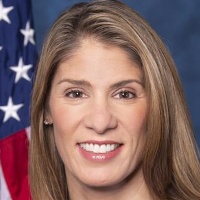
Lori Trahan
Representative
MA
Lori Trahan
Representative
MA
The "Accelerating Kids Access to Care Act of 2025" streamlines the enrollment process for out-of-state healthcare providers in Medicaid and CHIP, ensuring children under 21 have access to care from eligible providers across state lines. By reducing administrative burdens and unnecessary screening requirements, the Act aims to improve healthcare access for children while maintaining necessary safeguards against fraud and abuse. Participating providers will be enrolled for a 5-year period, and the changes will take effect three years after the Act's enactment.
This bill authorizes the creation of a Congressional Gold Medal to honor the volunteers and communities involved with the North Platte Canteen during World War II.

Adrian Smith
Representative
NE
Adrian Smith
Representative
NE
The North Platte Canteen Congressional Gold Medal Act recognizes and honors the volunteers and donors of the North Platte Canteen in Nebraska during World War II with a Congressional Gold Medal. This medal will be presented by the Speaker of the House and the President pro tempore of the Senate, and then displayed at the Lincoln County Historical Museum. The Act also authorizes the creation and sale of bronze duplicates of the gold medal to cover production costs, with proceeds deposited into the Mint's Public Enterprise Fund.
This bill encourages the deployment and use of automated external defibrillators (AEDs) by providing nationwide legal protections from civil liability for those who use them in emergencies, own them, or manage properties where they are used.
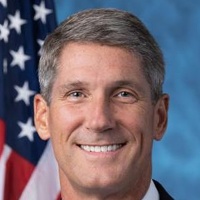
C. Franklin
Representative
FL
C. Franklin
Representative
FL
The Cardiac Arrest Survival Act of 2025 aims to establish a national standard of legal protection from civil liability for individuals using automated external defibrillators (AEDs) in emergencies, as well as for AED owners and property managers where AEDs are used. This bill amends the Public Health Service Act to encourage broader AED deployment by providing Good Samaritan protections for those who use or attempt to use an AED, premises owner/lessee/manager protections, and device owner-acquirer protections, with certain exceptions for misconduct or failure to maintain the device. The Act seeks to preempt inconsistent state laws and clarify that it does not mandate AED placement or create new causes of action. By creating consistent, nationwide legal protection, this bill intends to save lives from cardiac arrest.
The "Women’s Protection in Telehealth Act" excludes providers who prescribe abortion-inducing drugs via telehealth from participating in Medicare, requiring in-person examinations and follow-up visits.
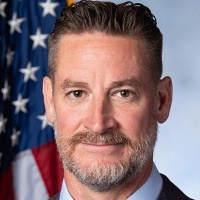
W. Steube
Representative
FL
W. Steube
Representative
FL
The Women's Protection in Telehealth Act amends the Social Security Act to exclude individuals or entities from Medicare if they provide abortion-inducing drugs via telehealth. To be eligible for Medicare, a physician must physically examine the patient, be present during the drug's administration, and schedule an in-person follow-up within 14 days. This exclusion is permanent and not subject to standard waivers.
This resolution expresses Congressional opposition to imposing new performance fees or royalties on local radio stations and businesses for broadcasting or playing music.
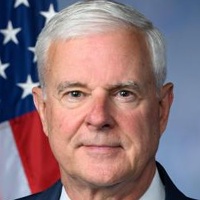
Steve Womack
Representative
AR
Steve Womack
Representative
AR
The Local Radio Freedom Act expresses Congressional opposition to imposing new performance fees, taxes, or royalties on local radio stations and businesses for playing music. It argues that the current system of free airplay provides essential promotional value to artists and that new fees would threaten the financial viability of local broadcasters and the vital community services they provide.
The "PSA Screening for HIM Act" ensures that high-risk men, including African-American men and those with a family history of prostate cancer, have access to prostate cancer screenings without cost-sharing under group health plans and insurance coverage.
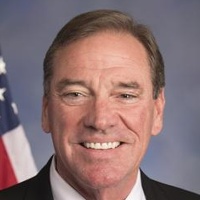
Neal Dunn
Representative
FL
Neal Dunn
Representative
FL
The "PSA Screening for HIM Act" aims to improve early detection of prostate cancer by requiring group health plans and health insurance issuers to cover prostate cancer screenings without cost-sharing for high-risk men aged 40 and over, including African-American men and those with a family history of the disease. This coverage mandate ensures that high-risk individuals have access to potentially life-saving screenings, aligning with the goal of reducing prostate cancer-related deaths and improving treatment outcomes. The Act defines "men with a family history of prostate cancer" as those with a first-degree relative with prostate cancer, associated cancers, or genetic alterations linked to increased risk. This provision is set to take effect for plan years starting on or after January 1, 2026.
The "Death Tax Repeal Act" eliminates estate and generation-skipping transfer taxes, adjusts gift tax calculations, and sets a $10,000,000 lifetime gift exemption.
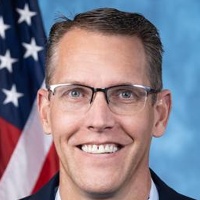
Randy Feenstra
Representative
IA
Randy Feenstra
Representative
IA
The "Death Tax Repeal Act" eliminates both estate and generation-skipping transfer taxes, effective from the date of enactment. It adjusts gift tax calculations by setting the lifetime gift exemption at $10,000,000, with inflation adjustments after 2011. The Act also includes transitional rules for applying certain sections of the Internal Revenue Code during the enactment year.
This act authorizes the creation of the Smithsonian National Museum of the American Latino on the National Mall, ensuring diverse representation in its exhibits and programs.
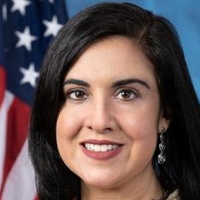
Nicole Malliotakis
Representative
NY
Nicole Malliotakis
Representative
NY
The Smithsonian National Museum of the American Latino Act authorizes the creation of the Smithsonian National Museum of the American Latino on the National Mall. It ensures the museum's exhibits and programs accurately represent the diverse cultures, histories, events, and values of Hispanic and Latino communities, seeking guidance from diverse sources. The Act also mandates regular reports to Congress on the museum's efforts to meet these diversity requirements.
The "Alternatives to PAIN Act" aims to improve Medicare Part D coverage for non-opioid pain management drugs by reducing cost-sharing and removing barriers like step therapy and prior authorization, starting in 2026.
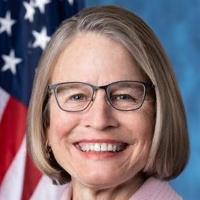
Mariannette Miller-Meeks
Representative
IA
Mariannette Miller-Meeks
Representative
IA
The "Alternatives to PAIN Act" amends Medicare Part D to improve access to non-opioid pain management drugs by waiving deductibles and ensuring they are placed on the lowest cost-sharing tier starting in 2026. The Act also prohibits the use of step therapy and prior authorization requirements for these drugs, further easing access for patients. These changes aim to provide more accessible alternatives for pain management, reducing reliance on opioids.
The United States-Israel Defense Partnership Act of 2025 bolsters defense cooperation between the U.S. and Israel through joint programs, funding increases, and extended authorities related to countering unmanned systems, anti-tunnel technology, emerging technologies, and war reserve stockpiles, while also exploring Israel's inclusion in the national technology and industrial base and assessing integrated air and missile defense in the CENTCOM region.
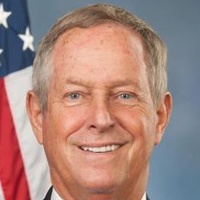
Joe Wilson
Representative
SC
Joe Wilson
Representative
SC
The United States-Israel Defense Partnership Act of 2025 seeks to bolster the defense relationship between the United States and Israel through joint initiatives and increased cooperation. It establishes programs to counter unmanned systems, extend anti-tunnel and counter-UAS cooperation, and promote collaboration in emerging technologies like AI and cybersecurity. The act also mandates the establishment of a Defense Innovation Unit office in Israel and assesses integrated air and missile defense in the U.S. Central Command region. Finally, it explores Israel's potential inclusion in the national technology and industrial base.
The "National Right-to-Work Act" prohibits mandatory union membership as a condition of employment, protecting employees' rights to choose whether or not to join or support a labor union.
Joe Wilson
Representative
SC
Joe Wilson
Representative
SC
The "National Right-to-Work Act" amends both the National Labor Relations Act and the Railway Labor Act to protect an employee's right to choose whether or not to join or support a labor union. It eliminates the possibility of mandatory union membership or dues payments as a condition of employment, ensuring that employees cannot be forced to join or support a union against their will.
The Honoring Our Fallen Heroes Act of 2025 expands public safety officer benefits to include disability and death coverage for certain cancers presumed to be caused by on-duty exposure to carcinogens, and clarifies "line of duty" definitions for first responder benefits.
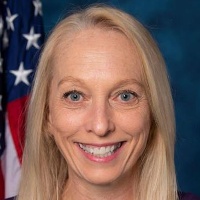
Mary Scanlon
Representative
PA
Mary Scanlon
Representative
PA
The Honoring Our Fallen Heroes Act of 2025 expands public safety officer benefits to include deaths and disabilities caused by exposure-related cancers, presuming that certain cancers diagnosed within 15 years of service are line-of-duty injuries if the officer served for at least 5 years. It defines "exposure-related cancer" and allows for updates to the list based on medical evidence, while also permitting individuals to petition for additions. The Act also clarifies "line of duty action" and applies retroactively to claims dating back to January 1, 2020, with a three-year window for filing claims based on these amendments.
The "Ensuring Continuity in Veterans Health Act" amends the Veterans Community Care Program to prioritize continuous healthcare for veterans.
C. Franklin
Representative
FL
C. Franklin
Representative
FL
The "Ensuring Continuity in Veterans Health Act" prioritizes uninterrupted healthcare for veterans. It amends the Veterans Community Care Program to specifically consider continuity of care when making decisions about veterans' healthcare services. This ensures veterans can maintain consistent relationships with healthcare providers and receive seamless, ongoing treatment.
The Investing in Rural America Act of 2025 expands Farm Credit System institutions' ability to finance essential community facilities in rural areas, fostering partnerships with local lenders and increasing transparency through public reporting.
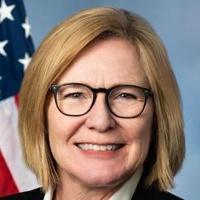
Michelle Fischbach
Representative
MN
Michelle Fischbach
Representative
MN
The Investing in Rural America Act of 2025 amends the Farm Credit Act of 1971, enabling Farm Credit System institutions to finance essential community facilities in rural areas, with a limit of 15% of their total outstanding loans. These institutions must offer participation in financing to other domestic lenders, especially community banks, and report these offers to the Farm Credit Administration. The Farm Credit Administration will then provide an annual report to Congress on these activities. This amendment aims to support rural development by leveraging the resources of the Farm Credit System.
Protects water and wastewater treatment facilities from CERCLA liability for PFAS releases if they comply with applicable laws and are not grossly negligent.

Marie Gluesenkamp Perez
Representative
WA
Marie Gluesenkamp Perez
Representative
WA
The "Water Systems PFAS Liability Protection Act" shields water and wastewater treatment facilities from CERCLA liability for PFAS releases if they comply with applicable laws and handle PFAS during or after water treatment. This protection covers specific non-polymeric PFAS and applies to public water systems, treatment works, and related entities. The exemption does not apply in cases of gross negligence or willful misconduct.