Legislative Activity
Track Lauren's sponsored bills, co-sponsored legislation, and voting record
This Act repeals the federal ban on mailing concealable firearms and prohibits the U.S. Postal Service from creating rules that restrict the mailing of firearms or require the disclosure of customer records as a condition of mailing.
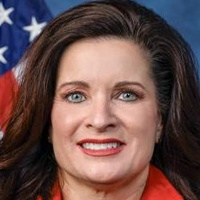
Sheri Biggs
Representative
SC
Sheri Biggs
Representative
SC
The Protecting the Mailing of Firearms Act repeals the federal ban on mailing certain concealable firearms. This legislation also prohibits the U.S. Postal Service from enacting rules that would block or unduly restrict the mailing of firearms, ammunition, or their components. Furthermore, the USPS cannot require sellers to disclose customer records or firearm serial numbers as a condition for mailing these items.
The Safeguard American Voter Eligibility (SAVE) Act mandates that individuals registering to vote in federal elections must present documentary proof of U.S. citizenship.
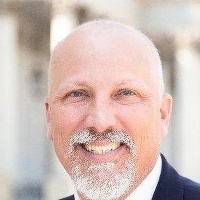
Chip Roy
Representative
TX
Chip Roy
Representative
TX
The Safeguard American Voter Eligibility Act (SAVE Act) significantly amends federal law to require individuals registering to vote in federal elections to present documentary proof of U.S. citizenship. This legislation mandates that states actively clean their voter rolls and cooperate with federal agencies to verify citizenship status. It establishes new criminal penalties for officials who fail to enforce these documentation requirements.
This bill mandates that tax-exempt organizations receiving any federal funding must publicly disclose their full contributor lists from IRS Form 990 Schedule B, or risk losing their tax-exempt status.

Paul Gosar
Representative
AZ
Paul Gosar
Representative
AZ
The Putting Trust in Transparency Act mandates that any tax-exempt organization receiving federal funding must publicly disclose the names, zip codes, and donation amounts of its major contributors listed on IRS Form 990 Schedule B. This is intended to increase oversight of organizations acting as government agents using taxpayer money. Failure to comply with this new public disclosure requirement can result in the revocation of the organization's tax-exempt status.
This bill prohibits the sale or release of petroleum products from the Strategic Petroleum Reserve to any entity owned, controlled, or influenced by the Chinese Communist Party, and bars exports of SPR oil to the People's Republic of China.
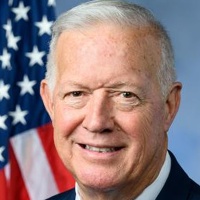
Randy Weber
Representative
TX
Randy Weber
Representative
TX
This bill, the Protecting America’s Strategic Petroleum Reserve from China Act, strictly prohibits the sale or release of oil from the U.S. Strategic Petroleum Reserve (SPR) to any entity owned, controlled, or influenced by the Chinese Communist Party. Furthermore, it prevents the sale of SPR products to non-Chinese buyers if those products are intended for export to the People's Republic of China. The legislation aims to safeguard U.S. energy reserves from benefiting the Chinese government.
The TAKE IT DOWN Act establishes federal criminal penalties for sharing nonconsensual intimate images (real or digitally forged) and mandates that covered online platforms remove such content within 48 hours of receiving a valid request.

Maria Salazar
Representative
FL
Maria Salazar
Representative
FL
The TAKE IT DOWN Act establishes federal criminal penalties for the intentional sharing of both real and digitally forged nonconsensual intimate images, with stricter penalties for images involving minors. It mandates that covered online platforms create a clear process for victims to request the removal of such content within 48 hours. Failure by platforms to reasonably comply with these removal requests will be treated as an unfair or deceptive practice enforced by the Federal Trade Commission (FTC).
This Act redefines immediate relatives for immigration, caps family-sponsored visas, and creates a new, non-work, temporary visa for parents of adult U.S. citizens.
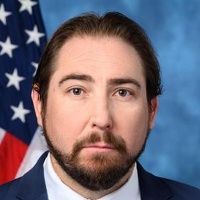
Eli Crane
Representative
AZ
Eli Crane
Representative
AZ
The Nuclear Family Priority Act significantly restructures U.S. family-based immigration by redefining "immediate relatives" to only include spouses and children of U.S. citizens, removing parents from that top category. It also establishes a new, temporary nonimmigrant visa for parents of adult U.S. citizens, which prohibits work and public benefits. Furthermore, the bill revises the annual cap for family-sponsored visas and makes numerous technical amendments across immigration law to align with these changes.
This resolution expresses Congressional support for the President's executive actions designating and deporting members of foreign terrorist organizations like Tren de Aragua.
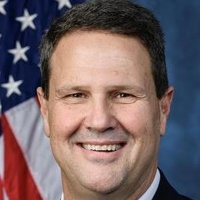
Jeff Crank
Representative
CO
Jeff Crank
Representative
CO
This resolution expresses strong Congressional support for the President's recent actions to designate transnational criminal organizations, like Tren de Aragua, as Foreign Terrorist Organizations. It affirms the President's executive authority to detain and deport non-citizens affiliated with these groups under the Alien Enemies Act. Furthermore, the bill endorses the recent deportations and the agreement with El Salvador to confine these individuals. Ultimately, this measure backs the complete removal of these threats to safeguard U.S. national security.
This Act establishes a competitive grant program, administered by the Secretary of Energy, to strengthen domestic mining education and training programs at specialized institutions.
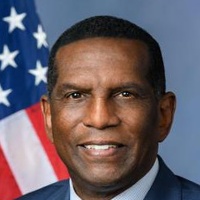
Clarence Owens
Representative
UT
Clarence Owens
Representative
UT
The Mining Schools Act of 2025 establishes a competitive grant program, administered by the Secretary of Energy, to strengthen domestic mining education at specialized institutions. These grants aim to train the next generation of professionals needed for the nation's energy and mineral supply by focusing on modern extraction, critical minerals, and environmental responsibility. The Act also creates the Mining Professional Development Advisory Board to guide the grant selection process and repeals the older Mining and Mineral Resources Research Institute Act of 1984.
The SHORT Act redefines "firearm" to exclude certain collector's items, eliminates disparate federal treatment of short-barreled rifles and shotguns, preempts state and local registration/tax burdens on these items, and mandates the destruction of certain existing NFA records.
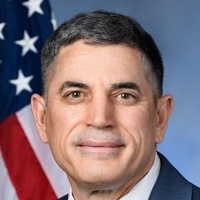
Andrew Clyde
Representative
GA
Andrew Clyde
Representative
GA
The SHORT Act aims to reform federal firearms regulations by redefining what constitutes a "firearm" for tax purposes, largely excluding antique or collector's items. It eliminates disparate federal treatment for short-barreled rifles and shotguns used lawfully and preempts state and local governments from imposing special taxes or registration requirements on these specific weapons. Furthermore, the bill mandates the destruction of certain existing federal registration and transfer records related to defined firearms.
The Keep Our Girls Safe Act of 2025 prohibits individuals of one sex from accessing school or federally funded program locker rooms while individuals of the opposite sex are actively using them.
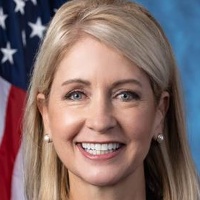
Mary Miller
Representative
IL
Mary Miller
Representative
IL
The Keep Our Girls Safe Act of 2025 amends Title IX to prohibit individuals of one sex from entering locker rooms while individuals of the opposite sex are actively using them during school or educational activities. This legislation establishes clear boundaries for sex-segregated facilities in federally funded educational settings. The provisions of the Act will take effect 30 days after becoming law.
This Act prohibits state and local governments from imposing excise taxes on the sale of firearms, ammunition, or related parts in interstate or foreign commerce.
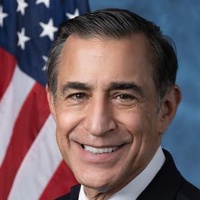
Darrell Issa
Representative
CA
Darrell Issa
Representative
CA
The Freedom from Unfair Gun Taxes Act of 2025 prohibits state and local governments from imposing excise taxes on the sale of firearms, ammunition, or firearm parts. This restriction specifically targets taxes levied on sales that involve interstate or foreign commerce. The Act explicitly preserves existing federal laws, such as the Pittman-Robertson Wildlife Restoration Act.
This act prohibits public institutions of higher education from receiving federal funding if they offer in-state tuition or state-based financial aid to undocumented students.
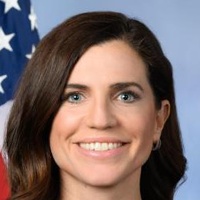
Nancy Mace
Representative
SC
Nancy Mace
Representative
SC
The American Students First Act penalizes public colleges that offer in-state tuition rates or state financial aid to undocumented students. If a college is found to violate these provisions, it will lose all federal financial assistance for the following fiscal year. This measure aims to restrict benefits for non-lawfully present aliens at the expense of federal funding for the institution.
This act eliminates the Optional Practical Training (OPT) program, ending work authorization for F-1 visa students unless explicitly authorized by future Congressional action.
Paul Gosar
Representative
AZ
Paul Gosar
Representative
AZ
The Fairness for High-Skilled Americans Act of 2025 aims to eliminate the Optional Practical Training (OPT) program, which currently allows F-1 student visa holders to gain temporary work authorization after completing their studies. This bill removes the government's authority to grant such work permission unless explicitly authorized by a future Act of Congress.
This act updates executive branch reorganization authority by expanding presidential objectives, redefining covered entities, removing certain restrictions, and extending the relevant deadlines to 2026.

James Comer
Representative
KY
James Comer
Representative
KY
The Reorganizing Government Act of 2025 updates the laws governing presidential executive reorganization plans. This bill expands the objectives for these plans to include reducing federal employees and eliminating burdensome regulations. It also extends the authority for the President to submit reorganization plans to Congress until the end of 2026.
This bill prohibits the use of federal taxpayer funds for gender transition procedures and bars federal health plans and ACA premium credits from covering such care.
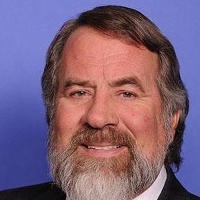
Doug LaMalfa
Representative
CA
Doug LaMalfa
Representative
CA
The End Taxpayer Funding of Gender Experimentation Act of 2025 prohibits the use of any federal funds for gender transition procedures, including those provided through federal health plans or facilities. This ban also extends to the Affordable Care Act, preventing individuals from using federal premium tax credits or cost-sharing reductions to cover plans that include such procedures. The legislation broadly defines gender transition procedures while excluding care for certain disorders of sex development and life-threatening emergencies.
This bill impeaches Chief Judge James E. Boasberg for allegedly abusing his power to obstruct the President's enforcement of immigration laws related to a designated terrorist organization.
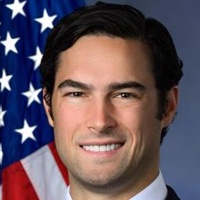
Brandon Gill
Representative
TX
Brandon Gill
Representative
TX
This bill impeaches Judge James E. Boasberg, Chief Judge for the District of Columbia, for high crimes and misdemeanors. The impeachment accuses Boasberg of abusing judicial power for political gain by obstructing the President's authority to remove aliens associated with a designated Foreign Terrorist Organization. Boasberg is accused of interfering with the President's enforcement of laws, jeopardizing national safety, and undermining the separation of powers. The bill seeks his removal from office.
The Fair and Open Competition Act of 2025 prohibits the federal government from requiring or penalizing bidders or contractors on federally funded construction projects based on their agreement or non-agreement with labor unions.
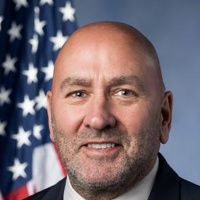
Clay Higgins
Representative
LA
Clay Higgins
Representative
LA
The Fair and Open Competition Act of 2025 ensures fair competition on federally funded construction projects by prohibiting the government from requiring or penalizing bidders based on union agreements. This legislation aims to keep federal agencies neutral in labor relations while promoting cost savings and opening opportunities for all businesses. Exceptions to this neutrality rule are strictly limited to specific public health, safety, or national security emergencies.
The LAND Act restricts foreign purchases of U.S. agricultural land by applying reciprocal ownership rules based on the buyer's home country and establishes a Task Force to monitor and report on these transactions.
Brandon Gill
Representative
TX
Brandon Gill
Representative
TX
The Land And National Defense Act (LAND Act) imposes strict reciprocal restrictions on foreign entities purchasing U.S. agricultural land, mirroring the limitations a U.S. citizen would face when buying land in the purchaser's home country. It establishes a new Task Force, chaired by the Secretary of Agriculture, to monitor and report on foreign ownership compliance. Furthermore, sellers are required to report all agricultural land sales to foreign purchasers to the Secretary of Agriculture.
This bill establishes the Space National Guard as a new, federally recognized state-level space force component for the U.S. Space Force, initially limited to seven states.
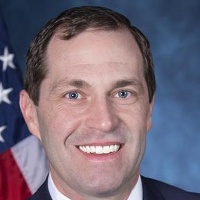
Jason Crow
Representative
CO
Jason Crow
Representative
CO
The Space National Guard Establishment Act of 2025 formally creates the Space National Guard as a new state-level component of the organized militia, serving as the reserve component for the U.S. Space Force. This initial structure transfers existing Air National Guard space personnel and units in seven specified states into the new branch. The Act mandates that the Space National Guard utilize existing Air National Guard facilities and requires annual briefings to Congress on its implementation and operations for five years.
The BLOC Act denies federal infrastructure funding to local jurisdictions that fail to adopt policies mandating notification to DHS before releasing certain undocumented individuals from custody.
Jeff Crank
Representative
CO
Jeff Crank
Representative
CO
The BLOC Act, or Blocking Lawless Open Border Cities and States Act of 2025, aims to withhold federal infrastructure funding from local governments designated as "sanctuary jurisdictions." To remain eligible for these funds, local jurisdictions must adopt a policy requiring them to notify the Secretary of Homeland Security 48 hours before releasing certain non-U.S. citizens from custody. This measure ties federal transportation dollars directly to local cooperation regarding immigration detainers.