Legislative Activity
Track Rick's sponsored bills, co-sponsored legislation, and voting record
This act requires the Postal Service to submit major service changes to the Postal Regulatory Commission for review and an advisory opinion before implementation, subject to Congressional oversight.
Andrew Clyde
Representative
GA
Andrew Clyde
Representative
GA
The Postal Service Transparency and Review Act requires the U.S. Postal Service to submit any proposed significant changes to mail service to the Postal Regulatory Commission (PRC) for review at least 180 days in advance. The USPS cannot spend money or implement the change until the PRC issues an advisory opinion. Furthermore, Congress retains the authority to disapprove of the proposed change through a joint resolution following the PRC's review.
This Act clarifies that student athletes participating in varsity college sports programs are not considered employees under federal or state labor laws.

Lisa McClain
Representative
MI
Lisa McClain
Representative
MI
The Protecting Student Athletes’ Economic Freedom Act of 2025 clarifies the legal status of college athletes. This Act explicitly states that participation in varsity college sports does not automatically confer employee status upon student athletes under federal or state labor laws. It also establishes clear definitions for key entities in college athletics, such as Associations, Conferences, Institutions, and Student Athletes.
This act establishes new, stringent requirements, including high voter turnout and a majority vote, for a union to become the exclusive representative for a group of workers.
Robert Onder
Representative
MO
Robert Onder
Representative
MO
The Worker Enfranchisement Act establishes stricter requirements for a union to become the exclusive representative for a group of employees. Under the new rules, a union must win a secret ballot election where more than half of the votes cast favor the union, and at least two-thirds of all eligible employees must participate in the vote. These new turnout and majority standards will apply to elections held six months after the Act's enactment.
This Act permits 501(c)(3) organizations to make political campaign statements within the ordinary course of their tax-exempt activities, provided the cost is de minimis.
Mark Harris
Representative
NC
Mark Harris
Representative
NC
The Free Speech Fairness Act amends tax law to allow 501(c)(3) organizations to make political campaign statements without jeopardizing their tax-exempt status. This protection applies only if the statement is made as part of the organization's ordinary course of activities and incurs only a de minimis (trivial) cost. This ensures non-profits can speak on political matters related to their mission without penalty, provided spending remains minimal.
The DETERRENT Act mandates increased transparency for colleges regarding foreign gifts and contracts, prohibits most dealings with "countries of concern," and imposes strict investment reporting requirements for large private universities, backed by significant enforcement penalties.
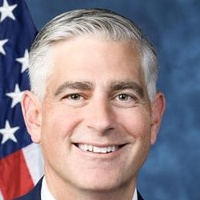
Michael Baumgartner
Representative
WA
Michael Baumgartner
Representative
WA
The DETERRENT Act significantly increases transparency requirements for colleges and universities regarding foreign gifts, contracts, and investments, especially those involving "countries or entities of concern." It mandates detailed public disclosure reports, establishes strict prohibitions and waiver processes for contracts with risky foreign entities, and imposes severe financial penalties for non-compliance. Furthermore, the bill requires specified large private institutions to report their holdings in concerning foreign assets annually.
The PHIT Act of 2025 allows taxpayers to deduct up to \$1,000 annually for qualified expenses related to physical fitness, gym memberships, and exercise instruction to promote healthier lifestyles.
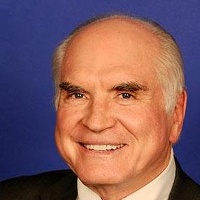
Mike Kelly
Representative
PA
Mike Kelly
Representative
PA
The Personal Health Investment Today Act of 2025 (PHIT Act) aims to improve public health by incentivizing healthier lifestyles, particularly to combat obesity. This bill allows taxpayers to treat certain qualified sports and fitness expenses, such as gym memberships and instruction fees, as deductible medical expenses. Deductions are capped annually at \$1,000 per individual or \$2,000 for joint filers.
This bill establishes national reciprocity for concealed carry permits, allowing individuals legally permitted to carry in their home state to carry a handgun in any other state that allows concealed carry.
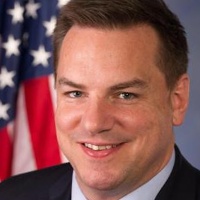
Richard Hudson
Representative
NC
Richard Hudson
Representative
NC
The Constitutional Concealed Carry Reciprocity Act of 2025 establishes a national standard for carrying concealed handguns across state lines. This act allows individuals legally permitted to carry in their home state to carry concealed in any other state that allows its residents to carry concealed firearms. The law does not override private property restrictions or prohibitions on government property, but it provides protections and legal recourse for those traveling in compliance with the new federal standard.
This Act renames the Ocmulgee Mounds National Historical Park to a National Park, establishes an adjacent National Preserve, authorizes land acquisition without eminent domain, creates a joint management plan with the Muscogee (Creek) Nation, and transfers specific tribal land into federal trust status.
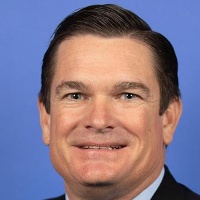
Austin Scott
Representative
GA
Austin Scott
Representative
GA
This Act officially redesignates the Ocmulgee Mounds National Historical Park as the Ocmulgee Mounds National Park and establishes a new Ocmulgee Mounds National Preserve, both managed as a single unit. The Secretary of the Interior is authorized to acquire additional non-condemned land to expand the Park and establish the Preserve. The legislation also creates an Advisory Council to guide management planning, which must prioritize the cultural resources and interests of the Muscogee (Creek) Nation, and transfers specific tribal land into federal trust status for the Tribe.
This joint resolution disapproves of the EPA's final rule reclassifying major sources as area sources under Section 112 of the Clean Air Act.
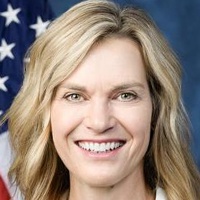
Julie Fedorchak
Representative
ND
Julie Fedorchak
Representative
ND
This joint resolution seeks to disapprove and nullify a recent final rule issued by the Environmental Protection Agency (EPA) concerning the reclassification of major pollution sources as area sources under the Clean Air Act. Congress is using its authority to reject this specific EPA regulation, preventing it from taking legal effect. If passed, the EPA's rule published on December 29, 2023, will be voided.
The Delinking Revenue from Unfair Gouging Act (DRUG Act) fundamentally restructures Pharmacy Benefit Manager (PBM) compensation by prohibiting most third-party payments and requiring service fees to be flat-rate and unconnected to drug prices, effective January 1, 2027.
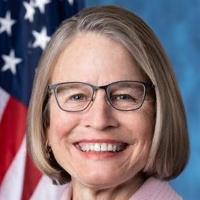
Mariannette Miller-Meeks
Representative
IA
Mariannette Miller-Meeks
Representative
IA
The Delinking Revenue from Unfair Gouging Act (DRUG Act) fundamentally reforms how Pharmacy Benefit Managers (PBMs) are paid for administering prescription drug benefits, effective January 1, 2027. This legislation prohibits PBMs from receiving most revenue tied to drug prices, rebates, or discounts from third parties. Instead, PBMs may only charge a strictly defined, flat-rate "bona fide service fee" for itemized services rendered. The bill mandates that all negotiated rebates and discounts must be fully passed through to the health plan or issuer to lower prescription costs for members.
This act prohibits the EPA from issuing tailpipe emission regulations that mandate specific vehicle technologies or limit the availability of new motor vehicles based on engine type.
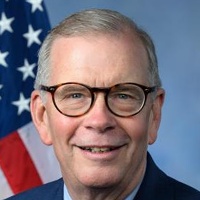
Tim Walberg
Representative
MI
Tim Walberg
Representative
MI
The Choice in Automobile Retail Sales Act of 2025 restricts the Environmental Protection Agency (EPA) from issuing tailpipe emission regulations that mandate specific vehicle technologies or limit the availability of new motor vehicles based on engine type. This ensures manufacturers maintain flexibility in meeting performance standards set by the EPA. The Act requires the EPA to update existing rules within two years to comply with these new limitations.
The Fair and Open Competition Act of 2025 prohibits the federal government from requiring or penalizing bidders or contractors on federally funded construction projects based on their agreement or non-agreement with labor unions.
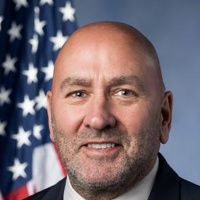
Clay Higgins
Representative
LA
Clay Higgins
Representative
LA
The Fair and Open Competition Act of 2025 ensures fair competition on federally funded construction projects by prohibiting the government from requiring or penalizing bidders based on union agreements. This legislation aims to keep federal agencies neutral in labor relations while promoting cost savings and opening opportunities for all businesses. Exceptions to this neutrality rule are strictly limited to specific public health, safety, or national security emergencies.
Recognizes and celebrates Delta Air Lines' 100th anniversary, acknowledging its global impact and commitment to community.
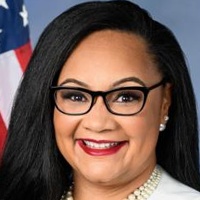
Nikema Williams
Representative
GA
Nikema Williams
Representative
GA
This bill recognizes and celebrates the 100th anniversary of Delta Air Lines, acknowledging its historical significance as the first U.S. airline to reach this milestone. It highlights Delta's growth, global connectivity, commitment to community, and industry leadership.
This bill seeks to nullify the EPA’s rule regarding waste emissions charges for petroleum and natural gas systems.
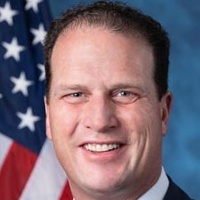
August Pfluger
Representative
TX
August Pfluger
Representative
TX
This resolution seeks to exercise congressional disapproval of the EPA’s "Waste Emissions Charge for Petroleum and Natural Gas Systems" rule. If passed, the measure would nullify the rule, ensuring it has no legal force or effect.
The Credit for Caring Act of 2025 establishes a new, partially refundable federal income tax credit for working family caregivers covering qualified expenses exceeding \$2,000, up to a \$5,000 annual limit.
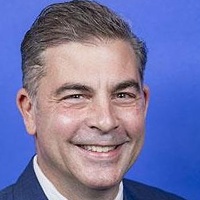
Mike Carey
Representative
OH
Mike Carey
Representative
OH
The Credit for Caring Act of 2025 establishes a new, non-refundable federal income tax credit for working family caregivers who incur significant expenses caring for a relative with long-term care needs. Eligible caregivers can claim a credit equal to 30% of qualified expenses exceeding \$2,000, up to a maximum annual credit of \$5,000. The bill specifies detailed requirements for the care recipient's needs, the types of allowable expenses, and includes income phase-out limits for claiming the benefit.
This Act excludes certain federal grants received for deploying broadband infrastructure from gross income for federal tax purposes.
Mike Kelly
Representative
PA
Mike Kelly
Representative
PA
The Broadband Grant Tax Treatment Act excludes certain federal grants received for deploying broadband infrastructure from gross income, making those funds tax-free. This exclusion prevents taxpayers from claiming a deduction or credit for expenses covered by these grants. The bill ensures that the basis of property purchased with these tax-free funds is appropriately adjusted. This provision applies to grants received in taxable years ending after March 11, 2023.
The SPEED for BEAD Act aims to streamline broadband deployment by modifying the Infrastructure Investment and Jobs Act, preventing unnecessary regulations, and prioritizing efficient use of funds for broadband expansion.
Richard Hudson
Representative
NC
Richard Hudson
Representative
NC
The SPEED for BEAD Act amends the Infrastructure Investment and Jobs Act to streamline broadband deployment grants. It renames the "Equity" program to "Expansion," allows funds for workforce development, and permits removal of high-cost locations from project areas. The act also prohibits certain conditions related to labor, climate change, and network management, and ensures consideration of all broadband technologies.
The "New Health Options Act of 2025" aims to lower health insurance premiums and promote more transparent pricing by establishing a reinsurance program, allowing out-of-network costs to count towards deductibles under certain conditions, and requiring providers to disclose lower prices to insured patients when applicable.
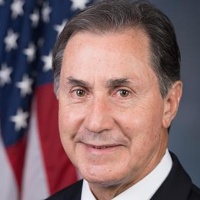
Gary Palmer
Representative
AL
Gary Palmer
Representative
AL
The "New Health Options Act of 2025" aims to lower health insurance premiums and promote access to affordable care. It establishes a reinsurance program to help insurers cover high-cost claims, allows out-of-network costs to count towards deductibles under certain conditions, and requires providers to disclose when a patient's out-of-pocket cost is higher than the cash price. The bill also allows insurers to opt out of the single risk pool, and when they do, removes the standard limits on how much premiums can vary based on age.
This bill designates English as the official language of the United States, standardizing its use in government functions and naturalization processes, while allowing exceptions for certain circumstances.
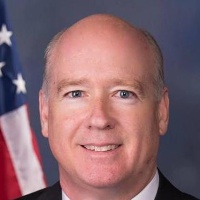
Robert Aderholt
Representative
AL
Robert Aderholt
Representative
AL
The "Designation of English as the Official Language of the United States Act of 2025" establishes English as the official language of the U.S., requiring the government to conduct official business in English and encouraging English language learning. It mandates a uniform English language standard for naturalization, ensuring new citizens can understand core American documents, while also providing exceptions for certain situations like language teaching, national security, and protection of rights. The bill also sets rules for interpreting U.S. laws, favoring interpretations that protect individual rights and state powers, and directs the Secretary of Homeland Security to develop uniform English language testing for citizenship applicants.
This bill modifies the definition of "qualifying single source drug" under the Social Security Act to include certain advanced drugs using genetically targeted technology for a limited time.
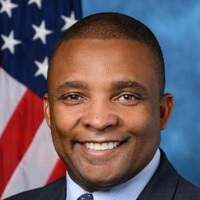
Donald Davis
Representative
NC
Donald Davis
Representative
NC
The "Maintaining Investments in New Innovation Act" amends the Social Security Act's definition of "qualifying single source drug" to include advanced drugs using genetically targeted technology. This update applies to drugs that can modify gene function, potentially impacting drug pricing and access regulations under the Act.