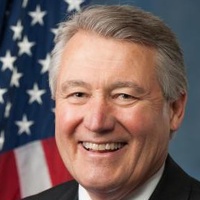
Legislative Activity
Track Rick's sponsored bills, co-sponsored legislation, and voting record
This resolution condemns socialism in all its forms while reaffirming support for election security measures, including the requirement that only U.S. citizens participate in American elections.
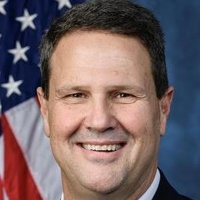
Jeff Crank
Representative
CO
Jeff Crank
Representative
CO
This resolution formally condemns socialism in all its forms, asserting that its ideology is incompatible with American values and the U.S. Constitution. It reaffirms the necessity of secure, citizen-only elections and calls for the enactment of the SAVE America Act to prevent noncitizen voting and strengthen election integrity.
This resolution expresses the House of Representatives' support for Charleston, South Carolina, to host the 2027 annual session of the OSCE Parliamentary Assembly.
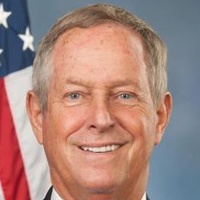
Joe Wilson
Representative
SC
Joe Wilson
Representative
SC
This resolution expresses the support of the House of Representatives for Charleston, South Carolina, to host the 2027 annual session of the Organization for Security and Cooperation in Europe (OSCE) Parliamentary Assembly. It highlights the city’s world-class infrastructure and honors the legacy of the late Senator Lindsey Olin Graham by advocating for the event to proceed as originally planned.
This bill clarifies that a franchisor is only considered a joint employer of a franchisee's workers if it exercises substantial, direct, and immediate control over essential terms of employment.
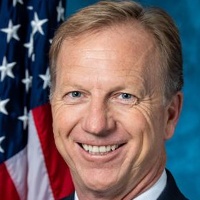
Kevin Hern
Representative
OK
Kevin Hern
Representative
OK
The American Franchise Act aims to protect the traditional franchise business model by clarifying the definition of a "joint employer." This legislation establishes that a franchisor is only considered a joint employer if it exercises "substantial direct and immediate control" over the essential terms of employment for a franchisee's workers. This change specifically targets liability risks associated with maintaining brand standards, ensuring franchisors are not automatically held responsible for local labor practices. The new standard applies prospectively to future legal proceedings.
This act amends Title IX to explicitly define "sex," "female," and "male" based on biological characteristics.
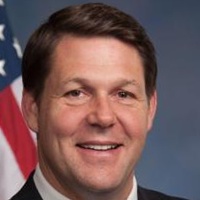
Jodey Arrington
Representative
TX
Jodey Arrington
Representative
TX
The Title IX Clarification Act of 2026 amends Title IX to explicitly define "sex," "female," and "male" based on an individual's biologically determined sex and reproductive system. This legislation clarifies the scope of sex-based protections under federal education law. The changes take effect immediately upon enactment.
This bill designates the Department of Veterans Affairs multispecialty clinic in Marietta, Georgia, as the "Colonel Michael H. Boyce Department of Veterans Affairs Multispecialty Clinic."
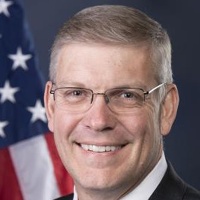
Barry Loudermilk
Representative
GA
Barry Loudermilk
Representative
GA
This bill designates the Department of Veterans Affairs multispecialty clinic in Marietta, Georgia, as the "Colonel Michael H. Boyce Department of Veterans Affairs Multispecialty Clinic." This renaming honors the late Colonel Michael H. Boyce for his distinguished military career and his dedicated service to the Cobb County veterans community.
This bill mandates electronic prior authorization, increases transparency through required data reporting, and establishes faster decision timelines for Medicare Advantage plans to improve timely access to care for seniors.
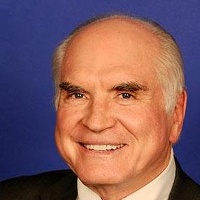
Mike Kelly
Representative
PA
Mike Kelly
Representative
PA
The Improving Seniors’ Timely Access to Care Act of 2025 aims to streamline and modernize the prior authorization process within Medicare Advantage plans. This bill mandates the adoption of electronic prior authorization systems and significantly increases transparency regarding approval rates and decision times starting in 2027. Furthermore, it establishes new enrollee protections and grants the Secretary authority to enforce faster decision timeframes for medical services.
The SHIELD Citizens Act amends federal law to restrict eligibility for federal welfare programs exclusively to U.S. citizens.

Clay Fuller
Representative
GA
Clay Fuller
Representative
GA
The SHIELD Citizens Act proposes to restrict eligibility for federal welfare programs, including SNAP, Medicaid, and housing assistance, exclusively to U.S. citizens. By amending existing law, the bill aims to ensure that federal public resources are reserved for citizens and nationals of the United States. The legislation includes a transition period for current recipients and maintains existing exceptions for emergency services and disaster relief.
The Securing Agriculture's Workforce Act of 2026 modernizes the H-2A visa program by streamlining the application process through a centralized online platform, updating labor and housing requirements, and expanding the definition of eligible agricultural work.
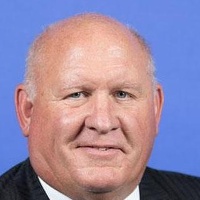
Glenn Thompson
Representative
PA
Glenn Thompson
Representative
PA
The Securing Agriculture's Workforce Act of 2026 modernizes the H-2A visa program to better support the agricultural industry by streamlining application processes and establishing a centralized online portal for employers. The bill updates labor certification, housing, and wage requirements while expanding the definition of eligible agricultural work to include a broader range of activities. Additionally, it enhances worker protections—including new heat illness prevention standards—and provides greater administrative efficiency for federal agencies managing the program.
The No Antisemitism in Education Act of 2026 mandates that educational institutions receiving federal funding treat antisemitism with the same enforcement rigor as other forms of discrimination prohibited under Title VI of the Civil Rights Act.
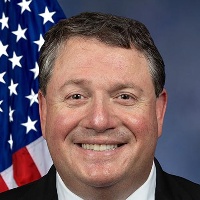
Randall Fine
Representative
FL
Randall Fine
Representative
FL
The No Antisemitism in Education Act of 2026 mandates that educational institutions receiving federal funding treat antisemitic discrimination with the same rigor as other forms of discrimination prohibited under Title VI of the Civil Rights Act of 1964. The bill requires institutions to utilize a formal definition of antisemitism when investigating and addressing discriminatory acts. It aims to ensure accountability for systemic failures to protect Jewish students while upholding First Amendment rights and existing state laws.
This bill restricts the Environmental Protection Agency's authority by prohibiting regulations that restrict vehicle sales, mandate fuel-switching, reduce grid reliability, or require commercially unavailable or cost-prohibitive technologies.
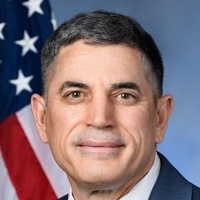
Andrew Clyde
Representative
GA
Andrew Clyde
Representative
GA
The End EPA Abuse Act of 2026 aims to significantly limit the regulatory authority of the Environmental Protection Agency (EPA). This bill amends the Clean Air Act to prohibit the EPA from issuing regulations that restrict vehicle sales, mandate fuel-switching at power plants, or reduce electric grid reliability. It also bars the EPA from requiring the use of technologies deemed commercially unavailable, cost-prohibitive without subsidies, or otherwise infeasible.
This bill enhances Medicaid Recovery Audit Contractor (RAC) program oversight, expands its scope to managed care plans, and mandates increased reporting and studies to improve payment integrity.

Gus Bilirakis
Representative
FL
Gus Bilirakis
Representative
FL
The Medicaid RAC Improvement Act of 2026 aims to strengthen oversight and transparency of the Medicaid Recovery Audit Contractor (RAC) program. It expands RAC review to include claims from managed care plans and requires annual reporting to Congress on program effectiveness. The bill also mandates studies and a demonstration project to address barriers states face in implementing robust payment integrity reviews.
This bill officially redesignates the Ocmulgee Mounds National Historical Park as the Ocmulgee Mounds National Park, updates its administration, and directs the Secretary of the Interior to take specific tribal lands into trust for the Muscogee (Creek) Nation.
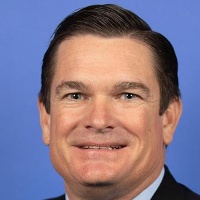
Austin Scott
Representative
GA
Austin Scott
Representative
GA
This Act officially redesignates the Ocmulgee Mounds National Historical Park as the Ocmulgee Mounds National Park, aligning its administration with other National Park System units. It maintains existing fishing and hunting regulations while directing the Secretary of the Interior to increase employment opportunities for culturally affiliated Indian tribes. Furthermore, the bill authorizes agreements with the Muscogee (Creek) Nation for resource management and directs the transfer of specific acreage into federal trust status for the Tribe, excluding gaming use.
This bill impeaches U.S. District Judge Eleanor Louise Ross for high crimes and misdemeanors stemming from an undisclosed affair, workplace misconduct, extortion vulnerability, partisan political activity, and obstruction of a judicial investigation through false statements.
Andrew Clyde
Representative
GA
Andrew Clyde
Representative
GA
This bill initiates impeachment proceedings against U.S. District Judge Eleanor Louise Ross for high crimes and misdemeanors. The articles of impeachment cite judicial misconduct, including an undisclosed extramarital affair creating conflicts of interest, inappropriate conduct in chambers, attending a partisan political event, and making false statements to obstruct a judicial investigation. The bill ultimately declares Judge Ross guilty and calls for her removal from office.
This constitutional amendment would permanently set the number of Supreme Court justices at nine. It requires ratification by three-fourths of the states within seven years.

Andy Biggs
Representative
AZ
Andy Biggs
Representative
AZ
This proposed constitutional amendment would permanently set the number of Supreme Court justices at nine. The composition would include one chief justice and eight associate justices. For the amendment to be enacted it must be ratified by three-fourths of the states within seven years of being submitted.
This resolution supports designating June as Family Month to recognize the traditional nuclear family as the foundation of a healthy society and to rededicate the nation to its importance, while also opposing the observance of Pride Month.
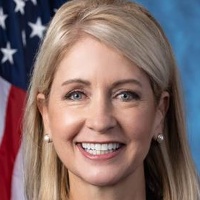
Mary Miller
Representative
IL
Mary Miller
Representative
IL
This resolution supports designating June as Family Month to recognize the traditional nuclear family as the foundation of a healthy society. It calls for a national rededication to the importance of marriage and family, asserting that children thrive best in a home with a married mother and father. The bill also explicitly states that the House of Representatives no longer recognizes Pride Month.
This bill reaffirms the nation's commitment to the phrase "one Nation under God" in the Pledge of Allegiance as a unifying affirmation of shared American values.
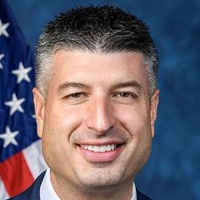
Tom Barrett
Representative
MI
Tom Barrett
Representative
MI
This bill reaffirms the nation's commitment to the phrase "one Nation under God" in the Pledge of Allegiance. It highlights the historical context of this phrase and its role in expressing the principle that individual rights stem from a higher authority. The legislation also acknowledges the upcoming 250th anniversary of the Declaration of Independence and a related rededication event.
This act simplifies annual reporting for employee benefit plans by extending filing deadlines and allowing for electronic signatures on Form 5500.
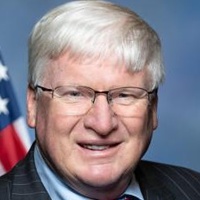
Glenn Grothman
Representative
WI
Glenn Grothman
Representative
WI
This act simplifies annual reporting for employee benefit plans by modernizing the Form 5500 filing process. It extends the filing deadline and allows for the use of electronic signatures on required reports. These changes aim to streamline compliance for plan administrators.
This bill expands Medicare Part B coverage to reimburse for specific pharmacist services related to testing and treatment for certain public health threats, effective January 1, 2026.

Adrian Smith
Representative
NE
Adrian Smith
Representative
NE
The Ensuring Community Access to Pharmacist Services Act expands Medicare Part B coverage to include services provided by pharmacists starting January 1, 2026. This coverage is specifically for testing or treatment related to COVID-19, the flu, RSV, strep throat, or during a declared public health emergency. The bill outlines payment structures, generally covering 80% of the cost, and prohibits pharmacists from balance billing Medicare patients for these covered services.
This bill mandates the prominent display of the national motto, "In God We Trust," on every federal public building within one year of enactment.
Mary Miller
Representative
IL
Mary Miller
Representative
IL
The "In God We Trust Act" mandates the prominent display of the national motto, "In God We Trust," on every federal public building. This requirement applies to all buildings owned or leased by the federal government within one year of the bill's enactment.
The IGNITE HBCU Excellence Act authorizes competitive grants to Historically Black Colleges and Universities (HBCUs) for long-term facility improvements, technology upgrades, and infrastructure modernization, while also providing for the forgiveness of certain outstanding HBCU capital financing loans.

J. Hill
Representative
AR
J. Hill
Representative
AR
The IGNITE HBCU Excellence Act authorizes competitive grants to Historically Black Colleges and Universities (HBCUs) and similar institutions for long-term facility improvements, technology upgrades, and infrastructure modernization. Priority for these grants will be given to institutions demonstrating the greatest need, limited fundraising ability, and high percentages of Pell Grant recipients. The bill also mandates immediate forgiveness for certain outstanding balances on existing HBCU Capital Financing Program loans. Finally, it requires comprehensive reporting and studies to assess the program's impact and future funding needs.