Legislative Activity
Track Alma's sponsored bills, co-sponsored legislation, and voting record
The College for All Act of 2025 establishes federal-state partnerships and grants to eliminate tuition and fees at public and tribal colleges, boosts Pell Grants, and increases funding for minority-serving institutions.
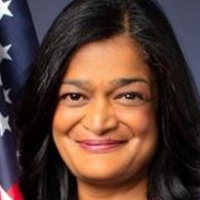
Pramila Jayapal
Representative
WA
Pramila Jayapal
Representative
WA
The College for All Act of 2025 establishes a Federal-State partnership to eliminate tuition and required fees at public and Tribal colleges for eligible students, while significantly increasing Federal Pell Grant maximum awards and expanding eligibility to include many "Dreamer students." The bill also creates new grant programs to cover tuition at private non-profit HBCUs and MSIs, and funds initiatives to improve student success and support for low-income and first-generation students. Finally, it increases overall appropriations for HBCUs, Tribal Colleges, and other Minority-Serving Institutions.
This bill restricts the transfer of specific offensive military articles and defense services to Israel until Congress authorizes their use for specified purposes and Israel provides written assurances of compliance with international law.
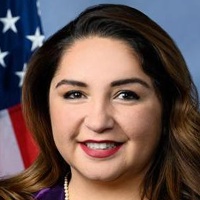
Delia Ramirez
Representative
IL
Delia Ramirez
Representative
IL
This bill imposes significant restrictions on the transfer of specific defense articles and services to Israel. Transfers of listed military equipment, such as certain bombs and ammunition, are prohibited unless Congress first passes a law detailing their specific authorized use. Furthermore, Israel must provide satisfactory written assurances that the items will only be used for those stated purposes and in compliance with international law.
This bill revises federal anti-discrimination laws, including those covering age, race, sex, and disability, by establishing a "motivating factor" standard of proof that makes it easier for plaintiffs to prove discrimination.
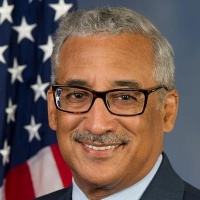
Robert Scott
Representative
VA
Robert Scott
Representative
VA
The Protecting Older Workers Against Discrimination Act of 2025 significantly lowers the standard of proof required for employment discrimination claims under major federal laws like the ADEA, Title VII, and the ADA. It establishes that an illegal factor only needs to be a "motivating factor" in an employer's decision, rather than the sole cause. While this makes it easier to prove discrimination, remedies like damages are limited if the employer can prove they would have made the same decision regardless. These new standards apply immediately to all pending claims upon enactment.
This Act establishes a new federal grant program to provide operating support for high-quality public transit that prioritizes service improvements in underserved communities, while also increasing the federal share for rural transit operating costs.
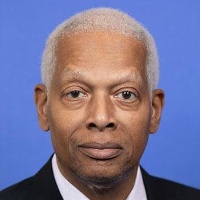
Henry Johnson
Representative
GA
Henry Johnson
Representative
GA
The Stronger Communities through Better Transit Act establishes a new federal grant program to provide operating support for high-quality public transit services. This funding is specifically targeted to improve mobility and environmental outcomes, with a requirement that the majority of funds benefit underserved communities or areas of persistent poverty. The Act also increases the federal share for rural transit operating assistance up to 80%.
This bill reauthorizes and increases the funding for the Historic Preservation Fund through 2035.
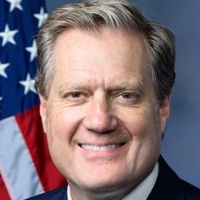
Michael Turner
Representative
OH
Michael Turner
Representative
OH
The Historic Preservation Fund Reauthorization Act extends the life of the Historic Preservation Fund through the year 2035. This legislation also increases the maximum annual funding available for the program from \$150 million to \$250 million. Essentially, this bill ensures continued and increased financial support for preserving historic sites across the nation.
This bill prohibits individuals under 18 from having direct contact with tobacco plants or dried tobacco leaves on farms to strengthen child labor protections in tobacco agriculture.
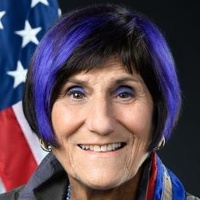
Rosa DeLauro
Representative
CT
Rosa DeLauro
Representative
CT
The Children Don't Belong on Tobacco Farms Act amends child labor laws to prohibit individuals under 18 from having direct contact with tobacco plants or dried tobacco leaves. This change ensures that agricultural work involving direct handling of tobacco falls under federal child labor protections. The bill specifically updates exemptions to reflect this new restriction on youth employment in tobacco agriculture.
This bill prohibits the reduction, elimination, or suspension of federal funding for land-grant colleges and universities unless specifically authorized by Congress.
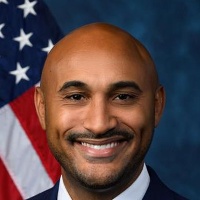
Shomari Figures
Representative
AL
Shomari Figures
Representative
AL
This bill aims to safeguard the financial stability of land-grant colleges and universities. It explicitly prohibits any federal official, including the Secretary of Agriculture, from reducing, eliminating, or suspending their established funding. Funding for these institutions can only be altered through a new act of Congress.
This resolution expresses the House's sense that the severe turmoil in Cameroon warrants the creation of a specific humanitarian parole program by the Department of Homeland Security for Cameroonian nationals fleeing violence.
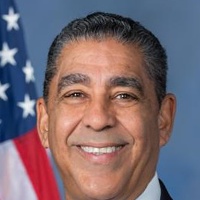
Adriano Espaillat
Representative
NY
Adriano Espaillat
Representative
NY
This resolution expresses the sense of the House that the severe, ongoing violence and humanitarian crisis in Cameroon warrants immediate action. It calls on the Department of Homeland Security to establish a specific humanitarian parole program for Cameroonian nationals fleeing persecution. The bill highlights the dangers returnees face and seeks to address the historical lack of such programs for African nations.
This resolution officially designates the week of May 5 through May 9, 2025, as Teacher Appreciation Week to honor public school teachers and affirms the need to incorporate their expertise into education policy decisions.
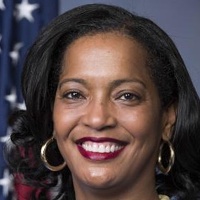
Jahana Hayes
Representative
CT
Jahana Hayes
Representative
CT
This resolution officially designates the week of May 5 through May 9, 2025, as "Teacher Appreciation Week" to honor the dedication of public school teachers nationwide. It recognizes the crucial support teachers offer for key educational policies, including funding for students with disabilities and loan forgiveness programs. Furthermore, the bill affirms that teachers must have a voice in shaping federal, state, and local education policy.
This Act reinstates and provides backpay to unfairly terminated CDC employees and mandates regular reporting from the CDC on employee dismissals.
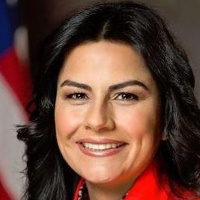
Nanette Barragán
Representative
CA
Nanette Barragán
Representative
CA
The Protect our Public Health Workforce Act addresses the unfair removal of certain CDC federal employees between January 20, 2025, and the enactment of this law. It mandates the reinstatement or placement of these affected employees into equivalent positions, along with providing full backpay. Furthermore, the CDC must regularly report detailed information regarding employee removals to relevant Congressional committees until January 20, 2029.
This Act expands the Occupational Safety and Health Act (OSHA) to explicitly cover all public employees of the United States, states, and local governments.
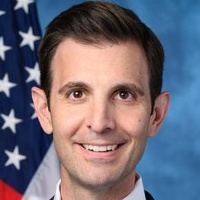
Chris Deluzio
Representative
PA
Chris Deluzio
Representative
PA
The Public Service Worker Protection Act expands the Occupational Safety and Health Act (OSHA) to explicitly cover all public employees, including those working for federal, state, and local governments. This change brings public sector workers under the general protections afforded by OSHA. While the expansion takes effect generally within 90 days, states without an existing OSHA plan are given a three-year transition period before federal oversight applies to their employees.
This bill bans the manufacture, sale, and transfer of specific semiautomatic assault weapons and large-capacity ammunition feeding devices while grandfathering existing possessions and establishing new transfer requirements.
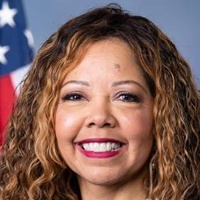
Lucy McBath
Representative
GA
Lucy McBath
Representative
GA
The Assault Weapons Ban of 2025 comprehensively defines and bans the manufacture, sale, and transfer of specific semiautomatic assault weapons and large capacity ammunition feeding devices. The bill grandfathers existing weapons but imposes new requirements for their secure storage and mandates dealer involvement for future private transfers. It also allows federal grant money to be used by states for buy-back programs targeting these banned items.
This Act establishes a pathway for eligible Ukrainian nationals paroled into the U.S. since February 20, 2014, to apply for lawful permanent resident status without paying application fees.
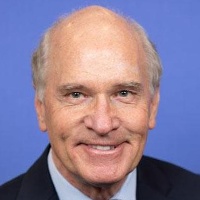
William Keating
Representative
MA
William Keating
Representative
MA
The Ukrainian Adjustment Act of 2025 establishes a pathway for eligible Ukrainian nationals, paroled into the U.S. after February 20, 2014, to apply for lawful permanent resident status (a Green Card). This process requires rigorous security vetting and allows the Secretary of Homeland Security broad waiver authority for most inadmissibility grounds, excluding certain post-2014 criminal activity. Approved applicants will have their status adjusted retroactively to their date of parole, and the application process will be fee-free.
This bill establishes a universal, comprehensive national health insurance program called "Medicare for All" that eliminates patient cost-sharing and transitions the nation away from private insurance duplication.
Pramila Jayapal
Representative
WA
Pramila Jayapal
Representative
WA
The Medicare for All Act establishes a universal, nationwide health insurance program providing comprehensive coverage for all U.S. residents with no out-of-pocket costs. It fundamentally restructures healthcare financing by implementing global budgets for institutions and a new fee schedule for individuals, while phasing out existing federal programs like Medicare and Medicaid. The legislation also sets strict quality standards for providers and creates a dedicated Trust Fund to manage the system's finances.
This bill repeals the Arctic National Wildlife Refuge oil and gas program and designates over 1.5 million acres of the refuge as protected wilderness.
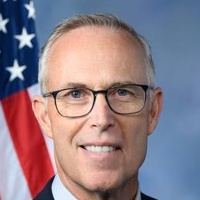
Jared Huffman
Representative
CA
Jared Huffman
Representative
CA
The Arctic Refuge Protection Act officially repeals the previous law authorizing oil and gas leasing in the Arctic National Wildlife Refuge. This legislation simultaneously designates approximately 1.56 million acres within the Refuge as protected wilderness under the National Wilderness Preservation System. The Secretary of the Interior is now required to manage this newly designated land according to strict wilderness preservation standards.
The Equality Act comprehensively prohibits discrimination based on sex, sexual orientation, and gender identity across key areas including public accommodations, employment, housing, credit, and jury service.
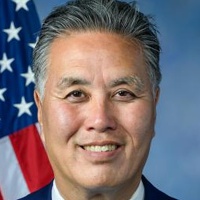
Mark Takano
Representative
CA
Mark Takano
Representative
CA
The Equality Act comprehensively expands federal civil rights protections against discrimination based on sex, sexual orientation, and gender identity across key areas of American life. It amends existing laws to prohibit discrimination in public accommodations, housing, credit, employment, and federal funding. The purpose of the bill is to provide consistent, explicit, and comprehensive remedies for individuals facing bias in these essential sectors.
This resolution expresses support for designating the last Tuesday of April as "APOL1-Mediated Kidney Disease (AMKD) Awareness Day" to promote education and genetic testing for this serious health disparity affecting people of African descent.
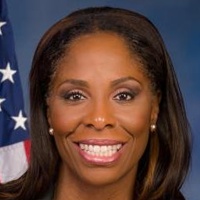
Stacey Plaskett
Representative
VI
Stacey Plaskett
Representative
VI
This resolution expresses the support of Congress for designating the last Tuesday of April as "APOL1-Mediated Kidney Disease (AMKD) Awareness Day." It highlights the disproportionate impact of AMKD, often linked to APOL1 gene variants common in people of African descent, on kidney health. The bill encourages public education and genetic testing to help identify at-risk individuals early. Ultimately, it aims to raise awareness to reduce kidney disease disparities and promote further research into specific treatments.
The Training and Nutrition Stability Act amends the Supplemental Nutrition Assistance Program by removing a specific existing rule and excluding income earned from certain employment and training programs from benefit calculations.
Adriano Espaillat
Representative
NY
Adriano Espaillat
Representative
NY
The Training and Nutrition Stability Act amends the Supplemental Nutrition Assistance Program (SNAP) by removing an outdated rule. Crucially, this bill excludes income earned from specific employment and job training programs when calculating a household's SNAP eligibility. This change aims to encourage participation in workforce development and rehabilitation efforts without negatively impacting food assistance benefits.
This resolution expresses Congress's firm belief that all properly cast absentee ballots from overseas servicemembers and citizens must be counted in accordance with the Uniformed and Overseas Citizens Absentee Voting Act (UOCAVA).
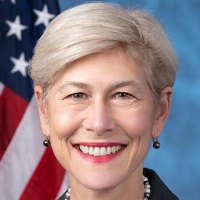
Deborah Ross
Representative
NC
Deborah Ross
Representative
NC
This resolution expresses the sense of Congress that the votes of overseas servicemembers and citizens, cast under the Uniformed and Overseas Citizens Absentee Voting Act (UOCAVA), must be counted and honored. It emphasizes the federal duty of states and localities to uphold UOCAVA requirements and prevent the disenfranchisement of military voters. Furthermore, the bill encourages states to prioritize the timely processing of these absentee ballots and calls on the Attorney General to monitor compliance and act on any violations.
This bill strengthens federal oversight, financial accountability, and transparency for educational institutions receiving federal student aid to protect students from risky operations and misrepresentation.
Mark Takano
Representative
CA
Mark Takano
Representative
CA
The **Preventing Risky Operations from Threatening the Education and Career Trajectories of Students Act of 2025** aims to strengthen federal oversight and accountability for institutions receiving federal student aid. It establishes new financial performance standards, expands student protections against deceptive practices and school closures, and mandates greater transparency regarding institutional spending and student outcomes. Ultimately, the bill seeks to ensure that federal aid supports quality education that leads to financial success for students while penalizing low-performing or fraudulent institutions.