Legislation
The Vote at Home Act of 2025 mandates that states mail federal election ballots to all registered voters two weeks before the election, provides free postage for these ballots, and establishes automatic voter registration through motor vehicle departments.
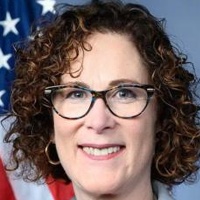
Valerie Hoyle
Representative
OR
Valerie Hoyle
Representative
OR
The Vote at Home Act of 2025 aims to expand access to federal elections by mandating that states mail ballots to all registered voters two weeks before election day and provide free return postage. It also modernizes voter registration by requiring motor vehicle departments to streamline registration forms and automatically register eligible citizens who provide proof of citizenship when obtaining or renewing a driver's license. These provisions are intended to increase voter turnout, reduce in-person lines, and lower administrative costs.
This Act exempts FCC-approved communications projects entirely within a floodplain from standard environmental and historic preservation reviews under NEPA and NHPA.

Gus Bilirakis
Representative
FL
Gus Bilirakis
Representative
FL
The Coastal Broadband Deployment Act streamlines the deployment of communications infrastructure by exempting certain FCC-approved projects located entirely within floodplains from extensive environmental and historic preservation reviews under NEPA and NHPA. This change aims to accelerate the installation or modification of communications facilities that require federal authorization. Essentially, these specific floodplain projects will bypass standard environmental impact statements and historic property assessments.
This bill prohibits the use of federal funds for military parades in D.C. celebrating the personal birthday of any individual, including the President.
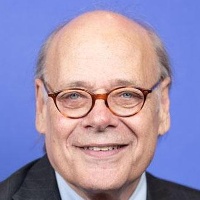
Steve Cohen
Representative
TN
Steve Cohen
Representative
TN
This bill prohibits the use of federal funds for military parades in Washington D.C. intended to celebrate the personal birthday or achievement of any single individual. Congress argues that such events risk significant taxpayer expense and infrastructure damage for personal glorification. Instead, the bill suggests the President celebrate with low-key activities like cake or golf.
This resolution supports the goals of Mathematics and Statistics Awareness Month to promote public understanding and appreciation of these essential fields, while also encouraging greater diversity within the workforce.

Young Kim
Representative
CA
Young Kim
Representative
CA
This resolution officially recognizes April as Mathematics and Statistics Awareness Month to celebrate the vital role these fields play in innovation across science, technology, and the economy. It emphasizes the need to promote public understanding and appreciation for mathematics and statistics. Furthermore, the bill highlights the importance of increasing diversity within these critical quantitative fields to maintain U.S. global leadership.
This Act secures \$5 million annually in grants for youth organizations from fiscal years 2026 through 2030.
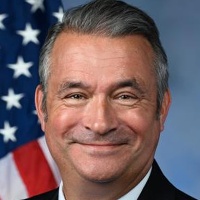
Don Bacon
Representative
NE
Don Bacon
Representative
NE
The Youth Lead Act establishes dedicated federal funding for youth organizations by setting aside \$5 million annually for grants between fiscal years 2026 and 2030. This legislation amends existing law to ensure consistent financial support for these organizations.
This resolution expresses support for designating April 24, 2025, as "Remanufacturing Day" to promote the economic and environmental benefits of restoring used products to like-new condition.
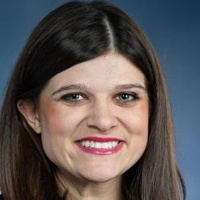
Haley Stevens
Representative
MI
Haley Stevens
Representative
MI
This resolution expresses the support of the House of Representatives for designating April 24, 2025, as "Remanufacturing Day." The day aims to promote awareness of remanufacturing, an industrial process that restores used products to like-new condition. This initiative highlights the significant economic contributions and environmental benefits of the remanufacturing industry.
This Act updates definitions, raises capacity limits, and establishes a working group to promote the commercialization and industrial competitiveness of small modular nuclear reactors (SMRs).
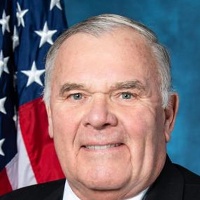
James Baird
Representative
IN
James Baird
Representative
IN
The Small Modular Reactor Commercialization Act of 2025 aims to accelerate the deployment of advanced nuclear technology by updating definitions and increasing size limits for Small Modular Reactors (SMRs) up to 500 MWe. The bill revises capacity limits under the Atomic Energy Act and ensures SMR developers remain eligible for federal funding regardless of size within the new parameters. Furthermore, it establishes a high-level working group tasked with developing strategies to ensure U.S. competitiveness in the global SMR market.
This resolution commends United States Border Patrol Chief Jason Owens upon his retirement after 29 years of exemplary service, recognizing his leadership and dedication to the mission.
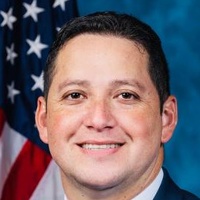
Ernest Gonzales
Representative
TX
Ernest Gonzales
Representative
TX
This resolution formally commends United States Border Patrol Chief Jason Owens upon his retirement after 29 years of dedicated public service. It recognizes his extensive career, highlighting his leadership in establishing key divisions to combat cartel activity and support agents. The bill serves as an official acknowledgment of his faithfulness and commitment to the Border Patrol's mission.
This act prohibits the Federal Motor Carrier Safety Administration from mandating speed limiting devices on interstate commercial vehicles over 26,000 pounds.
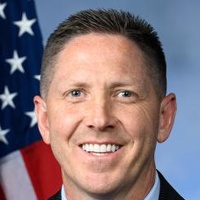
Josh Brecheen
Representative
OK
Josh Brecheen
Representative
OK
The DRIVE Act prohibits the Federal Motor Carrier Safety Administration from mandating speed limiting devices on heavy commercial vehicles engaged in interstate commerce. This legislation removes any federal requirement for trucks over 26,000 pounds to have their top speed electronically capped. In essence, the bill deregulates restrictions concerning speed control technology for large, cross-state eighteen-wheelers.
The NO FAKES Act of 2025 establishes a new federal property right protecting an individual's voice and visual likeness from unauthorized creation and distribution of digital replicas, including provisions for licensing, post-death rights, and liability for online services.

Maria Salazar
Representative
FL
Maria Salazar
Representative
FL
The NO FAKES Act of 2025 establishes a new federal property right protecting an individual's voice and visual likeness from unauthorized creation and distribution as a "Digital Replica" via AI or other means. This right belongs to the individual while alive and transfers to their heirs for a limited time after death, allowing them to control and license their digital identity. The Act outlines specific liability rules for unauthorized use, provides safe harbors for online services that comply with takedown notices, and sets penalties for false claims.
This resolution recognizes the disproportionate impact of climate change on vulnerable communities globally and calls for the U.S. government to promote environmental justice through international cooperation.
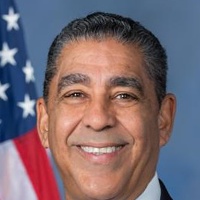
Adriano Espaillat
Representative
NY
Adriano Espaillat
Representative
NY
This resolution recognizes the disproportionate impact of climate change on vulnerable and disadvantaged communities globally, honoring the legacy of environmental justice advocate Cecil Corbin-Mark. It asserts that the U.S. government has a responsibility to work with international partners to promote environmental justice worldwide. The bill urges that global climate action must prioritize the human rights and specific needs of frontline communities.
This resolution expresses Congressional support for designating April 2025 as Parkinson's Awareness Month to promote research, education, and support for those affected by the disease.
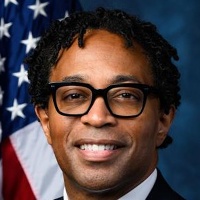
Wesley Bell
Representative
MO
Wesley Bell
Representative
MO
This resolution expresses the strong support of Congress for designating April 2025 as Parkinson's Awareness Month. It highlights the significant impact of Parkinson's disease, which affects over a million Americans, and underscores the urgent need for increased research into treatments and a cure. The bill also recognizes the dedication of patients, caregivers, researchers, and organizations working to improve the lives of those affected by this growing neurological disorder.
The California Clean Coast Act of 2025 permanently prohibits new oil and gas leasing and related activities on the Outer Continental Shelf off the coast of California while preserving existing leases.
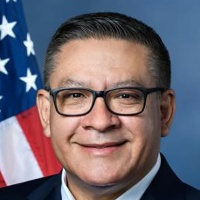
Salud Carbajal
Representative
CA
Salud Carbajal
Representative
CA
The California Clean Coast Act of 2025 permanently prohibits all new federal oil and gas leasing and related activities on the outer Continental Shelf off the coast of California. This measure ensures no future drilling permits can be issued in these sensitive waters. However, the Act explicitly preserves the rights of any existing oil and gas leases already in effect.
The Farmer First Fuel Incentives Act mandates that clean fuel production tax credits require U.S.-grown feedstocks, excludes indirect land use emissions from emissions rate calculations, and extends the credit's availability until 2034.
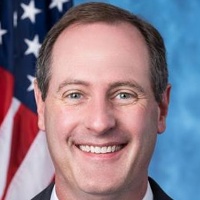
Tracey Mann
Representative
KS
Tracey Mann
Representative
KS
The Farmer First Fuel Incentives Act modifies the clean fuel production tax credit by requiring that qualifying fuels be made from U.S.-grown feedstocks starting in 2025. It also extends the availability of this credit until 2034 and adjusts how emissions rates are calculated by excluding indirect land use changes. Finally, the bill revises a specific emissions factor used in determining the credit amount for fuel produced after 2024.
This act permanently raises the income limits for the mortgage insurance premium tax deduction for middle-class homeowners.
Vern Buchanan
Representative
FL
Vern Buchanan
Representative
FL
The Middle Class Mortgage Insurance Premium Act of 2025 permanently extends the deduction for mortgage insurance premiums and significantly raises the income limits for eligibility. This change allows more middle-class taxpayers to deduct these costs on their federal income taxes. These provisions will apply to tax years beginning after December 31, 2025.
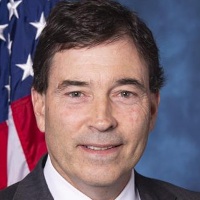
The Transportation Freedom Act incentivizes domestic auto manufacturing with tax breaks, repeals recent EPA emissions rules, eliminates state authority to set stricter emission standards, and mandates a feasibility-based process for setting future national fuel economy and greenhouse gas standards.
Troy Balderson
Representative
OH
Troy Balderson
Representative
OH
The Transportation Freedom Act seeks to bolster domestic auto manufacturing through significant tax incentives tied to high-wage American jobs and strong worker benefits. Simultaneously, the bill repeals recent EPA and NHTSA rules regarding multipollutant emissions and fuel economy standards for light, medium, and heavy-duty vehicles. Furthermore, it centralizes emission control by eliminating the authority of individual states to set standards stricter than the federal level. Finally, it mandates the establishment of new, feasibility-based fuel economy and greenhouse gas standards for future model years, explicitly prohibiting mandates for electric-only vehicle sales.
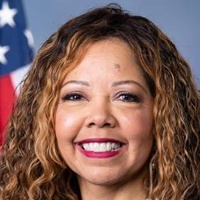
This bill overhauls federal workforce and adult education programs to integrate digital literacy, establish career navigators, and enhance accountability across training services.
Lucy McBath
Representative
GA
Lucy McBath
Representative
GA
The Adult Education Workforce Opportunity and Reskilling for Knowledge and Success Act overhauls existing workforce and adult education laws to better connect Americans with modern job opportunities. It achieves this by integrating digital literacy training, establishing new "College and Career Navigators" for personalized guidance, and authorizing increased federal funding for these services. The bill also modernizes adult education goals to emphasize full civic participation and requires greater transparency in state workforce planning.
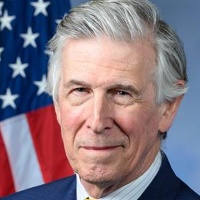
This resolution urges the protection and conservation of at least 50 percent of U.S. land, freshwater, and ocean ecosystems while promoting global diplomatic efforts to achieve similar conservation goals worldwide.
Donald Beyer
Representative
VA
Donald Beyer
Representative
VA
This resolution expresses the urgent need to protect and conserve at least 50 percent of the land, freshwater, and ocean ecosystems within the United States to combat a severe biodiversity crisis. It calls for Congress to support this ambitious goal, recognizing that intact nature is vital for economic stability and climate resilience. Furthermore, the bill encourages the U.S. to promote similar conservation efforts globally through diplomatic engagement while ensuring that conservation actions are equitable and just for all communities.
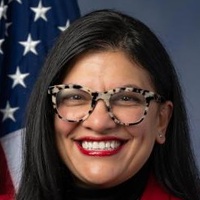
This resolution expresses the sense of Congress in supporting the recognition of April as National Arab American Heritage Month to celebrate the history, culture, and significant contributions of Arab Americans.
Rashida Tlaib
Representative
MI
Rashida Tlaib
Representative
MI
This resolution expresses the strong support of Congress for recognizing April as National Arab American Heritage Month (NAAHM). It celebrates the rich history, diverse culture, and significant contributions of Arab Americans across all sectors of U.S. society. The measure encourages communities nationwide to observe this month with appropriate programs and activities.
This Act improves early childhood nutrition programs by revising eligibility certification for proprietary centers, streamlining serious deficiency reviews, adjusting meal reimbursement limits, updating inflation calculations, and establishing an advisory committee to reduce paperwork burdens.
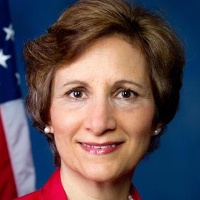
Suzanne Bonamici
Representative
OR
Suzanne Bonamici
Representative
OR
The Early Childhood Nutrition Improvement Act aims to strengthen federal nutrition programs for children by clarifying eligibility rules for for-profit childcare centers and mandating a comprehensive review of serious deficiency processes to ensure fairness and reduce unnecessary state-level burdens. The bill also adjusts meal reimbursement limits, updates inflation tracking for program costs, and establishes an advisory committee to drastically reduce paperwork and modernize administrative requirements for providers. These changes seek to streamline operations, improve consistency, and better support child care providers participating in federal meal programs.