Legislation
This act establishes a federal crime with severe penalties for using shell companies to conceal foreign national contributions in U.S. elections.
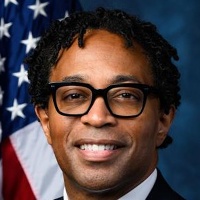
Wesley Bell
Representative
MO
Wesley Bell
Representative
MO
The Shell Company Abuse Act establishes a new federal crime to prevent individuals from using shell companies to conceal illegal election contributions made by foreign nationals in U.S. politics. This legislation specifically targets those who set up or utilize entities with the intent of hiding the source of banned foreign money influencing elections. Violators face up to five years in prison and significant fines for this prohibited activity.
This bill extends the National Flood Insurance Program (NFIP) until December 31, 2026.
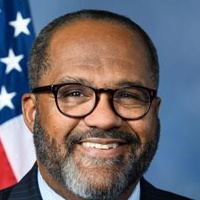
Troy Carter
Representative
LA
Troy Carter
Representative
LA
This bill extends the National Flood Insurance Program (NFIP) by moving its expiration date from September 30, 2023, to December 31, 2026. This action ensures the continuation of federal flood insurance coverage for an additional three years.
This Act establishes a federal tax credit for individuals who donate to high-performing charter school organizations for expansion purposes, subject to annual caps and specific spending requirements.
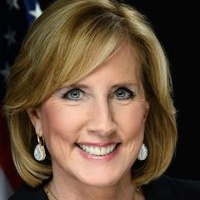
Claudia Tenney
Representative
NY
Claudia Tenney
Representative
NY
The High-Quality Charter Schools Act establishes a new federal tax credit for individuals who donate to eligible, high-performing charter school organizations for expansion purposes. This credit is set at 75% of the qualified contribution, subject to annual income limitations and an overall national cap of $5 billion starting in 2026. The bill also mandates specific spending deadlines for recipient organizations and ensures that participation does not subject these charter schools to government control. These provisions will take effect for tax years beginning after December 31, 2025.
This act codifies the "Rule of Two" into law, requiring federal agencies to set aside contracts above the simplified acquisition threshold for small businesses if at least two qualified small businesses can reasonably bid.
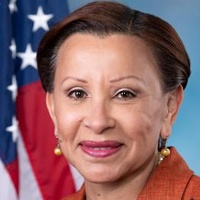
Nydia Velázquez
Representative
NY
Nydia Velázquez
Representative
NY
The Protecting Small Business Competitions Act of 2025 codifies the "Rule of Two" into federal small business contracting law. This rule mandates that federal agencies must set aside contracts exceeding the simplified acquisition threshold for small businesses if they can reasonably expect at least two qualified small business offers. This ensures greater opportunities for small businesses to compete for federal contracts while maintaining fair market pricing.
This bill mandates the creation of a comprehensive National Strategy and detailed Implementation Plan to coordinate federal efforts, reduce bureaucracy, and close the digital divide by ensuring universal access to fast and affordable broadband internet.
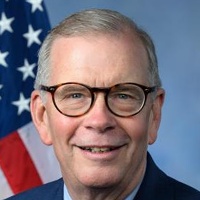
Tim Walberg
Representative
MI
Tim Walberg
Representative
MI
The PLAN for Broadband Act mandates the creation of a comprehensive National Strategy to effectively coordinate federal broadband programs and streamline deployment efforts across the country. This strategy must detail roles, goals, and methods for cutting red tape for state, local, and Tribal governments seeking to expand internet access. Following the strategy, a detailed Implementation Plan will establish concrete timelines, accountability measures, and public check-ins to ensure progress in closing the digital divide. The Government Accountability Office will also study the effectiveness of these plans to ensure taxpayer funds are used efficiently.
This bill prohibits the sale or release of petroleum products from the Strategic Petroleum Reserve to any entity owned, controlled, or influenced by the Chinese Communist Party, and bars exports of SPR oil to the People's Republic of China.
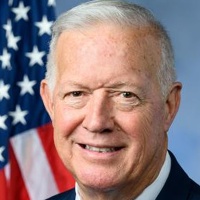
Randy Weber
Representative
TX
Randy Weber
Representative
TX
This bill, the Protecting America’s Strategic Petroleum Reserve from China Act, strictly prohibits the sale or release of oil from the U.S. Strategic Petroleum Reserve (SPR) to any entity owned, controlled, or influenced by the Chinese Communist Party. Furthermore, it prevents the sale of SPR products to non-Chinese buyers if those products are intended for export to the People's Republic of China. The legislation aims to safeguard U.S. energy reserves from benefiting the Chinese government.
This Act establishes a commission to study and propose methods for expanding the size of the U.S. House of Representatives due to population growth since 1929.

Haley Stevens
Representative
MI
Haley Stevens
Representative
MI
The House Expansion Commission Act establishes a commission to study the feasibility and structure of increasing the size of the U.S. House of Representatives, which has remained fixed at 435 members since 1929 despite massive population growth. This body is tasked with investigating various expansion methods, logistical challenges, and the impact on representation. The Commission must deliver a final report with concrete proposals for expansion to Congress within two years of its first meeting.
The ASTRO Act authorizes the government to pay for necessary transportation for astronauts returning from space missions before they receive medical clearance to drive.
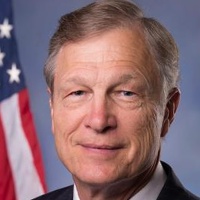
Brian Babin
Representative
TX
Brian Babin
Representative
TX
The Astronaut Safe Temporary Ride Options (ASTRO) Act authorizes the government to pay for necessary transportation for astronauts returning from space missions before they receive medical clearance to drive. This provision covers travel related to medical research, monitoring, diagnosis, or other approved official duties. NASA is required to submit an annual report to Congress detailing the use and cost of this specialized transportation.
This resolution demands the President and HHS Secretary immediately provide Congress with all documents related to the potential elimination, downsizing, or restructuring of the Administration for Community Living (ACL).
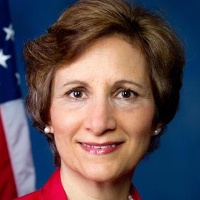
Suzanne Bonamici
Representative
OR
Suzanne Bonamici
Representative
OR
This resolution is an official request demanding that the President and the Secretary of Health and Human Services immediately provide Congress with all unredacted documents related to the potential elimination, downsizing, or significant restructuring of the Administration for Community Living (ACL). Congress specifically seeks information regarding any actions that would impact the ACL's ability to carry out key federal laws, such as the Older Americans Act. The required documents must be transmitted within 14 days of the resolution's passage.
This bill prohibits the Small Business Administration from facilitating voter registration and restricts recipients of SBA assistance from engaging in such activities.
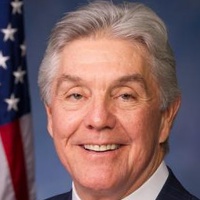
Roger Williams
Representative
TX
Roger Williams
Representative
TX
The Business over Ballots Act reaffirms that the Small Business Administration's (SBA) primary mission is solely to support small businesses. This legislation explicitly prohibits the SBA from engaging in or facilitating voter registration activities. Furthermore, it mandates that all new contracts and existing assistance agreements must restrict recipients from using SBA funds for voter registration efforts.
This Act establishes cost-based payment rules under Medicare for certain algorithm-based healthcare services utilizing AI or machine learning, effective January 1, 2026.
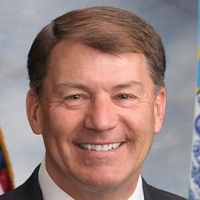
Mike Rounds
Senator
SD
Mike Rounds
Senator
SD
The Health Tech Investment Act aims to establish specific, cost-based payment rules for advanced algorithm-based healthcare services under Medicare, starting in 2026. This ensures that services utilizing AI or machine learning receive appropriate payment based on manufacturer-submitted costs while in the New Technology Ambulatory Payment Classification (NTAP). The bill also clarifies eligibility for these new technologies within the Medicare outpatient payment system.
This act dismantles the Department of Education by transferring its key programs—including K-12 funding, student aid, and special education—to the Departments of Health and Human Services, the Treasury, Labor, and State, while establishing new, flexible block grants for states.
Mike Rounds
Senator
SD
Mike Rounds
Senator
SD
The Returning Education to Our States Act fundamentally dismantles the Department of Education by transferring most of its core functions, including K-12 and higher education funding, to the Departments of Health and Human Services, the Treasury, and Labor. This bill replaces existing federal education structures with flexible block grants managed by these non-education agencies, giving states greater discretion over funding use. The legislation also mandates new federal oversight, data reporting, and auditing requirements for states receiving these block grants.
This bill updates federal workforce and adult education laws to modernize skill definitions, increase funding, establish new career navigator roles, and integrate libraries to improve jobseeker guidance and instructor professional development.
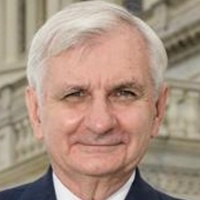
John Reed
Senator
RI
John Reed
Senator
RI
The Adult Education Workforce Opportunity and Reskilling for Knowledge and Success Act aims to modernize workforce development by establishing "college and career navigators" to guide job seekers and integrating digital literacy into required training. The bill also updates the Adult Education and Family Literacy Act to emphasize full community participation and significantly increases authorized federal funding over five years. Ultimately, it seeks to improve career guidance, professionalize adult education staff, and ensure programs address essential modern skills.
This Act mandates annual reporting and risk-based testing of imported organic animal feedstuffs for prohibited residues, with immediate consequences for shipments that fail testing.
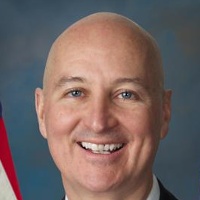
Pete Ricketts
Senator
NE
Pete Ricketts
Senator
NE
The Organic Imports Verification Act of 2025 mandates annual reporting to Congress on residue testing for imported organic animal feedstuffs, especially those shipped in bulk. The Secretary of Agriculture must develop a risk-based plan to determine which imported organic feeds will undergo annual residue testing. If testing reveals prohibited substances above established organic limits, the affected feedstuff cannot be sold or labeled as organic.
This Act shifts authority over certain administrative subpoenas to the Secretary of Homeland Security and establishes strict, judicially reviewable nondisclosure requirements for recipients of those subpoenas to protect ongoing investigations.
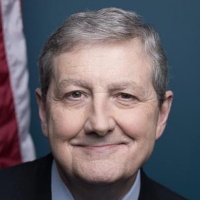
John Kennedy
Senator
LA
John Kennedy
Senator
LA
The Targeting Child Predators Act of 2025 shifts authority over certain administrative subpoenas from the Treasury to Homeland Security and imposes strict 180-day nondisclosure requirements on recipients when an investigation is certified as sensitive. This Act establishes a new judicial review process allowing recipients to challenge these secrecy orders in federal court. Courts can uphold or extend the nondisclosure period only if disclosure risks endangering lives, flight from prosecution, or evidence tampering.
This Act establishes standards for content provenance information and detection methods to protect the integrity of digital media against unauthorized synthetic and deepfaked content.

Maria Cantwell
Senator
WA
Maria Cantwell
Senator
WA
The Content Origin Protection and Integrity from Edited and Deepfaked Media Act of 2025 aims to combat the challenges posed by AI-generated and altered content. It establishes requirements for attaching and protecting digital labels (content provenance information) that identify the origin of media. The bill directs federal agencies to develop standards for content detection and mandates that sellers of AI creation tools facilitate this labeling. Enforcement will be handled by the FTC, state attorneys general, and private citizens.
This act establishes dedicated, long-term federal funding for Title X family planning clinics and sets specific guidelines for nondirective pregnancy counseling.

Tina Smith
Senator
MN
Tina Smith
Senator
MN
The Expanding Access to Family Planning Act establishes a dedicated Title X Clinic Fund to provide consistent, long-term financial support for family planning clinics. This funding, set for ten years, includes annual allocations for services and facility improvements. The bill also mandates that clinics receiving these funds offer comprehensive, non-directive counseling options to patients with positive pregnancy tests.
The Coastal Communities Ocean Acidification Act of 2025 updates federal law to enhance collaboration with Indigenous communities and stakeholders in ocean acidification research, monitoring, and adaptation planning.

Lisa Murkowski
Senator
AK
Lisa Murkowski
Senator
AK
The Coastal Communities Ocean Acidification Act of 2025 amends existing federal law to strengthen research and monitoring efforts related to ocean acidification. This bill significantly enhances collaboration by mandating increased input from Indigenous communities, industry, and local stakeholders in federal planning and advisory roles. It also requires the Secretary of Commerce to prioritize working with State, local, and Tribal governments already engaged in vulnerability assessments. Finally, the Act includes technical corrections to ensure clarity and accuracy within the existing legislation.
This Act establishes and funds regional "Ocean Innovation Clusters" to foster sustainable growth and collaboration within the "Blue Economy."
Lisa Murkowski
Senator
AK
Lisa Murkowski
Senator
AK
The Ocean Regional Opportunity and Innovation Act of 2025 establishes "Ocean Innovation Clusters" across the nation to boost sustainable economic activity in the "Blue Economy." The Secretary of Commerce will designate at least seven geographically diverse clusters composed of businesses, academia, and government partners. These clusters will receive federal grants and support to foster innovation, workforce development, and cross-sector collaboration in ocean-related industries. The Act also mandates the creation of physical collaboration hubs to support these regional efforts.
The NO TIME TO Waste Act establishes a new USDA office, creates grant programs, and mandates educational campaigns to achieve a 50% reduction in U.S. food loss and waste by 2030.
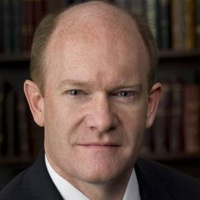
Christopher Coons
Senator
DE
Christopher Coons
Senator
DE
The NO TIME TO Waste Act establishes a new Office of Food Loss and Waste within the USDA to coordinate efforts toward a national goal of cutting food waste by 50% by 2030. The bill creates new grant programs to improve food recovery infrastructure and fund public-private partnerships for waste reduction at the local level. It also mandates new federal contractor requirements for food donation and launches a national education campaign focused on consumer behavior and food labeling.