Legislation
This Act increases the maximum financial assistance available to disabled veterans for necessary home health service improvements and mandates annual inflation adjustments to these limits.
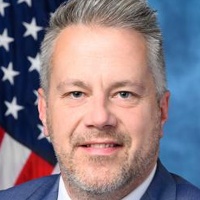
Eric Sorensen
Representative
IL
Eric Sorensen
Representative
IL
The Autonomy for All Disabled Veterans Act significantly increases the maximum financial assistance available to disabled veterans for necessary home improvements and structural alterations provided through home health services, raising certain limits to \$10,000. Furthermore, this legislation mandates that these housing-related benefit amounts be automatically adjusted each year to keep pace with the rate of inflation based on the residential home construction cost index. These new, higher spending limits apply only to veterans who apply for these specific benefits after the Act is enacted.
This Act prohibits federal funding for solar projects on prime farmland and removes various federal tax credits for solar energy property placed on that same high-quality agricultural land.
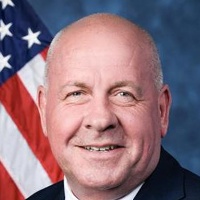
David Taylor
Representative
OH
David Taylor
Representative
OH
The Protecting American Farmland Act prohibits federal agencies from funding solar energy projects that convert prime farmland. Furthermore, the bill eliminates several key federal tax credits—including the residential clean energy credit and various production/investment credits—for solar energy facilities constructed on land defined as prime farmland. These restrictions apply to projects placed into service after the law's enactment date.
This Act establishes severe penalties for fraud targeting critical infrastructure and mandates sanctions, including asset blocking and entry bans, against foreign persons who knowingly access such systems to harm U.S. national security.
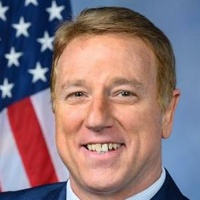
Patrick Fallon
Representative
TX
Patrick Fallon
Representative
TX
The Protecting Critical Infrastructure Act significantly increases penalties for fraud targeting essential systems like power grids and communication networks, mandating decades-long prison sentences. Furthermore, it requires the President to impose strict sanctions, including asset freezes and entry bans, on foreign persons who knowingly access U.S. critical infrastructure to harm national security. The bill grants the President authority under IEEPA to enforce these measures, with specific reporting requirements to Congress.
This bill establishes an annual, capped regulatory budgeting system managed by the OMB Director to control the total amount of new, unfunded regulatory costs imposed by federal agencies.
Patrick Fallon
Representative
TX
Patrick Fallon
Representative
TX
The REG Budgeting Act of 2025 establishes a system requiring the OMB Director to set annual caps on the total new, unfunded regulatory costs agencies can impose on the public. Any proposed limit that results in a net increase in these costs requires Congressional approval to take effect. The Act mandates strict reporting and review processes, allowing affected parties to challenge agency rules that violate these new cost control provisions.
This Act establishes federal grants for states and intermediary organizations to upgrade and improve child care facilities nationwide, prioritizing safety and access for low-income children.
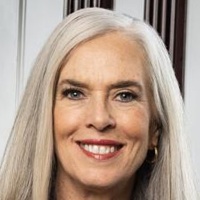
Katherine Clark
Representative
MA
Katherine Clark
Representative
MA
The Child Care Infrastructure Act establishes federal grants to help states upgrade and improve child care facilities nationwide, focusing on safety and capacity. This funding aims to support the building, renovation, and expansion of centers, prioritizing those serving low-income families and infants. The bill also authorizes grants to intermediary organizations to provide technical assistance and financing tools to providers. Overall, $10 billion is authorized to improve the physical infrastructure supporting early childhood education.
The Small Business Tax Relief Act introduces graduated corporate tax rates, modifies partnership interest valuation for service providers, tightens tax rules for investment management partners, enhances the self-employment tax deduction for lower earners, and increases the excise tax on corporate stock buybacks.
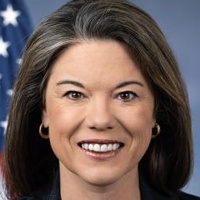
Angie Craig
Representative
MN
Angie Craig
Representative
MN
The Small Business Tax Relief Act introduces several changes aimed at modifying corporate and partnership taxation. Key provisions include establishing a lower graduated tax rate for small corporations, altering the tax treatment of partnership interests received for services, and reclassifying certain investment gains for investment management partners as ordinary income. Additionally, the Act enhances the self-employment tax deduction for lower-income individuals and increases the excise tax on corporate stock repurchases.
This act modernizes federal support for building out high-speed, symmetrical 100 Mbps broadband internet infrastructure in rural areas through prioritized grants, loans, and guarantees.
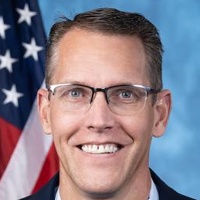
Randy Feenstra
Representative
IA
Randy Feenstra
Representative
IA
The Rural Broadband Modernization Act updates federal support for building high-speed internet infrastructure in underserved rural areas. It establishes new minimum buildout requirements of 100 Mbps symmetrical speed and prioritizes funding for the most unserved communities. The Act authorizes significant annual appropriations through fiscal year 2030 to provide grants, loans, and loan guarantees for these modernization projects.
This bill mandates enhanced pre-loan counseling detailing debt-to-income ratios and requires quarterly loan balance disclosures during non-payment periods to ensure students know the true cost of their federal student loans.
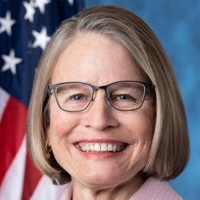
Mariannette Miller-Meeks
Representative
IA
Mariannette Miller-Meeks
Representative
IA
The Know Before You Owe Federal Student Loan Act of 2025 aims to increase transparency for student loan borrowers. It requires schools to provide detailed pre-loan counseling comparing estimated payments to income and clearly outlining total debt before a student accepts any federal loan funds. Furthermore, lenders must send quarterly statements to borrowers during non-payment periods, detailing accrued interest and warning about the impact of interest capitalization. This legislation mandates that students actively confirm the exact loan amount they wish to borrow after receiving this comprehensive information.
This act updates federal law to establish a uniform, three-part test for defining "obscene" visual material transmitted across state lines.
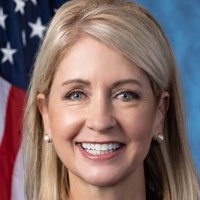
Mary Miller
Representative
IL
Mary Miller
Representative
IL
The Interstate Obscenity Definition Act updates federal law to establish a clear, three-part standard for defining "obscene" visual material transmitted across state lines. This standard requires the material to appeal to an unhealthy interest, depict specific sexual conduct, and lack serious value. The bill also standardizes the definitions of sexual terms used in this context.
This Act designates Venezuela for Temporary Protected Status (TPS) for its nationals for an 18-month period, establishing eligibility requirements and a $360 application fee with a waiver option.
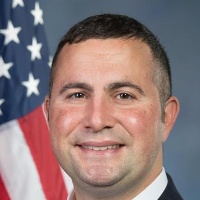
Darren Soto
Representative
FL
Darren Soto
Representative
FL
The Venezuela TPS Act of 2025 officially designates Venezuela for Temporary Protected Status (TPS) for an initial 18-month period. This allows eligible Venezuelan nationals who have been continuously present in the U.S. since the law's enactment to apply for TPS. The bill also outlines procedures for travel authorization and sets a $360 application fee, with provisions for fee waivers.
This act establishes a federal grant program to help law enforcement officers afford and access childcare during their off-hours.
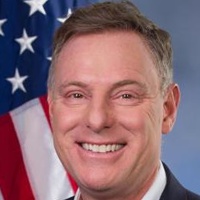
Scott Peters
Representative
CA
Scott Peters
Representative
CA
The Providing Child Care for Police Officers Act of 2025 establishes a new federal grant program to help law enforcement officers secure childcare during non-traditional hours. Administered by HHS, these competitive grants will fund local agencies to offer subsidies, start new facilities, or cover operational costs for officers. The program requires state agencies to apply and secure matching funds, with a sunset date of September 30, 2030.
This Act establishes a national strategy to combat mental health stigma and improve behavioral health services, research, and workforce diversity within Asian American, Native Hawaiian, and Pacific Islander (AANHPI) communities.
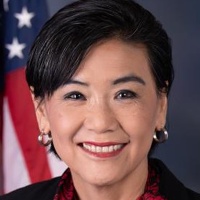
Judy Chu
Representative
CA
Judy Chu
Representative
CA
The Stop Mental Health Stigma in Our Communities Act of 2025 aims to address the significant mental health disparities and high suicide rates within Asian American, Native Hawaiian, and Pacific Islander (AANHPI) communities. The bill mandates the creation of a national behavioral health outreach strategy tailored to the diverse AANHPI population to reduce stigma and increase culturally competent care. Furthermore, it requires comprehensive systematic reviews and reports on the AANHPI youth mental health crisis and strategies to increase the number of AANHPI behavioral health professionals.
This bill phases out the enhanced federal funding match for Medicaid coverage provided to low-income adults between 2027 and 2034, while establishing new rules for states that have not yet expanded Medicaid.
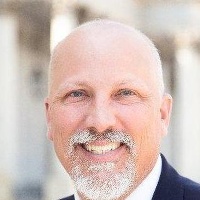
Chip Roy
Representative
TX
Chip Roy
Representative
TX
The Ending Medicaid Discrimination Against the Most Vulnerable Act modifies the enhanced federal funding structure for Medicaid coverage provided to low-income adults. This bill establishes a gradual phase-out of the enhanced Federal Medical Assistance Percentage (FMAP) between 2027 and 2034, with the extra funding ending entirely in 2035. Furthermore, the legislation alters the incentives for states that have not yet expanded Medicaid coverage, potentially limiting future enhanced funding for those states if they expand after 2024.
The ELECT Act of 2025 terminates taxpayer financing for presidential election campaigns by ending the designation option on tax returns and dissolving the Presidential Election Campaign Fund and Primary Matching Payment Account.
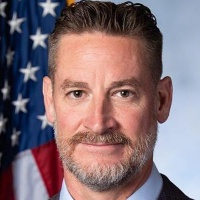
W. Steube
Representative
FL
W. Steube
Representative
FL
The ELECT Act of 2025 aims to eliminate taxpayer financing for presidential election campaigns. This bill ends the ability for taxpayers to designate income tax payments to the Presidential Election Campaign Fund starting after the 2024 tax year. Furthermore, it terminates the Presidential Election Campaign Fund and the Presidential Primary Matching Payment Account, transferring any remaining balances to the Treasury to reduce the national deficit.
This bill expands the Family and Medical Leave Act (FMLA) to grant eligible employees up to 26 weeks of leave to care for a covered service member or for their own service-related injuries, while also broadening the definition of "family" for military leave purposes.
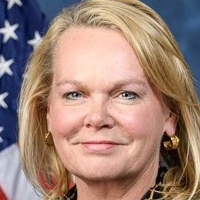
April McClain Delaney
Representative
MD
April McClain Delaney
Representative
MD
The MIL FMLA Act significantly expands existing family and medical leave protections under the FMLA for military families and veterans. It broadens the definition of covered family relationships to include domestic partners and other close relations when caring for a service member. The bill establishes a new entitlement of up to 26 workweeks of leave for caring for a covered service member or for a service member's own serious service-related injury or illness. These changes also apply to federal civilian employees, updating definitions and leave entitlements within Title 5 of the U.S. Code.
This Act allows federal law enforcement officers to receive retirement credit for previously capped overtime pay upon making a lump-sum payment, while also expanding eligibility for availability pay to certain other federal employees.
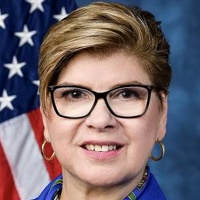
Nellie Pou
Representative
NJ
Nellie Pou
Representative
NJ
The LEO Fair Retirement Act of 2025 addresses compensation issues for federal law enforcement officers (LEOs) by allowing them to receive full retirement credit for previously capped overtime premium pay, provided they make a required lump-sum payment. The Act also expands eligibility for "availability pay" to several new categories of federal law enforcement personnel. Finally, it provides a non-refundable federal tax credit for officers receiving certain lump-sum payments related to their retirement annuity calculations.
The Women’s and Family Protection Act of 2025 amends federal homelessness definitions to better include marginalized communities and prioritizes emergency grants for nonprofits serving vulnerable populations like women, children, and victims of gender-based violence.
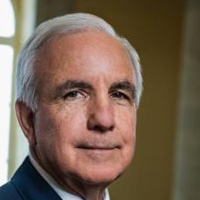
Carlos Gimenez
Representative
FL
Carlos Gimenez
Representative
FL
The Women’s and Family Protection Act of 2025 amends federal definitions related to homelessness to explicitly include residents of indigenous, rural, or marginalized communities and clarifies protections for survivors of gender-based violence. The bill also establishes a dedicated set-aside within the Emergency Solutions Grants Program, prioritizing funding for nonprofit organizations that serve high-needs populations like homeless women, children, and victims of trauma. These grants will support operating costs, outpatient services, and housing relocation assistance for vulnerable individuals. Finally, the Act mandates specific reporting requirements and technical assistance focused on trauma-informed care for service providers receiving these funds.
This Act exempts discharges from the use of Forest Service-approved products for fire control and suppression from certain federal water pollution permit requirements.
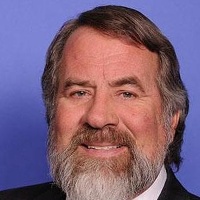
Doug LaMalfa
Representative
CA
Doug LaMalfa
Representative
CA
The Forest Protection and Wildland Firefighter Safety Act of 2025 exempts discharges resulting from the use of Forest Service-approved products for fire control and suppression from certain federal water pollution permit requirements. This change streamlines firefighting operations by removing unnecessary permitting hurdles for using approved suppression agents. The Act also includes technical updates to related environmental statutes.
This Act increases death gratuities and funeral expense allowances for federal employees killed in the line of duty, adjusts related payments for service members, and authorizes emergency appropriations to cover these increased obligations following disasters or attacks.
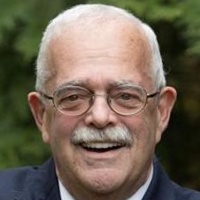
Gerald Connolly
Representative
VA
Gerald Connolly
Representative
VA
The Honoring Civil Servants Killed in the Line of Duty Act significantly increases the death gratuity and funeral expense benefits for federal employees who die in the line of duty. This legislation establishes a new, indexed $\$100,000$ death gratuity payment and raises the maximum funeral expense reimbursement to $\$8,800$. The bill also updates payment rules for federal employees serving overseas and makes corresponding adjustments to death gratuities for certain military-related federal service deaths. Finally, it authorizes emergency supplemental appropriations to ensure agencies can cover these increased benefit costs following major disasters or attacks.
This Act mandates that certain retail establishments must allow customers with certified medical conditions to use non-public restrooms if no public facility is available.

Eleanor Norton
Representative
DC
Eleanor Norton
Representative
DC
The Restroom Access Act of 2025 mandates that certain retail establishments must allow customers with certified medical conditions to use non-public restrooms under specific circumstances. To qualify, the customer must present an official ID card confirming their eligible medical need, and no public restroom must be available. This law aims to provide necessary accommodations for individuals with conditions like Crohn's disease or those requiring ostomy devices.