Legislation
This bill establishes a grant program to fund nonprofit organizations providing free, on-site eye care services, including exams and glasses, to public school students.
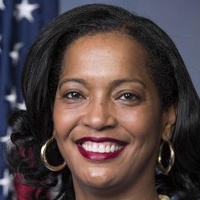
Jahana Hayes
Representative
CT
Jahana Hayes
Representative
CT
The See the Board Act establishes a new federal grant program administered by the Secretary of Health and Human Services. This program aims to fund nonprofit organizations that provide free, on-site eye care services, including exams and glasses, directly to students in public elementary and secondary schools. The goal is to improve student access to necessary vision care through mobile or portable clinics.
The TEENS Act modifies child labor laws to permit teenagers to work up to 24 hours per week between 7:00 a.m. and 9:00 p.m. during school weeks without being considered oppressive child labor.
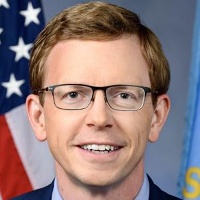
Dusty Johnson
Representative
SD
Dusty Johnson
Representative
SD
The Teenagers Earning Everyday Necessary Skills (TEENS) Act modifies existing child labor laws to provide clearer guidelines for student employment during the school year. This bill sets a specific limit, stating that a teenager's work will not be deemed "oppressive child labor" based on hours if they work 24 hours or less per week. Furthermore, work hours must fall strictly between 7:00 a.m. and 9:00 p.m. on any day school is in session.
This Act establishes the national Wildlife Confiscations Network to coordinate the proper care and placement of live animals seized by federal authorities during wildlife smuggling enforcement.
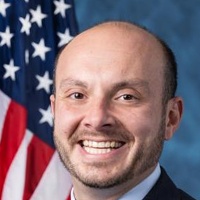
Andrew Garbarino
Representative
NY
Andrew Garbarino
Representative
NY
The Wildlife Confiscations Network Act of 2025 establishes a national, voluntary partnership—the Wildlife Confiscations Network—to coordinate the care and placement of illegally smuggled or confiscated wildlife. This network will utilize qualified animal care facilities to ensure seized animals receive proper triage, housing, and forensic documentation. The Act authorizes up to $5 million annually from Fiscal Year 2026 through 2030 to support this critical infrastructure.
The Leadership in CET Act establishes a temporary USPTO pilot program to expedite the examination of patent applications for critical and emerging technologies like AI and semiconductors.
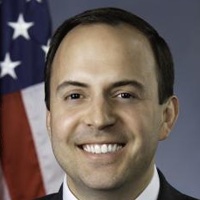
Lance Gooden
Representative
TX
Lance Gooden
Representative
TX
The Leadership in CET Act establishes a temporary pilot program at the U.S. Patent and Trademark Office (USPTO) to expedite the examination of patent applications for critical and emerging technologies like AI and quantum computing. This fast-track system aims to boost U.S. innovation leadership by prioritizing these key technological advancements. The program will run for five years or until 15,000 applications are accepted, with provisions for potential renewal.
This act establishes fixed, non-renewable 18-year terms for future Supreme Court Justices and outlines a staggered appointment schedule, while also creating a temporary mechanism for filling vacancies below the nine-justice quorum.

Henry Johnson
Representative
GA
Henry Johnson
Representative
GA
The Supreme Court Tenure Establishment and Retirement Modernization Act of 2025 establishes fixed, non-renewable 18-year terms for all future Supreme Court Justices, with appointments staggered every two years. This legislation also outlines a process for phasing out current Justices upon the confirmation of new appointees. Finally, it grants the Chief Justice the authority to temporarily fill sudden vacancies below the standard nine-justice level using a randomly selected retired Justice.
This bill allows National Guard and Reserve members eligible for federal employee health benefits to enroll in TRICARE Reserve Select starting January 1, 2026.
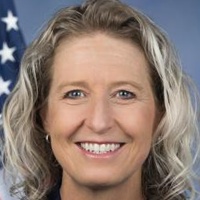
Jennifer Kiggans
Representative
VA
Jennifer Kiggans
Representative
VA
The Servicemember Healthcare Freedom Act of 2025 aims to ensure continuous healthcare coverage for National Guard and Reserve members who are also federal employees. This bill removes the current restriction preventing these service members from enrolling in TRICARE Reserve Select (TRS) if they are eligible for the Federal Employee Health Benefits (FEHB) program. By allowing earlier enrollment in TRS starting January 1, 2026, the Act seeks to eliminate potential healthcare gaps during mobilization.
This Act mandates that websites and software applications used by covered entities must be accessible to people with disabilities and directs federal agencies to create and enforce specific digital accessibility standards.
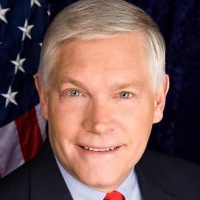
Pete Sessions
Representative
TX
Pete Sessions
Representative
TX
The Websites and Software Applications Accessibility Act of 2025 clarifies that the Americans with Disabilities Act (ADA) requires all websites and applications used by covered entities to be accessible to people with disabilities. This legislation directs federal agencies to establish and regularly update specific digital accessibility standards for businesses, government entities, and employers. Ultimately, the Act aims to eliminate online discrimination by providing clear rules, technical assistance, and enforcement mechanisms, including the right for individuals to sue directly for non-compliance.
This Act establishes the new Forest Conservation Easement Program to protect and restore private and Tribal forests through easements, while simultaneously repealing the existing Healthy Forests Reserve Program.
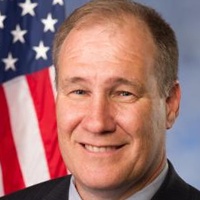
Trent Kelly
Representative
MS
Trent Kelly
Representative
MS
The Forest Conservation Easement Program Act of 2025 establishes a new federal program to protect and restore private and Tribal forest lands through conservation easements. This program offers two types of easements—Forest Land and Forest Reserve—with federal cost-share assistance available to eligible entities and landowners, prioritizing working forests and species recovery. The Act also allocates $100 million annually for this new program from 2026 through 2030 while simultaneously repealing the existing Healthy Forests Reserve Program, ensuring existing contracts remain honored. Finally, Congress stipulates that the costs associated with implementing this Act must be offset by savings or new revenue.
This Act establishes a Bill of Rights for students at federally funded public colleges and universities, protecting free speech, association, and ensuring fair procedures for student group recognition, funding, and event security fees.
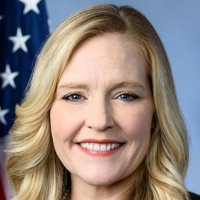
Erin Houchin
Representative
IN
Erin Houchin
Representative
IN
The Students Bill of Rights Act of 2025 establishes new federal protections for free speech and association at federally funded public colleges and universities. This bill sets clear, objective standards for student group recognition, the allocation of student activity funds, and the assessment of security fees for events. It grants students the right to sue institutions that violate these rights and outlines penalties, including the potential loss of federal funding, for non-compliance.
The Real Education and Access for Healthy Youth Act of 2025 establishes federal grant programs to fund comprehensive, evidence-informed, and culturally responsive sex education and youth-friendly sexual health services, prioritizing underserved communities.
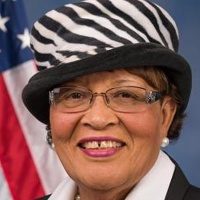
Alma Adams
Representative
NC
Alma Adams
Representative
NC
The Real Education and Access for Healthy Youth Act of 2025 aims to establish comprehensive, evidence-based, and culturally responsive sex education and health services for young people aged 10 to 29. The bill creates competitive grant programs to fund sex education in K-12 schools and higher education, support educator training, and improve access to youth-friendly sexual health services, especially for underserved communities. It explicitly mandates that all funded programs must be medically accurate, inclusive of all identities, and centered on principles of consent and reproductive justice. The Act authorizes $100 million annually and repeals prior funding streams dedicated to abstinence-only education.
The Flight Education Access Act increases federal student loan limits for students in accredited, FAA Part 141 flight training programs while imposing new disclosure requirements and program completion tracking.
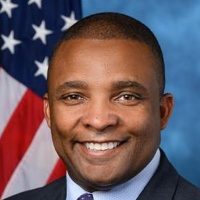
Donald Davis
Representative
NC
Donald Davis
Representative
NC
The Flight Education Access Act increases federal student loan limits specifically for students enrolled in eligible undergraduate flight training programs that meet FAA Part 141 requirements. This legislation also mandates new disclosure requirements for schools regarding loan terms and establishes performance tracking for these programs. Finally, the Act directs the GAO to report on the implementation and impact of these changes within two years.
This bill prohibits graduate medical schools from receiving federal funding if they mandate adherence to certain diversity, equity, and inclusion (DEI) tenets or establish DEI offices.
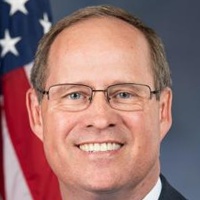
Gregory Murphy
Representative
NC
Gregory Murphy
Representative
NC
This bill prohibits graduate medical schools from receiving federal funding or participating in federal student loan programs unless they certify they do not mandate adherence to specific diversity, equity, and inclusion (DEI) tenets. This certification bans forcing faculty, staff, or students to pledge beliefs regarding inherent group status or collective guilt, and prevents the establishment of offices that compel such adherence. Furthermore, accrediting agencies cannot require medical programs to adopt policies conflicting with these restrictions to maintain accreditation.
The Social Security Enhancement and Protection Act of 2025 increases minimum benefits for long-term low earners, adds a longevity bonus for long-term beneficiaries, extends student benefits until age 26, modifies the taxation of high earners, lowers the benefit calculation rate for high earners, and increases the OASDI employment tax rate starting in 2026.

Gwen Moore
Representative
WI
Gwen Moore
Representative
WI
The Social Security Enhancement and Protection Act of 2025 aims to strengthen the Social Security system through several key changes. It increases the minimum benefit for long-term, low-earning workers and introduces a new bonus payment for long-term beneficiaries. The bill also extends student benefits until age 26 and modifies the taxation of high earners above the current contribution cap. Finally, it increases the OASDI employment tax rate starting in 2026.
The Preparing for the Future Act establishes a grant program providing up to \$8,000 annually for students training to become school psychologists who commit to working in underserved schools for four years after graduation.
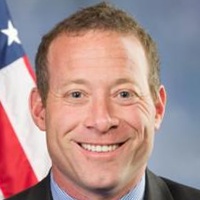
Josh Gottheimer
Representative
NJ
Josh Gottheimer
Representative
NJ
The Preparing for the Future Act establishes a new federal grant program to support students pursuing degrees to become school psychologists. Eligible students can receive up to $8,000 annually, provided they maintain strong academic standing and commit to serving full-time in high-need schools for four years after graduation. Failure to complete this service obligation will convert the grant funding into a repayable federal loan with accrued interest. This initiative aims to increase the number of qualified school psychologists in underserved educational settings.
This bill revises federal anti-discrimination laws, including those covering age, race, sex, and disability, by establishing a "motivating factor" standard of proof that makes it easier for plaintiffs to prove discrimination.
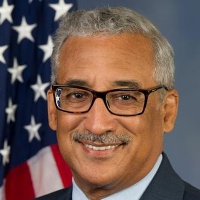
Robert Scott
Representative
VA
Robert Scott
Representative
VA
The Protecting Older Workers Against Discrimination Act of 2025 significantly lowers the standard of proof required for employment discrimination claims under major federal laws like the ADEA, Title VII, and the ADA. It establishes that an illegal factor only needs to be a "motivating factor" in an employer's decision, rather than the sole cause. While this makes it easier to prove discrimination, remedies like damages are limited if the employer can prove they would have made the same decision regardless. These new standards apply immediately to all pending claims upon enactment.
This bill establishes a mandatory, science-based national organization to standardize health, safety, and medication rules across participating state horse racing commissions.

Tom Cotton
Senator
AR
Tom Cotton
Senator
AR
The Racehorse Health and Safety Act of 2025 creates a mandatory national organization, the Racehorse Health and Safety Organization (RHSO), to standardize health, safety, and medication rules across participating states. This body will establish uniform, science-based regulations for medication control and racetrack safety, enforced through a comprehensive disciplinary framework. The legislation also mandates the creation of expert committees to continuously update these standards for specific horse breeds. Participation requires states to adopt specific anti-deceptive sales laws and adhere to the RHSO's overriding rules.
This bill permanently establishes a 7-year recovery period for the depreciation of motorsports entertainment complexes for tax purposes.

Todd Young
Senator
IN
Todd Young
Senator
IN
The Motorsports Fairness and Permanency Act of 2025 permanently establishes a 7-year recovery period for the depreciation of motorsports entertainment complexes. This legislation allows owners and operators of these facilities to continue writing off building costs significantly faster than standard commercial property. By removing the previous expiration date, the bill ensures long-term tax predictability for the motorsports industry.
This bill establishes annual reference prices for prescription drugs based on international benchmarks, capping the retail list price for federal beneficiaries and effectively extending that price cap to all consumers, with penalties for non-compliance funding NIH research.

Jeff Merkley
Senator
OR
Jeff Merkley
Senator
OR
The End Price Gouging for Medications Act requires the Secretary of HHS to establish annual reference prices for prescription drugs based on international pricing benchmarks. These reference prices will cap the retail list price for beneficiaries of major federal health programs like Medicare and Medicaid. Furthermore, this pricing structure must be extended to all consumers, including those with private insurance or who are uninsured. Manufacturers who violate these price caps face significant civil penalties, with collected funds directed to the NIH for drug research and development.
The RTCP Revitalization Act establishes mandatory, increasing funding levels from the Commodity Credit Corporation to support geographically disadvantaged farmers and ranchers without imposing annual payment limits if funds cover all eligible applications.

Mazie Hirono
Senator
HI
Mazie Hirono
Senator
HI
The RTCP Revitalization Act aims to strengthen support for geographically disadvantaged farmers and ranchers through the Commodity Credit Corporation (CCC). This bill removes existing payment caps for eligible recipients when funding is sufficient to cover all applications. Furthermore, it establishes mandatory, increasing funding levels for this program starting in fiscal year 2026 through 2031 and beyond.
This joint resolution disapproves of the EPA's rule reclassifying major sources of air pollution as area sources under the Clean Air Act.
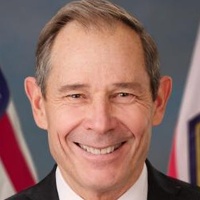
John Curtis
Senator
UT
John Curtis
Senator
UT
This Joint Resolution uses the Congressional Review Act to formally disapprove and nullify an Environmental Protection Agency (EPA) rule. The rejected rule concerned the reclassification of major sources of pollution as area sources under Section 112 of the Clean Air Act. Consequently, the EPA's December 29, 2023, final rule will have no legal effect.