Legislation
This Act establishes a system to review and reduce excessively priced brand-name prescription drugs by comparing U.S. prices to international benchmarks and potentially revoking manufacturer monopolies to allow for generic competition.
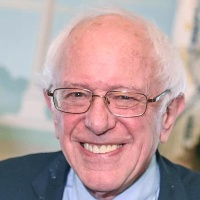
Bernard Sanders
Senator
VT
Bernard Sanders
Senator
VT
The Prescription Drug Price Relief Act of 2025 establishes a system for the Secretary of Health and Human Services to review brand-name drugs priced excessively high compared to international benchmarks or other factors. If a price is deemed excessive, the bill immediately cancels the manufacturer's government-granted monopolies, allowing generic and biosimilar competition to begin quickly. The Act also mandates comprehensive annual reporting from manufacturers on pricing, R&D, and marketing costs, which will be made public via a new database.
This Act amends federal anti-discrimination laws to make it easier for workers to prove discrimination by showing that a protected characteristic was *a* motivating factor, not necessarily the *only* factor, in an adverse employment action.

Tammy Baldwin
Senator
WI
Tammy Baldwin
Senator
WI
The Protecting Older Workers Against Discrimination Act standardizes the burden of proof in employment discrimination cases across several major federal laws, including those covering age, race, sex, and disability. This bill makes it easier for plaintiffs to prove discrimination by establishing that a protected characteristic was a "motivating factor" in an adverse employment decision, even if other legal reasons existed. The new standards apply immediately to all pending claims upon enactment.
The HART Act amends antitrust reporting requirements to aggregate annual residential property purchases by investors, ensuring large-scale acquisitions are subject to government review.

Amy Klobuchar
Senator
MN
Amy Klobuchar
Senator
MN
The Housing Acquisitions Review and Transparency (HART) Act amends antitrust reporting requirements to treat aggregated purchases of residential property within a calendar year as a single transaction. This mandates antitrust premerger notification filings when cumulative acquisitions meet certain thresholds. The Act also narrows existing exemptions, generally requiring reporting for investment or rental property purchases unless they are strictly for personal use. The FTC and DOJ are tasked with updating regulations and creating new reporting forms to implement these changes.
This Act prohibits the Department of Defense from using funds in fiscal years 2025 and 2026 to procure or modify foreign-owned aircraft for presidential airlift.

Charles Schumer
Senator
NY
Charles Schumer
Senator
NY
The Presidential Airlift Security Act of 2025 prohibits the Department of Defense from using funds in fiscal years 2025 and 2026 to procure, modify, or maintain foreign-owned aircraft for presidential airlift purposes. This measure restricts the use of the defense budget for acquiring or servicing used foreign planes considered for presidential transport during this period.
This act terminates specific, unused regulatory authorities granted to the Securities and Exchange Commission under the Dodd-Frank Act if rulemaking was not initiated by January 1, 2025.
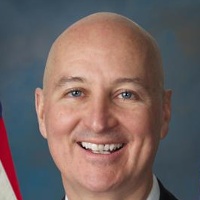
Pete Ricketts
Senator
NE
Pete Ricketts
Senator
NE
The Business Owners Protection Act of 2025 terminates specific, unused regulatory authorities granted to the Securities and Exchange Commission (SEC) under the Dodd-Frank Act. If the SEC failed to initiate rulemaking for these discretionary powers by January 1, 2025, those authorities automatically expire upon the enactment of this Act. The SEC is required to publicly report to Congress on all terminated authorities within 180 days.
This Act excludes income earned from specific job training and educational programs when determining eligibility for food assistance benefits.

Kirsten Gillibrand
Senator
NY
Kirsten Gillibrand
Senator
NY
The Training and Nutrition Stability Act of 2025 ensures that income received from specific job training, educational, and vocational rehabilitation programs will not count against an individual's eligibility for federal food assistance. This change aims to encourage participation in workforce development activities without jeopardizing necessary nutritional support. The bill also includes minor technical updates to existing law to accommodate this new exclusion.
This Act establishes the non-regulatory Connecticut River Watershed Partnership program and a competitive matching grant program to fund collaborative restoration and protection efforts across the five watershed states.

Jeanne Shaheen
Senator
NH
Jeanne Shaheen
Senator
NH
The Connecticut River Watershed Partnership Act establishes a new, non-regulatory program to coordinate restoration and protection efforts across the five-state watershed. This initiative will develop a comprehensive strategy and support it through a competitive, voluntary grant program to fund projects benefiting ecology, water quality, and climate resilience. The law specifically mandates outreach to environmental justice communities and requires annual reporting to Congress on funded projects. Funding is authorized through fiscal year 2030, with at least 75% of appropriations dedicated to the grant program.
This act modifies the criteria and eligibility dates for hospitals seeking the Medicare designation of Rural Emergency Hospital.

Cindy Hyde-Smith
Senator
MS
Cindy Hyde-Smith
Senator
MS
The Rural Health Sustainability Act of 2025 updates the criteria for hospitals seeking the Rural Emergency Hospital designation under Medicare. This bill retroactively adjusts the eligibility review date to January 1, 2014, and adds a new pathway for designation based on certification by the Office of Rural Health Policy. This aims to broaden access to this critical designation for eligible rural facilities.
This Act establishes federal grant funds within DHS and DOJ to reimburse and support state and local efforts for border security infrastructure, surveillance, and the prosecution and detention of undocumented criminal aliens.

John Cornyn
Senator
TX
John Cornyn
Senator
TX
The State Border Security Assistance Act establishes two new federal grant funds to support state and local efforts regarding immigration enforcement. The first fund provides resources for physical border barriers, surveillance technology, and relocation costs along the southern border. The second fund is dedicated to assisting states with the costs of arresting, prosecuting, and detaining undocumented individuals, particularly those who have committed crimes. Both programs are authorized through 2029, with remaining funds returning to the Treasury.
This Act establishes the Commission on American Quantum Information Science and Technology Dominance to review U.S. competitiveness and recommend strategies to secure national and economic advantage in quantum technology.

Marsha Blackburn
Senator
TN
Marsha Blackburn
Senator
TN
The Quantum Leadership in Emerging Applications and Policy Act of 2025 establishes the Commission on American Quantum Information Science and Technology Dominance. This independent body is tasked with reviewing the nation's standing in quantum science and technology to ensure U.S. national and economic security. The Commission will analyze global competition, investment strategies, workforce needs, and commercialization barriers before delivering comprehensive recommendations to Congress and the President.
This Act requires businesses to clearly label the cost of specific, Presidentially-imposed tariffs as a "tariff surcharge" on consumer goods, with exemptions for small businesses.
Charles Schumer
Senator
NY
Charles Schumer
Senator
NY
The Truth in Tariffs Act mandates that businesses clearly disclose to consumers the exact amount of a product's price attributed to specific, Presidentially-imposed tariffs enacted after January 20, 2025. This cost must be explicitly labeled as a "tariff surcharge" on the final price. The Federal Trade Commission (FTC) is tasked with enforcing this requirement, treating violations as unfair or deceptive business practices. Small businesses, as defined by the Small Business Act, are exempt from this disclosure rule.
This Act enhances Civilian Conservation Centers by establishing specialized training in conservation and firefighting, boosting hiring of graduates, and improving related housing infrastructure.

Jeff Merkley
Senator
OR
Jeff Merkley
Senator
OR
The Civilian Conservation Center Enhancement Act of 2025 aims to revitalize Civilian Conservation Centers (CCCs) as residential training facilities for underserved youth. This legislation mandates the creation of specialized training programs, particularly in areas like wildland firefighting, to support the needs of the Department of the Interior and Agriculture. Furthermore, the bill establishes hiring goals and provides enhanced hiring authorities to ensure covered graduates secure employment in federal conservation and firefighting roles. It also includes provisions for improving agency housing stock using student labor.
The Regulatory Accountability Act significantly overhauls federal rulemaking procedures by mandating rigorous cost-benefit analysis, exploring alternatives, increasing public input periods, and restricting agency advocacy during comment periods.

James Lankford
Senator
OK
James Lankford
Senator
OK
The Regulatory Accountability Act fundamentally overhauls federal rulemaking procedures to increase transparency, require rigorous cost-benefit analysis for major rules, and mandate public access to supporting data. It establishes new definitions for agency guidance and significantly structures public comment periods, including special provisions for major economic rules. Furthermore, the Act limits judicial review of certain agency decisions and institutes a mandatory post-promulgation review framework for major regulations.
The Water Affordability, Transparency, Equity, and Reliability Act of 2025 establishes significant annual funding levels for federal water and sanitation programs, mandates comprehensive reporting on service equity and affordability, and updates state revolving funds to support infrastructure buyouts, subsidies, and lead line replacement.
Bernard Sanders
Senator
VT
Bernard Sanders
Senator
VT
The Water Affordability, Transparency, Equity, and Reliability Act of 2025 significantly increases federal funding allocations for clean water, drinking water, and rural water infrastructure programs. It mandates comprehensive reporting on water affordability and discrimination issues while allowing states greater flexibility in using revolving funds, including purchasing private water systems. The Act also establishes new grant opportunities for lead line replacement and PFAS contamination cleanup, and institutes requirements for Project Labor Agreements on funded construction projects. Finally, it updates definitions to expand drinking water assistance eligibility for underserved border communities known as colonias.
This Act establishes new federal requirements, including health documentation and age restrictions, for importing live dogs into the United States.
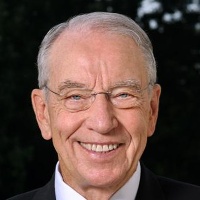
Charles Grassley
Senator
IA
Charles Grassley
Senator
IA
The Healthy Dog Importation Act establishes new federal requirements for bringing live dogs into the United States, mandating electronic health documentation, vaccinations, and permanent ID for most imports. It defines key roles like "importer" and "compensation" while outlining specific exceptions for returning pets or working dogs. The law requires the Secretary to create detailed regulations within 18 months, including establishing a central tracking database and the authority to charge necessary fees for verification.
This bill bans the manufacture, sale, and transfer of specified semiautomatic assault weapons and large-capacity ammunition feeding devices while grandfathering existing possession and requiring background checks for future transfers of those grandfathered items.
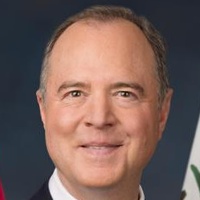
Adam Schiff
Senator
CA
Adam Schiff
Senator
CA
The Assault Weapons Ban of 2025 comprehensively defines and bans the manufacture, sale, and transfer of specific semiautomatic assault weapons and large-capacity ammunition feeding devices. It grandfathers existing possessions but requires background checks for all future private transfers of these previously owned weapons. The bill also permits the use of federal Byrne grant funds for state-run buy-back programs targeting these banned items.
This Act designates over 126,000 acres of the Olympic National Forest as new wilderness areas and protects numerous river segments in Washington State under the National Wild and Scenic Rivers System.
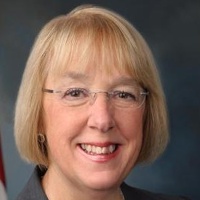
Patty Murray
Senator
WA
Patty Murray
Senator
WA
The Wild Olympics Wilderness and Wild and Scenic Rivers Act designates over 126,000 acres of the Olympic National Forest as new wilderness areas. It also adds numerous river segments in Washington State to the National Wild and Scenic Rivers System, protecting them from development like dams. The bill ensures that existing private rights and treaty rights of Indian Tribes are fully preserved. Overall, this legislation significantly expands federal conservation protections across the Olympic Peninsula.
The American Ownership and Resilience Act establishes an Ownership Investment Facility to provide government leverage to licensed investment companies making covered investments, particularly in Employee Stock Ownership Plans (ESOPs), while setting strict operational and capital requirements for those companies.

Chris Van Hollen
Senator
MD
Chris Van Hollen
Senator
MD
The American Ownership and Resilience Act establishes an Ownership Investment Facility to provide government leverage to licensed investment companies making "covered investments," primarily focused on supporting Employee Stock Ownership Plans (ESOPs) and worker cooperatives in acquiring business ownership. The Act sets strict operational rules for these investment companies, including capital requirements, portfolio diversification limits, and mandates for independent review of ESOP transactions. Furthermore, it details the licensing process, oversight mechanisms, and reporting requirements to ensure accountability and protect employee interests.
The Global Fairness in Drug Pricing Act aims to lower U.S. prescription drug costs by establishing international price targets, facilitating safe importation, cracking down on anticompetitive behavior, and studying global pricing impacts.
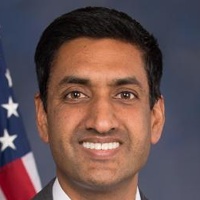
Ro Khanna
Representative
CA
Ro Khanna
Representative
CA
The Global Fairness in Drug Pricing Act aims to significantly lower prescription drug costs for Americans. It directs the HHS to establish "most-favored-nation" price targets based on international rates and enhances safe importation options. Additionally, the bill mandates enforcement actions against anticompetitive drug manufacturer behavior and requires a study on global pricing discrimination.
This bill eliminates the Low-Income Housing Tax Credit (LIHTC) by ceasing the issuance of new credits for buildings placed in service after the law's enactment.
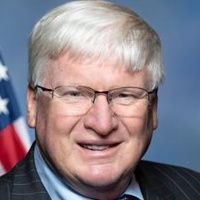
Glenn Grothman
Representative
WI
Glenn Grothman
Representative
WI
The Low-Income Housing Tax Credit Elimination Act proposes to end the federal government's primary incentive for developing affordable housing. Specifically, this bill mandates that no new Low-Income Housing Tax Credits (LIHTC) will be issued for any building placed in service after the law's enactment date. This action effectively phases out the current mechanism used to finance new low-income housing projects.