Legislation
This act automatically reinstates Department of Energy financial assistance awards that were previously canceled based on the May 15, 2025 Secretarial Memorandum.
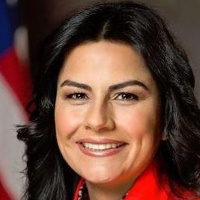
Nanette Barragán
Representative
CA
Nanette Barragán
Representative
CA
The Stop the Trump Electricity Price Hikes Act immediately reinstates financial assistance awards previously canceled by the Department of Energy (DOE). This action specifically reverses cancellations based on the May 15, 2025 Secretarial Memorandum. The bill ensures these awards continue as if they had never been terminated.
This Act establishes a new CDC center to declare racism a public health crisis and funds research and programs to dismantle structural racism and study the public health impacts of police violence.
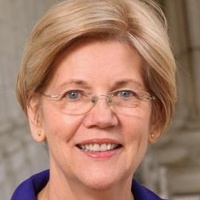
Elizabeth Warren
Senator
MA
Elizabeth Warren
Senator
MA
The Anti-Racism in Public Health Act of 2025 establishes the National Center on Antiracism and Health within the CDC to declare racism a public health crisis and research its impacts. This Act mandates the creation of a new CDC program dedicated to researching police violence and developing public health strategies to prevent related injuries and deaths. Ultimately, the bill aims to dismantle structural racism in health systems through dedicated research, data collection, and community investment.
This resolution expresses support for designating a week in September 2025 as "National Adult Education and Family Literacy Week" to highlight the urgent need for improved adult skills across the nation.
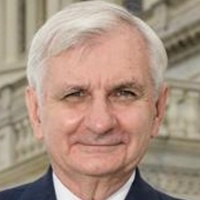
John Reed
Senator
RI
John Reed
Senator
RI
This resolution expresses support for designating the week of September 14 through 20, 2025, as National Adult Education and Family Literacy Week. It highlights the urgent need to improve basic reading, math, and digital skills for millions of U.S. adults to boost the economy and improve individual well-being. The bill encourages communities and organizations to support vital adult education and family literacy programs.
The Mental Health in Aviation Act of 2025 mandates the FAA to update mental health regulations, improve medical clearance processes, fund more aviation medical examiners, and launch an anti-stigma campaign for aviation workers.
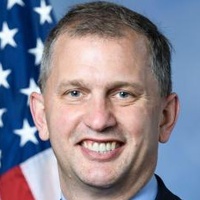
Sean Casten
Representative
IL
Sean Casten
Representative
IL
The Mental Health in Aviation Act of 2025 directs the FAA to update regulations to encourage aviation workers to seek mental health support without fear of stigma. The bill mandates annual reviews of the medical clearance process and allocates funding to hire more Aviation Medical Examiners. Furthermore, it requires the FAA to implement recommendations from a recent mental health task force and launch a public awareness campaign to reduce stigma.
This act prohibits discrimination in federal jury service based on disability or age, ensuring individuals are not excluded if they can perform the essential functions of jury duty with reasonable accommodation.
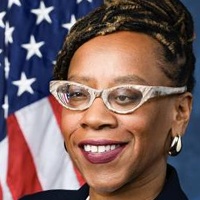
Lateefah Simon
Representative
CA
Lateefah Simon
Representative
CA
This Act prohibits discrimination against individuals based on disability or age in federal jury service. It amends federal law to ensure that a disability cannot be used as a basis for exclusion from a jury unless the individual cannot perform the essential functions of service even with a reasonable accommodation. The legislation updates existing jury qualification standards to reflect this nondiscrimination principle.
The Price Gouging Prevention Act of 2025 prohibits selling goods or services at grossly excessive prices, especially following exceptional market shocks, and mandates new revenue and pricing disclosures for companies filing with the SEC.

Janice Schakowsky
Representative
IL
Janice Schakowsky
Representative
IL
The Price Gouging Prevention Act of 2025 establishes federal prohibitions against selling goods or services at "grossly excessive prices," particularly following an "exceptional market shock." The bill grants enforcement authority to the Federal Trade Commission (FTC) and allows State Attorneys General to bring actions against violators. Furthermore, it mandates that companies experiencing a market shock must provide detailed financial and pricing strategy disclosures in subsequent SEC filings.
This Act establishes new federal grants to help public wastewater treatment plants upgrade their systems to treat or eliminate emerging contaminants like PFAS.
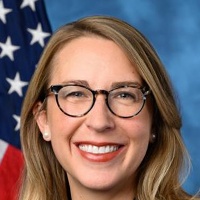
Hillary Scholten
Representative
MI
Hillary Scholten
Representative
MI
The Public Utility Remediation and Enhancement for Water Act establishes a new federal grant program administered by the EPA to help public wastewater treatment plants upgrade facilities. These grants specifically target the planning, design, and construction needed to treat or eliminate emerging contaminants like PFAS chemicals. The federal government will cover at least 75% of eligible project costs to improve water quality.
The EQUAL Parks Act permanently codifies the Presidential Memorandum promoting diversity and inclusion in the management and use of public lands and waters.
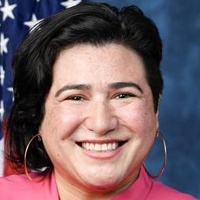
Emily Randall
Representative
WA
Emily Randall
Representative
WA
The EQUAL Parks Act codifies a previous Presidential Memorandum into permanent law, ensuring that federal policies regarding public lands and waters prioritize diversity and inclusion. This legislation solidifies the commitment to making these shared spaces accessible and welcoming to all Americans.
This bill authorizes the awarding of a Congressional Gold Medal to the Buffalo Soldier regiments to recognize their distinguished service to the United States.

Andy Kim
Senator
NJ
Andy Kim
Senator
NJ
This bill, the Buffalo Soldiers Congressional Gold Medal Act of 2025, directs Congress to award a Congressional Gold Medal to the historic Buffalo Soldier regiments for their distinguished service to the United States. The medal will be designed and struck by the Secretary of the Treasury and ultimately housed at the Smithsonian's National Museum of African American History and Culture. The Act also authorizes the creation and sale of bronze duplicates to help cover the costs of production.
This Act eliminates health care premiums for individual Selected Reserve members using TRICARE Reserve Select and mandates new forms to track their medical readiness.

Tammy Baldwin
Senator
WI
Tammy Baldwin
Senator
WI
The Healthcare for Our Troops Act eliminates monthly premiums for individual Selected Reserve members utilizing TRICARE Reserve Select health coverage. This legislation also establishes standardized premium rates for enrolled family members and mandates the creation of new medical forms to track service members' readiness status. The changes aim to improve healthcare access and administrative clarity for part-time military personnel and their dependents.
The Rails to Trails Landowner Rights Act establishes new requirements, landowner approvals, and rigorous review processes for temporarily converting former railroad rights-of-way into public trails.
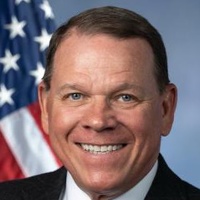
Sam Graves
Representative
MO
Sam Graves
Representative
MO
The Rails to Trails Landowner Rights Act establishes stricter requirements for temporarily converting former railroad rights-of-way into public trails. It mandates landowner approval, financial guarantees, and comprehensive public review, including a cost-benefit analysis, before interim trail use can be certified. Furthermore, the bill requires periodic review of existing trail corridors and creates an advisory committee to recommend maintenance standards for trail sponsors.
This bill mandates the Secretary of Defense to create and implement a strategy for strengthening military cooperation and deterrence with allies across the Indo-Pacific region.

Michael Bennet
Senator
CO
Michael Bennet
Senator
CO
This bill mandates the Secretary of Defense to develop and implement a comprehensive strategy to strengthen multilateral deterrence in the Indo-Pacific region. The strategy must detail plans for enhancing allied cooperation across access, command structure, information sharing, and joint exercises with key partners. It requires a report to Congress within 180 days outlining the five-year plan and any necessary resource adjustments.
The Immigration Enforcement Identification Safety (IEIS) Act mandates that certain immigration officers visibly display identification during public enforcement duties and allows agencies to reimburse covered employees for privacy-enhancing services.

Mark Warner
Senator
VA
Mark Warner
Senator
VA
The IEIS Act mandates that federal immigration enforcement officers visibly display their name, unique ID, and agency during public-facing enforcement duties, with exceptions for undercover or high-risk operations. The bill also allows agencies to fully reimburse covered employees for privacy-enhancing services to protect them and their families. Furthermore, the Act includes provisions ensuring it does not impede legitimate journalistic investigation or the public disclosure of matters of public concern regarding these employees.
This bill mandates comprehensive, fact-based annual U.S. Human Rights Reports, updating required coverage to safeguard their integrity against political manipulation and detail abuses against vulnerable populations.
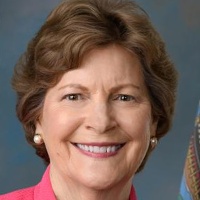
Jeanne Shaheen
Senator
NH
Jeanne Shaheen
Senator
NH
The Safeguarding the Integrity of the Human Rights Reports Act of 2025 reaffirms the U.S. commitment to promoting human rights globally. This bill mandates that the State Department's annual Human Rights Reports remain comprehensive and free from political interference. It updates reporting requirements to specifically detail abuses against vulnerable groups, including forced medical procedures, restrictions on movement, and the impact of government corruption on rights. The goal is to ensure these essential reports maintain credibility for accountability and advocacy worldwide.
The Supporting Ukraine Act of 2025 provides substantial emergency military and financial aid to Ukraine, mandates the use of seized Russian assets for reconstruction, and establishes new mechanisms for defense technology cooperation and integrating battlefield lessons into U.S. military doctrine.
Jeanne Shaheen
Senator
NH
Jeanne Shaheen
Senator
NH
The Supporting Ukraine Act of 2025 provides comprehensive security, financial, and humanitarian aid to Ukraine while simultaneously leveraging frozen Russian assets to fund reconstruction efforts. It allocates over $30 billion in emergency appropriations for military assistance, replenishes U.S. defense stocks, and bolsters NATO allies. Furthermore, the bill establishes mechanisms to seize Russian assets, redirects seized Iranian weapons to Ukraine, and mandates U.S. military learning from the conflict.
This Act establishes fair market value requirements for local governments taking over or selling cable systems after franchise revocation and limits local government control over franchise transfers.
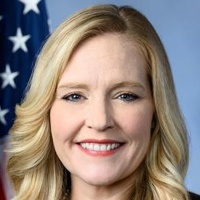
Erin Houchin
Representative
IN
Erin Houchin
Representative
IN
The CABLE Competition Act aims to establish clear rules for the transfer and sale of existing cable systems, particularly after a local government revokes a franchise. It mandates that local authorities must pay the fair market value if they take over a system following a franchise revocation. Furthermore, the bill prevents local governments from arbitrarily blocking the transfer of an existing franchise to a new operator who agrees to honor the original terms.
This bill mandates the modernization of the Bureau of Industry and Security's (BIS) information technology systems to enhance export control efficiency, supply chain visibility, and threat detection through 2030.
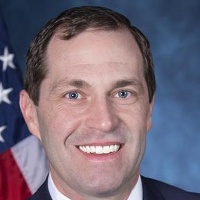
Jason Crow
Representative
CO
Jason Crow
Representative
CO
The BIS IT Modernization Act mandates a comprehensive overhaul of the Bureau of Industry and Security's (BIS) technology systems through fiscal year 2030. This modernization aims to leverage advanced tools like AI and data analysis to speed up export licensing and enhance supply chain tracking. The goal is to improve national security by better identifying and tracking entities involved in illicit trade, particularly concerning adversaries like China and Russia. Ultimately, the Act requires a unified, secure IT environment to boost efficiency and data sharing capabilities across government and industry partners.
This bill reauthorizes and extends the funding authorization for the National Sea Grant College Program through fiscal year 2031.

Maria Cantwell
Senator
WA
Maria Cantwell
Senator
WA
This bill reauthorizes the National Sea Grant College Program by extending its funding authorization through fiscal year 2031. It ensures continued federal support for the program's vital research, education, and outreach activities related to the nation's coastal and marine resources.
This bill increases the maximum dollar amount of exempt resources from $\$2,000$ to $\$5,000$ for determining eligibility for certain federal financial assistance programs under the Act of October 19, 1973.

Tina Smith
Senator
MN
Tina Smith
Senator
MN
This bill amends the Act of October 19, 1973, to increase the maximum dollar amount of exempt resources for determining eligibility for federal financial assistance or benefits. Specifically, it raises the resource limit from $\$2,000$ to $\$5,000$. The legislation also includes minor technical corrections to the existing language of the Act.
This bill prohibits non-citizens from voting in District of Columbia elections and repeals the Local Resident Voting Rights Amendment Act of 2022.
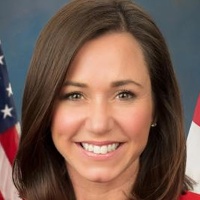
Katie Britt
Senator
AL
Katie Britt
Senator
AL
This bill prohibits non-U.S. citizens from voting in any election within the District of Columbia. It also repeals the Local Resident Voting Rights Amendment Act of 2022, effectively undoing that prior legislation. The measure ensures that only citizens can participate in D.C. local elections and ballot initiatives.