Legislation
This bill amends the Elementary and Secondary Education Act to establish a phased increase in federal funding levels for Impact Aid programs through fiscal year 2031.
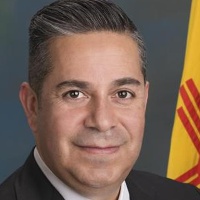
Ben Luján
Senator
NM
Ben Luján
Senator
NM
This bill amends the Elementary and Secondary Education Act to establish a new, increasing schedule for federal appropriations for Impact Aid programs through fiscal year 2031. It specifically sets new funding limits for payments related to federal property acquisition, basic payments for heavily impacted districts, services for children with disabilities, and construction activities. The legislation aims to advance progress toward full federal funding for these essential school support programs.
This Act mandates that states report detailed data on child separations occurring outside of formal court oversight, known as "hidden foster care arrangements," to ensure federal transparency and accountability.

John Cornyn
Senator
TX
John Cornyn
Senator
TX
The Hidden Foster Care Transparency Act mandates that states report detailed data on child separations occurring outside of formal court oversight, termed "hidden foster care arrangements." This legislation requires states receiving federal child welfare funding to track the circumstances, duration, services provided, and outcomes for children in these informal placements. The Secretary of Health and Human Services will then compile this information into an annual public report for Congress to shed light on these often-untracked situations.
This Act establishes a pilot program to integrate real-time weather warnings with active road construction zone data to enhance work zone safety.
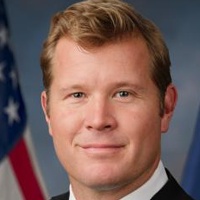
Tim Sheehy
Senator
MT
Tim Sheehy
Senator
MT
The Work Zone Weather Integration Act of 2025 establishes a pilot program to safely combine real-time weather warnings with active road construction zone data. This initiative, run by the Secretary of Transportation and NOAA, will test the technical feasibility and safety benefits of integrating hazard alerts directly into work zone information. The program requires participation from at least five states, and a final report will recommend whether the system should be expanded nationwide.
The Chloe Cole Act prohibits medical professionals from engaging in the chemical or surgical alteration of minors' biological sex, and establishes a private right of action for victims to sue for damages.

Marsha Blackburn
Senator
TN
Marsha Blackburn
Senator
TN
The Chloe Cole Act prohibits healthcare professionals from participating in the "chemical or surgical mutilation" of minors, broadly defined to include puberty blockers, cross-sex hormones, and surgeries intended to alter sex characteristics. This bill establishes a federal private right of action allowing individuals harmed by these procedures as minors to sue providers, regardless of when the procedure occurred. The Act also sets specific exceptions for treatments related to verifiable disorders of sexual development and establishes a long statute of limitations for filing lawsuits.
This joint resolution disapproves and nullifies the Bureau of Land Management's rule regarding the Miles City Field Office Record of Decision and Resource Management Plan Amendment.
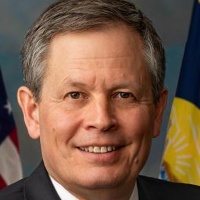
Steve Daines
Senator
MT
Steve Daines
Senator
MT
This joint resolution expresses Congress's disapproval of a specific rule submitted by the Bureau of Land Management (BLM) concerning the Miles City Field Office Resource Management Plan Amendment. By invoking the Congressional Review Act, this action immediately voids the BLM's submitted rule, preventing it from taking effect. In essence, Congress is striking down this particular BLM decision.
This resolution designates September 2025 as National Spinal Cord Injury Awareness Month to recognize those affected and support increased research for treatments and a cure.

Tammy Baldwin
Senator
WI
Tammy Baldwin
Senator
WI
This resolution officially designates September 2025 as National Spinal Cord Injury Awareness Month. It highlights the urgent need to increase focus and funding for research into treatments and cures for spinal cord injuries. The measure also recognizes the dedicated efforts of organizations and individuals working to improve the lives of those affected by these debilitating injuries.
This bill extends the deadline for finalizing certain federal rules regarding High Occupancy Vehicle (HOV) facilities by one year, moving it from September 30, 2025, to September 30, 2026.
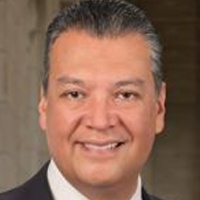
Alejandro Padilla
Senator
CA
Alejandro Padilla
Senator
CA
The High Occupancy Vehicle Lane Exemption Reauthorization Act extends the federal deadline for finalizing certain rules regarding High Occupancy Vehicle (HOV) facilities. This legislation pushes back the required completion date by one year, moving it from September 30, 2025, to September 30, 2026. This extension provides authorities with additional time to complete necessary actions related to HOV lane regulations.
The Student Athlete Fairness and Enforcement Act comprehensively establishes Name, Image, and Likeness (NIL) rights, overhauls transfer and health/safety standards, protects scholarships, and creates federal enforcement mechanisms for student athletes.

Maria Cantwell
Senator
WA
Maria Cantwell
Senator
WA
The Student Athlete Fairness and Enforcement Act comprehensively reforms college athletics by establishing Name, Image, and Likeness (NIL) rights for student athletes, while also implementing transfer flexibility and mandatory health and safety standards. The bill increases athlete autonomy regarding professional exploration and academic choices, and it establishes new revenue streams for athletic departments through jersey sponsorships and media rights restructuring. Finally, it creates robust enforcement mechanisms, including an Athlete Ombuds office and expanded federal oversight, to ensure compliance with these sweeping new protections.
This bill mandates the creation of a comprehensive plan to upgrade the cybersecurity, networking, and hardware capabilities of the U.S. Academic Research Fleet.
Alejandro Padilla
Senator
CA
Alejandro Padilla
Senator
CA
The Accelerating Networking, Cyberinfrastructure, and Hardware for Oceanic Research (ANCHOR) Act mandates the National Science Foundation Director to develop a comprehensive plan to upgrade the cybersecurity and telecommunications capabilities of the U.S. Academic Research Fleet. This plan must assess the necessary hardware, identify specific cybersecurity risks in collaboration with CISA and NIST, and detail a multi-agency funding strategy. The goal is to ensure these research vessels have the necessary speed and security for critical scientific missions, telemedicine, and real-time data transfer.
This Act officially designates Antifa as a domestic terrorist organization and establishes a comprehensive national strategy to investigate, prosecute, and defund networks engaged in politically motivated violence and intimidation.
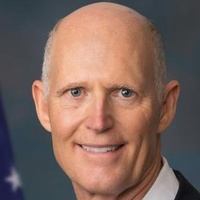
Rick Scott
Senator
FL
Rick Scott
Senator
FL
The Stop ANTIFA Act of 2025 officially designates Antifa as a domestic terrorist organization based on findings that the group engages in organized political violence and intimidation. This legislation mandates a comprehensive national strategy, led by the Joint Terrorism Task Force, to investigate, disrupt, and prosecute individuals and networks supporting such domestic terrorism. Furthermore, the bill prioritizes funding for local law enforcement to combat these threats and directs the Treasury Department to dismantle financial support structures.
This resolution condemns recent Russian incursions into NATO territory and airspace while reaffirming the United States' commitment to collective defense under Article 5 of the North Atlantic Treaty.
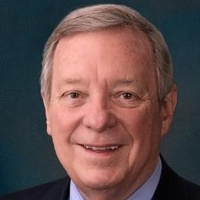
Richard Durbin
Senator
IL
Richard Durbin
Senator
IL
This resolution strongly condemns recent Russian incursions into the airspace of NATO member countries and reaffirms the United States' unwavering commitment to Article 5 of the North Atlantic Treaty. It explicitly denounces Russia's ongoing aggression against Ukraine and its pattern of intimidation against allies. The measure serves as a clear statement that the U.S. will defend every inch of NATO territory against attack.
This resolution expresses Congress's strong opposition to the growing trend of book banning and threats to freedom of expression in the United States.
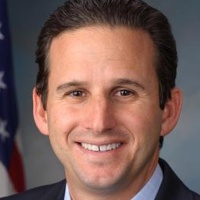
Brian Schatz
Senator
HI
Brian Schatz
Senator
HI
This resolution expresses deep concern over the rising trend of book banning and threats to freedom of expression across the United States. It strongly opposes censorship in schools and libraries, citing constitutional rights and the harm done to democratic discourse. The measure urges local entities to protect students' access to diverse viewpoints and calls for the reversal of restrictive orders impacting educational materials.
This joint resolution disapproves of the Bureau of Land Management's final rule regarding the North Dakota Field Office Record of Decision and Approved Resource Management Plan.

Kevin Cramer
Senator
ND
Kevin Cramer
Senator
ND
This joint resolution expresses Congress's disapproval of a specific rule issued by the Bureau of Land Management (BLM) concerning the North Dakota Field Office's Resource Management Plan. Utilizing the Congressional Review Act, this action nullifies the BLM's submitted rule, preventing it from taking effect. In essence, Congress is overturning the BLM's recent management plan for North Dakota lands.
This resolution formally condemns the October 7th terrorist attacks and the subsequent rise in antisemitic hatred and threats against Jewish communities in the United States.
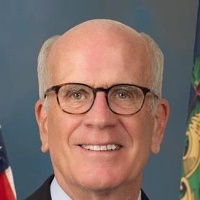
Peter Welch
Senator
VT
Peter Welch
Senator
VT
This resolution formally condemns the October 7, 2023, terrorist attacks by Hamas against Israel and the subsequent rise in antisemitic hatred experienced by Jewish communities in the United States. It reaffirms the commitment to protecting the rights of all people to practice their faith peacefully without fear of violence or intimidation. Furthermore, the resolution specifically denounces hateful language that unfairly links all Jewish people to the actions of the Israeli government.
This Act clarifies and promotes awareness of Medicare coverage for occupational therapy services in treating mental health and substance use disorders.
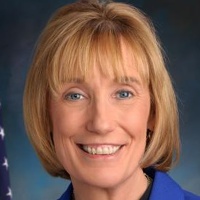
Margaret Hassan
Senator
NH
Margaret Hassan
Senator
NH
The Occupational Therapy Mental Health Parity Act clarifies and promotes awareness of how Medicare covers occupational therapy services for mental health and substance use disorders. It mandates that the Secretary of Health and Human Services educate stakeholders on the existing Medicare coverage guidelines and proper billing codes for these essential treatments.
The Safe Step Act establishes mandatory exceptions processes and timelines for group health plans that use step therapy protocols for prescription drugs.

Lisa Murkowski
Senator
AK
Lisa Murkowski
Senator
AK
The Safe Step Act establishes mandatory exception processes for group health plans and insurance issuers that utilize step therapy protocols for prescription drugs. This ensures patients and doctors have a clear, timely pathway to request coverage for medically necessary alternatives when required initial treatments are inappropriate or ineffective. Plans must provide rapid decisions for urgent requests and adhere to specific reporting requirements detailing exception outcomes.
The Charlie Kirk Act modifies the U.S. Agency for Global Media's rules regarding the dissemination of U.S. information abroad and sets a 12-year delay before that material can be made available domestically through the Archivist of the United States.
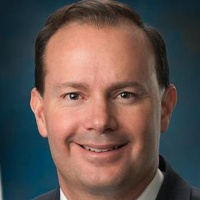
Mike Lee
Senator
UT
Mike Lee
Senator
UT
The Charlie Kirk Act modifies how the U.S. Agency for Global Media (USAGM) disseminates information about the United States overseas, generally prohibiting its distribution within the U.S. This legislation establishes a 12-year delay before materials shared abroad can be made available domestically through the Archivist of the United States. Furthermore, the bill reinforces restrictions on using USAGM funds for domestic influence activities.
This Act establishes a program and competitive grant funding mechanism to restore and protect the New York-New Jersey Watershed through collaborative, science-based efforts prioritizing environmental justice.
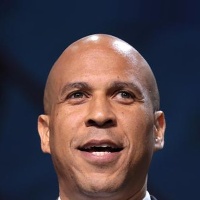
Cory Booker
Senator
NJ
Cory Booker
Senator
NJ
The New York-New Jersey Watershed Protection Act establishes a new, voluntary program to restore and protect fish and wildlife habitats and water quality across the New York-New Jersey Watershed. This effort will be supported by a competitive matching grant program, prioritizing projects that address climate resilience and environmental justice concerns. The Act authorizes \$20 million annually from 2026 through 2031, after which the legislation will expire.
This act ensures continued and necessary funding for Amtrak's existing long-distance routes.
Tim Sheehy
Senator
MT
Tim Sheehy
Senator
MT
The Rail Service Continuity and Stability Act of 2025 ensures the ongoing operation of existing Amtrak long-distance routes. This legislation authorizes Congress to appropriate any necessary additional funding required to maintain these specific services. In essence, it provides an open-ended financial commitment to keep current long-distance trains running.
This resolution designates the week of October 5, 2025, through October 11, 2025, as "National Community Policing Week" to recognize the importance of building trust and collaboration between law enforcement and the communities they serve.
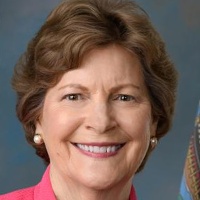
Jeanne Shaheen
Senator
NH
Jeanne Shaheen
Senator
NH
This resolution officially designates the week of October 5 through October 11, 2025, as "National Community Policing Week." It recognizes the vital role of community policing in building trust between law enforcement and residents to enhance public safety. The bill encourages collaboration between citizens and police to find lasting solutions to crime and strengthen community relationships.