Legislation
This resolution recognizes the epidemic of violence against transgender people, memorializes those lost this year, and calls for action to ensure their safety and dignity.
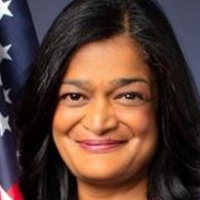
Pramila Jayapal
Representative
WA
Pramila Jayapal
Representative
WA
This resolution supports the goals of Transgender Day of Remembrance by recognizing the ongoing epidemic of violence targeting transgender people, particularly transgender women of color. It memorializes the lives lost this year and highlights the systemic barriers, including discrimination and lack of healthcare access, faced by the transgender community. The bill calls for urgent action from the government to protect these lives through inclusive legislation and policies that ensure dignity and respect for all individuals.
This resolution officially designates November 2025 as American Diabetes Month to raise awareness about the public health crisis of diabetes in the United States.
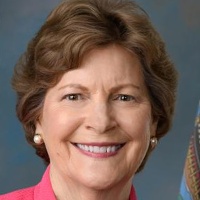
Jeanne Shaheen
Senator
NH
Jeanne Shaheen
Senator
NH
This resolution officially designates November 2025 as American Diabetes Month to raise public awareness about the significant health and economic impact of diabetes in the United States. It highlights the high prevalence of diabetes and prediabetes, noting disproportionate effects on minority populations and veterans. The resolution supports efforts to increase education, early detection, and access to care to reduce the incidence and improve management of the condition.
This resolution expresses the House's belief that strong U.S. history and civics education is essential to preserving the nation's founding ideals leading up to the 250th anniversary of the United States.

Jim Costa
Representative
CA
Jim Costa
Representative
CA
This resolution expresses the sense of the House that strong public education in U.S. history and civics is essential for preserving the nation's founding ideals ahead of the 250th anniversary of the Declaration of Independence. It affirms core beliefs about self-government, recognizes the sacrifices of the Revolutionary era, and encourages fact-based instruction in schools. Ultimately, the bill seeks to strengthen civic knowledge, patriotism, and national unity through a renewed commitment to American principles.
This resolution expresses strong opposition to the return of congressional earmarks, citing concerns over wasteful spending, rising national debt, and the need to restore a permanent ban.
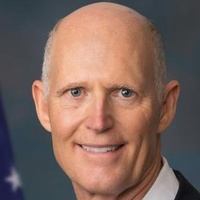
Rick Scott
Senator
FL
Rick Scott
Senator
FL
This resolution expresses strong opposition to the return of congressionally directed spending, commonly known as earmarks. It condemns the use of these provisions as wasteful and contributing to the nation's growing federal debt. The body calls for Congress to immediately restore the ban on earmarks and prioritize fiscal responsibility to combat inflation and reduce national debt.
This bill, the HOPE Act, extends premium tax credit eligibility, establishes strict penalties for fraudulent enrollment practices by agents and brokers, and implements new consumer protection and oversight measures for health insurance exchanges.
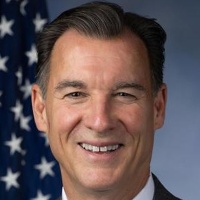
Thomas Suozzi
Representative
NY
Thomas Suozzi
Representative
NY
This bill, the Bipartisan Healthcare Optimization, Protection, and Extension (HOPE) Act, modifies premium tax credit rules for health insurance coverage through 2027 and significantly strengthens consumer protections against fraudulent enrollment practices by agents and brokers. It establishes new civil and criminal penalties for providing false enrollment information and mandates verification processes to ensure consumer consent and accurate coverage. The legislation also extends the 2026 open enrollment period and requires Exchanges to notify individuals of their premium tax credit value before enrollment.
This resolution expresses support for designating November as Complex Regional Pain Syndrome and Reflex Sympathetic Dystrophy Syndrome Awareness Month to increase public understanding, encourage diagnosis, and advance research for these debilitating conditions.
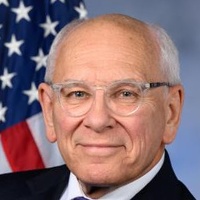
Paul Tonko
Representative
NY
Paul Tonko
Representative
NY
This resolution expresses support for designating November as Complex Regional Pain Syndrome (CRPS) and Reflex Sympathetic Dystrophy Syndrome Awareness Month. The observance aims to increase public understanding of this rare and debilitating chronic pain condition. Furthermore, it encourages improved diagnosis, advances in research, and the development of new treatments for those affected.
This resolution officially recognizes November 2025 as National Family Caregivers Month to honor the vital contributions of millions of unpaid family caregivers and advocate for supportive policies.
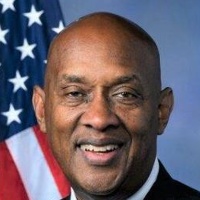
Dwight Evans
Representative
PA
Dwight Evans
Representative
PA
This resolution officially recognizes November 2025 as National Family Caregivers Month to honor the vital, unpaid contributions of the 63 million family caregivers across the nation. It acknowledges the significant financial, physical, and emotional burdens these individuals face while supporting loved ones. Furthermore, the bill encourages federal agencies and the private sector to implement strategies and invest in policies that provide essential support, such as paid leave and tax credits, for these caregivers.
This Act mandates the State Department to develop a diplomatic action plan and report to Congress regarding United States nationals and their family members unjustly detained or subjected to exit bans by the People's Republic of China, while also authorizing sanctions against responsible Chinese officials.
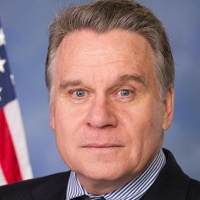
Christopher Smith
Representative
NJ
Christopher Smith
Representative
NJ
This Act addresses the unjust detention of U.S. nationals and their family members by the People's Republic of China. It mandates the development of a diplomatic action plan by the Secretary of State to secure releases and hold accountable Chinese officials responsible for these detentions. Furthermore, the bill calls for increased reporting to Congress and outlines specific policy actions to condemn China's use of detention and exit bans as leverage.
This resolution expresses the sense of the House supporting the fundamental rights and protections for youth in the foster care system.
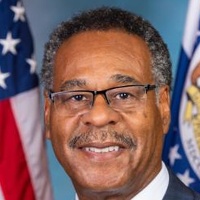
Emanuel Cleaver
Representative
MO
Emanuel Cleaver
Representative
MO
This House Resolution expresses the sense of Congress in support of the rights of youth currently or formerly in the foster care system. It highlights concerning statistics regarding educational attainment and maltreatment within the system. The resolution affirms that foster youth should have specific rights, including access to education, necessary healthcare, and protection from abuse.
This Act enhances U.S. Customs and Border Protection's ability to conduct joint operations in foreign countries to combat drug trafficking, human smuggling, and other security threats.
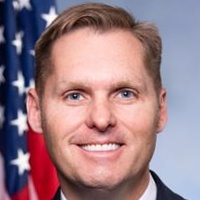
Michael Guest
Representative
MS
Michael Guest
Representative
MS
The Combatting International Drug Trafficking and Human Smuggling Partnership Act of 2025 enhances the ability of U.S. Customs and Border Protection (CBP) to conduct joint operations with foreign governments. This allows CBP personnel to support efforts abroad focused on deterring drug and human smuggling, as well as other security threats. The bill also grants the Secretary authority to pay claims for damages arising from these foreign CBP operations for a limited time.
This bill ensures that public colleges must charge Selected Reserve members in-state tuition rates to remain approved for Montgomery GI Bill educational assistance benefits.
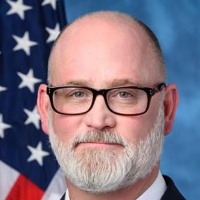
Derrick Van Orden
Representative
WI
Derrick Van Orden
Representative
WI
This bill, the Montgomery GI Bill Selected Reserves Tuition Fairness Act of 2025, amends current law to ensure that public institutions of higher learning charge members of the Selected Reserve the in-state tuition rate when using their educational assistance benefits. If a school fails to provide this in-state tuition rate for those using the Montgomery GI Bill Selected Reserve (Chapter 1606), the Department of Veterans Affairs will disapprove courses offered under that program. These changes take effect for academic periods beginning on or after August 1, 2026.
This act mandates the Department of Veterans Affairs to promptly reimburse veterans for benefits misused by their fiduciaries, while also establishing procedures for the VA to attempt recovery from the offending fiduciary.

Gerald Connolly
Representative
VA
Gerald Connolly
Representative
VA
The Veteran Fraud Reimbursement Act of 2025 ensures that veterans whose benefits are misused by a fiduciary will have those funds promptly reissued by the Department of Veterans Affairs. The bill mandates the VA to make a good faith effort to recover the misused funds from the fiduciary after reimbursing the veteran. Furthermore, it establishes procedures for payment if the veteran dies before reimbursement and requires the VA to assess potential negligence in benefit oversight.
This resolution expresses condolences for the victims of the UPS Airlines flight 2976 crash and commends the first responders and community support following the tragedy.
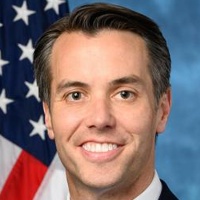
Morgan McGarvey
Representative
KY
Morgan McGarvey
Representative
KY
This resolution expresses the deepest condolences of the House of Representatives to the families and loved ones of the victims of the UPS Airlines flight 2976 crash. It specifically honors the fourteen individuals who lost their lives in the tragic accident. Furthermore, the resolution commends the heroic and selfless actions of the numerous first responders and emergency personnel who assisted at the scene.
This act mandates a periodic review, tied to inflation, of the automatic maximum coverage amounts for Servicemembers Group Life Insurance and Veterans Group Life Insurance.
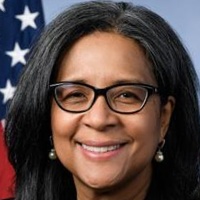
Marilyn Strickland
Representative
WA
Marilyn Strickland
Representative
WA
The Fairness for Servicemembers and their Families Act of 2025 mandates a periodic review of the automatic maximum coverage amounts for Servicemembers Group Life Insurance (SGLI) and Veterans Group Life Insurance (VGLI). This review, conducted every five years starting in 2026, will compare the current coverage limit against an inflation-adjusted amount based on the Consumer Price Index. The results will be submitted to Congress to inform potential adjustments to life insurance benefits.
This bill officially renames the United States Postal Service facility in Moab, Utah, as the "2nd Lieutenant Mitchell Williams Post Office."

Mike Kennedy
Representative
UT
Mike Kennedy
Representative
UT
This bill officially designates the United States Postal Service facility in Moab, Utah, as the "2nd Lieutenant Mitchell Williams Post Office." It ensures that all official records and documents will now use this new name for the location at 50 East 100 North.
This Act strengthens the Public Service Loan Forgiveness program by establishing a new, phased cancellation schedule for newer federal direct loans and streamlining employment certification.
Eric Swalwell
Representative
CA
Eric Swalwell
Representative
CA
This Act amends the Public Service Loan Forgiveness program to streamline requirements for existing loans and establish a new, tiered cancellation schedule for newer Federal Direct Loans. Borrowers employed in public service will now receive partial loan cancellation after making 24, 48, 72, and 96 qualifying payments. Full cancellation of the remaining balance is granted after 120 qualifying payments, and the bill also simplifies the employment certification process and cancels accrued interest.
This resolution honors Wadee Alfayoumi, a young Palestinian-American victim of a hate crime, and condemns all hate-motivated violence while affirming protections for all children and communities.

Richard Durbin
Senator
IL
Richard Durbin
Senator
IL
This resolution honors Wadee Alfayoumi, a 6-year-old Palestinian-American boy murdered in a hate crime in Illinois. It condemns all forms of hate-motivated violence based on ethnicity or religion and recognizes the contributions of the Palestinian community. Furthermore, the resolution affirms the right of all children to live free from discrimination and calls for officials and the media to avoid dehumanizing language.
This bill seeks to nullify the Bureau of Land Management's rule regarding the Buffalo Field Office Record of Decision and Approved Resource Management Plan Amendment.
Harriet Hageman
Representative
WY
Harriet Hageman
Representative
WY
This bill expresses the disapproval of Congress regarding a specific rule submitted by the Bureau of Land Management concerning the Buffalo Field Office Record of Decision and Approved Resource Management Plan Amendment. By invoking the Congressional Review Act, this measure ensures that the BLM's submitted rule will have no legal force or effect.
This joint resolution authorizes unique, one-time displays and illuminations on the National Mall and Washington Monument to commemorate the 250th anniversary of the United States, specifically from December 31, 2025, through January 5, 2026.

Shelley Capito
Senator
WV
Shelley Capito
Senator
WV
This joint resolution requests the Secretary of the Interior to authorize unique, one-time displays on the National Mall and the Washington Monument between December 31, 2025, and January 5, 2026. The bill specifically mandates special illumination and projection of historical content onto the Washington Monument to commemorate the nation's 250th anniversary. It also authorizes the Secretary to coordinate these commemorative events with the U.S. Semiquincentennial Commission.
This resolution commends Delta State University for 100 years of dedicated service, academic excellence, and significant contributions to Mississippi and the nation.

Cindy Hyde-Smith
Senator
MS
Cindy Hyde-Smith
Senator
MS
This resolution officially commends Delta State University for celebrating 100 years of service to Mississippi and the United States. It recognizes the university's significant history, academic achievements, cultural contributions, and athletic success since its founding in 1924. The Senate directs that an enrolled copy of this commendation be sent to key university officials.