Legislation
The PAID OFF Act of 2025 restricts certain exemptions under the Foreign Agents Registration Act for agents representing entities owned or controlled by designated countries of concern, subject to a five-year sunset provision.
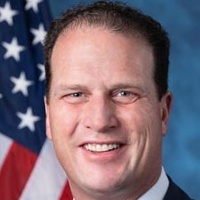
August Pfluger
Representative
TX
August Pfluger
Representative
TX
The PAID OFF Act of 2025 aims to strengthen oversight of foreign influence by limiting exemptions under the Foreign Agents Registration Act (FARA) for agents representing entities owned or controlled by designated "countries of concern." This legislation establishes a formal process requiring Congressional approval via a joint resolution for the Secretary of State to update this list of concerning nations. These significant changes are set to terminate five years after the Act's enactment.
This Act establishes a joint task force and enhances penalties to combat the distribution of illegal drugs and goods through dark web marketplaces.
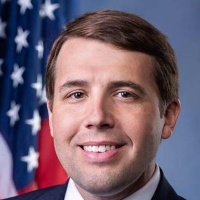
Chris Pappas
Representative
NH
Chris Pappas
Representative
NH
The Dark Web Interdiction Act of 2025 aims to combat the illegal distribution of drugs, weapons, and other illicit goods facilitated by the anonymity of the dark web. This legislation establishes a dedicated interagency task force within the FBI to detect, disrupt, and dismantle dark web marketplaces. Furthermore, it creates a new federal offense for dispensing controlled substances via the dark web, complete with enhanced penalties. The Act also mandates reports on the use of virtual currencies in these illicit transactions to improve investigative capabilities.
This Act establishes grant programs and student loan repayment to increase the number of mental health service providers working in low-income schools.
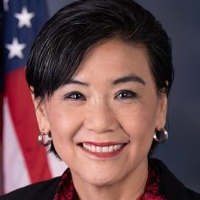
Judy Chu
Representative
CA
Judy Chu
Representative
CA
The Increasing Access to Mental Health in Schools Act establishes grant programs to build pipelines that train and place more mental health providers in low-income schools. It also creates a student loan repayment program for providers who commit to working in these underserved districts for five years. The bill aims to improve student support ratios by increasing the number of school counselors, psychologists, and social workers in high-need areas. Finally, it mandates a study to develop future criteria for identifying areas with mental health provider shortages.
This bill updates the Children's Online Privacy Protection Act to strengthen privacy protections for children and teens by expanding definitions, restricting data collection and use, and establishing new parental rights and enforcement mechanisms.
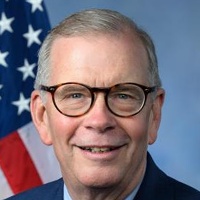
Tim Walberg
Representative
MI
Tim Walberg
Representative
MI
The Children and Teens’ Online Privacy Protection Act significantly updates existing law to strengthen privacy protections for minors online. This legislation revises definitions related to personal information, operators, and teens, while imposing stricter rules on data collection, use, and advertising directed at users under 17. It also establishes specific rights for parents and teens regarding their collected data and mandates security practices for online services.
The Go Pack Go Act of 2025 allows subscribers in specific Wisconsin counties to elect to receive in-state, adjacent-market network television signals from cable operators and satellite carriers instead of their local network signals.
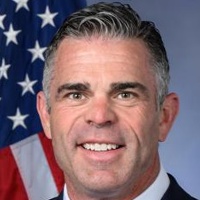
Tony Wied
Representative
WI
Tony Wied
Representative
WI
The Go Pack Go Act of 2025 allows subscribers in specific Wisconsin counties to elect to receive in-state, adjacent-market network television signals from cable operators or satellite carriers instead of their designated local network station. This choice is contingent upon technical feasibility for satellite carriers and alters existing signal carriage and copyright obligations for providers. The bill specifically defines "covered counties" and the conditions for these alternative signal retransmissions.
This Act prohibits federal agencies from imposing water use restrictions or demanding water rights transfers as conditions for land use agreements, reinforcing state authority over water allocation.
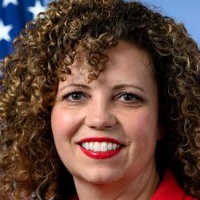
Celeste Maloy
Representative
UT
Celeste Maloy
Representative
UT
The Water Rights Protection Act affirms the long-standing authority of states in evaluating, regulating, and allocating water use. It prohibits federal agencies from imposing restrictions on water rights that exceed those established under state law when issuing land use agreements. Furthermore, the Act explicitly forbids federal agencies from conditioning permits on the transfer of state-recognized water rights to the United States. This legislation ensures federal actions remain consistent with state water law without altering existing reserved water rights or certain federal environmental laws.
The Pray Safe Act of 2025 establishes a Department of Homeland Security Federal Clearinghouse to publish evidence-based safety and security best practices and information on federal grants for nonprofit organizations, faith-based organizations, and houses of worship.
Grace Meng
Representative
NY
Grace Meng
Representative
NY
The Pray Safe Act of 2025 establishes a Federal Clearinghouse within the Department of Homeland Security to publish evidence-based safety and security best practices for nonprofit organizations, faith-based organizations, and houses of worship. This Clearinghouse will centralize information on security recommendations and available federal grant programs to help these entities prevent and respond to threats. The Act also mandates a GAO report evaluating existing federal security grant programs for these organizations.
This bill restricts the acceptance of donations for projects related to the President or Vice President from individuals or entities with conflicts of interest, mandates transparency for donors, and establishes civil and criminal penalties for violations.
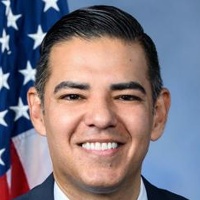
Robert Garcia
Representative
CA
Robert Garcia
Representative
CA
The Stop Ballroom Bribery Act establishes strict new rules governing donations made for projects related to the White House, Vice President's residence, or related federal monuments. It prohibits accepting donations from individuals or entities currently involved in litigation, seeking federal contracts, or engaging in lobbying activities targeting the executive branch. Furthermore, the bill mandates transparency by requiring disclosure of meetings with high-ranking officials following a donation and imposes significant civil and criminal penalties for violations.
This Act establishes a Federal Trade Commission-led national campaign to promote best practices and education for minors' online safety and requires annual reporting on these efforts.
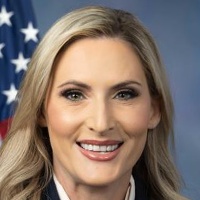
Laurel Lee
Representative
FL
Laurel Lee
Representative
FL
The Promoting a Safe Internet for Minors Act establishes a nationwide public awareness and education campaign, led by the Federal Trade Commission, to promote the safe use of the internet by minors. This initiative requires collaboration with various partners to identify and promote best practices for online safety. Furthermore, the FTC must submit annual reports detailing the campaign's activities for ten years.
This Act prohibits federal funding for solar projects that convert prime farmland and excludes solar facilities on prime farmland from various clean energy tax credits.
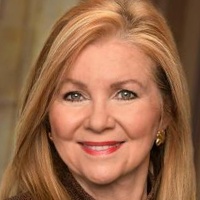
Marsha Blackburn
Senator
TN
Marsha Blackburn
Senator
TN
The Protecting American Farmland Act prohibits federal funding for solar energy projects that convert prime farmland. It also amends tax law to exclude solar energy property placed on prime farmland from several key clean energy tax credits. This legislation aims to safeguard valuable agricultural land from large-scale solar development.
This resolution recognizes National Native American Heritage Month to celebrate the diverse heritages, cultures, and significant contributions of Native Americans to the United States.
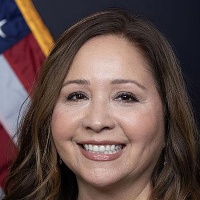
Adelita Grijalva
Representative
AZ
Adelita Grijalva
Representative
AZ
This resolution officially recognizes November as National Native American Heritage Month to celebrate the rich heritages, cultures, and vital contributions of Native Americans to the United States. It highlights their historical influence on American governance, their significant achievements in various fields, and their distinguished military service. Furthermore, the resolution reaffirms Congress's commitment to supporting Tribal self-governance and improving resources for Native American communities.
This Act establishes a Commission to investigate past U.S. military occupations in the Americas and recommend remedies, including formal apologies and reparations.
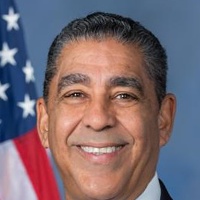
Adriano Espaillat
Representative
NY
Adriano Espaillat
Representative
NY
This Act establishes the Commission to Study and Develop Reconciliation Proposals for Misguided Interventions in the Americas. The Commission is tasked with documenting evidence, analyzing the impact, and recommending remedies for past U.S. military occupations in nations across Latin America and the Caribbean. Its duties include recommending formal apologies and policies to reverse the repercussions of these interventions. The Commission will operate for up to four years before submitting its final report and recommendations to Congress.
This bill officially recognizes November 29, 2025, as "Small Business Saturday" to promote and raise awareness about the importance of supporting local small businesses.
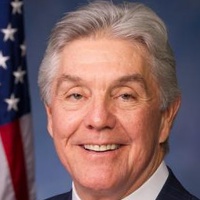
Roger Williams
Representative
TX
Roger Williams
Representative
TX
This bill officially designates November 29, 2025, as "Small Business Saturday." It encourages the observance of this day and supports initiatives that promote local shopping. The goal is to raise awareness about the vital economic role of locally owned small businesses.
The BRAVE Act of 2025 seeks to significantly improve veteran mental health care by addressing workforce shortages, modernizing Vet Center infrastructure, tailoring support for women veterans, and enhancing coordination between the VA and DoD.
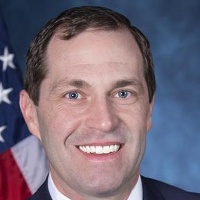
Jason Crow
Representative
CO
Jason Crow
Representative
CO
The BRAVE Act of 2025 aims to significantly improve mental health care for veterans by strengthening the workforce through pay and qualification adjustments, modernizing Vet Center infrastructure and technology, and enhancing specialized support for women veterans. The bill mandates comprehensive reports to address staffing shortages, improve service coordination between VA entities, and ensure outreach efforts are data-driven and tailored to specific veteran needs. Ultimately, this legislation seeks to increase the accessibility, quality, and relevance of mental health and readjustment services across the Department of Veterans Affairs.
This resolution establishes December 1, 2025, as Chosin Few Day to recognize the 75th anniversary of the heroic and costly breakout by UN forces during the Battle of the Chosin Reservoir in the Korean War.
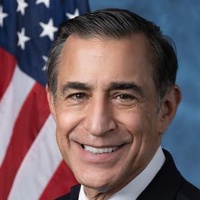
Darrell Issa
Representative
CA
Darrell Issa
Representative
CA
This resolution recognizes the 75th anniversary of the Battle of the Chosin Reservoir during the Korean conflict and designates December 1, 2025, as Chosin Few Day. It honors the courage and sacrifice of the United States and allied forces who fought in extreme conditions against overwhelming odds. The bill commemorates the successful evacuation from Hungnam and reaffirms the nation's lasting gratitude to all who served.
This resolution expresses the House of Representatives' strong opposition to any clemency for Ghislaine Maxwell due to her lack of remorse and refusal to accept responsibility for her sex trafficking crimes.
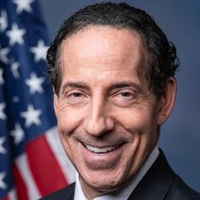
Jamie Raskin
Representative
MD
Jamie Raskin
Representative
MD
This resolution expresses the strong opposition of the House of Representatives to any commutation, clemency, or pardon for convicted child sex trafficker Ghislaine Maxwell. Congress asserts that Maxwell has shown no remorse for her serious crimes and has failed to accept responsibility. Therefore, the House believes she does not qualify for early release and reaffirms support for her victims.
This bill directs the FTC to study the social media use, data collection, and mental health effects on teenagers and report findings to Congress.
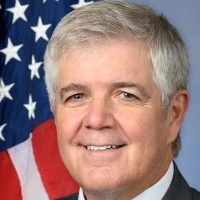
Cliff Bentz
Representative
OR
Cliff Bentz
Representative
OR
The Safe Social Media Act mandates that the Federal Trade Commission (FTC), in collaboration with the Department of Health and Human Services, conduct a comprehensive study on the social media usage habits and associated mental health effects among individuals under 17. This study must detail the personal information collected by platforms, how algorithms use that data, and the impact of targeted advertising. The FTC is required to submit a final report to Congress, including any recommended policy changes, within three years of the Act's enactment.
The SIMSA Act of 2025 establishes a new Schedule A for synthetic analogues of controlled substances, outlines strict penalties for violations, and sets registration and labeling requirements for these substances.
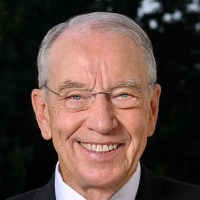
Charles Grassley
Senator
IA
Charles Grassley
Senator
IA
The SIMSA Act of 2025 establishes a new Schedule A within the Controlled Substances Act to specifically target synthetic analogues that are structurally or functionally similar to existing controlled substances. This legislation grants the Attorney General authority to temporarily or permanently schedule these substances, imposing strict penalties for trafficking and mandatory labeling requirements. Furthermore, the Act outlines specific registration processes for handling Schedule A substances and provides a mechanism for sentence review if a substance is later descheduled.
This Act establishes grants for eligible entities to develop or expand in-person and virtual peer support programs to assist family caregivers.
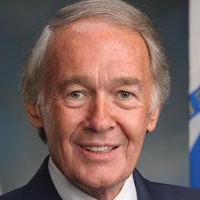
Edward Markey
Senator
MA
Edward Markey
Senator
MA
The Family Caregiver Peer Support Act establishes a grant program to develop and expand peer support services for family caregivers, available both in-person and virtually. These grants will fund programs that offer emotional support and assistance with administrative tasks, while prioritizing underserved populations. The legislation also supports training for peer support specialists and ensures language access for diverse caregiver communities.
This bill mandates the denial of pretrial release for individuals currently charged with a felony who have a prior felony conviction for a crime of violence requiring at least 30 days of incarceration.
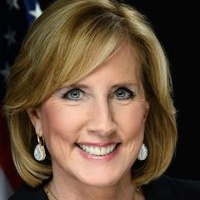
Claudia Tenney
Representative
NY
Claudia Tenney
Representative
NY
The No Bail Post-Jail Act mandates that a judge must deny pretrial release for individuals currently charged with a felony if they have a prior felony conviction for a crime of violence that resulted in serving at least 30 days in custody. This measure focuses on denying release for certain repeat offenders facing serious current charges.