Legislation
This resolution congratulates the Seattle Seahawks on their Super Bowl LX victory, highlighting key player achievements and the team's historic, turnover-free postseason run.
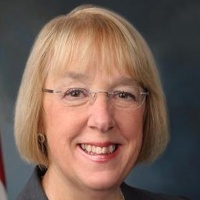
Patty Murray
Senator
WA
Patty Murray
Senator
WA
This resolution congratulates the Seattle Seahawks on their victory in Super Bowl LX, where they defeated the New England Patriots. It celebrates the team's historic season, highlighting key player achievements and the leadership that led to their second championship. The resolution also recognizes the dedication of the team's staff and the unwavering support of their fans, the "12s."
This bill expresses the House's condolences for the victims of the 2019 Aurora, Illinois mass shooting and designates February 15, 2020, as "Henry Pratt Company Victims and Aurora Heroes Day" in Illinois.
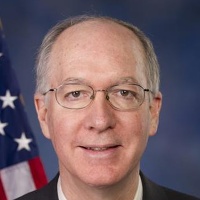
Bill Foster
Representative
IL
Bill Foster
Representative
IL
This resolution expresses the deep condolences of the House of Representatives for the victims of the February 15, 2019, mass shooting in Aurora, Illinois. It also honors the memory of those killed and commends the bravery of the first responders. Finally, the bill designates February 15, 2020, as "Henry Pratt Company Victims and Aurora Heroes Day" in Illinois.
This joint resolution seeks to disapprove and nullify the Department of Veterans Affairs' final rule concerning "Reproductive Health Services."
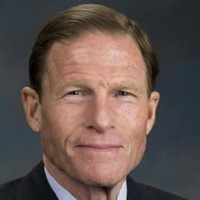
Richard Blumenthal
Senator
CT
Richard Blumenthal
Senator
CT
This joint resolution seeks to disapprove a recent rule issued by the Department of Veterans Affairs concerning "Reproductive Health Services." If enacted, this resolution would nullify the VA's September 9, 2024, regulation, rendering it without legal effect.
This bill strengthens the Department of Energy's mission to secure a reliable domestic supply chain for critical energy resources through ongoing assessments, strategic development, and diversification efforts.
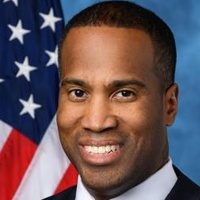
John James
Representative
MI
John James
Representative
MI
The Securing America’s Critical Minerals Supply Act aims to bolster U.S. energy security by focusing on critical energy resources. This legislation tasks the Department of Energy with assessing vulnerabilities in supply chains and developing strategies to increase domestic production and recycling. The bill mandates ongoing evaluations of resource importance, supply chain risks, and the influence of adversarial nations. Ultimately, it seeks to ensure a reliable and secure supply of essential energy materials for the nation.
This resolution censures President Donald Trump for repeatedly making derogatory statements and specifically condemns him for reposting a racist social media post depicting former President and First Lady Obama as primates.
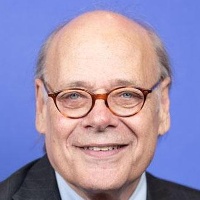
Steve Cohen
Representative
TN
Steve Cohen
Representative
TN
This resolution formally censures and condemns President Donald Trump for repeatedly making derogatory statements and, specifically, for reposting a racist social media image depicting former President and Mrs. Obama as primates. The bill asserts this action violates the President's oath of office and calls for a public apology.
This bill mandates a joint session of Congress on February 24, 2026, to receive a message from the President.
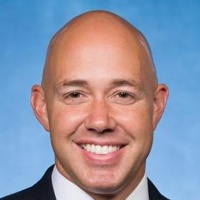
Brian Mast
Representative
FL
Brian Mast
Representative
FL
This bill calls for a joint session of Congress to convene in the House chamber on Tuesday, February 24, 2026, at 9:00 p.m. The purpose of this joint meeting is specifically to receive a message delivered by the President.
This resolution establishes February 14, 2026, as "Marjory Stoneman Douglas High School Remembrance Day" to honor the victims and survivors of the 2018 mass shooting.
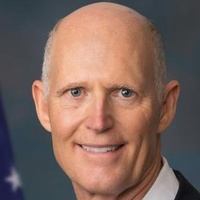
Rick Scott
Senator
FL
Rick Scott
Senator
FL
This resolution officially establishes February 14, 2026, as "Marjory Stoneman Douglas High School Remembrance Day." It honors the memories of the 17 victims lost in the 2018 mass shooting and recognizes the strength of the Parkland community. The resolution also expresses gratitude to the first responders who aided in the aftermath of the tragedy.
This joint resolution seeks to disapprove a specific proposed foreign military sale of defense articles and services, including spare parts and support, to the Government of Ukraine.

Rand Paul
Senator
KY
Rand Paul
Senator
KY
This joint resolution seeks to disapprove and prohibit a specific proposed foreign military sale of defense articles and services to the Government of Ukraine. The blocked sale includes Class IX spare parts for U.S. Army vehicles and weapon systems, along with associated logistics and program support.
This Act mandates automatic spending reductions for Department of Defense components that fail to achieve a clean financial audit opinion after fiscal year 2025.
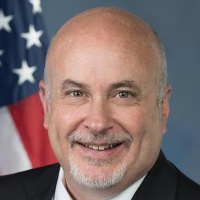
Mark Pocan
Representative
WI
Mark Pocan
Representative
WI
The Audit the Pentagon Act of 2026 addresses the Department of Defense's repeated failure to pass a financial audit. This bill establishes automatic spending reductions for any DoD component that fails to receive a clean audit opinion after fiscal year 2025. It also outlines Congressional priorities regarding protecting wounded warrior accounts and maintaining financial controls for classified programs.
This bill mandates a feasibility study for expanding the Lewis and Clark Regional Water System across Iowa, Minnesota, and South Dakota, with a final report recommending construction authorization and cost-sharing.
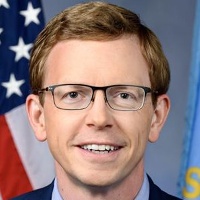
Dusty Johnson
Representative
SD
Dusty Johnson
Representative
SD
This bill mandates the Secretary of the Interior to conduct a comprehensive feasibility study for expanding the Lewis and Clark Regional Water System into Iowa, Minnesota, and South Dakota. The study must analyze engineering, economic, environmental, and social impacts of the proposed rural water supply project. Upon completion, a report with recommendations for construction authorization and cost-sharing will be submitted to Congress.
This bill directs the Secretary of the Interior to conduct a feasibility study for a proposed project to supply water from the Missouri River to the Western Dakota Regional Water System.
Dusty Johnson
Representative
SD
Dusty Johnson
Representative
SD
This Act directs the Secretary of the Interior to conduct a feasibility study for a proposed rural water supply project in Western South Dakota, drawing water from the Missouri River. The study, conducted in partnership with the Western Dakota Regional Water System, Inc., will determine the project's viability and recommend a non-Federal cost share of at least 25% for future construction. The resulting report will be submitted to relevant Congressional committees.
This bill officially recognizes the cultural and historical significance of Lunar New Year in 2026 and expresses respect for those who celebrate it.

Grace Meng
Representative
NY
Grace Meng
Representative
NY
This bill officially recognizes the cultural and historical significance of Lunar New Year, specifically in 2026, the Year of the Horse. It expresses deep respect for Asian American communities and all who celebrate this important occasion. The resolution concludes by offering wishes for a happy and prosperous new year to all observers.
This bill terminates the national emergency declared by the President on February 1, 2025, under the National Emergencies Act.
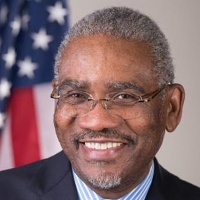
Gregory Meeks
Representative
NY
Gregory Meeks
Representative
NY
This bill officially terminates the national emergency that the President declared on February 1, 2025, under Executive Order 14193. It acts to end the authorities granted under the National Emergencies Act related to that specific declaration.
This resolution calls for the Federal Government to establish a comprehensive Transgender Bill of Rights to legally protect and ensure the rights, safety, and access to essential services for transgender and nonbinary people.
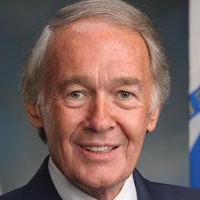
Edward Markey
Senator
MA
Edward Markey
Senator
MA
This resolution calls for the Federal Government to establish a comprehensive Transgender Bill of Rights to protect and codify the rights of transgender and nonbinary people. It mandates federal action to ensure equal access to medical care, safety, employment, housing, and legal recognition. The bill aims to eliminate discrimination across various sectors and strengthen protections against violence and abuse.
This bill authorizes the minting of special $2.50 commemorative coins for the 250th anniversary of the Declaration of Independence and mandates a study on the feasibility of issuing a $2.50 coin for general circulation.
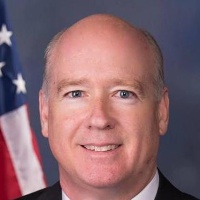
Robert Aderholt
Representative
AL
Robert Aderholt
Representative
AL
This act establishes the "$2.50 for America's 250th Act" to commemorate the 250th anniversary of the Declaration of Independence. It authorizes the Treasury to mint and issue special commemorative gold, silver, and clad $2.50 coins featuring designs from the 1926 Sesquicentennial coin. Additionally, the bill mandates a study on the feasibility of minting and issuing a $2.50 coin for wide circulation.
This bill directs the conveyance of 3,400 acres of federal land in La Paz County, Arizona, to the County for solar energy development, requiring payment for the land and mandating revenue use for local workforce development and education.
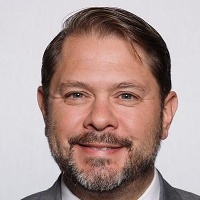
Ruben Gallego
Senator
AZ
Ruben Gallego
Senator
AZ
This bill directs the Secretary of the Interior to convey approximately 3,400 acres of federal land in La Paz County, Arizona, to the County. The land must be used for solar energy development, with a portion of the revenue supporting local workforce development and education. The transfer requires the County to pay fair market value and adhere to strict protections for Tribal artifacts.
This bill establishes a four-year demonstration allowing virtual-only suppliers to participate in the Medicare Diabetes Prevention Program (MDPP) to expand access to diabetes prevention services.

Tim Scott
Senator
SC
Tim Scott
Senator
SC
The PREVENT DIABETES Act establishes a four-year demonstration program allowing virtual-only suppliers to participate in the Medicare Diabetes Prevention Program (MDPP) from 2026 through 2029. This allows for expanded access to evidence-based diabetes prevention services delivered entirely online, regardless of the beneficiary's state. The bill also removes enrollment limits for individuals during this demonstration period.
This bill abolishes immigration detention and electronic monitoring while redirecting funds to establish a grant program for community-based wrap-around social services.
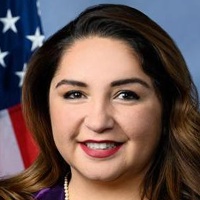
Delia Ramirez
Representative
IL
Delia Ramirez
Representative
IL
This bill aims to end immigration detention and electronic monitoring by abolishing detention authority and terminating related contracts within a set timeframe. It mandates the release of all currently detained individuals and prohibits future use of federal funds for monitoring programs. Finally, the legislation redirects funding toward a new grant program providing voluntary, comprehensive wrap-around social services through community-based organizations.
This bill mandates the Department of Homeland Security's Office of Intelligence and Analysis to implement formalized, standardized, and tracked training curricula for its employees, covering entry-level skills, analysis, and open source collection.
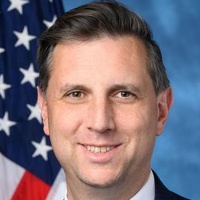
Seth Magaziner
Representative
RI
Seth Magaziner
Representative
RI
This bill establishes the Department of Homeland Security Intelligence and Analysis Training Act to mandate formalized and standardized training for all employees in the DHS Office of Intelligence and Analysis (I&A). It requires specific entry-level, analyst, and open source collection training, alongside the development of advanced professional development opportunities. The Act also mandates tracking completion and requires regular reporting to Congress on the implementation and effectiveness of these new curricula.
This Act establishes a three-year demonstration grant program to provide emergency relief and improve pre-placement services for youth awaiting foster care placement.
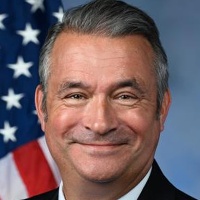
Don Bacon
Representative
NE
Don Bacon
Representative
NE
The Foster Care Stabilization Act of 2026 establishes a three-year demonstration grant program to provide emergency relief and improve pre-placement services for youth awaiting foster care placement. Up to three agencies can receive grants of up to $1 million each to offer direct support, such as essential necessities and crisis assistance. The Secretary of Health and Human Services will oversee the program and report findings to Congress.