Legislation
This resolution designates the week of May 4 through May 8, 2026, as Teacher Appreciation Week while recognizing the critical role and priorities of the nation's public school teachers.
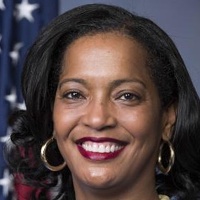
Jahana Hayes
Representative
CT
Jahana Hayes
Representative
CT
This resolution officially designates the week of May 4 through May 8, 2026, as Teacher Appreciation Week. It recognizes the vital role of public school teachers and highlights their key priorities, including support for existing federal protections and funding. Furthermore, the bill encourages leaders to engage directly with teachers to ensure their expertise informs education policy.
This bill expresses congressional disapproval of the CFPB's rule withdrawing guidance on reopening previously closed consumer deposit accounts.
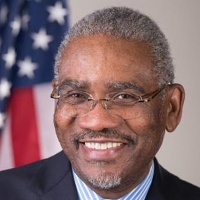
Gregory Meeks
Representative
NY
Gregory Meeks
Representative
NY
This bill expresses Congressional disapproval of the Consumer Financial Protection Bureau's (CFPB) rule that withdrew guidance on reopening previously closed consumer deposit accounts. By disapproving the rule, Congress effectively voids the CFPB's action, restoring the previous status regarding the reopening of these accounts.
This bill expresses support for designating May 6, 2026, as "National Maternal Mental Health Awareness Day" to raise awareness and understanding of critical maternal mental health conditions.

Julia Letlow
Representative
LA
Julia Letlow
Representative
LA
This resolution expresses support for designating May 6, 2026, as "National Maternal Mental Health Awareness Day." It highlights the critical public health issue of maternal mental health conditions, which affect hundreds of thousands of American families annually. The bill calls for raising awareness, improving screening and treatment access, and supporting research to better address these preventable conditions.
This bill expresses support for designating May 5th as a National Day of Awareness for Missing and Murdered Indigenous Women and Girls and calls for related commemorative activities and updated research.

Dan Newhouse
Representative
WA
Dan Newhouse
Representative
WA
This bill expresses support for designating May 5th as a National Day of Awareness for Missing and Murdered Indigenous Women and Girls. It calls for national observance to honor victims and show solidarity with their families. Additionally, the legislation recommends the Department of Justice commission an updated study on this ongoing crisis.
This resolution expresses support for designating May 2026 as National Brain Tumor Awareness Month to increase public awareness and support research for brain tumors.

Mike Quigley
Representative
IL
Mike Quigley
Representative
IL
This resolution expresses support for designating May 2026 as National Brain Tumor Awareness Month. The measure aims to increase public awareness regarding the significant impact of brain tumors and the urgent need for advances in research and treatment. It honors those affected by brain tumors and supports efforts to improve outcomes for patients.
This resolution addresses concerns over the politicization of war crimes allegations against allied special operations forces, urging the executive branch to protect military alliances.

Joni Ernst
Senator
IA
Joni Ernst
Senator
IA
This resolution expresses Congressional appreciation for key military alliances and the sacrifices made by allied special operations forces in conflicts like Afghanistan and Iraq. It voices concern that recent, politically motivated war crimes allegations against allied forces undermine mutual trust and morale. The bill urges that investigations into such matters remain impartial and free from political interference to preserve essential defense partnerships.
This resolution recognizes and celebrates the significant contributions of Asian Americans, Native Hawaiians, and Pacific Islanders to the history and culture of the United States.

Mazie Hirono
Senator
HI
Mazie Hirono
Senator
HI
This resolution officially recognizes Asian American, Native Hawaiian, and Pacific Islander Heritage Month in May 2026. It celebrates the significant and growing contributions of these communities to American history, culture, and government. The resolution also acknowledges important anniversaries and ongoing challenges faced by the community.
This Senate resolution expresses support for free and fair general elections in Venezuela, recognizing the democratic opposition and urging the use of diplomatic tools to achieve this goal.
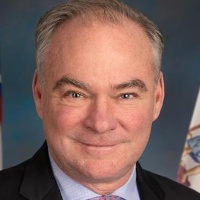
Timothy Kaine
Senator
VA
Timothy Kaine
Senator
VA
This Senate resolution expresses strong support for free and fair general elections in Venezuela, recognizing the democratic will of the Venezuelan people. It affirms that the current regime lacks legitimacy and declares it in the U.S. national interest to support a democratic transition. The resolution urges the United States to use diplomatic tools to back internationally monitored elections.
This resolution supports the U.S. dollar as the world's reserve currency and calls for measures to counter the People's Republic of China's efforts to undermine its global standing.
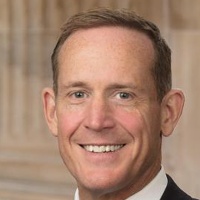
Ted Budd
Senator
NC
Ted Budd
Senator
NC
This resolution supports the continued role of the U.S. dollar as the world's primary reserve currency. It expresses concern over the People's Republic of China's efforts to undermine the dollar through currency manipulation and the development of a parallel financial system. The bill calls for monitoring these Chinese actions and taking steps to strengthen the dollar's global standing.
This resolution commends the UCLA Bruins women's basketball team for winning the 2026 NCAA Division I Women's Basketball National Championship.
Adam Schiff
Senator
CA
Adam Schiff
Senator
CA
This resolution formally commends and congratulates the University of California, Los Angeles (UCLA) Bruins women's basketball team for winning the 2026 NCAA Division I Women's Basketball National Championship. It honors the team's historic victory, recognizing their dedication, coaching staff, and the six graduating seniors who led the effort. The resolution also directs that official copies be sent to key university officials.
This bill establishes "deemed wages" into Social Security for individuals providing substantial unpaid care to qualifying dependent relatives to improve their future retirement benefits.

Christopher Murphy
Senator
CT
Christopher Murphy
Senator
CT
The Social Security Caregiver Credit Act of 2026 establishes a system of "deemed wages" to improve the retirement security of unpaid caregivers. This provision credits individuals who spend at least 80 hours per month caring for a dependent relative with notional earnings for Social Security benefit calculations. The goal is to recognize the value of caregiving and increase future benefits for those who provide essential, unpaid support.
This Senate resolution declares the People's Republic of China as the foremost strategic competitor and outlines necessary U.S. policy actions to counter its security, economic, and technological threats globally.

Christopher Coons
Senator
DE
Christopher Coons
Senator
DE
This Senate resolution declares the People's Republic of China (PRC) the foremost strategic competitor of the United States, citing threats across military, economic, and technological domains. It calls for countering these threats by making them a top foreign policy priority. The resolution urges strengthening deterrence, protecting U.S. economic interests against predatory practices, and reaffirming commitments to Indo-Pacific allies.
This resolution supports the goals of National Nurses Week, recognizing the vital contributions of nurses and encouraging public observance of their importance.

Jeff Merkley
Senator
OR
Jeff Merkley
Senator
OR
This resolution supports the goals of National Nurses Week, observed annually from May 6th to May 12th. It recognizes the vital contributions of nurses across patient care, public health, and research. The bill encourages the nation to observe this week with appropriate recognition for the importance of nurses in everyday lives.
This resolution supports designating May 10, 2026, as "National Asian American, Native Hawaiian, and Pacific Islander Mental Health Day" to raise awareness and improve mental health care access for this diverse community.
Mazie Hirono
Senator
HI
Mazie Hirono
Senator
HI
This resolution supports designating May 10, 2026, as "National Asian American, Native Hawaiian, and Pacific Islander Mental Health Day." It recognizes the critical need to address significant mental health disparities and barriers to care within the diverse AANHPI community. The bill calls for better data collection, increased provider diversity, and improved access to culturally and linguistically appropriate mental health services.
This act revises the leverage limits and calculation methods for Small Business Investment Companies (SBICs) while expanding exclusions for investments in targeted small businesses.
Daniel Meuser
Representative
PA
Daniel Meuser
Representative
PA
The Investing in All of America Act of 2025 revises the rules governing Small Business Investment Companies (SBICs) by updating how they calculate their maximum allowable government leverage. This bill lowers the overall leverage limits for SBICs while creating new exclusions for investments made in small businesses located in low-income or rural areas, or those operating in covered technology sectors. These changes aim to incentivize targeted investment by allowing certain qualifying loans to be excluded from the leverage calculation.
This act mandates that out-of-pocket drug spending counts toward a patient's health plan deductible and maximum, regardless of whether insurance benefits were used for the purchase.
Gregory Murphy
Representative
NC
Gregory Murphy
Representative
NC
The Every Dollar Counts Act of 2026 ensures that money spent out-of-pocket for prescription drugs counts toward an individual's health plan deductible and out-of-pocket maximum, even if insurance benefits are not used for the purchase. This aims to provide financial relief and transparency for consumers. The bill also makes corresponding adjustments to how drug prices are calculated for Medicaid purposes.
This bill supports the designation of the week of August 24 through August 28, 2026, as the fourth annual "National Community Health Worker Awareness Week" to recognize the vital role of community health workers.
Raul Ruiz
Representative
CA
Raul Ruiz
Representative
CA
This bill supports the designation of the fourth annual "National Community Health Worker Awareness Week" in August 2026. It recognizes Community Health Workers (CHWs) as vital frontline professionals who connect communities to essential health and social services. The resolution encourages collaboration to raise awareness of the significant contributions CHWs make in improving health outcomes nationwide.
This bill amends CERCLA to mandate that climate change risks and projected extreme weather hazards be considered in the selection and ongoing review of Superfund hazardous waste site cleanups.
Adam Schiff
Senator
CA
Adam Schiff
Senator
CA
The Preparing Superfund for Climate Change Act of 2026 amends existing law to require that climate change risks be explicitly considered during the cleanup of hazardous waste sites. This legislation mandates that potential threats from local natural disasters and extreme weather, including future climate change impacts, must be factored into the selection and ongoing review of cleanup plans.
This act requires operating system providers to implement age verification for users under 18, mandating parental consent, and grants the FTC enforcement authority.
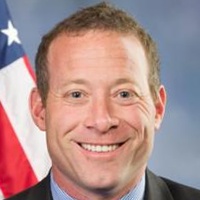
Josh Gottheimer
Representative
NJ
Josh Gottheimer
Representative
NJ
The Parents Decide Act mandates that operating system providers implement age verification for all users, requiring parental consent for anyone under 18. This law tasks the Federal Trade Commission (FTC) with creating regulations to ensure secure data handling and parental control over access for minors. The goal is to give parents oversight regarding what minors can access on devices.
This act establishes sweeping reforms to the Medicare hospice program, including a five-year enrollment moratorium, enhanced oversight, new payment structures, and stricter quality reporting penalties.
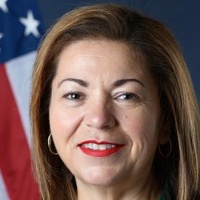
Linda Sánchez
Representative
CA
Linda Sánchez
Representative
CA
The Hospice Care Accountability, Reform, and Enforcement (Hospice CARE) Act of 2026 establishes sweeping reforms to enhance oversight and integrity within the Medicare hospice program. Key provisions include a temporary nationwide moratorium on new hospice enrollment, increased survey frequency, and significant changes to payment structures starting in 2030. The bill aims to combat fraud, ensure higher quality of care through stricter certification and ownership rules, and adjust payment methodologies over the next decade.