Legislation
This Act mandates distributors of highly pathogenic agents to log all transfers and establishes federal oversight for strategic evaluations of high-containment laboratories.
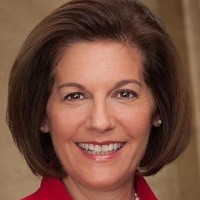
Catherine Cortez Masto
Senator
NV
Catherine Cortez Masto
Senator
NV
This Act establishes new requirements for distributors of highly pathogenic agents to maintain detailed electronic sales logs to enhance public health security. It also mandates a federal evaluation of high-containment laboratories to assess national biosafety and biosecurity risks. The legislation aims to centralize oversight and create standards for dangerous pathogen handling and storage.
This bill encourages public-private partnerships to enhance financial literacy education for students and young adults.
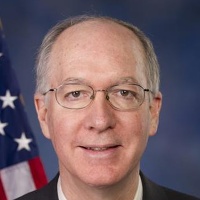
Bill Foster
Representative
IL
Bill Foster
Representative
IL
This bill emphasizes the critical need for improved financial literacy among students and young adults by encouraging greater collaboration between the public and private sectors. It supports existing efforts by federal agencies to provide educational resources, workshops, and decision-making tools to consumers of all ages. Furthermore, the legislation reaffirms directives for federal agencies to partner on opportunities, internships, and employment for minorities and women in the financial industry.
This resolution mandates that certain House Members, officers, and employees complete a training program on counterintelligence and classified information protection to maintain access to classified materials.
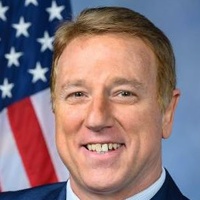
Patrick Fallon
Representative
TX
Patrick Fallon
Representative
TX
The STOP Resolution mandates that certain Members, officers, and employees of the House of Representatives must complete specialized training in counterintelligence and classified information protection. This training, administered by the Sergeant-at-Arms, must be completed within specific deadlines, with access to classified information restricted until compliance is verified. Failure to complete the required training results in penalties, including the denial of access to classified materials.
This bill seeks to disapprove the Bureau of Consumer Financial Protection's rule withdrawing guidance on the in-person collection of consumer debt.
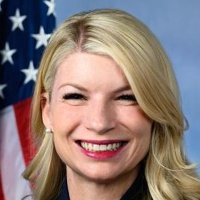
Brittany Pettersen
Representative
CO
Brittany Pettersen
Representative
CO
This bill seeks to disapprove the Consumer Financial Protection Bureau's (CFPB) rule that withdrew guidance concerning the in-person collection of consumer debt (Bulletin 2015-07). By disapproving this rule, Congress aims to nullify the CFPB's action and reinstate the previous guidance. The measure effectively rejects the CFPB's decision to withdraw Bulletin 2015-07.
This bill nullifies the Consumer Financial Protection Bureau's rule concerning the revocation or unfavorable changes to existing credit arrangements.
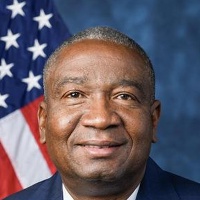
Cleo Fields
Representative
LA
Cleo Fields
Representative
LA
This bill expresses Congressional disapproval of the Consumer Financial Protection Bureau's (CFPB) rule concerning unfavorable changes or revocations to existing credit arrangements. By invoking the Congressional Review Act, this action nullifies the specified CFPB rule, preventing it from having any legal effect.
This resolution establishes a comprehensive "Unhoused Persons Bill of Rights" asserting fundamental civil and human rights for unhoused individuals while mandating significant federal funding and policy shifts toward a housing-first approach to end homelessness.
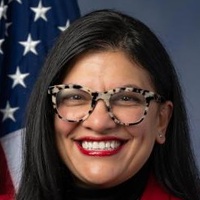
Rashida Tlaib
Representative
MI
Rashida Tlaib
Representative
MI
This resolution establishes a formal "Unhoused Persons Bill of Rights" to protect the fundamental civil and human rights of unhoused individuals, explicitly banning discrimination based on housing status. It outlines specific rights, such as access to housing, public services, and safety from harassment or property destruction. Furthermore, the bill commits to massive federal funding allocations and policy changes, prioritizing a "Housing First" approach to end homelessness.
This bill disapproves the CFPB's rule withdrawing the 2012 bulletin on lending discrimination, effectively reinstating the original guidance.
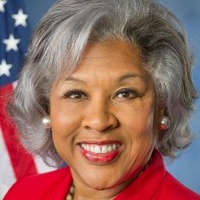
Joyce Beatty
Representative
OH
Joyce Beatty
Representative
OH
This bill seeks to disapprove the Consumer Financial Protection Bureau's (CFPB) rule that withdrew the previous guidance on lending discrimination, known as Bulletin 2012-04. By disapproving this action, the bill effectively reinstates the original guidance. This ensures the CFPB's prior stance on lending discrimination remains legally in effect.
This bill mandates that certain federally-owned memorials remain open to the public during a government shutdown by classifying necessary access personnel as performing emergency services.
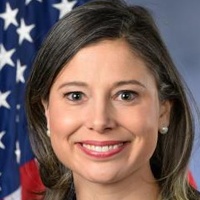
Maggie Goodlander
Representative
NH
Maggie Goodlander
Representative
NH
This bill mandates that certain memorials on federal property remain accessible to the public even during a government shutdown. It requires federal agencies to ensure access to memorials not federally funded but normally accessible through federal facilities during any lapse in appropriations. Furthermore, essential staff required to maintain this access will be exempt from furlough under emergency service provisions.
This act establishes grants for local educational agencies to install point-of-use filtration systems in schools to address lead contamination in drinking water.
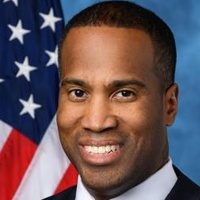
John James
Representative
MI
John James
Representative
MI
The Safe Water in Schools Act of 2026 aims to reduce lead exposure in school drinking water by amending the Safe Drinking Water Act. This legislation establishes dedicated federal funding to provide grants for certified point-of-use filtration systems at schools and child care programs. These grants will support both preventative measures and remediation efforts against lead contamination.
This resolution recognizes April 29, 2026, as Denim Day to honor sexual assault survivors and raise awareness against victim-blaming.

Tammy Baldwin
Senator
WI
Tammy Baldwin
Senator
WI
This resolution officially recognizes April 29, 2026, as "Denim Day" to raise awareness about sexual violence. It honors survivors and condemns victim-blaming, emphasizing that clothing never implies consent. The bill supports comprehensive services for survivors and calls for strengthened efforts to prevent sexual assault and hold offenders accountable.
This resolution expresses support for U.S. library staff and the essential, expanding community services libraries provide, while advocating for their funding, civil rights, and the right to organize.

Mazie Hirono
Senator
HI
Mazie Hirono
Senator
HI
This resolution expresses strong support for library staff across the United States and the vital community services libraries provide. It advocates for adequate funding commensurate with the broad social support roles libraries now fill and defends the civil rights and union organizing efforts of library workers against threats like censorship. Ultimately, the bill calls for prioritizing funding to ensure all citizens maintain free access to information and resources.
This resolution expresses the House's strong support for Kosovo's full integration into the North Atlantic Treaty Organization (NATO) as a U.S. national security priority in Southeastern Europe.
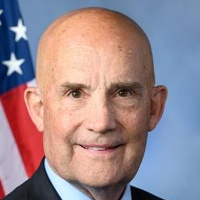
Keith Self
Representative
TX
Keith Self
Representative
TX
This resolution expresses the sense of the House of Representatives strongly supporting Kosovo's full integration into the North Atlantic Treaty Organization (NATO). It highlights the threat posed by malign actors in the Western Balkans and reaffirms U.S. support for Kosovo's sovereignty and democratic progress. The bill urges the U.S. to actively advocate for Kosovo's inclusion in NATO pathways, including the Partnership for Peace and the Membership Action Plan.
This act establishes new safety and storage requirements for service firearms carried by federal law enforcement officers and mandates reporting procedures for lost or stolen weapons.
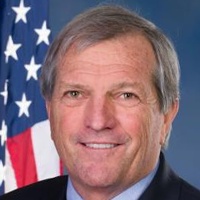
Mark DeSaulnier
Representative
CA
Mark DeSaulnier
Representative
CA
The Federal Law Enforcement and Public Protection Act establishes new federal requirements for the safe storage and handling of service weapons carried by federal law enforcement officers. This legislation mandates that agencies create specific rules for locking and storing firearms when not in use, adopting minimum standards like the use of safes or smart locks. Furthermore, the bill requires agencies to report any lost or stolen firearms and provide training on safe storage practices to all relevant personnel.
This bill establishes best practices for safe firearm storage, mandates storage notices on new firearms, requires storage devices with all rifle and shotgun sales, creates a grant program for device distribution, and offers a tax credit for storage device manufacturers and sellers.
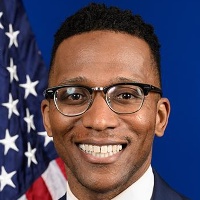
Christian Menefee
Representative
TX
Christian Menefee
Representative
TX
The Kimberly Vaughan Firearm Safe Storage Act promotes responsible firearm ownership by establishing voluntary best practices for safe storage and requiring manufacturers to include storage notices with new firearms. The bill also mandates that safe storage devices be included with all rifle and shotgun sales, not just handguns. Furthermore, it creates a grant program to help states distribute free storage devices and establishes a tax credit for manufacturers and sellers of these devices.
This bill expresses congressional disapproval of the CFPB's rule withdrawing guidance on applying the Ability-To-Repay Rule to successors-in-interest.
Cleo Fields
Representative
LA
Cleo Fields
Representative
LA
This bill seeks to disapprove, using the Congressional Review Act, the Bureau of Consumer Financial Protection's rule that withdrew guidance concerning the application of the Ability-To-Repay Rule to successors-in-interest. If enacted, this disapproval would nullify the CFPB's withdrawal rule.
This bill mandates a report on Russia's persecution of religious groups in occupied Ukraine and authorizes sanctions against those responsible.
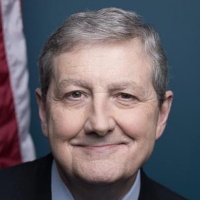
John Kennedy
Senator
LA
John Kennedy
Senator
LA
This Act mandates a comprehensive report on Russia's systematic persecution of religious groups in occupied Ukrainian territories, detailing abuses against non-aligned faiths. Following each report, the President must certify findings and impose sanctions on responsible individuals and entities. The legislation aims to hold accountable those involved in suppressing religious freedom and destroying houses of worship during the invasion.
This resolution expresses support for designating April as National Language Access Month to highlight the importance of language services for individuals with limited English proficiency.
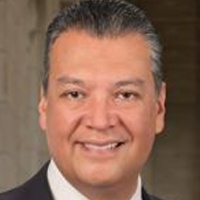
Alejandro Padilla
Senator
CA
Alejandro Padilla
Senator
CA
This resolution expresses the Senate's support for designating April as "National Language Access Month." It recognizes that providing language access is crucial for ensuring equitable access to public services for millions of Americans with limited English proficiency. The bill encourages federal and local entities to raise awareness about language access rights and resources.
This bill establishes grants for screening, support, and training related to domestic violence among pregnant and postpartum individuals, funds a study on violence's impact on maternal health, and provides guidance for healthcare protocols.
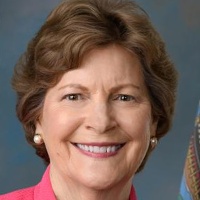
Jeanne Shaheen
Senator
NH
Jeanne Shaheen
Senator
NH
This bill aims to combat domestic violence affecting pregnant and postpartum individuals by funding programs for screening, counseling, and support services. It also mandates a study on how various forms of violence impact maternal health risks, including suicide and homicide. Furthermore, the legislation establishes grants for innovative, culturally relevant approaches to improve maternal and child health outcomes for survivors. Finally, it requires the HHS Secretary to issue guidance on developing protocols for routine screening and establishing partnerships between healthcare providers and support organizations.
This act exempts capital gains from the sale of a qualified family farm to a qualified family member from gross income.
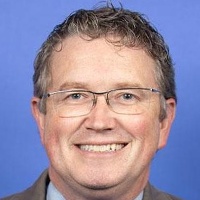
Thomas Massie
Representative
KY
Thomas Massie
Representative
KY
This act eliminates capital gains tax for family members selling qualified farm property to a direct relative. The exclusion applies to the seller's profit, provided the farm meets specific ownership and usage requirements. This measure aims to facilitate the transfer of family farms across generations while establishing beneficial basis rules for the purchasing family member.
This bill establishes federal grant programs and financing reforms to support equitable transit-oriented development that prevents displacement and preserves affordable housing near transit.
Mark DeSaulnier
Representative
CA
Mark DeSaulnier
Representative
CA
The Equitable Transit Oriented Development Support Act aims to ensure that new development near public transit benefits existing communities rather than displacing them. It establishes a HUD grant program for equitable TOD planning and creates a fund to preserve and create affordable housing near transit stations. Additionally, the bill modifies federal infrastructure finance programs to allow Community Development Financial Institutions (CDFIs) to play a larger role in financing these equitable transit projects.