Legislation
This Act extends recall and reappointment rights to separated career Foreign Service members and requires reporting on their re-entry into the Service.

Chris Van Hollen
Senator
MD
Chris Van Hollen
Senator
MD
The Foreign Service Workforce Retention Act amends the Foreign Service Act of 1980 to extend vital recall and reappointment rights to career members who separate from the Service, not just those who retire. This change allows former career members to be reappointed within five years of separation, with the Department required to act on requests within 180 days. The bill also mandates annual reporting to Congress on the use of these reappointment authorities.
This bill mandates increased disclosure of beneficial ownership for Department of Defense contractors and lowers the threshold for required foreign influence risk assessments.

Elizabeth Warren
Senator
MA
Elizabeth Warren
Senator
MA
This bill aims to increase transparency regarding foreign influence over Department of Defense (DoD) contractors. It mandates that companies bidding on DoD contracts must disclose beneficial ownership information as part of their proposals. Furthermore, the legislation expands the scope of foreign influence risk assessments and lowers the contract value threshold that triggers these mitigation procedures.
This bill ratifies the Zuni Tribe's water rights settlement, provides federal funding for water infrastructure, and protects culturally significant federal lands around the Zuni Salt Lake from mineral development.
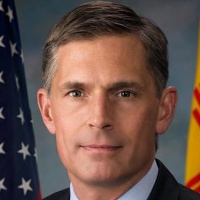
Martin Heinrich
Senator
NM
Martin Heinrich
Senator
NM
The Zuni Indian Tribe Water Rights Settlement Act of 2025 ratifies a comprehensive agreement resolving the Zuni Tribe's water claims in the Zuni River Stream System through defined water rights and federal funding for infrastructure. Title I establishes two dedicated trust funds totaling $685 million to support water projects and operations. Title II withdraws nearly 93,000 acres of federal land around the Zuni Salt Lake from mineral development and places certain parcels into trust for the Tribe, ensuring cultural and water resource protection.
This Act ratifies a settlement to resolve the water rights claims of the Ohkay Owingeh Pueblo in the Rio Chama Stream System through the establishment of a trust fund and specific waivers of claims.
Martin Heinrich
Senator
NM
Martin Heinrich
Senator
NM
This bill ratifies the Ohkay Owingeh Rio Chama Water Rights Settlement Agreement to achieve a final resolution of the Pueblo's water rights claims in the Rio Chama Stream System. It establishes a federal Trust Fund, capitalized with $745 million, to support the implementation of the agreement and water infrastructure projects. In exchange for the recognized water rights and benefits, the Pueblo and the United States must waive most past and present water rights claims against each other in the stream system. The settlement becomes legally effective only upon the completion of several key actions, including court approval and necessary legislative enactments.
This act prohibits specified political insiders from receiving payments from the Anti-Weaponization Fund related to the *Trump v. IRS* settlement and mandates public disclosure 180 days before any such payment is made.
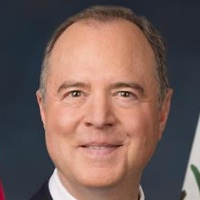
Adam Schiff
Senator
CA
Adam Schiff
Senator
CA
The "No Payouts for Political Insiders Act" restricts who can receive payments from the Anti-Weaponization Fund, specifically prohibiting payments related to the *Trump v. Internal Revenue Service* settlement to high-level political officials and their associates. The bill also mandates public disclosure of payment details, including the recipient and amount, at least 180 days before any such payment is made. These restrictions apply to pending cases and future causes of action arising after January 20, 2025.
This resolution designates May 2026 as ALS Awareness Month to recognize the impact of amyotrophic lateral sclerosis and affirm dedication to supporting those affected by the disease.
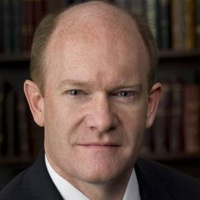
Christopher Coons
Senator
DE
Christopher Coons
Senator
DE
This resolution officially designates May 2026 as ALS Awareness Month. It recognizes the devastating impact of amyotrophic lateral sclerosis (ALS) and affirms the Senate's dedication to improving access to treatments and supports for those affected. The bill also commits to supporting research to find causes, risk factors, and a cure for ALS.
The AGE Act of 2026 establishes a federal income tax credit for individuals paying qualifying eldercare expenses for relatives aged 65 and older who need assistance with daily living.

Amy Klobuchar
Senator
MN
Amy Klobuchar
Senator
MN
The AGE Act of 2026 establishes a federal income tax credit for individuals covering eligible eldercare expenses for qualifying relatives or household members aged 65 and older who need assistance with daily living. This credit is set at a base rate of 20% of expenses, subject to a phase-out based on higher adjusted gross income. The maximum covered expense amount is capped at $6,000 per tax year.
This bill mandates the development of a national strategy to advance American Wi-Fi technologies and counter foreign adversary efforts to undermine them, particularly ahead of the 2027 World Radiocommunication Conference.
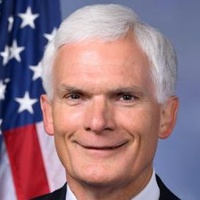
Robert Latta
Representative
OH
Robert Latta
Representative
OH
This bill aims to secure U.S. leadership in Wi-Fi and other wireless technologies against foreign adversaries, particularly China. It mandates the development of a national strategy to advocate for U.S. spectrum priorities in international forums like the upcoming World Radiocommunication Conference in Shanghai. The resulting plan must detail how the U.S. will counter efforts to undermine American-originated technologies.
This bill directs the FAA to modernize and expand secure, voluntary electronic filing capabilities for aircraft major repair and alteration records (Form 337), including enabling third-party software integration while protecting privacy.
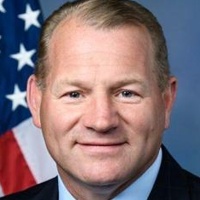
Troy Nehls
Representative
TX
Troy Nehls
Representative
TX
This bill directs the Federal Aviation Administration (FAA) to modernize and expand electronic filing capabilities for aircraft repair and alteration records (Form 337). It mandates the creation of secure electronic filing systems, including optional integration with third-party software via APIs. The legislation emphasizes that the use of these new digital tools will be entirely voluntary and must include strong privacy and security protections.
The COOL Online Act mandates that online sellers conspicuously disclose a product's country of origin and their principal place of business for certain goods, with specific exclusions for food, drugs, used items, and small sellers.
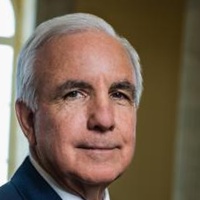
Carlos Gimenez
Representative
FL
Carlos Gimenez
Representative
FL
The COOL Online Act mandates that internet sellers conspicuously disclose a product's country of origin and the seller's principal place of business for certain goods sold online. This requirement excludes agricultural products, most food and drugs, used items, and sales by very small sellers. Enforcement falls under the Federal Trade Commission, with implementation guided by an interagency agreement.
This bill directs the Secretary of Transportation to conduct a feasibility study for establishing a rail route, named the Polar Express, connecting Alaska to the North American continental rail network.
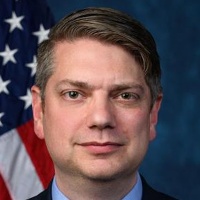
Nicholas Begich
Representative
AK
Nicholas Begich
Representative
AK
This bill, the Polar Express Act of 2026, directs the Secretary of Transportation to conduct a comprehensive feasibility study on establishing a new rail route connecting Alaska to the continental North American rail network. The study must be completed and reported to Congress within two years of initiation. This legislation only authorizes the study and does not commit federal funds for any actual construction.
The SAFE for Survivors Act of 2026 reauthorizes workplace support grants and establishes federal rights to job-protected leave, employment accommodations, unemployment compensation, and insurance protections for victims of domestic and sexual violence.

Debbie Dingell
Representative
MI
Debbie Dingell
Representative
MI
The SAFE for Survivors Act of 2026 comprehensively supports victims of domestic and sexual violence by establishing a federal right to job-protected safe leave and prohibiting employment discrimination. The bill also prevents insurance companies from penalizing survivors and ensures access to unemployment compensation when leaving a job due to violence. Additionally, it reauthorizes grants to help workplaces support affected employees and funds public awareness campaigns.
This act prohibits the federal government from mandating that qualified health plans maintain a provider network, while requiring greater transparency from plans that choose not to have one.
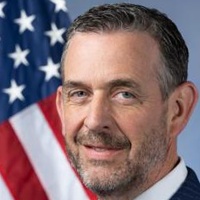
Michael Rulli
Representative
OH
Michael Rulli
Representative
OH
The Patient Choice and Access Act of 2026 removes the requirement for qualified health plans to maintain a provider network to be certified on the health insurance exchange. This change allows plans to operate without established networks starting in 2027. Plans choosing not to use a network must provide clear disclosures about potential out-of-pocket costs and balance billing to consumers.
This bill, the BRIDGE Act, mandates a comprehensive report and strategy detailing the scope of China's Belt and Road Initiative to undermine the U.S.-led world order and outlining the U.S. government's plan to counter it.
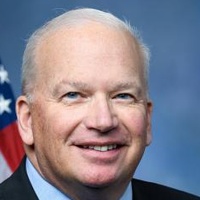
Scott Fitzgerald
Representative
WI
Scott Fitzgerald
Representative
WI
This bill, the "BRIDGE Act," mandates a comprehensive report detailing how the People's Republic of China uses its Belt and Road Initiative to undermine the U.S.-led world order. It requires the administration to develop and submit a detailed, government-wide strategy for effectively countering China's economic and political reach through the BRI. The legislation aims to ensure a unified U.S. response coordinated with allies to promote shared economic growth within a free and open international system.
The "Gig Is Up Act" mandates payroll tax withholding and doubles the employer's Social Security tax rate for large businesses that heavily utilize independent contractors.
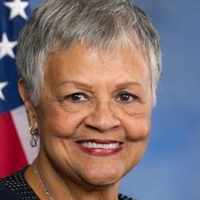
Bonnie Watson Coleman
Representative
NJ
Bonnie Watson Coleman
Representative
NJ
The "Gig Is Up Act" amends the tax code to require payroll tax withholding for independent contractors of very large businesses that rely heavily on them. For qualifying large businesses, payments to these contractors will be treated as wages subject to standard payroll taxes, and the employer's Social Security tax rate will be doubled. These changes are designed to ensure workers receive proper credit toward their Social Security earnings.
This Act authorizes the posthumous award of the Medal of Honor to Robert Lodge for his valorous actions in the Air Force during the Vietnam War, overriding existing time limitations.
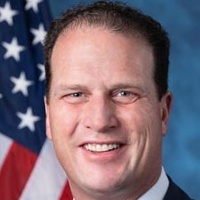
August Pfluger
Representative
TX
August Pfluger
Representative
TX
This Act authorizes the President to award the Medal of Honor to Robert Lodge for his valorous actions while serving in the Air Force during the Vietnam War on May 10, 1972. The legislation specifically waives any existing time limits that would otherwise prevent the posthumous presentation of the award.
This bill transfers administrative jurisdiction of approximately 5,624 acres on Adak Island, Alaska, from the Secretary of the Interior to the Secretary of the Navy for defense-related activities, removing the land from the National Wildlife Refuge System.
Nicholas Begich
Representative
AK
Nicholas Begich
Representative
AK
This bill transfers administrative jurisdiction of approximately 5,624 acres of land on Adak Island, Alaska, from the Secretary of the Interior to the Secretary of the Navy. This transfer allows the Navy to use the land for various defense-related activities, including testing and training. Consequently, the specified acreage is immediately removed from the Alaska Maritime National Wildlife Refuge system.
This Act designates Antifa as a domestic terrorist organization and mandates a comprehensive federal strategy to investigate, prosecute, and dismantle its networks and funding sources.
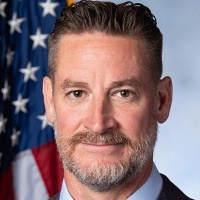
W. Steube
Representative
FL
W. Steube
Representative
FL
The Stop ANTIFA Act of 2026 officially designates Antifa as a domestic terrorist organization due to its pattern of political violence and efforts to undermine the U.S. government. The bill directs federal agencies to use their full authority to investigate, disrupt, and dismantle the network, its funding, and its members. It prioritizes prosecuting related federal offenses and mandates a comprehensive national strategy to combat politically motivated violence and intimidation.
This bill extends certain FISA surveillance authorities while imposing new warrant requirements for accessing U.S. person communications, establishing criminal penalties for misuse, and prohibiting the Federal Reserve from issuing a central bank digital currency without explicit Congressional authorization.
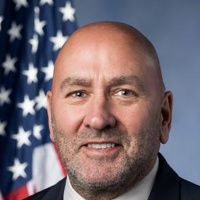
Clay Higgins
Representative
LA
Clay Higgins
Representative
LA
This bill primarily focuses on reauthorizing and reforming surveillance authorities under Title VII of the Foreign Intelligence Surveillance Act (FISA). It extends these authorities while implementing new restrictions, including requiring a warrant for the acquisition of U.S. person communications and limiting the FBI's use of unminimized data. Additionally, the legislation establishes new criminal penalties for misuse of FISA information and prohibits the Federal Reserve from issuing a central bank digital currency (CBDC) until at least 2031 without express Congressional authorization.
This bill amends the Bankruptcy Code to allow student loan borrowers to recover court costs and attorney's fees when they successfully prove undue hardship to discharge their loans.
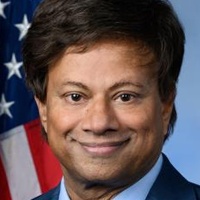
Shri Thanedar
Representative
MI
Shri Thanedar
Representative
MI
This bill, the "Stopping Abusive Student Loan Collection Practices in Bankruptcy Act of 2026," amends the U.S. Bankruptcy Code to protect student loan borrowers. It allows borrowers who successfully prove undue hardship to recover court costs and attorney's fees from lenders in bankruptcy cases. This change shifts the burden of costs to the lender when a court discharges student loan debt based on hardship.