Legislation
This bill prohibits enlistment or appointment of foreign nationals from designated adversary countries in the U.S. Armed Forces and requires a report on current service members from those nations.
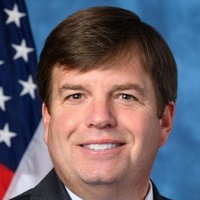
Dale Strong
Representative
AL
Dale Strong
Representative
AL
The Targeted Restrictions Upholding Service Trustworthiness (TRUST) Act prohibits individuals from certain foreign adversary nations from enlisting or being appointed as officers in the U.S. Armed Forces. This measure is intended to mitigate national security risks associated with foreign influence and espionage. The bill also requires a report detailing current service members who were nationals of these covered nations upon joining the military. These new restrictions apply to enlistments or appointments occurring 180 days after the bill's enactment.
This bill restricts how government entities can obtain records generated or held by Members of Congress and their staff during official duties, requiring notification and imposing review delays unless an exception applies.
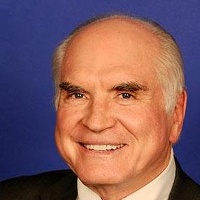
Mike Kelly
Representative
PA
Mike Kelly
Representative
PA
The Congressional Records Protection Act restricts government entities from obtaining official records of Members of Congress and their staff through warrants or subpoenas, with exceptions for criminal investigations. If such records are sought, the Member or employee must be notified before or at the time of execution. Furthermore, the government generally cannot review the seized materials for 30 days following notification.
This Act prohibits federal research agencies and grant recipients from using specific diversity, equity, or inclusion practices in connection with federal research grants.
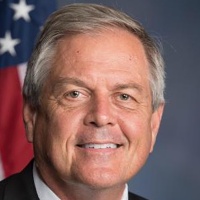
Ralph Norman
Representative
SC
Ralph Norman
Representative
SC
The Merit Restoration Act prohibits federal research agencies and grant recipients from using specific diversity, equity, or inclusion (DEI) practices when awarding or conducting federally funded research. These prohibitions focus on preventing discrimination based on race, sex, or other protected characteristics and banning mandatory training or agreements asserting inherent superiority or inferiority based on these factors. Violations can result in the freezing and required repayment of federal grant funds.
This Act mandates that law enforcement agencies receiving federal grants report felony animal cruelty convictions to the Attorney General, leading to a public database and prioritizing funding for those who comply.
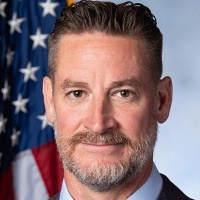
W. Steube
Representative
FL
W. Steube
Representative
FL
The Law Enforcement Animal Safety and Harm Reporting Act of 2026 (LEASH Act) mandates that recipients of federal justice assistance grants must report felony animal cruelty convictions to the Attorney General. This data will be used to prioritize funding for local governments that submit this information, and a public database of these convictions must be established.
The HOME for Foster Youth Act expands rental assistance eligibility and excludes education vouchers from income calculations for youth transitioning out of foster care.
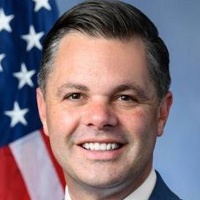
Zachary (Zach) Nunn
Representative
IA
Zachary (Zach) Nunn
Representative
IA
The HOME for Foster Youth Act expands housing assistance eligibility for young adults leaving foster care by increasing the application window from 90 to 180 days and removing prior homelessness requirements. It also ensures that Education and Training Vouchers are not counted as income when calculating housing assistance. Furthermore, the bill mandates improved coordination between HUD and HHS to streamline access to housing and supportive services for this population.
This act officially redesignates Rock Creek Park in the District of Columbia as Rock Creek National Park to recognize its national significance.

Eleanor Norton
Representative
DC
Eleanor Norton
Representative
DC
The Rock Creek National Park Act of 2026 officially redesignates Rock Creek Park in the District of Columbia as Rock Creek National Park. This change recognizes the park's significant natural, cultural, and historical resources. The legislation updates all federal references to reflect the new designation.
The American High-Speed Rail Act significantly expands federal support for high-speed rail development by increasing funding, broadening eligibility, updating safety and technology requirements, and facilitating property acquisition and freight right-of-way transfers.
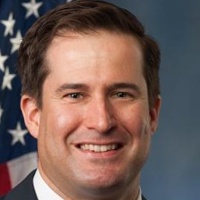
Seth Moulton
Representative
MA
Seth Moulton
Representative
MA
The American High-Speed Rail Act significantly expands federal support for high-speed and higher-speed rail development by increasing funding limits, broadening eligibility for public-private partnerships, and establishing new planning and safety requirements. The bill authorizes substantial funding through 2031 for corridor development and planning, while also creating pathways for acquiring necessary right-of-way property and ensuring labor protections on federally-funded infrastructure. It also refines definitions, setting the threshold for true "high-speed rail" at 186 mph or more, and introduces a new category for "higher-speed rail."
This act prohibits the use of federal funds for installing permanent fencing around the United States Supreme Court Building or its grounds.
Eleanor Norton
Representative
DC
Eleanor Norton
Representative
DC
This Act, titled the "No Fencing at the United States Supreme Court Act," prohibits the use of federal funds to install permanent fencing around the perimeter of the U.S. Supreme Court Building or its grounds. However, the legislation permits the repair or replacement of existing fencing.
The Digital Asset PARITY Act simplifies the tax treatment for regulated stablecoin transactions, expands safe harbors for foreign digital asset trading, extends wash sale rules to digital assets, and establishes new rules for taxing staking and mining income.

Max Miller
Representative
OH
Max Miller
Representative
OH
The Digital Asset PARITY Act aims to modernize the tax code for digital assets by simplifying the treatment of stablecoin transactions and clarifying rules for trading, lending, and staking. It extends existing tax concepts like wash sales and constructive sales to digital assets and establishes new rules for income recognition from validation activities like mining or staking. The bill also mandates a study on potential relief for small consumer digital asset transactions.
The PANA Act of 2026 establishes the Venezuela Restoration Fund, using forfeited assets from individuals tied to the Maduro regime to support democracy, human rights, and anti-corruption efforts in Venezuela.

Maria Salazar
Representative
FL
Maria Salazar
Representative
FL
The PANA Act of 2026 establishes the Venezuela Restoration Fund, which will hold assets forfeited from individuals or entities connected to the Chávez or Maduro regimes. This fund authorizes the Secretary of State to spend the money without further congressional approval to strengthen democracy, defend human rights, support independent media, and fight corruption in Venezuela. The Treasury Secretary must report annually to Congress on the fund's deposits and expenditures.
The EFFIE Act establishes felony penalties for knowingly and fraudulently signing materials or documentation required for a federal candidate's ballot access.
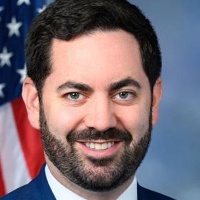
Michael Lawler
Representative
NY
Michael Lawler
Representative
NY
The EFFIE Act, or the "End Fraudulent Filings that Interfere with Elections Act," makes it a federal felony for candidates or their agents to knowingly and fraudulently sign documents required for ballot access. This new law establishes penalties of up to a $250,000 fine and five years in prison for such fraudulent activity related to federal office campaigns.
This Act establishes comprehensive federal loan forgiveness and payment support for educators serving in high-need schools and early childhood education programs.
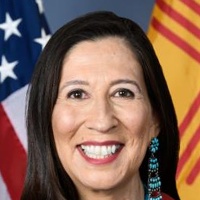
Teresa Leger Fernandez
Representative
NM
Teresa Leger Fernandez
Representative
NM
The Loan Forgiveness for Educators Act of 2026 establishes new federal loan forgiveness programs for teachers, school leaders, and early childhood educators serving in high-need schools or programs. Educators can achieve full loan forgiveness after five years of qualifying service, or receive monthly payment support during that time. The bill mandates the Secretary of Education to launch these programs within 270 days of enactment. It also includes specific provisions for Parent PLUS loan borrowers and ensures flexibility for educators whose school status changes.
This act establishes an SBA program, including a toolkit and counseling, to help small businesses create succession plans, and provides a corresponding tax credit for doing so.
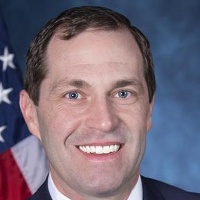
Jason Crow
Representative
CO
Jason Crow
Representative
CO
The Small Business Succession Planning Act establishes a new Small Business Administration (SBA) program to help small businesses create and implement succession plans through toolkits, training, and counseling. The bill also introduces a tax credit for small businesses that establish and complete a succession plan, subject to recapture if the business is quickly sold to a non-small business entity. Furthermore, the SBA is required to submit a plan to increase the rate of succession planning among small businesses, especially those owned by disadvantaged individuals.
This Act establishes a grant program to increase the number of school-based mental health providers in high-need elementary and secondary schools to improve student access to essential services.
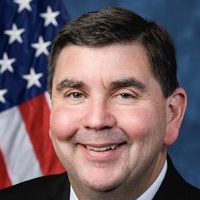
John Mannion
Representative
NY
John Mannion
Representative
NY
The Elementary and Secondary School Counseling Act establishes a federal grant program to increase the number of school-based mental health providers in high-need schools. This funding flows from the Department of Education to states, which then award competitive subgrants to local educational agencies. The goal is to help schools work toward recommended student-to-provider ratios for counselors, psychologists, and social workers. Funds must supplement existing resources and require state matching to support recruitment and retention efforts.
This bill encourages colleges and universities to develop comprehensive, evidence-based mental health and suicide prevention plans coordinated with federal agencies and established best practices.
John Mannion
Representative
NY
John Mannion
Representative
NY
This Act encourages colleges and universities to develop and implement comprehensive, evidence-based mental health and suicide prevention plans. It directs the Secretary of Education to coordinate these efforts with the Secretary of Health and Human Services, aligning plans with established national recommendations and existing programs. The legislation requires reporting on these encouragement efforts but imposes no new regulatory obligations on institutions.
This Act reaffirms U.S. commitment to the Tibetan people's human rights and distinct identity, supports the Central Tibetan Administration, and directs diplomatic efforts to secure its greater recognition in international forums.
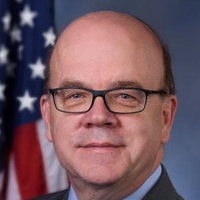
James McGovern
Representative
MA
James McGovern
Representative
MA
The Assuring the Future of Tibet Act of 2026 reaffirms long-standing U.S. policy supporting the human rights and distinct identity of the Tibetan people. It declares that the Central Tibetan Administration is the legitimate representative of the Tibetan people and supports dialogue for a negotiated resolution to the Tibet-China dispute. The bill mandates increased high-level U.S. diplomatic engagement with the Central Tibetan Administration and directs advocacy for its observer status in the United Nations.
This Act directs the review, implementation, and evaluation of evidence-based mental health interventions and staff wellness supports within Head Start programs.
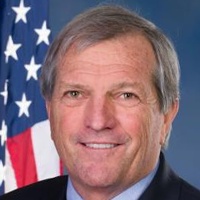
Mark DeSaulnier
Representative
CA
Mark DeSaulnier
Representative
CA
The Early Childhood Mental Health Support Act aims to improve behavioral health outcomes for children in Head Start programs. It requires the review and identification of evidence-based mental health interventions and staff wellness practices suitable for these settings. The bill authorizes grants for implementing these identified strategies and establishes a framework for evaluating their effectiveness.
The SCALE Biology Act establishes a comprehensive biometrology laboratory program at NIST to develop standards and measurement science for engineering biology and biomanufacturing.
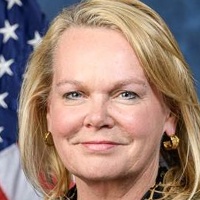
April McClain Delaney
Representative
MD
April McClain Delaney
Representative
MD
The SCALE Biology Act establishes a comprehensive biometrology laboratory program at the National Institute of Standards and Technology (NIST). This program directs NIST to conduct research and develop technical standards for engineering biology, biomanufacturing, and biotechnology. The goal is to enhance innovation, improve data reliability, and support the safe and secure development of biological technologies. The Act also authorizes specific funding levels for this new NIST research duty through fiscal year 2030.
This bill mandates that Small Business Development Centers provide assistance to small businesses in establishing and improving various workforce development programs, including apprenticeships and work-based learning.
Jason Crow
Representative
CO
Jason Crow
Representative
CO
The Small Business Workforce Pipeline Act of 2026 requires Small Business Development Centers to expand their services to help small businesses establish and improve work-based learning, apprenticeship, pre-apprenticeship, and job training programs. This assistance will include providing guidance from the Department of Labor and other federal agencies.
This bill establishes a 10-year demonstration program allowing eligible Medicare beneficiaries to voluntarily use their benefits for healthcare in approved foreign countries to evaluate impacts on quality, cost, and family reunification.
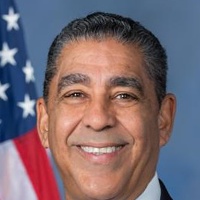
Adriano Espaillat
Representative
NY
Adriano Espaillat
Representative
NY
This bill establishes a 10-year demonstration program allowing eligible Medicare beneficiaries to voluntarily use their benefits for healthcare in approved foreign countries. The program aims to evaluate if international coverage can improve care quality, decrease government costs, and aid family reunification. The Secretary of HHS will select participating countries and manage enrollment, ensuring quality standards and cost-effectiveness comparable to U.S. Medicare.