Legislative Activity
Track Rudy's sponsored bills, co-sponsored legislation, and voting record
This bill prohibits discrimination against pregnancy centers that offer life-affirming alternatives to abortion and strengthens enforcement mechanisms for related conscience protections.
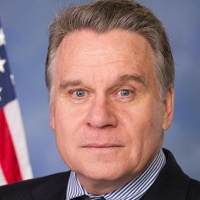
Christopher Smith
Representative
NJ
Christopher Smith
Representative
NJ
The Let Pregnancy Centers Serve Act of 2025 aims to protect pregnancy resource centers from discrimination by federal and state entities due to their commitment to offering life-affirming alternatives to abortion. This bill prohibits government agencies receiving federal funds from penalizing organizations that do not perform, refer for, or counsel in favor of abortion. Furthermore, it strengthens enforcement by allowing qualified parties to directly sue government entities for violating these conscience protections.
The Major Richard Star Act ensures that military retirees with combat-related disabilities can concurrently receive their full military retirement pay and VA disability compensation without reduction.

Gus Bilirakis
Representative
FL
Gus Bilirakis
Representative
FL
The Major Richard Star Act ensures that military retirees with combat-related disabilities can receive both their military retirement pay and VA disability compensation concurrently without reduction. This law removes previous restrictions that caused military retirement pay to be offset by VA disability payments for these specific cases. The changes take effect on the first day of the month following the Act's enactment.
Recognizes and celebrates Delta Air Lines' 100th anniversary, acknowledging its global impact and commitment to community.
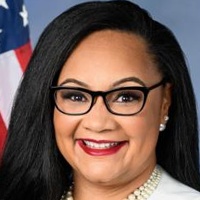
Nikema Williams
Representative
GA
Nikema Williams
Representative
GA
This bill recognizes and celebrates the 100th anniversary of Delta Air Lines, acknowledging its historical significance as the first U.S. airline to reach this milestone. It highlights Delta's growth, global connectivity, commitment to community, and industry leadership.
The Fair and Open Competition Act of 2025 prohibits the federal government from requiring or penalizing bidders or contractors on federally funded construction projects based on their agreement or non-agreement with labor unions.
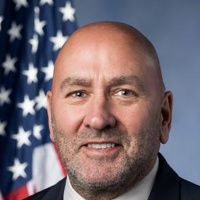
Clay Higgins
Representative
LA
Clay Higgins
Representative
LA
The Fair and Open Competition Act of 2025 ensures fair competition on federally funded construction projects by prohibiting the government from requiring or penalizing bidders based on union agreements. This legislation aims to keep federal agencies neutral in labor relations while promoting cost savings and opening opportunities for all businesses. Exceptions to this neutrality rule are strictly limited to specific public health, safety, or national security emergencies.
Extends the statute of limitations to 10 years for prosecuting fraud related to specific pandemic unemployment programs and rescinds $5,000,000 from unspent COVID-19 relief funds.
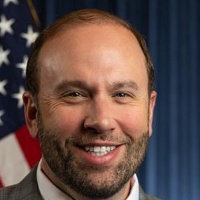
Jason Smith
Representative
MO
Jason Smith
Representative
MO
The "Pandemic Unemployment Fraud Enforcement Act" extends the statute of limitations to 10 years for prosecuting fraud related to specific pandemic unemployment programs. It applies to violations or conspiracies under Title 18 and Title 31 of the U.S. Code and rescinds $5,000,000 from previously allocated funds to offset the budget. The changes made by this law will begin on the date of enactment.
This act expands the Work Opportunity Tax Credit to include employers who hire qualified military spouses.
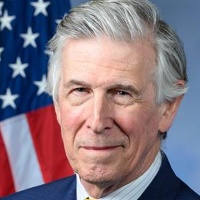
Donald Beyer
Representative
VA
Donald Beyer
Representative
VA
The Military Spouse Hiring Act amends the Internal Revenue Code to expand eligibility for the Work Opportunity Tax Credit (WOTC). This change allows employers to claim the tax credit for hiring qualified military spouses. A qualified military spouse is defined as someone certified as being married to a member of the U.S. Armed Forces.
This Act prevents the President and the Secretary of HHS from using emergency declarations to impose gun control measures and prohibits federal disaster rules from restricting the possession or transfer of firearms, ammunition, and related accessories.
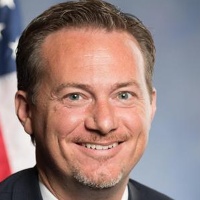
Michael Cloud
Representative
TX
Michael Cloud
Representative
TX
The Protecting the Right to Keep and Bear Arms Act of 2025 restricts the President and the Secretary of Health and Human Services from using emergency declarations to enact gun control measures. This bill specifically prevents the use of the National Emergencies Act and the Public Health Service Act for imposing new firearm restrictions. Furthermore, it amends disaster relief law to prohibit federal disaster declarations from banning the possession, sale, or transfer of firearms, ammunition, or related accessories.
Calls for Nigeria to be designated as a Country of Particular Concern due to ongoing, severe violations of religious freedom, urging U.S. action to protect religious minorities and promote human rights in the region.
Christopher Smith
Representative
NJ
Christopher Smith
Representative
NJ
This resolution expresses the sense of Congress that Nigeria should be designated as a Country of Particular Concern due to severe violations of religious freedom. It urges the Nigerian government to protect religious minorities, prosecute those responsible for violence, and ensure religious freedom. The resolution also calls for increased U.S. diplomatic efforts and potential sanctions on individuals and groups responsible for religious freedom violations in Nigeria.
This bill allows investors to defer taxes on capital gain dividends from mutual funds when those dividends are automatically reinvested until the shares are sold or the investor passes away.
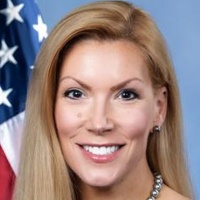
Beth Van Duyne
Representative
TX
Beth Van Duyne
Representative
TX
This bill, the Generating Retirement Ownership through Long-Term Holding Act, allows individual investors to defer paying taxes on capital gain dividends from mutual funds if those dividends are automatically reinvested into more fund shares. Taxes on these deferred gains are only due when the investor sells the shares or upon death. This provision aims to encourage long-term investment in mutual funds by providing immediate tax relief on reinvested earnings.
This act amends the tax code to give businesses the option to immediately deduct or amortize (spread out over at least five years) their research and experimental expenditures.
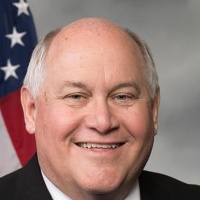
Ron Estes
Representative
KS
Ron Estes
Representative
KS
The American Innovation and R&D Competitiveness Act of 2025 revises how businesses treat research and experimental (R&E) expenditures for tax purposes. Taxpayers can now choose between immediately deducting R&E costs or amortizing them over a period of at least 60 months. This legislation also makes technical adjustments to ensure consistency between immediate deductions and claiming the research tax credit.
This Act expands Medicare eligibility for home health services by explicitly including the need for occupational therapy as a qualifying factor.
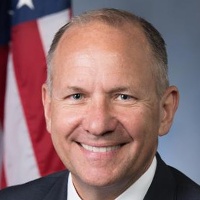
Lloyd Smucker
Representative
PA
Lloyd Smucker
Representative
PA
The Medicare Home Health Accessibility Act updates Medicare rules to explicitly include the need for occupational therapy as a valid basis for qualifying for home health services under both Part A and Part B. This change ensures that occupational therapy is treated equally alongside physical and speech therapy when determining eligibility for in-home care. These new provisions will take effect for services provided on or after January 1, 2026.
This bill censures Representative Al Green for disrupting the President's address to Congress and requires him to receive a formal reprimand before the House.
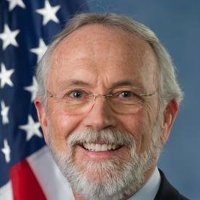
Dan Newhouse
Representative
WA
Dan Newhouse
Representative
WA
This bill censures Representative Al Green of Texas for disrupting the President's address to Congress on March 4, 2025. It condemns his actions and orders him to appear before the House of Representatives to receive a formal reprimand. During this time the Speaker of the House will publicly read the resolution of censure.
This Act excludes certain federal grants received for deploying broadband infrastructure from gross income for federal tax purposes.
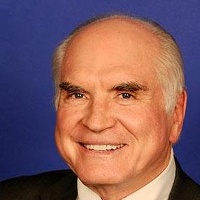
Mike Kelly
Representative
PA
Mike Kelly
Representative
PA
The Broadband Grant Tax Treatment Act excludes certain federal grants received for deploying broadband infrastructure from gross income, making those funds tax-free. This exclusion prevents taxpayers from claiming a deduction or credit for expenses covered by these grants. The bill ensures that the basis of property purchased with these tax-free funds is appropriately adjusted. This provision applies to grants received in taxable years ending after March 11, 2023.
The Fighter Force Preservation and Recapitalization Act of 2025 aims to increase and modernize the Air Force's fighter aircraft fleet, ensuring a strong national defense through the year 2030.
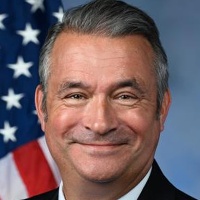
Don Bacon
Representative
NE
Don Bacon
Representative
NE
The Fighter Force Preservation and Recapitalization Act of 2025 aims to modernize and maintain the Air Force's fighter aircraft fleet by increasing the minimum number of fighter aircraft, requiring detailed reports on the fleet's status, prioritizing the assignment of new aircraft to existing squadrons, and preserving the Air National Guard's fighter capabilities. The act mandates the Air Force to assign at least three out of every four new advanced fighter aircraft to existing Air Force fighter squadrons and maintain at least 25 Air National Guard fighter aircraft squadrons. Additionally, it requires the Secretary of the Air Force to develop and submit an annual modernization plan for the Air National Guard's fighter fleet to Congress. The Act defines specific categories of fighter aircraft to clarify modernization efforts.
Censures Representative Al Green for disrupting President Trump's address to Congress, violating decorum, and bringing disrepute to the House.
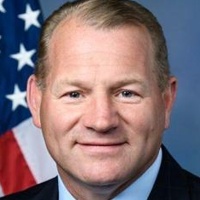
Troy Nehls
Representative
TX
Troy Nehls
Representative
TX
This resolution censures Representative Al Green for disrupting President Trump's address to Congress, violating decorum, and bringing disrepute to the House. It mandates that Representative Green present himself to the House for a public reading of the censure resolution by the Speaker.
This bill reinstates the pre-American Rescue Plan Act threshold for third-party payment networks to report gig economy earnings to the IRS, requiring both over $20,000 in payments and over 200 transactions.
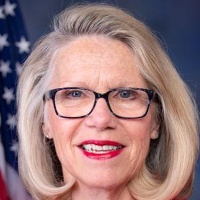
Carol Miller
Representative
WV
Carol Miller
Representative
WV
The Saving Gig Economy Taxpayers Act seeks to reinstate the previous, higher reporting thresholds for third-party payment processors issuing Form 1099-K. This means payment networks will only be required to report earnings to the IRS if a user exceeds both a \$20,000 total payment amount and 200 separate transactions in a calendar year. Furthermore, the bill applies this "de minimis" standard to backup withholding rules for these network payments starting in 2025.
The American Innovation Act of 2025 incentivizes entrepreneurship by increasing tax deductions for start-up costs, allowing unused losses and credits to be preserved after an ownership change under certain conditions.
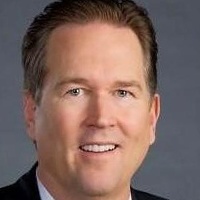
Vern Buchanan
Representative
FL
Vern Buchanan
Representative
FL
The American Innovation Act of 2025 modifies the tax code to simplify and expand deductions for start-up and organizational expenditures for new businesses, allowing businesses to deduct up to $20,000 in start-up costs in the first year. The Act also preserves start-up net operating losses and tax credits after an ownership change, with specific conditions to ensure the continuation of the business. These changes aim to support new businesses by providing more immediate tax relief and ensuring that their losses and credits are not entirely forfeited after an ownership change. The provisions of this act generally apply to businesses starting after December 31, 2025.
The "Federal Firearms Licensee Protection Act of 2025" increases penalties for stealing firearms from licensed dealers, manufacturers, or importers, especially during burglaries or robberies, and clarifies related definitions.
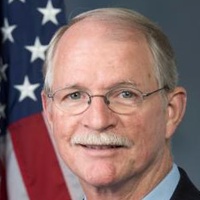
John Rutherford
Representative
FL
John Rutherford
Representative
FL
The "Federal Firearms Licensee Protection Act of 2025" increases penalties for stealing firearms from licensed dealers. It sets stricter punishments, including up to 20 years in prison, for violating laws related to firearm theft. The act also mandates minimum prison sentences of 3 years for burglaries and 5 years for robberies targeting licensed firearm businesses.
This resolution urges the European Union to formally designate the Islamic Revolutionary Guard Corps (IRGC) as a terrorist organization in response to its history of human rights abuses, regional destabilization, and global terrorism.
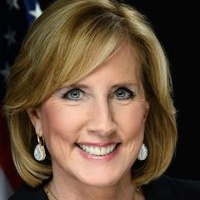
Claudia Tenney
Representative
NY
Claudia Tenney
Representative
NY
This resolution urges the European Union to formally designate the Islamic Revolutionary Guard Corps (IRGC) as a terrorist organization in response to its history of human rights abuses, support for global terrorist proxies, and assassination plots. It calls on the U.S. government to prioritize this diplomatic objective to enhance international security and hold the IRGC accountable for its destabilizing actions.
The UNITED Act aims to enhance U.S. economic competitiveness by authorizing the President to negotiate a comprehensive trade agreement with the United Kingdom, while also requiring adherence to congressional oversight and trade priorities.

Adrian Smith
Representative
NE
Adrian Smith
Representative
NE
The "UNITED Act" aims to enhance U.S. economic strength and strategic interests by directing the President to pursue trade negotiations with the United Kingdom and authorizing the President to enter into a comprehensive trade agreement. It sets specific parameters for tariff modifications and requires ongoing consultation with Congress throughout the negotiation and implementation processes. The Act also ensures adherence to existing trade priorities and accountability standards, while preventing unilateral changes to the agreement without Congressional approval.