Legislative Activity
Track James's sponsored bills, co-sponsored legislation, and voting record
This bill authorizes the creation and presentation of a Congressional Gold Medal to honor Peace Corps Volunteers who served between 1961 and 2026 for their contributions to world peace and understanding.
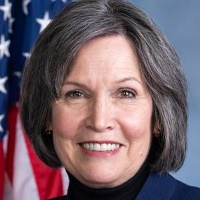
Betty McCollum
Representative
MN
Betty McCollum
Representative
MN
This bill authorizes the presentation of a Congressional Gold Medal to all Peace Corps Volunteers who served between August 28, 1961, and December 31, 2026, to recognize their distinguished service and promotion of world peace. The medal will be awarded to the Director of the Peace Corps for display at the agency's headquarters. The Secretary of the Treasury is also authorized to strike and sell bronze duplicates of the medal to cover production costs.
This joint resolution directs the President to remove U.S. Armed Forces from hostilities against certain designated groups and states unless Congress authorizes the use of force, while preserving the right to self-defense.
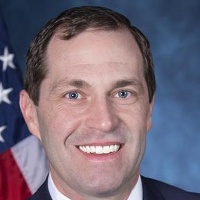
Jason Crow
Representative
CO
Jason Crow
Representative
CO
This joint resolution directs the President to remove U.S. Armed Forces from hostilities initiated after February 20, 2025, against designated terrorist groups or drug trafficking organizations without prior Congressional authorization. It asserts Congress's constitutional power to declare war and finds recent military strikes against vessels lacked proper justification. The bill allows for continued use of forces for self-defense or authorized counternarcotics support, but explicitly states drug trafficking alone does not constitute an armed attack.
This resolution urges that all future U.S. trade agreements must mandate reasonable cooperation from partner nations to facilitate the search and recovery of missing American service members from past conflicts.
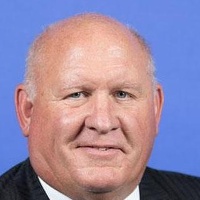
Glenn Thompson
Representative
PA
Glenn Thompson
Representative
PA
This resolution expresses the sense of Congress that all future U.S. trade agreements must require partner nations to provide reasonable access and collaboration for the search and recovery of missing U.S. service members. It directs that cooperation on accounting for Prisoners of War/Missing in Action (POW/MIA) be a mandatory component of international trade partnerships. The goal is to streamline and accelerate efforts to bring closure for families of personnel missing from past conflicts.
This resolution condemns using federal regulatory power or litigation to suppress lawful political speech critical of a party or the President, warning against authoritarianism.
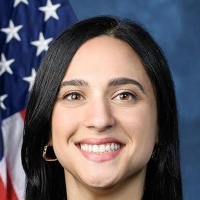
Yassamin Ansari
Representative
AZ
Yassamin Ansari
Representative
AZ
This resolution strongly condemns attempts to use federal regulatory power or litigation to suppress lawful speech critical of a political party or the President. It reaffirms the fundamental importance of the First Amendment and warns that such actions resemble tactics used by authoritarian regimes. The bill urges government agencies to protect free expression and ensure accountability, not political censorship.
This bill mandates that federally funded higher education institutions update their harassment policies to explicitly cover technology-facilitated harassment and establishes a competitive grant program to fund anti-harassment initiatives.
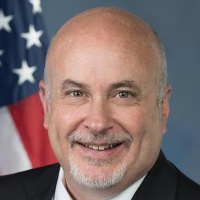
Mark Pocan
Representative
WI
Mark Pocan
Representative
WI
The Tyler Clementi Higher Education Anti-Harassment Act of 2025 mandates that colleges receiving federal funds update their policies to explicitly prohibit and detail procedures for addressing harassment based on protected characteristics, including technology-facilitated abuse. The bill also establishes a competitive grant program, funded up to $50 million annually, to support campus efforts in harassment prevention, training, and support services. This legislation adds new requirements without superseding existing civil rights protections.
The Redistricting Reform Act of 2025 mandates the use of independent, nonpartisan commissions to draw fair congressional maps based on strict criteria, while establishing federal court oversight and administrative procedures to ensure compliance.
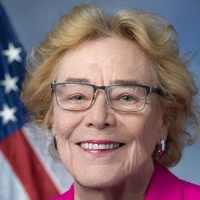
Zoe Lofgren
Representative
CA
Zoe Lofgren
Representative
CA
The Redistricting Reform Act of 2025 fundamentally overhauls congressional map-drawing by mandating the use of independent, non-partisan commissions in every state. This legislation establishes strict, prioritized criteria for map creation, explicitly banning partisan manipulation and requiring maps to prioritize community representation over political advantage. Furthermore, it sets firm deadlines for map enactment and establishes clear federal court procedures to intervene if states fail to adopt a lawful plan. Overall, the bill aims to ensure fairer congressional representation by removing map-drawing authority from state legislatures.
This resolution officially recognizes the 250th anniversary of the United States Navy, celebrating its history, global strength, and vital contributions to national security and diplomacy.
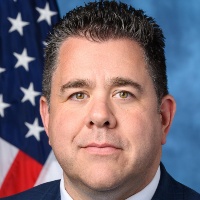
Nicolas LaLota
Representative
NY
Nicolas LaLota
Representative
NY
This resolution officially recognizes the 250th birthday of the United States Navy, celebrating its long history since the Continental Navy was established in 1775. Congress expresses deep gratitude for the bravery and dedication of all past and present Sailors who have defended the nation. The bill reaffirms the Navy's vital role in global security, humanitarian efforts, and maintaining American strength worldwide.
This House resolution strongly condemns all forms of political violence and demands an end to dehumanizing rhetoric against political opponents.
Marc Veasey
Representative
TX
Marc Veasey
Representative
TX
This House Resolution strongly condemns all forms of political violence and threats against elected officials and public figures, regardless of political affiliation. It affirms that disagreements must be resolved through peaceful and democratic means, not intimidation or force. The resolution urges law enforcement to prosecute those who commit or encourage such violence. Finally, it calls on all leaders to cease using dehumanizing rhetoric and promote civil discourse.
This act eliminates federal income tax on overtime compensation earned by all workers.
Nicole Malliotakis
Representative
NY
Nicole Malliotakis
Representative
NY
The No Tax on Overtime for All Workers Act amends the tax code to clarify and expand the definition of "qualified overtime compensation." This change ensures that overtime pay earned above a standard rate, whether mandated by the Fair Labor Standards Act or agreed upon beforehand with an employer, is treated favorably for tax purposes. The goal is to incentivize and reward workers for putting in extra hours.
The SHINE for Autumn Act of 2025 establishes federal grants for states to improve stillbirth surveillance, data collection, and risk factor research while mandating the development of standardized educational guidelines on stillbirth.
Young Kim
Representative
CA
Young Kim
Representative
CA
The SHINE for Autumn Act of 2025 aims to significantly improve federal support for state-level stillbirth research and data collection. It authorizes grants for states to enhance surveillance, track risk factors, and build local capacity for analyzing stillbirth data, provided the information remains de-identified. Furthermore, the bill mandates the development of standardized guidelines and educational materials regarding stillbirth awareness and risk factors, developed in consultation with experts and bereaved families.
This Act mandates that most health insurance plans, Medicare Part D, Medicaid, and CHIP must cover specific, currently recommended vaccines without out-of-pocket costs for a limited time.
Frank Pallone
Representative
NJ
Frank Pallone
Representative
NJ
The Protecting Free Vaccines Act mandates that most private health insurance plans must cover specific vaccines recommended by the CDC's Advisory Committee on Immunization Practices (ACIP) without any out-of-pocket costs until January 1, 2030. This requirement also updates coverage rules for Medicare Part D, Medicaid, and CHIP to ensure continuity of coverage for these recommended immunizations. The bill locks in coverage based on the ACIP recommendations in place as of October 25, 2024, across various federal health programs.
This bill mandates dedicated, funded resources for specialized 988 Suicide Prevention Lifeline services for LGBTQ+ youth.
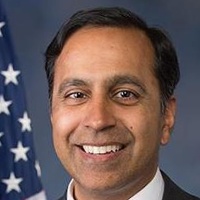
Raja Krishnamoorthi
Representative
IL
Raja Krishnamoorthi
Representative
IL
The **988 LGBTQ+ Youth Access Act of 2025** addresses the high rates of suicide risk among LGBTQ youth by strengthening specialized support through the national crisis hotline. This bill mandates that dedicated resources and services, such as a specific dialing option, must be maintained for LGBTQ individuals contacting 988. Furthermore, it requires that at least 9 percent of appropriated funds for the hotline be specifically reserved to ensure these specialized services for LGBTQ youth remain fully operational.
This bill amends the Social Security Act to provide Medicare coverage for FDA-approved multi-cancer early detection screening tests starting in 2028.
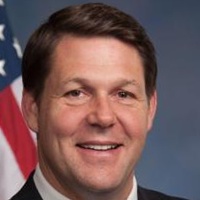
Jodey Arrington
Representative
TX
Jodey Arrington
Representative
TX
The Nancy Gardner Sewell Medicare Multi-Cancer Early Detection Screening Coverage Act amends the Social Security Act to provide Medicare Part B coverage for multi-cancer early detection screening tests starting January 1, 2028. This legislation establishes clear criteria for qualifying tests and outlines payment structures to ensure beneficiaries have access to these advanced diagnostic tools. Importantly, this coverage is designed to complement, rather than replace, existing Medicare-covered cancer screenings.
This Act mandates that new passenger motor vehicles sold in the U.S. must include standard equipment capable of receiving AM broadcast radio signals.

Gus Bilirakis
Representative
FL
Gus Bilirakis
Representative
FL
The AM Radio for Every Vehicle Act of 2025 mandates that the Secretary of Transportation establish a rule requiring AM broadcast radio receivers to be installed as standard equipment in new passenger motor vehicles. This requirement aims to ensure public access to AM radio signals, which are often used for emergency alerts. The bill also directs a GAO study on the effectiveness of AM radio within the national emergency alert system compared to other technologies. Finally, the Act preempts state and local laws on this matter and includes a sunset provision eight years after enactment.
This resolution expresses Congressional support for designating September 2025 as African Diaspora Heritage Month to recognize the community's significant contributions to the United States and strengthen ties with Africa.
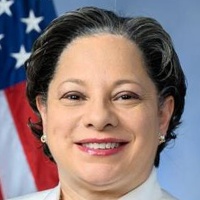
Jennifer McClellan
Representative
VA
Jennifer McClellan
Representative
VA
This resolution expresses strong Congressional support for designating September 2025 as "African Diaspora Heritage Month." It recognizes the significant and diverse contributions of the African diaspora community to American society, culture, and the economy. The bill encourages federal, state, and local entities to observe this month through appropriate programs and activities. Ultimately, it affirms the vital role of the diaspora in strengthening U.S. ties with Africa and enriching the nation's heritage.
The FAMILY Act establishes a national paid family and medical leave insurance program administered by the Social Security Administration, providing benefits for caregiving related to serious health conditions or victims of violence.
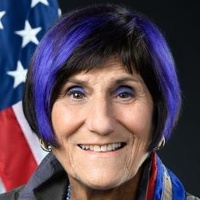
Rosa DeLauro
Representative
CT
Rosa DeLauro
Representative
CT
The FAMILY Act establishes a national Paid Family and Medical Leave Insurance program administered by a new office within the Social Security Administration. This program provides monthly benefits to eligible individuals who take time off for qualified caregiving reasons, including serious health conditions or victims of violence. The Act also sets forth detailed eligibility requirements, benefit calculation formulas, and job protection guarantees for employees utilizing the leave. Finally, it creates a funding mechanism to support existing state-level paid leave programs that meet federal standards.
The George Floyd Justice in Policing Act of 2025 comprehensively reforms policing by increasing accountability, mandating transparency through data collection, restricting dangerous tactics, and prohibiting sexual misconduct by officials acting under color of law.
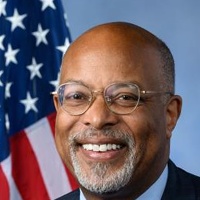
Glenn Ivey
Representative
MD
Glenn Ivey
Representative
MD
The George Floyd Justice in Policing Act of 2025 is a comprehensive bill designed to increase police accountability and transparency nationwide through federal mandates and funding incentives. It reforms standards for prosecuting civil rights violations, eliminates qualified immunity, and establishes national registries for police misconduct and use-of-force data. Furthermore, the Act bans specific dangerous police tactics like chokeholds and restricts the transfer of military equipment to local departments.
This bill posthumously awards a Congressional Gold Medal to honor the groundbreaking civil rights achievements of Constance Baker Motley and authorizes the production and sale of bronze duplicates.
Rosa DeLauro
Representative
CT
Rosa DeLauro
Representative
CT
This bill, the Congressional Tribute to Constance Baker Motley Act of 2025, posthumously awards the Congressional Gold Medal to the pioneering civil rights attorney and federal judge, Constance Baker Motley. The legislation recognizes her historic achievements, including her role in *Brown v. Board of Education* and her service as the first African-American woman appointed as a federal judge. The Secretary of the Treasury is authorized to strike the medal, and provisions are made for selling bronze duplicates to cover production costs.
This Act establishes a presumption of service connection for specific diseases developed by veterans exposed to toxins at the Pentagon Reservation following the September 11, 2001 attacks.
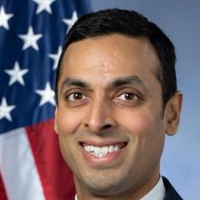
Suhas Subramanyam
Representative
VA
Suhas Subramanyam
Representative
VA
The Susan E. Lukas 9/11 Servicemember Fairness Act establishes a presumption of service connection for specific diseases developed by veterans who served at the Pentagon Reservation between September 11 and November 19, 2001. This provision simplifies the process for these veterans to receive VA disability benefits for listed conditions like asthma, cancer, and cardiovascular disease, linking them automatically to their toxic exposure following the 9/11 attacks. The Secretary is also empowered to add other related illnesses to this covered list.
The RESULTS Act reforms how Medicare determines payment rates for clinical diagnostic laboratory tests by mandating the use of comprehensive, real-world private payor claims data collected from an independent entity.
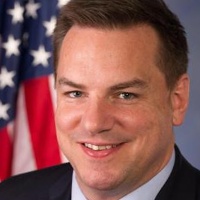
Richard Hudson
Representative
NC
Richard Hudson
Representative
NC
The Reforming and Enhancing Sustainable Updates to Laboratory Testing Services Act of 2025 (RESULTS Act) aims to improve Medicare payment rates for clinical lab tests by mandating the collection of more accurate, real-world payment data directly from large, independent private insurance claims databases. This legislation updates definitions, collection timelines, and calculation methods to ensure Medicare payments for widely available tests reflect current market rates. It also establishes default payment rules if sufficient private payor data cannot be secured.