Legislative Activity
Track James's sponsored bills, co-sponsored legislation, and voting record
This Act establishes sanctions against Pakistani officials undermining democracy and human rights, while urging the U.S. government to promote democratic institutions in Pakistan until September 30, 2030.
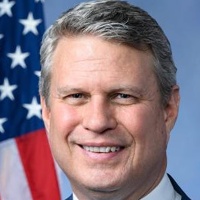
Bill Huizenga
Representative
MI
Bill Huizenga
Representative
MI
The Pakistan Freedom and Accountability Act expresses strong U.S. support for democracy and human rights in Pakistan, citing concerns over military influence and recent election interference. This legislation directs the President to identify and impose sanctions on Pakistani officials responsible for undermining democratic processes or committing serious human rights abuses. The Act emphasizes the need for civilian control over the military and sets an expiration date for its provisions in September 2030.
The **Congressional Power of the Purse Act** strengthens Congress's control over impoundment, mandates detailed federal spending transparency, and tightens oversight on the declaration and termination of national emergencies.
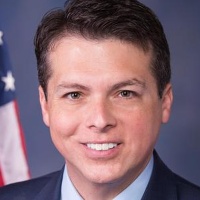
Brendan Boyle
Representative
PA
Brendan Boyle
Representative
PA
The Congressional Power of the Purse Act is a comprehensive bill designed to reassert Congressional authority over federal spending, emergency declarations, and executive branch financial oversight. It strengthens Congress's ability to prevent impoundment of appropriated funds, mandates greater transparency regarding unspent government money, and imposes strict time limits and review procedures on presidential declarations of national emergencies. Ultimately, the Act aims to increase accountability across the Executive Branch regarding the execution and management of taxpayer funds.
This Act establishes a comprehensive EPA program to research, guide, and assist in improving indoor air quality across all buildings, with a special focus on schools and childcare facilities.
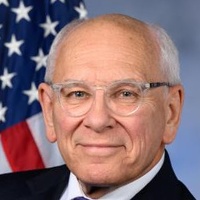
Paul Tonko
Representative
NY
Paul Tonko
Representative
NY
The Indoor Air Quality and Healthy Schools Act of 2025 establishes a comprehensive federal program, managed by the EPA Administrator, to assess, reduce, and prevent exposure to indoor air contaminants in all buildings, with a special focus on schools and childcare facilities. The Act mandates the creation of science-based guidelines for contaminants of concern and supports technical assistance, training, and voluntary "Healthy Building Certifications." It also directs the development of model building codes and a national assessment of air quality in educational settings to ensure healthier indoor environments nationwide.
This Act establishes a comprehensive U.S. policy to condemn China's repression of Uyghurs and other minorities in Xinjiang, demands international access to detention facilities, and directs the State Department to prioritize protecting their rights and combating transnational harassment.
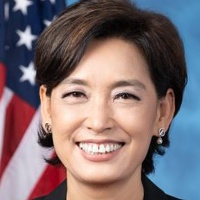
Young Kim
Representative
CA
Young Kim
Representative
CA
The Uyghur Policy Act of 2025 formally condemns the People's Republic of China's repression and cultural erasure of Uyghurs and other minorities in the Xinjiang Uyghur Autonomous Region. It directs the U.S. government to prioritize protecting Uyghur identity, demanding immediate access to detention facilities, and coordinating international pressure to secure the release of political prisoners. Furthermore, the Act mandates strengthening State Department efforts, including Uyghur language training and public diplomacy funding, to counter transnational harassment and raise global awareness of these human rights abuses.
This act prohibits discrimination in federal jury service based on disability or age, ensuring individuals are not excluded if they can perform the essential functions of jury duty with reasonable accommodation.
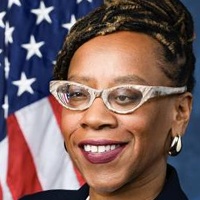
Lateefah Simon
Representative
CA
Lateefah Simon
Representative
CA
This Act prohibits discrimination against individuals based on disability or age in federal jury service. It amends federal law to ensure that a disability cannot be used as a basis for exclusion from a jury unless the individual cannot perform the essential functions of service even with a reasonable accommodation. The legislation updates existing jury qualification standards to reflect this nondiscrimination principle.
The Enduring Welcome Act of 2025 establishes a permanent Office of the Coordinator for Afghan Relocation Efforts within the State Department to streamline and support the resettlement of Afghan allies and their families.
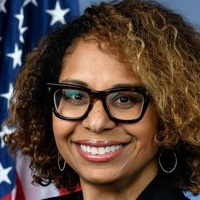
Sydney Kamlager-Dove
Representative
CA
Sydney Kamlager-Dove
Representative
CA
The Enduring Welcome Act of 2025 establishes a permanent Office of the Coordinator for Afghan Relocation Efforts within the State Department to streamline and support the resettlement of Afghan allies. This Act mandates the creation of a secure, centralized database to track all applicants, beneficiaries, and relocation progress, ensuring accountability to Congress. The Coordinator will manage interagency efforts, resolve family reunification roadblocks, and provide integration support for covered persons. This entire framework is set to automatically expire five years after enactment unless otherwise specified.
This Act directs the Secretary of HHS to report on and improve state coverage of remote physiologic monitoring devices for pregnant and postpartum Medicaid beneficiaries.
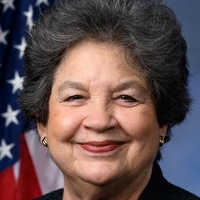
Lois Frankel
Representative
FL
Lois Frankel
Representative
FL
The Connected Maternal Online Monitoring (Connected MOM) Act aims to improve health outcomes for pregnant and postpartum women on Medicaid by examining and addressing barriers to state coverage for remote physiologic monitoring devices. The Secretary of Health and Human Services must report to Congress on current state coverage rules and suggest improvements for utilizing these monitoring tools. Following the report, federal resources provided to states must be updated to reflect the recommended best practices for covering remote maternal health monitoring.
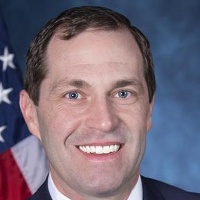
This bill establishes a competitive grant program to fund the creation and operation of pet-friendly interim and permanent housing for unhoused individuals, ensuring access to necessary supportive and veterinary care for both people and their companion animals.
Jason Crow
Representative
CO
Jason Crow
Representative
CO
The Providing for Unhoused People and Pets Act of 2025 (PUPP Act) establishes a grant program to fund the creation and upgrading of interim and permanent housing that accommodates unhoused individuals along with their pets. Managed jointly by the Secretaries of Agriculture and HUD, these grants support construction, renovation, and essential pet-related operating costs. Grantees must ensure housing provides necessary supportive services for occupants and basic veterinary care for their companion animals.
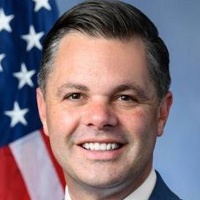
This Act establishes a multi-sector Task Force, led by the Treasury Secretary, to study, recommend strategies for, and report on preventing evolving electronic payment scams.
Zachary (Zach) Nunn
Representative
IA
Zachary (Zach) Nunn
Representative
IA
The Taskforce for Recognizing and Averting Payment Scams Act (TRAPS Act) establishes a new Task Force led by the Secretary of the Treasury. This diverse group, including federal agencies, industry experts, and consumer advocates, will study evolving payment scams. The Task Force is charged with developing cross-sector prevention strategies and submitting comprehensive recommendations for new laws and improved coordination to combat these fraudulent activities.
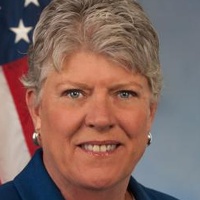
This act mandates that the Department of Veterans Affairs must provide abortion care, counseling, and related services and medication to eligible veterans and certain other individuals.
Julia Brownley
Representative
CA
Julia Brownley
Representative
CA
The Reproductive Freedom for Veterans Act mandates that the Department of Veterans Affairs (VA) must now provide abortion care, counseling, and related medication as part of the medical services offered to eligible veterans and certain other beneficiaries. This legislation formally amends existing VA health care provisions to include these reproductive health services.
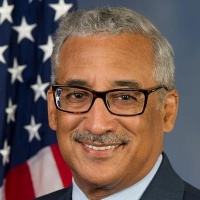
The LOAN Act significantly expands Pell Grants, eliminates loan fees, restructures repayment and forgiveness for federal loans, stops interest capitalization, and ties future federal loan interest rates to Treasury yields while creating refinancing options.
Robert Scott
Representative
VA
Robert Scott
Representative
VA
The LOAN Act significantly overhauls federal student aid by dramatically expanding Pell Grants, making higher education more accessible through increased funding and eligibility pathways. It also restructures federal student loans by eliminating origination fees, introducing new income-driven repayment plans, and stopping interest capitalization to reduce borrower debt. Furthermore, the bill establishes new fixed interest rate formulas for future loans and creates refinancing options for both existing federal and private student loans. Overall, the legislation aims to lower the cost of college and ease the burden of repayment for millions of borrowers.
This act repeals the prohibition on Medicaid payments to certain healthcare entities and mandates retroactive payment for services already rendered under the repealed ban.
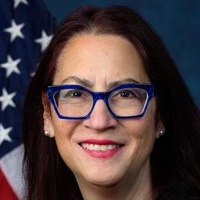
Laura Friedman
Representative
CA
Laura Friedman
Representative
CA
The Restoring Essential Healthcare Act repeals an outdated ban that prevented Medicaid from making payments to certain healthcare providers. This legislation ensures that these previously prohibited entities will now be reimbursed for medical services rendered between the enactment of the original ban and the passage of this Act. In short, it restores payment eligibility and retroactively covers past services.
This act authorizes $50 million annually from 2026 through 2031 for the CDC to conduct research on firearms safety and gun violence prevention.
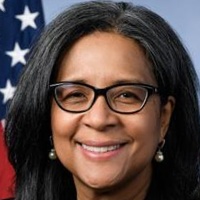
Marilyn Strickland
Representative
WA
Marilyn Strickland
Representative
WA
The Gun Violence Prevention Research Act of 2025 authorizes $50 million annually for the Centers for Disease Control and Prevention (CDC) to conduct or support research on firearms safety and gun violence prevention. This dedicated funding is authorized for each fiscal year from 2026 through 2031. This new allocation is separate from and in addition to any existing CDC research funding.
This bill establishes a new system for distributing up to 2,000 additional Medicare-funded residency positions annually from 2026 through 2032, prioritizing hospitals serving underserved areas, and mandates a study on strategies to increase workforce diversity.
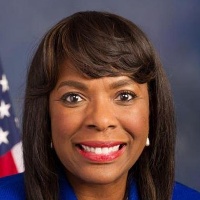
Terri Sewell
Representative
AL
Terri Sewell
Representative
AL
The Resident Physician Shortage Reduction Act of 2025 establishes a structured process for distributing up to 2,000 additional, federally funded residency positions annually between fiscal years 2026 and 2032. This distribution prioritizes hospitals serving in underserved areas, those already training above their limit, and those committed to primary care and general surgery training. The bill also mandates a study and report by the Comptroller General on effective strategies to increase diversity within the health professional workforce.
This Act exempts certain overtime compensation, defined as pay exceeding 1.5 times the regular rate or agreed-upon extra hours over a 40-hour work week, from federal income tax for tax years beginning after December 31, 2024.
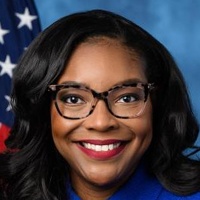
Emilia Sykes
Representative
OH
Emilia Sykes
Representative
OH
The No Tax on Overtime for All Workers Act amends the Internal Revenue Code to exclude certain overtime compensation from federal taxation. This change specifically covers overtime pay that meets the standard time-and-a-half rate or overtime agreed upon in advance with an employer, provided the standard work week is at least 40 hours. This provision takes effect for tax years beginning after December 31, 2024.
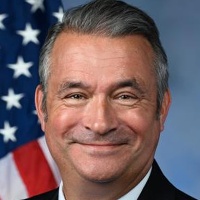
This Act prohibits insurance companies from discriminating against living organ donors when issuing life, disability, or long-term care policies and mandates the updating of educational materials regarding donation risks and insurance implications.
Don Bacon
Representative
NE
Don Bacon
Representative
NE
The Living Donor Protection Act of 2025 prohibits life, disability, and long-term care insurance companies from denying coverage or increasing premiums solely because an individual is a living organ donor. This legislation ensures that living donors are not financially penalized for their altruistic act. Additionally, the bill requires the Secretary of HHS to update educational materials to accurately reflect the insurance protections afforded to living donors.
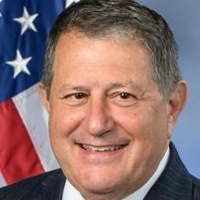
This constitutional amendment prohibits immunity from criminal prosecution for federal officials based on their official duties and bars the President from self-pardoning.
Joseph Morelle
Representative
NY
Joseph Morelle
Representative
NY
This proposed constitutional amendment would eliminate immunity from criminal prosecution for federal officials, including the President, based on their official duties. It also explicitly prohibits the President from issuing a self-pardon for any federal crimes. If ratified, these changes would take effect immediately.
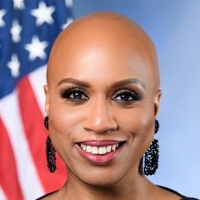
The EACH Act of 2025 mandates that all federally funded health programs and facilities must cover and provide abortion services, while also prohibiting federal interference with private insurance coverage.
Ayanna Pressley
Representative
MA
Ayanna Pressley
Representative
MA
The EACH Act of 2025 aims to ensure equal access to abortion coverage by requiring all federally funded health programs and facilities to cover abortion services. This legislation prohibits federal interference with state or private insurance coverage of abortion and repeals Section 1303 of the Affordable Care Act. Ultimately, the bill seeks to eliminate financial and insurance barriers to abortion care, particularly for low-income individuals relying on programs like Medicaid.
This bill amends the Family and Medical Leave Act to explicitly qualify time taken for an employee's own organ donation surgery as a serious health condition.
Don Bacon
Representative
NE
Don Bacon
Representative
NE
This bill amends the Family and Medical Leave Act (FMLA) to explicitly clarify that time taken off for an employee's own organ donation surgery qualifies as a serious health condition. This ensures both private and federal sector workers receive FMLA protection for recovery from organ donation. The legislation also specifies how federal employees must substitute existing paid leave when taking FMLA time for this purpose.
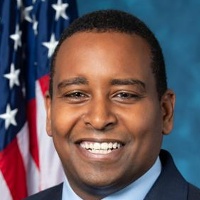
Ally's Act mandates that certain private health insurance plans must cover auditory implant devices, related services, and upgrades for qualifying individuals without imposing stricter cost-sharing or treatment limitations than other medical benefits.
Joe Neguse
Representative
CO
Joe Neguse
Representative
CO
The Ally's Act mandates that certain private health insurance plans must cover auditory implant devices, related supplies, and necessary services for qualifying individuals. This coverage must be comparable to other medical and surgical benefits regarding cost-sharing and treatment limitations. Furthermore, plans cannot deny coverage if a physician or qualified audiologist determines the required hearing items or services are medically necessary. These new requirements take effect for plan years beginning on or after January 1, 2026.