Legislative Activity
Track Tony's sponsored bills, co-sponsored legislation, and voting record
The Veterans First Act of 2025 redirects \$2 billion from foreign aid to fund the construction and renovation of state-run veterans' homes.
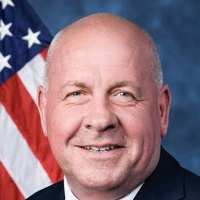
David Taylor
Representative
OH
David Taylor
Representative
OH
The Veterans First Act of 2025 redirects $2 billion from foreign aid to the Department of Veterans Affairs (VA). This funding is specifically allocated to provide grants for the construction, renovation, and improvement of state-run veterans' homes and facilities. The bill ensures these funds remain available until fully utilized for veteran care infrastructure projects.
This Act expands federal funding flexibility and increases the federal share for highway safety projects specifically designed to protect pedestrians and bicyclists.
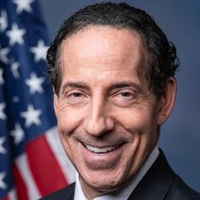
Jamie Raskin
Representative
MD
Jamie Raskin
Representative
MD
The Sarah Debbink Langenkamp Active Transportation Safety Act updates the Highway Safety Improvement Program to prioritize safety for pedestrians and cyclists. This bill allows federal funding to cover up to 100% of the cost for projects that connect existing bike/pedestrian infrastructure or reduce risks for vulnerable road users. It also provides flexibility for states to use existing safety funds as matching money for these specific upgrades.
This bill censures Representative Al Green for disrupting the President's address to Congress and requires him to receive a formal reprimand before the House.
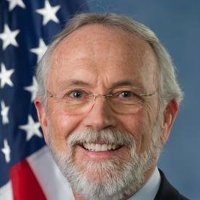
Dan Newhouse
Representative
WA
Dan Newhouse
Representative
WA
This bill censures Representative Al Green of Texas for disrupting the President's address to Congress on March 4, 2025. It condemns his actions and orders him to appear before the House of Representatives to receive a formal reprimand. During this time the Speaker of the House will publicly read the resolution of censure.
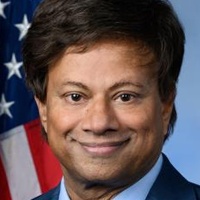
The LIONs Act of 2025 increases the maximum loan amounts for 7(a) loans to $7,500,000 and for development company loans to $10,000,000.
Shri Thanedar
Representative
MI
Shri Thanedar
Representative
MI
The LIONs Act of 2025 increases the maximum loan amounts for both 7(a) loans and development company loans, aiming to provide greater financial support to small businesses. Specifically, it raises the 7(a) loan limit to $7,500,000 and the development company loan limit to $10,000,000.
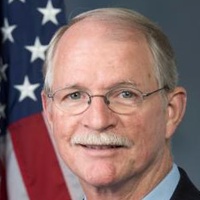
The "Federal Firearms Licensee Protection Act of 2025" increases penalties for stealing firearms from licensed dealers, manufacturers, or importers, especially during burglaries or robberies, and clarifies related definitions.
John Rutherford
Representative
FL
John Rutherford
Representative
FL
The "Federal Firearms Licensee Protection Act of 2025" increases penalties for stealing firearms from licensed dealers. It sets stricter punishments, including up to 20 years in prison, for violating laws related to firearm theft. The act also mandates minimum prison sentences of 3 years for burglaries and 5 years for robberies targeting licensed firearm businesses.
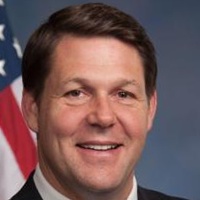
Permanently allows individuals with health savings accounts (HSAs) to utilize telehealth services without needing to meet their deductible.
Jodey Arrington
Representative
TX
Jodey Arrington
Representative
TX
The "Telehealth Expansion Act of 2025" permanently allows individuals with Health Savings Accounts (HSAs) to access telehealth services without needing to meet their deductible first, starting after December 31, 2024. This removes a barrier to accessing telehealth services for HSA holders.
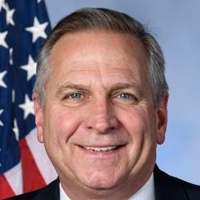
The Truck Parking Safety Improvement Act establishes a grant program to expand commercial truck parking and improve safety on Federal-aid highways.
Mike Bost
Representative
IL
Mike Bost
Representative
IL
The Truck Parking Safety Improvement Act establishes a grant program to expand commercial truck parking and improve safety. The program provides funds to states, local governments, and tribal entities for projects that increase parking availability, improve existing facilities, and use technology to manage parking. The Act also requires a biennial report to Congress on the availability of truck parking and the effectiveness of funded projects. It authorizes $151 million per fiscal year from 2025 through 2029 for these initiatives.
The "FARM Act of 2025" restricts tax credits for renewable energy production, specifically solar and wind, on agricultural land used by public utilities.
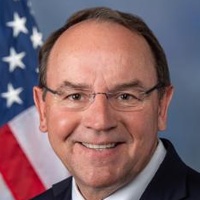
Thomas Tiffany
Representative
WI
Thomas Tiffany
Representative
WI
The FARM Act of 2025 restricts federal tax credits for renewable energy production, specifically solar and wind facilities, when placed on agricultural land by public utilities. This act amends the Internal Revenue Code to deny these credits, aiming to preserve agricultural land.
To award a Congressional Gold Medal to the 761st Tank Battalion, the first Black soldiers to serve in an American armored unit, for their valor and crucial contributions to the Allied victory in Europe.
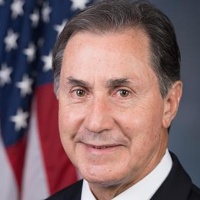
Gary Palmer
Representative
AL
Gary Palmer
Representative
AL
This bill authorizes the Speaker of the House and the President pro tempore of the Senate to award a Congressional Gold Medal to the 761st Tank Battalion, also known as the "Black Panthers," in recognition of their courageous service and crucial contributions during World War II. The medal will be given to the National Museum of African American History and Culture for display, honoring the 761st as the first Black soldiers to serve in an American armored unit and their significant role in the Allied victory in Europe. The bill also allows for the creation and sale of bronze duplicates of the medal to support the United States Mint Public Enterprise Fund.
This resolution condemns the Iranian regime’s terrorism and human rights abuses while affirming support for the Iranian people’s right to establish a democratic, secular, and non-nuclear republic.
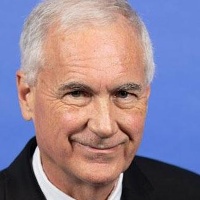
Tom McClintock
Representative
CA
Tom McClintock
Representative
CA
This resolution condemns the Iranian regime for its ongoing human rights abuses, state-sponsored terrorism, and regional instability. It expresses strong support for the Iranian people's struggle for a democratic, secular, and non-nuclear republic. Furthermore, the bill advocates for international accountability for the regime's crimes and calls for the protection of Iranian political refugees.
This resolution establishes uniform standards and oversight for the authorized display of flags within House of Representatives facilities.
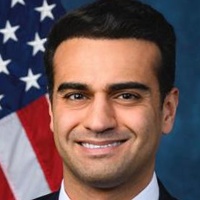
Abraham Hamadeh
Representative
AZ
Abraham Hamadeh
Representative
AZ
This resolution establishes uniform standards for the display of flags within House of Representatives facilities, excluding individual Members' personal offices. It explicitly defines the authorized flags permitted for display and designates the Committee on House Administration and the Sergeant at Arms to oversee compliance and manage temporary exceptions.
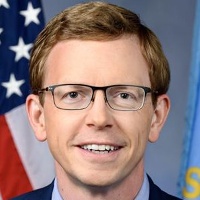
The America Works Act of 2025 amends the Food and Nutrition Act of 2008 to modify exemptions from work requirements for SNAP benefits and allows waivers in high-unemployment areas.
Dusty Johnson
Representative
SD
Dusty Johnson
Representative
SD
The America Works Act of 2025 amends the Food and Nutrition Act of 2008 to provide exemptions from work requirements for specific individuals, including those under 18 or over 65, medically unfit individuals, and parents of young children. It also allows the Secretary to waive certain requirements in counties with high unemployment rates, based on state agency requests. Additionally, the act removes a subsection from the Fiscal Responsibility Act of 2023.
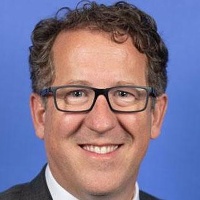
This bill authorizes the creation of a Congressional Gold Medal to honor the volunteers and communities involved with the North Platte Canteen during World War II.
Adrian Smith
Representative
NE
Adrian Smith
Representative
NE
The North Platte Canteen Congressional Gold Medal Act recognizes and honors the volunteers and donors of the North Platte Canteen in Nebraska during World War II with a Congressional Gold Medal. This medal will be presented by the Speaker of the House and the President pro tempore of the Senate, and then displayed at the Lincoln County Historical Museum. The Act also authorizes the creation and sale of bronze duplicates of the gold medal to cover production costs, with proceeds deposited into the Mint's Public Enterprise Fund.
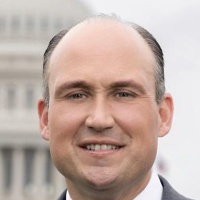
The "Make American Flags in America Act of 2025" mandates that U.S. flags displayed on Federal property or bought by Federal agencies be made entirely in the U.S., and requires a study on country-of-origin labeling enforcement for flags.
Nicholas Langworthy
Representative
NY
Nicholas Langworthy
Representative
NY
The "Make American Flags in America Act of 2025" mandates that U.S. flags displayed on Federal property or bought by Federal agencies be entirely manufactured in the U.S. using 100% U.S.-made materials, in accordance with international agreements. It also directs the Federal Trade Commission to study and report on country-of-origin labeling enforcement for U.S. flags, aiming to improve enforcement and deter violations.
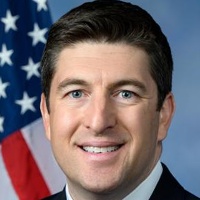
The "CURD Act" formally defines "natural cheese" to help consumers distinguish it from processed cheese, ensuring consistent labeling and preventing misuse of the term.
Bryan Steil
Representative
WI
Bryan Steil
Representative
WI
The "Codifying Useful Regulatory Definitions Act" defines "natural cheese" to differentiate it from processed cheese products, setting standards for its composition, ingredients, and labeling. It ensures that only products meeting the defined criteria can be labeled as "natural cheese," while allowing "natural" or "all-natural" claims consistent with existing regulations. This act aims to provide clarity for consumers and consistency in labeling requirements across the country.
This resolution expresses Congressional opposition to imposing new performance fees or royalties on local radio stations and businesses for broadcasting or playing music.
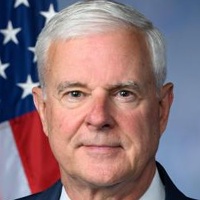
Steve Womack
Representative
AR
Steve Womack
Representative
AR
The Local Radio Freedom Act expresses Congressional opposition to imposing new performance fees, taxes, or royalties on local radio stations and businesses for playing music. It argues that the current system of free airplay provides essential promotional value to artists and that new fees would threaten the financial viability of local broadcasters and the vital community services they provide.
This bill mandates payment and performance security for construction projects receiving federal water infrastructure funding, ensuring subcontractors are paid and projects are completed.
Mike Bost
Representative
IL
Mike Bost
Representative
IL
The Water Infrastructure Subcontractor and Taxpayer Protection Act of 2025 amends the Water Infrastructure Finance and Innovation Act of 2014 to ensure payment and performance security for construction projects receiving federal assistance. It allows the Secretary of Transportation or the Administrator to consider state or local laws mandating payment and performance security as fulfilling this requirement if they cover at least 50% of the construction contract. If state or local laws don't apply or meet the 50% threshold, adherence to federal bond requirements under 40 U.S.C. 3131(b)(1) and (2) is required.
The "Death Tax Repeal Act" eliminates estate and generation-skipping transfer taxes, adjusts gift tax calculations, and sets a $10,000,000 lifetime gift exemption.
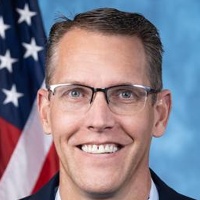
Randy Feenstra
Representative
IA
Randy Feenstra
Representative
IA
The "Death Tax Repeal Act" eliminates both estate and generation-skipping transfer taxes, effective from the date of enactment. It adjusts gift tax calculations by setting the lifetime gift exemption at $10,000,000, with inflation adjustments after 2011. The Act also includes transitional rules for applying certain sections of the Internal Revenue Code during the enactment year.
The SAFE for America Act of 2025 eliminates the diversity visa program, effective October 1, 2025.
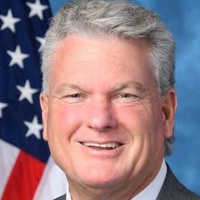
Mike Collins
Representative
GA
Mike Collins
Representative
GA
The SAFE for America Act of 2025 eliminates the Diversity Visa Program, which makes visas available to persons from countries with low rates of immigration to the United States. This is achieved through repealing subsection (c) of Section 203 of the Immigration and Nationality Act. The Act also makes corresponding technical amendments to other sections of the Immigration and Nationality Act to reflect this change. These changes would take effect beginning October 1, 2025.
The "National Right-to-Work Act" prohibits mandatory union membership as a condition of employment, protecting employees' rights to choose whether or not to join or support a labor union.
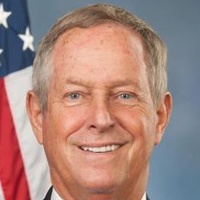
Joe Wilson
Representative
SC
Joe Wilson
Representative
SC
The "National Right-to-Work Act" amends both the National Labor Relations Act and the Railway Labor Act to protect an employee's right to choose whether or not to join or support a labor union. It eliminates the possibility of mandatory union membership or dues payments as a condition of employment, ensuring that employees cannot be forced to join or support a union against their will.