Legislative Activity
Track Ann's sponsored bills, co-sponsored legislation, and voting record
This resolution encourages the Department of State and civil society to advance the Abraham Accords by promoting peace and tolerance through educational reform.
Bradley Schneider
Representative
IL
Bradley Schneider
Representative
IL
This resolution strongly supports the Abraham Accords as a foundation for broader peace and security cooperation in the Middle East. It specifically encourages the Department of State and civil society groups to promote peace and tolerance through educational reforms in partner nations. The bill advocates for expanding normalization efforts and ensuring these agreements deliver tangible security and economic benefits across the region.
This Act establishes a specific P visa category for temporary workers employed by traveling carnivals, circuses, and associated concession providers, while subjecting them to existing H-2B temporary worker regulations.
Zoe Lofgren
Representative
CA
Zoe Lofgren
Representative
CA
The Carnivals are Real Entertainment Act establishes a specific P visa pathway for temporary workers employed by traveling carnivals, circuses, and associated concession providers. This new classification ensures essential mobile entertainment staff can enter the U.S. while adhering to existing H-2B temporary worker program regulations. The law mandates that the Secretaries of Homeland Security and Labor develop and finalize the necessary rules within one year of enactment.
The CBO Scoring Accountability Act mandates that the Congressional Budget Office produce annual reports for ten years tracking the actual financial impact of major legislation against its initial cost estimates.
Garland Barr
Representative
KY
Garland Barr
Representative
KY
The CBO Scoring Accountability Act mandates that the Congressional Budget Office (CBO) produce annual reports for ten years following the enactment of any "major legislation." These reports must compare the actual financial impact of the law against the CBO's original estimates. If significant discrepancies occur, the CBO is required to explain the variance to Congress.
This resolution supports Financial Literacy Month by recognizing widespread financial struggles and calling for increased education and awareness across the nation.
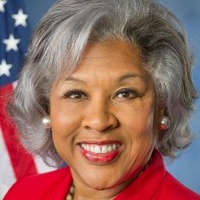
Joyce Beatty
Representative
OH
Joyce Beatty
Representative
OH
This resolution officially supports the goals of Financial Literacy Month by recognizing the widespread financial challenges facing American households. It highlights the urgent need for improved personal finance education due to low budgeting rates and high levels of household debt. The bill calls upon federal, state, and local entities to promote programs that enhance financial understanding and responsible money management.
This bill repeals the requirement for financial institutions to collect and report specific data on small business loans to reduce compliance costs and improve small business access to credit.
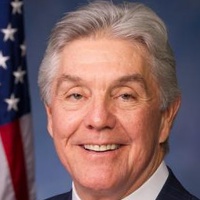
Roger Williams
Representative
TX
Roger Williams
Representative
TX
The 1071 Repeal to Protect Small Business Lending Act aims to eliminate the mandatory data collection and reporting requirements for small business loans previously established under Section 704B of the Equal Credit Opportunity Act. Proponents argue that these regulations impose unnecessary compliance costs on lenders, potentially hindering small business access to credit. This bill repeals those specific reporting mandates to reduce regulatory burdens on financial institutions.
This Act imposes sweeping, mandatory sanctions, tariffs, and investment prohibitions on the Russian Federation and its affiliates until Russia negotiates a lasting peace with Ukraine.
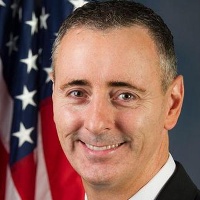
Brian Fitzpatrick
Representative
PA
Brian Fitzpatrick
Representative
PA
The Sanctioning Russia Act of 2025 imposes sweeping economic penalties on the Russian Federation in response to its aggression against Ukraine. This legislation mandates severe, immediate sanctions against key Russian officials, financial institutions, and energy sector entities, including asset freezes and trade prohibitions. Furthermore, the Act dramatically increases import duties on Russian goods and requires the President to review and reimpose these measures until Russia negotiates a lasting peace with Ukraine.
This bill mandates sanctions on Iranian natural gas transactions to curb the growth of Iran's gas industry.
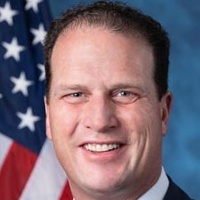
August Pfluger
Representative
TX
August Pfluger
Representative
TX
The No Iranian Energy Act aims to strengthen U.S. policy by explicitly targeting Iran's growing natural gas industry with sanctions. This bill amends existing law to ensure that sanctions apply to the sale, supply, or transfer of Iranian natural gas. The legislation reflects Congress's intent to restrict Iran's energy sector activities.
This bill rescinds specific financial waivers and licenses related to Iran and prohibits the President from reauthorizing similar permissions for accessing certain Iranian funds.
August Pfluger
Representative
TX
August Pfluger
Representative
TX
This bill mandates the immediate rescission of specific waivers and licenses that previously allowed certain international money transfers related to Iran. It explicitly prohibits the President from reissuing similar permissions or granting new licenses that would allow the Iranian government access to restricted financial accounts. In essence, this legislation closes specific financial pathways previously opened concerning Iran.
The Secure Family Futures Act of 2025 modifies tax code provisions for applicable insurance companies by excluding certain debt from being treated as a capital asset and extending the capital loss carryover period to ten years for specific losses incurred after 2025.
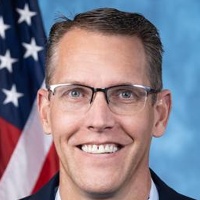
Randy Feenstra
Representative
IA
Randy Feenstra
Representative
IA
The Secure Family Futures Act of 2025 modifies tax treatment for certain debt holdings of applicable insurance companies, excluding specific debt instruments from being treated as capital assets for tax purposes. Additionally, this Act extends the capital loss carryover period to 10 years for specified losses incurred by these insurance companies. These changes apply only to transactions occurring after December 31, 2025.
This bill raises the resource limits for Supplemental Security Income (SSI) eligibility starting in 2025 and ties future limits to inflation adjustments.
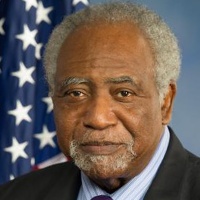
Danny Davis
Representative
IL
Danny Davis
Representative
IL
The SSI Savings Penalty Elimination Act significantly raises the resource limits for individuals and couples applying for Supplemental Security Income (SSI), starting in 2025. This legislation also mandates that these new resource limits will be automatically adjusted annually to keep pace with inflation. The goal is to allow SSI applicants to save more money without losing eligibility for benefits.
This resolution formally recognizes the 250th anniversary of the United States Marine Corps, honoring its legacy, service, and core values.
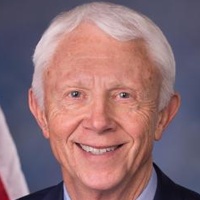
Jack Bergman
Representative
MI
Jack Bergman
Representative
MI
This resolution formally recognizes the upcoming 250th anniversary of the United States Marine Corps in 2025. Congress is honoring the Corps' long history, core values of honor, courage, and commitment, and its consistent readiness to defend the nation. The bill encourages the public to join in celebrating this significant milestone and acknowledging the service and sacrifice of all Marines.
This bill establishes national reciprocity for concealed carry permits, allowing individuals legally permitted to carry in their home state to carry a handgun in any other state that allows concealed carry.
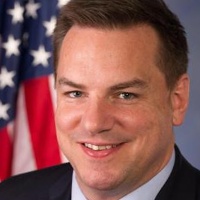
Richard Hudson
Representative
NC
Richard Hudson
Representative
NC
The Constitutional Concealed Carry Reciprocity Act of 2025 establishes a national standard for carrying concealed handguns across state lines. This act allows individuals legally permitted to carry in their home state to carry concealed in any other state that allows its residents to carry concealed firearms. The law does not override private property restrictions or prohibitions on government property, but it provides protections and legal recourse for those traveling in compliance with the new federal standard.
The Foreign Investment Guardrails to Help Thwart (FIGHT) China Act imposes sanctions, prohibits U.S. investments in sensitive Chinese national security technologies, and establishes divestment requirements for companies linked to China's military-industrial complex.
Garland Barr
Representative
KY
Garland Barr
Representative
KY
The Foreign Investment Guardrails to Help Thwart (FIGHT) China Act aims to protect U.S. national security by imposing sanctions on certain foreign persons and restricting U.S. investments in sensitive technologies within China. The bill establishes new prohibitions and mandatory reporting requirements for U.S. persons engaging in covered national security transactions involving specific prohibited technologies. Furthermore, it mandates the creation of a "Non-SDN Chinese Military-Industrial Complex Companies List" and requires divestment from securities in companies placed on that list.
The Credit for Caring Act of 2025 establishes a new, partially refundable federal income tax credit for working family caregivers covering qualified expenses exceeding \$2,000, up to a \$5,000 annual limit.
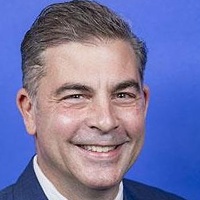
Mike Carey
Representative
OH
Mike Carey
Representative
OH
The Credit for Caring Act of 2025 establishes a new, non-refundable federal income tax credit for working family caregivers who incur significant expenses caring for a relative with long-term care needs. Eligible caregivers can claim a credit equal to 30% of qualified expenses exceeding \$2,000, up to a maximum annual credit of \$5,000. The bill specifies detailed requirements for the care recipient's needs, the types of allowable expenses, and includes income phase-out limits for claiming the benefit.
This bill supports the stepped-up basis, which helps family farms and small businesses pass on their operations to the next generation without facing higher taxes.
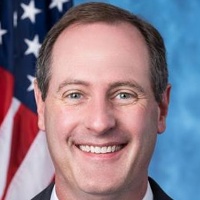
Tracey Mann
Representative
KS
Tracey Mann
Representative
KS
This bill expresses the House of Representatives' support for maintaining the stepped-up basis under section 1014 of the Internal Revenue Code, which allows inherited assets to be adjusted to their current market value, protecting family-owned farms and small businesses from increased taxes. It opposes any changes to the tax code that would negatively impact the ability of these businesses to pass their operations on to the next generation. The bill recognizes the importance of generational transfers for the continuation of family farms, ranches, agribusinesses, and small businesses.
This bill disapproves the Bureau of Consumer Financial Protection's rule prohibiting creditors and consumer reporting agencies from using medical information.
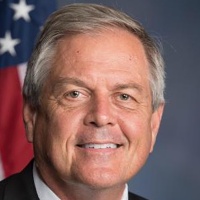
Ralph Norman
Representative
SC
Ralph Norman
Representative
SC
This bill disapproves a recent rule issued by the Bureau of Consumer Financial Protection (BCFP) concerning the use of medical information by creditors and consumer reporting agencies. Utilizing the Congressional Review Act, Congress nullifies this specific BCFP regulation. Consequently, the rejected rule will have no legal effect.
Nullifies the Consumer Financial Protection Bureau's rule on overdraft lending practices of large financial institutions.
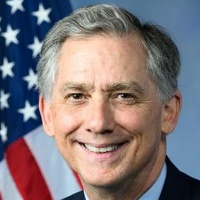
J. Hill
Representative
AR
J. Hill
Representative
AR
This bill disapproves and invalidates the Consumer Financial Protection Bureau's rule regarding overdraft lending practices of very large financial institutions. The rule, found in the Federal Register, is nullified by this disapproval.
The ACRE Act of 2025 creates a federal tax exemption for qualified lenders on interest earned from loans secured by rural or agricultural real property, excluding loans to foreign adversary entities.
Randy Feenstra
Representative
IA
Randy Feenstra
Representative
IA
The Access to Credit for our Rural Economy Act of 2025 (ACRE Act) creates a new federal tax incentive for qualified lenders. This incentive excludes income earned from interest on loans secured by rural or agricultural real property from taxation. The goal is to encourage lending for agricultural, forestry, and certain rural home improvement purposes while prohibiting loans to foreign adversary entities.
The "Federal Firearms Licensee Protection Act of 2025" increases penalties for stealing firearms from licensed dealers, manufacturers, or importers, especially during burglaries or robberies, and clarifies related definitions.
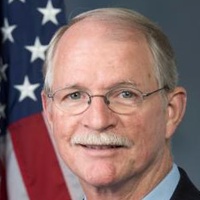
John Rutherford
Representative
FL
John Rutherford
Representative
FL
The "Federal Firearms Licensee Protection Act of 2025" increases penalties for stealing firearms from licensed dealers. It sets stricter punishments, including up to 20 years in prison, for violating laws related to firearm theft. The act also mandates minimum prison sentences of 3 years for burglaries and 5 years for robberies targeting licensed firearm businesses.
The EARLY Minds Act supports state-level mental health prevention and early intervention programs for children and adolescents.
August Pfluger
Representative
TX
August Pfluger
Representative
TX
The "EARLY Minds Act" amends the Public Health Service Act to emphasize early intervention for mental health by requiring states to outline prevention strategies in their plans. States can use up to 5% of their funding to support these programs. The Secretary must report to Congress biennially on state prevention and early intervention activities, including outcomes and demographics.