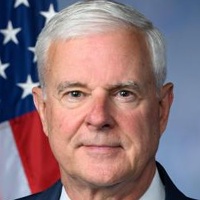
Legislative Activity
Track Steve's sponsored bills, co-sponsored legislation, and voting record
This resolution honors the life and historic congressional legacy of the Honorable Kay Granger, recognizing her trailblazing service as a Representative from Texas and her dedicated contributions to national defense and the city of Fort Worth.
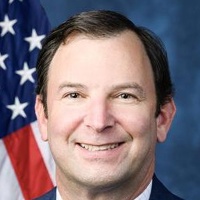
Craig Goldman
Representative
TX
Craig Goldman
Representative
TX
This resolution honors the life and legacy of the Honorable Kay Granger, celebrating her nearly 28 years of service in the U.S. House of Representatives. It recognizes her historic achievements as a trailblazer for women in public office, her dedicated advocacy for national defense, and her lasting contributions to the city of Fort Worth, Texas.
This bill reauthorizes the Accelerating Access to Critical Therapies for ALS Act through 2031 while enhancing grant oversight, safety reporting requirements, and FDA strategic planning for rare neurodegenerative diseases.

Mike Quigley
Representative
IL
Mike Quigley
Representative
IL
The Accelerating Access to Critical Therapies for ALS Reauthorization Act of 2026 extends vital funding for ALS research and clinical trial programs through 2031. This legislation strengthens oversight by enhancing grant review processes, improving safety reporting requirements, and mandating a comprehensive five-year FDA action plan to accelerate the development of treatments for rare neurodegenerative diseases.
This bill clarifies that a franchisor is only considered a joint employer of a franchisee's workers if it exercises substantial, direct, and immediate control over essential terms of employment.
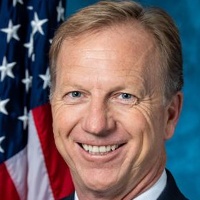
Kevin Hern
Representative
OK
Kevin Hern
Representative
OK
The American Franchise Act aims to protect the traditional franchise business model by clarifying the definition of a "joint employer." This legislation establishes that a franchisor is only considered a joint employer if it exercises "substantial direct and immediate control" over the essential terms of employment for a franchisee's workers. This change specifically targets liability risks associated with maintaining brand standards, ensuring franchisors are not automatically held responsible for local labor practices. The new standard applies prospectively to future legal proceedings.
This bill mandates electronic prior authorization, increases transparency through required data reporting, and establishes faster decision timelines for Medicare Advantage plans to improve timely access to care for seniors.
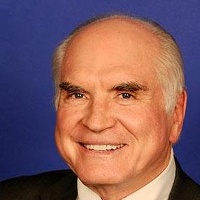
Mike Kelly
Representative
PA
Mike Kelly
Representative
PA
The Improving Seniors’ Timely Access to Care Act of 2025 aims to streamline and modernize the prior authorization process within Medicare Advantage plans. This bill mandates the adoption of electronic prior authorization systems and significantly increases transparency regarding approval rates and decision times starting in 2027. Furthermore, it establishes new enrollee protections and grants the Secretary authority to enforce faster decision timeframes for medical services.
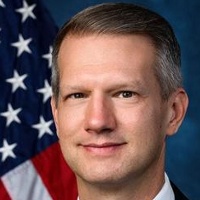
This Act prohibits payment card networks and processors from assigning specific merchant category codes to identify firearms retailers, protecting the privacy of firearm and ammunition purchases.
Riley Moore
Representative
WV
Riley Moore
Representative
WV
The Protecting Privacy in Purchases Act prohibits payment card networks and processors from assigning specific merchant category codes to firearms retailers. This legislation aims to protect consumer privacy by preventing the tracking of firearm and ammunition purchases through specialized financial classification. The Attorney General is tasked with enforcing these provisions and reporting annually on compliance.
This bill expands Medicare Part B coverage to reimburse for specific pharmacist services related to testing and treatment for certain public health threats, effective January 1, 2026.

Adrian Smith
Representative
NE
Adrian Smith
Representative
NE
The Ensuring Community Access to Pharmacist Services Act expands Medicare Part B coverage to include services provided by pharmacists starting January 1, 2026. This coverage is specifically for testing or treatment related to COVID-19, the flu, RSV, strep throat, or during a declared public health emergency. The bill outlines payment structures, generally covering 80% of the cost, and prohibits pharmacists from balance billing Medicare patients for these covered services.
This bill authorizes the minting and sale of commemorative gold and silver coins to honor the 25th anniversary of the September 11, 2001, terrorist attacks, with surcharges supporting the National September 11 Memorial and Museum.

Dan Goldman
Representative
NY
Dan Goldman
Representative
NY
This bill authorizes the Secretary of the Treasury to mint and issue commemorative gold and silver coins marking the 25th anniversary of the September 11, 2001, terrorist attacks. The coins will honor the victims, first responders, and survivors, with designs selected in consultation with the National September 11 Memorial and Museum. All surcharges from the sale of these coins will be paid directly to the Memorial and Museum to support its operations and maintenance.
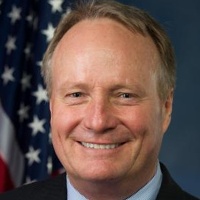
This bill establishes the Combating Organized Retail Crime Act of 2025 to enhance federal prosecution tools against organized retail and supply chain crime and create a DHS-led coordination center to align law enforcement efforts.
David Joyce
Representative
OH
David Joyce
Representative
OH
The Combating Organized Retail Crime Act of 2025 aims to combat sophisticated, cross-jurisdictional organized retail and supply chain theft. It achieves this by strengthening federal laws regarding money laundering and stolen property offenses, including lowering monetary thresholds for prosecution. Furthermore, the bill establishes a dedicated Center within the Department of Homeland Security to coordinate federal, state, and local enforcement efforts against these criminal organizations.
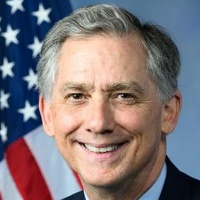
The Small LENDER Act modifies small business loan data collection and reporting requirements under the Equal Credit Opportunity Act, providing exemptions and delays for smaller institutions.
J. Hill
Representative
AR
J. Hill
Representative
AR
The Small LENDER Act modifies how financial institutions collect and report demographic data from small business loan applicants under the Equal Credit Opportunity Act. It mandates written notice to applicants, limits data gathering to self-reporting, and delays enforcement until at least June 1, 2033. The bill also introduces exemptions for smaller financial institutions and narrows the definition of a "small business."
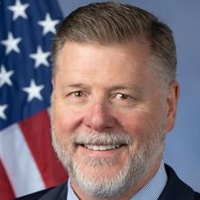
This bill amends the Food and Nutrition Act of 2008 to explicitly include hot rotisserie chicken as an eligible food item under the Supplemental Nutrition Assistance Program (SNAP).
Eric Crawford
Representative
AR
Eric Crawford
Representative
AR
This bill seeks to amend the Food and Nutrition Act of 2008 to update the definition of eligible food items for the Supplemental Nutrition Assistance Program (SNAP). Specifically, it would explicitly add hot rotisserie chicken to the list of items that can be purchased with SNAP benefits. The legislation also includes minor technical formatting updates to the existing law.
This bill prohibits federal agencies from banning the use of lead ammunition and tackle on federal lands and waters unless specific, evidence-based criteria and state-level coordination requirements are met.

Robert Wittman
Representative
VA
Robert Wittman
Representative
VA
The Protecting Access for Hunters and Anglers Act prevents federal agencies from banning the use of lead ammunition and tackle on federal lands and waters open to hunting and fishing. Exceptions to this rule are only permitted if specific, site-based field data proves lead is causing a wildlife population decline and the action is approved by or consistent with state wildlife policies.
This Act requires the Treasury Department to annually assess and report on the financial risks to the federal government from major fiscal shocks like recessions, disasters, or crises.

Ben Cline
Representative
VA
Ben Cline
Representative
VA
The Fiscal Contingency Preparedness Act mandates that the Treasury Department, in coordination with the OMB, include a new analysis of potential financial risks from major "fiscal shocks" in its annual report. This analysis must assess the short-term and long-term financial impacts of events like recessions, natural disasters, or cyber attacks on the federal government. The Government Accountability Office (GAO) will subsequently review the methodology and findings of this new fiscal assessment.
The Enhanced Iran Sanctions Act of 2025 mandates broad economic and immigration sanctions on foreign individuals, entities, and financial institutions that support Iran’s nuclear, missile, drone, or terrorist activities, while specifically targeting the country's petroleum and petrochemical sectors.
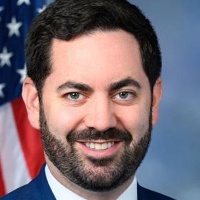
Michael Lawler
Representative
NY
Michael Lawler
Representative
NY
The Enhanced Iran Sanctions Act of 2025 strengthens U.S. policy by imposing mandatory sanctions on foreign persons and financial institutions that support Iran’s nuclear, ballistic missile, drone, and terrorist activities. The bill specifically targets Iran’s petroleum and petrochemical sectors to cut off funding for these malign programs. Additionally, it expands the State Department’s "Rewards for Justice" program to incentivize the reporting of individuals who evade these sanctions.
This bill requires the President’s annual budget and the Congressional budget resolution to include explicit reporting on public debt-to-GDP and deficit-to-GDP ratios.
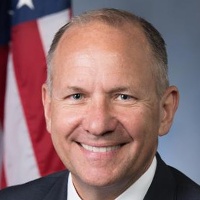
Lloyd Smucker
Representative
PA
Lloyd Smucker
Representative
PA
The Debt-to-GDP Transparency and Stabilization Act mandates that both the President’s annual budget submission and the Congressional budget resolution include clear data on public debt and deficit ratios relative to the Gross Domestic Product (GDP). This legislation aims to increase fiscal transparency by ensuring these key economic indicators are consistently reported in federal budget documents.
This bill authorizes the minting of special $2.50 commemorative coins for the 250th anniversary of the Declaration of Independence and mandates a study on the feasibility of issuing a $2.50 coin for general circulation.
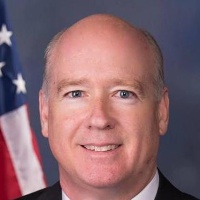
Robert Aderholt
Representative
AL
Robert Aderholt
Representative
AL
This act establishes the "$2.50 for America's 250th Act" to commemorate the 250th anniversary of the Declaration of Independence. It authorizes the Treasury to mint and issue special commemorative gold, silver, and clad $2.50 coins featuring designs from the 1926 Sesquicentennial coin. Additionally, the bill mandates a study on the feasibility of minting and issuing a $2.50 coin for wide circulation.
This act establishes the Domestic Cotton Consumption Credit to incentivize businesses to use U.S.-grown cotton through a verified supply chain with varying credit percentages based on processing location.
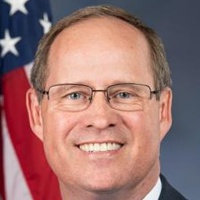
Gregory Murphy
Representative
NC
Gregory Murphy
Representative
NC
The Buying American Cotton Act of 2026 establishes the Domestic Cotton Consumption Credit to incentivize the use of U.S.-grown cotton in products sold domestically. This new business tax credit is calculated based on the volume of U.S. cotton used, the market price, and where the product was processed. The bill mandates digital tracing to verify the supply chain and offers significantly increased credit multipliers for products containing U.S.-made cotton yarn or fabric.
This bill modifies deposits into the Crime Victims Fund by excluding certain False Claims Act recoveries and mandates an Inspector General audit of the Fund's sustainability.
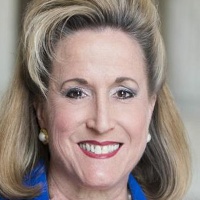
Ann Wagner
Representative
MO
Ann Wagner
Representative
MO
This bill amends the Victims of Crime Act of 1984 to temporarily exclude certain False Claims Act recoveries from being deposited into the Crime Victims Fund through fiscal year 2029. It also mandates a comprehensive audit by the Department of Justice Inspector General on the Fund's sustainability and the impact of recent legislative changes. The resulting report will provide recommendations for improving the Fund's effectiveness and oversight.
This resolution expresses the House's sense that the United States should aim to reduce and maintain the federal budget deficit at or below 3 percent of the Gross Domestic Product.
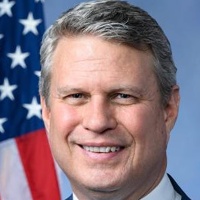
Bill Huizenga
Representative
MI
Bill Huizenga
Representative
MI
This resolution expresses the sense of the House that the United States should commit to reducing the annual federal budget deficit to 3% of GDP or less. It calls for Congress and the President to adopt fiscal policies aimed at achieving this bipartisan target by the end of fiscal year 2030. The bill also mandates recommendations for enforcement mechanisms and requires budget analyses to show how legislation impacts progress toward this goal.
This Act modernizes federal highway and freight safety programs by mandating the integration of advanced safety data technologies like predictive analytics and telematics to proactively reduce roadway risks.
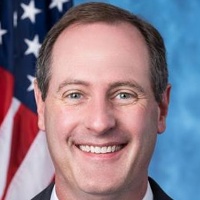
Tracey Mann
Representative
KS
Tracey Mann
Representative
KS
The Roadway Safety Modernization Act of 2025 aims to significantly enhance road safety by integrating modern data technologies into federal highway and freight safety programs. This legislation encourages states to adopt predictive analytics and telematics for risk modeling and proactive safety planning. Furthermore, it directs the Department of Transportation to establish guidance on data security and the responsible use of these advanced safety tools.
This act removes Section 4024(c) from the CARES Act to clarify the enforcement of state housing laws.
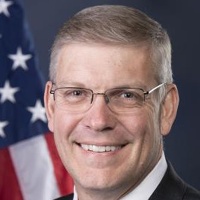
Barry Loudermilk
Representative
GA
Barry Loudermilk
Representative
GA
The Respect State Housing Laws Act aims to clarify federal housing regulations by amending the CARES Act. Specifically, this legislation removes Section 4024(c) from the CARES Act.