Legislative Activity
Track Peter's sponsored bills, co-sponsored legislation, and voting record
This Act prohibits the use of federal funds in fiscal year 2026 for nuclear weapons test explosions that produce a measurable yield, while allowing for zero-yield stockpile stewardship activities.
Edward Markey
Senator
MA
Edward Markey
Senator
MA
The No Nuclear Testing Act of 2025 prohibits the use of federal funds in fiscal year 2026 for any nuclear weapons test explosion that produces a measurable yield. This measure maintains the current ban on explosive testing while allowing for zero-yield stockpile stewardship activities to continue.
This Act establishes authority for the Treasury to issue an additional $\$200$ monthly economic recovery payment to eligible Social Security, SSI, Railroad Retirement, Veterans, and federal annuity recipients from January 1, 2026, through June 30, 2026.
Elizabeth Warren
Senator
MA
Elizabeth Warren
Senator
MA
This Act establishes the Social Security Emergency Inflation Relief Act to provide temporary financial assistance to benefit recipients. It authorizes an additional $\$200$ monthly economic recovery payment for eligible Social Security, SSI, Railroad Retirement, and Veterans' benefit recipients between January 1, 2026, and June 30, 2026. These payments are disregarded for federal income tax and benefit eligibility purposes.
This Act establishes financial assistance through grants and loans to deploy high-speed broadband service in underserved rural areas of America.

Roger Marshall
Senator
KS
Roger Marshall
Senator
KS
The ReConnecting Rural America Act of 2025 aims to expand high-speed broadband access in underserved rural areas through grants and loans. It establishes minimum service standards of 100 Mbps download and 100 Mbps upload capacity for funded projects. The bill prioritizes assistance for the most unserved communities and sets funding authorizations through fiscal year 2030.
This joint resolution terminates the national emergency declared to impose duties on articles imported from Canada.
Timothy Kaine
Senator
VA
Timothy Kaine
Senator
VA
This joint resolution officially terminates the national emergency declared by the President on February 1, 2025, which was used to impose duties on articles imported from Canada. It exercises the authority granted under the National Emergencies Act to end the emergency status established by Executive Order 14193.
This resolution commemorates the seventh anniversary of Jamal Khashoggi's murder while calling on Saudi Arabia to hold those responsible accountable and cease its transnational repression against dissidents.
Timothy Kaine
Senator
VA
Timothy Kaine
Senator
VA
This resolution commemorates the seventh anniversary of Jamal Khashoggi's murder and addresses ongoing transnational repression by the Government of Saudi Arabia. It calls for accountability for those responsible for Khashoggi's death and urges Saudi Arabia to release all wrongfully detained individuals. Furthermore, the resolution emphasizes that these human rights abuses strain the strategic relationship between the U.S. and Saudi Arabia.
This bill ensures uninterrupted funding for SNAP and WIC benefits through fiscal year 2026, covering any missed payments during a funding lapse.
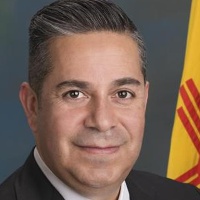
Ben Luján
Senator
NM
Ben Luján
Senator
NM
The Keep SNAP and WIC Funded Act of 2025 ensures that essential nutrition programs, including SNAP and WIC, continue to provide benefits without interruption if full appropriations for the Department of Agriculture are not enacted for Fiscal Year 2026. This legislation immediately makes funds available to cover benefits and state operating costs during any funding lapse, retroactive to September 30, 2025. These special appropriations terminate once the standard FY 2026 funding bill is passed or by September 30, 2026.
This joint resolution terminates the national emergency declared in July 2025 concerning duties on articles imported from Brazil.
Timothy Kaine
Senator
VA
Timothy Kaine
Senator
VA
This joint resolution terminates the national emergency declared by Executive Order 14323 on July 30, 2025. The declaration was originally put in place to impose duties on articles imported from Brazil. This bill officially ends that emergency status using the authority granted by the National Emergencies Act.
This bill changes how Social Security cost-of-living adjustments (COLAs) are calculated by mandating the use of the more favorable index between the Consumer Price Index for Urban Wage Earners and Clerical Workers or a newly established Consumer Price Index for Elderly Consumers.
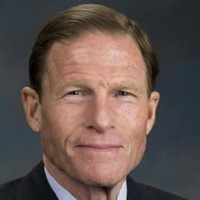
Richard Blumenthal
Senator
CT
Richard Blumenthal
Senator
CT
The Boosting Benefits and COLAs for Seniors Act seeks to update how Social Security cost-of-living adjustments (COLAs) are calculated. It mandates using the index that results in a higher adjustment: either the Consumer Price Index for Urban Wage Earners and Clerical Workers or a newly established Consumer Price Index for Elderly Consumers. This change aims to provide a more accurate reflection of seniors' actual cost of living in benefit calculations starting after September 2026.
The TREATS Act allows a single telehealth evaluation to satisfy the in-person requirement for prescribing certain Schedule III, IV, or V controlled substances approved for substance use disorder treatment.

Lisa Murkowski
Senator
AK
Lisa Murkowski
Senator
AK
The TREATS Act modifies existing law to expand access to medication-assisted treatment for substance use disorders. Specifically, it allows a single telehealth evaluation to satisfy the prior in-person evaluation requirement for prescribing certain Schedule III, IV, or V controlled substances approved for addiction treatment. This change aims to improve the delivery of necessary therapy services via remote care.
This Act ensures back pay for federal employees, contractors, and service members affected by a government shutdown beginning October 1, 2025, and prohibits agency staffing reductions during such lapses.

Chris Van Hollen
Senator
MD
Chris Van Hollen
Senator
MD
The True Shutdown Fairness Act ensures that federal employees, contractors, and service members affected by a government funding lapse starting October 1, 2025, receive retroactive back pay for the period they worked without funding. Additionally, the bill prohibits agencies from initiating permanent staffing reductions or furloughs during such a lapse. These provisions are designed to provide financial security and stability to essential government personnel during periods of lapsed appropriations.
This bill appropriates funds to ensure military and federal employees and contractors receive full compensation for work performed or time furloughed during a lapse in government appropriations between October 1, 2025, and the date of enactment.
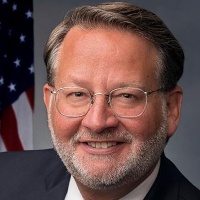
Gary Peters
Senator
MI
Gary Peters
Senator
MI
The Military and Federal Employee Protection Act ensures that federal employees, military members, and covered contractors receive their full standard compensation for work performed or time furloughed during a lapse in government appropriations occurring after September 30, 2025. This bill appropriates necessary funds for agencies to make these retroactive payments. Payments must be made promptly, generally within seven days of enactment for furloughed individuals. This legislation guarantees that no covered individual loses pay due to a government shutdown during the specified period.
This resolution recognizes the 74th anniversary of the U.S.-Philippines Mutual Defense Treaty while strongly condemning escalating Chinese aggression in the South China Sea and affirming the enduring security alliance.
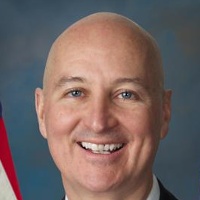
Pete Ricketts
Senator
NE
Pete Ricketts
Senator
NE
This resolution commemorates the 74th anniversary of the U.S.-Philippines Mutual Defense Treaty, affirming the strong bilateral security alliance between the two nations. It strongly condemns the escalating aggression and unlawful territorial claims by the People's Republic of China in the South China Sea. The bill urges the President to continue actions that support Philippine defense modernization and enhance deterrence against coercion. It reaffirms that an armed attack against Philippine public vessels in the region would invoke the Mutual Defense Treaty.
This bill establishes the position of Ambassador-at-Large for Arctic Affairs within the Department of State to coordinate U.S. foreign policy and engagement across national security, environmental protection, and economic development in the Arctic region.
Lisa Murkowski
Senator
AK
Lisa Murkowski
Senator
AK
This bill proposes establishing a new, Senate-confirmed position: the Ambassador-at-Large for Arctic Affairs within the Department of State. This Ambassador will report directly to the Secretary of State to lead U.S. foreign policy coordination across key areas in the Arctic. Their responsibilities will focus on national security, environmental protection, scientific research, and strengthening cooperation among Arctic nations.
This Act implements the transfer, investment, and quarterly obligation of frozen Russian sovereign assets into a Ukraine Support Fund to provide timely financial assistance to Ukraine.

Sheldon Whitehouse
Senator
RI
Sheldon Whitehouse
Senator
RI
The REPO for Ukrainians Implementation Act of 2025 builds upon existing law to facilitate the use of frozen Russian sovereign assets for Ukraine's benefit. It formally recognizes the Porto Declaration urging the repurposing of these assets and grants the President authority to transfer non-confiscated Russian assets into an interest-bearing Ukraine Support Fund. Furthermore, the bill mandates the investment of these funds and requires the quarterly obligation of at least $250 million to provide assistance to Ukraine. Finally, it requires the executive branch to report on the location of Russian sovereign assets globally and engage diplomatically with key allies to encourage asset repurposing.
This bill ensures uninterrupted Supplemental Nutrition Assistance Program (SNAP) benefits for fiscal year 2026 by automatically appropriating necessary funds if Congress fails to pass the Department of Agriculture budget.

Joshua Hawley
Senator
MO
Joshua Hawley
Senator
MO
The Keep SNAP Funded Act of 2025 ensures that Supplemental Nutrition Assistance Program (SNAP) benefits continue without interruption, even if Congress fails to pass the Department of Agriculture's budget for fiscal year 2026. This legislation authorizes automatic funding from the Treasury to maintain payments and cover any retroactive benefits missed due to the delay. This temporary funding mechanism remains active until the regular fiscal year 2026 appropriations are officially enacted.
This joint resolution directs the President to immediately remove U.S. Armed Forces from hostilities within or against Venezuela unless explicitly authorized by Congress.
Timothy Kaine
Senator
VA
Timothy Kaine
Senator
VA
This joint resolution directs the President to immediately remove United States Armed Forces from any hostilities within or against Venezuela that lack explicit authorization from Congress. It asserts that only Congress has the constitutional authority to declare war or approve such military actions. The bill ensures that U.S. forces can only remain if acting in self-defense against an armed attack.
This resolution designates the week beginning October 12, 2025, as National Wildlife Refuge Week to recognize the critical conservation, economic, and recreational value of the National Wildlife Refuge System.

Christopher Coons
Senator
DE
Christopher Coons
Senator
DE
This resolution officially designates the week beginning October 12, 2025, as "National Wildlife Refuge Week." It recognizes the critical role of the National Wildlife Refuge System in conserving over 850 million acres of vital habitat for threatened and endangered species. The resolution also highlights the refuges' significant contributions to local economies, public recreation, and community access to nature. Ultimately, it reaffirms Congress's commitment to supporting the conservation mission of the U.S. Fish and Wildlife Service.
This resolution designates October 1, 2025, as "Energy Efficiency Day" to celebrate the significant economic and environmental benefits driven by energy efficiency achievements.
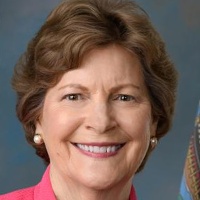
Jeanne Shaheen
Senator
NH
Jeanne Shaheen
Senator
NH
This resolution officially designates October 1, 2025, as "Energy Efficiency Day" to celebrate the significant economic and environmental benefits driven by energy efficiency efforts. It recognizes decades of bipartisan support, major legislative achievements, and the resulting savings for consumers and taxpayers. The resolution encourages all Americans to observe the day with appropriate activities recognizing the importance of energy efficiency.
This resolution expresses Congress's strong opposition to the growing trend of book banning and threats to freedom of expression in the United States.
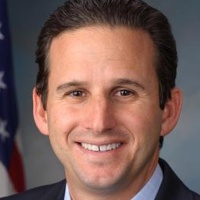
Brian Schatz
Senator
HI
Brian Schatz
Senator
HI
This resolution expresses deep concern over the rising trend of book banning and threats to freedom of expression across the United States. It strongly opposes censorship in schools and libraries, citing constitutional rights and the harm done to democratic discourse. The measure urges local entities to protect students' access to diverse viewpoints and calls for the reversal of restrictive orders impacting educational materials.
This bill prohibits the use of the Exchange Stabilization Fund to provide any financial assistance to Argentina's financial markets until December 10, 2027.
Elizabeth Warren
Senator
MA
Elizabeth Warren
Senator
MA
This Act prohibits the use of the U.S. Treasury Department's Exchange Stabilization Fund to provide any financial assistance or bailout to Argentina's financial markets. Congress asserts that these funds should instead protect American jobs and stability against foreign currency manipulation. The prohibition on using the fund to aid Argentina remains in effect until December 10, 2027.