Legislative Activity
Track Peter's sponsored bills, co-sponsored legislation, and voting record
This Act mandates federal agencies to compensate contractors for employee costs incurred due to funding lapses and appropriates necessary funds to cover resulting contract price adjustments.

Tina Smith
Senator
MN
Tina Smith
Senator
MN
The Fair Pay for Federal Contractors Act of 2025 ensures federal agencies compensate contractors for employee costs incurred due to government funding lapses or shutdowns. This act mandates contract price adjustments to cover reasonable expenses for furloughed or impacted contractor employees, up to a specified weekly limit. The law also provides necessary appropriations to cover these adjustments and requires public reporting on the compensation provided.
The Child Care for Every Community Act establishes a universal, federally-backed system guaranteeing access to high-quality, affordable early learning for every child while mandating rigorous standards and improved compensation for the childcare workforce.

Elizabeth Warren
Senator
MA
Elizabeth Warren
Senator
MA
The Child Care for Every Community Act establishes a universal, high-quality, and affordable early learning system, guaranteeing access to eligible children nationwide. It mandates rigorous federal standards for programs, facilities, and staff compensation, linking pay to public school benchmarks. The bill requires local governance through "prime sponsors" who must plan for equitable access and coordinate closely with K-12 education systems. Finally, it ensures state funding continuity through a maintenance of effort requirement to secure federal support.
This joint resolution seeks to disapprove and nullify the recent CMS rule concerning the Patient Protection and Affordable Care Act's Market Integrity and Affordability.

Mark Warner
Senator
VA
Mark Warner
Senator
VA
This joint resolution seeks to disapprove and nullify a specific rule published by the Centers for Medicare & Medicaid Services concerning the "Patient Protection and Affordable Care Act; Market Integrity and Affordability." If enacted, this measure would prevent the CMS rule from having any legal force or effect.
The AI LEAD Act establishes clear liability standards for developers and deployers of covered products, prohibits contractual liability waivers, creates federal enforcement mechanisms, and mandates registration for foreign AI developers.

Richard Durbin
Senator
IL
Richard Durbin
Senator
IL
The AI LEAD Act fundamentally reforms product liability law by establishing clear standards for when developers and deployers of "covered products" are legally responsible for harm caused by those products. It sets specific, often high, bars for proving developer liability related to design defects, failure to warn, and strict liability for dangerous conditions. Furthermore, the Act prohibits companies from using contracts to entirely waive their liability and establishes a federal right of action for individuals to enforce these new standards in court.
This resolution supports designating a week in September 2025 as "Telehealth Awareness Week" to recognize the critical role of remote healthcare in improving patient access.
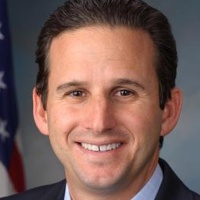
Brian Schatz
Senator
HI
Brian Schatz
Senator
HI
This resolution officially designates the week of September 14 through September 20, 2025, as "Telehealth Awareness Week." It recognizes the critical role telehealth plays in expanding healthcare access, especially for rural and underserved populations. The measure encourages increased awareness, resource sharing, and continued study of remote healthcare services. Ultimately, it supports maintaining robust access to telehealth for all beneficiaries.
The Safe Step Act establishes mandatory exceptions processes and timelines for group health plans that use step therapy protocols for prescription drugs.

Lisa Murkowski
Senator
AK
Lisa Murkowski
Senator
AK
The Safe Step Act establishes mandatory exception processes for group health plans and insurance issuers that utilize step therapy protocols for prescription drugs. This ensures patients and doctors have a clear, timely pathway to request coverage for medically necessary alternatives when required initial treatments are inappropriate or ineffective. Plans must provide rapid decisions for urgent requests and adhere to specific reporting requirements detailing exception outcomes.
This resolution calls on the President to recognize a demilitarized State of Palestine alongside a secure State of Israel, consistent with international law and a two-state solution.

Jeff Merkley
Senator
OR
Jeff Merkley
Senator
OR
This resolution calls on the President to formally recognize a demilitarized State of Palestine alongside a secure State of Israel, consistent with international law and the two-state solution. It outlines historical context and current obstacles, urging an end to settlement expansion and violence from all sides. Ultimately, the bill seeks to advance a negotiated peace that ensures security for Israel and self-determination for Palestinians.
The SHINE for Autumn Act of 2025 aims to improve stillbirth research and data collection through federal grants to states while mandating the creation and publication of public educational guidelines on stillbirth risk factors.
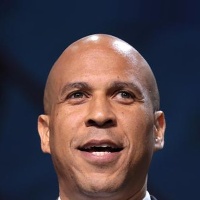
Cory Booker
Senator
NJ
Cory Booker
Senator
NJ
The SHINE for Autumn Act of 2025 aims to significantly improve the national understanding and prevention of stillbirths. It authorizes federal grants to help states enhance stillbirth surveillance, data collection, and analysis, ensuring all collected data remains de-identified. Furthermore, the Act mandates the creation of clear federal guidelines for standardized data collection and the development of public educational materials regarding stillbirth risk factors.
This joint resolution proposes a constitutional amendment to grant Congress and the states clear authority to regulate campaign finance, including setting spending limits and establishing public financing systems, while protecting the freedom of the press.
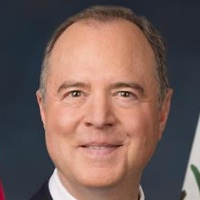
Adam Schiff
Senator
CA
Adam Schiff
Senator
CA
This joint resolution proposes a constitutional amendment to grant Congress and the states clear authority to regulate campaign contributions and expenditures. It explicitly allows for setting reasonable spending limits and establishing public financing systems for political campaigns. The amendment also permits banning spending by corporations and other legal entities while safeguarding the freedom of the press.
This bill mandates that the wealthiest taxpayers immediately recognize and pay taxes annually on the unrealized gains of their investment assets, while also removing several existing tax deferral mechanisms for this group.

Ron Wyden
Senator
OR
Ron Wyden
Senator
OR
The Billionaires Income Tax Act fundamentally changes how the wealthiest Americans are taxed by requiring them to pay taxes annually on the unrealized gains of their investment assets, eliminating indefinite tax deferral. It also removes several existing tax deferral mechanisms and imposes stricter tax consequences on these "applicable taxpayers" regarding investment income, expatriation, and deferred compensation. In essence, the bill aims to ensure that the ultra-wealthy pay taxes yearly on their growing wealth rather than waiting until assets are sold.
This Act nullifies specific executive orders related to federal labor relations and ensures that existing federal collective bargaining agreements remain in effect until their expiration date.
Mark Warner
Senator
VA
Mark Warner
Senator
VA
The Protect America’s Workforce Act nullifies two specific Executive Orders related to federal labor-management programs and prohibits the use of federal funds to enforce them. Furthermore, the Act ensures that all existing collective bargaining agreements between the federal government and labor organizations remain fully in effect until their original expiration dates. This legislation solidifies current federal union contracts while removing the authority of the voided orders.
This resolution designates September 2025 as National Voting Rights Month to raise awareness, encourage voter registration, and urge Congress to pass legislation strengthening voting protections.
Ron Wyden
Senator
OR
Ron Wyden
Senator
OR
This resolution officially designates September 2025 as National Voting Rights Month to highlight ongoing threats to ballot access and encourage civic engagement. It urges Congress to pass legislation strengthening voting protections, like the John R. Lewis Voting Rights Advancement Act. Furthermore, the resolution encourages educational outreach to inform citizens about registration and the history of voting rights in America.
This bill imposes an increased corporate tax rate on companies whose CEO-to-average-worker pay ratio exceeds 50 to 1, calculated using a five-year average.

Bernard Sanders
Senator
VT
Bernard Sanders
Senator
VT
The Tax Excessive CEO Pay Act of 2025 imposes a new surtax on corporations whose ratio of top executive pay to average worker pay exceeds 50 to 1. This penalty tax is calculated based on a five-year average of the compensation ratio and applies to tax years beginning after December 31, 2025. The legislation mandates that large private companies must also calculate and report this ratio to avoid the penalty. The Treasury Department is tasked with issuing regulations to prevent companies from exploiting loopholes to avoid this tax.
The Head Start for America's Children Act updates program purpose to explicitly include infants and toddlers and mental health, significantly increases funding authorizations, revises definitions, mandates full-year operations for most centers, and establishes new grants for workforce support and childcare partnerships.
Bernard Sanders
Senator
VT
Bernard Sanders
Senator
VT
The Head Start for America's Children Act aims to strengthen early childhood education by explicitly including infants and toddlers in growth goals and emphasizing mental health support. The bill significantly increases funding authorizations, updates numerous definitions to promote inclusivity (especially for Native American and Native Hawaiian communities), and establishes new requirements for staff compensation and professional development. Furthermore, it creates several new pilot programs focused on extending operating hours, fostering partnerships with higher education, and enabling community-wide eligibility in high-poverty areas.
The FAMILY Act establishes a federal paid family and medical leave insurance program administered by the Social Security Administration to provide wage replacement benefits for qualified caregiving.

Kirsten Gillibrand
Senator
NY
Kirsten Gillibrand
Senator
NY
The FAMILY Act establishes the Family and Medical Insurance Leave program, creating a new office within the Social Security Administration to manage paid benefits for qualified caregiving and serious health conditions. This law outlines eligibility requirements, a tiered formula for calculating monthly benefit payments, and protections against employer retaliation for taking leave. The Act also provides funding mechanisms for states that already have similar paid leave programs in place.
The Forced Arbitration Injustice Repeal Act voids pre-dispute agreements that force arbitration for employment, consumer, antitrust, and civil rights disputes, while protecting the right to join group legal actions.

Richard Blumenthal
Senator
CT
Richard Blumenthal
Senator
CT
The Forced Arbitration Injustice Repeal Act invalidates pre-dispute agreements that force individuals into private arbitration for employment, consumer, antitrust, or civil rights claims. This legislation protects the right of individuals and groups to pursue legal action in court rather than being compelled into private arbitration before a dispute arises. It ensures that courts, not arbitrators, decide if this new law applies to a specific agreement. The Act takes effect immediately upon enactment.
This Act posthumously awards a Congressional Gold Medal to honor the life and groundbreaking civil rights achievements of Constance Baker Motley.
Richard Blumenthal
Senator
CT
Richard Blumenthal
Senator
CT
This Act officially establishes the Congressional Tribute to Constance Baker Motley Act of 2025 to honor the life and groundbreaking civil rights achievements of the late legal pioneer. The bill authorizes the posthumous presentation of a Congressional Gold Medal to her family in recognition of her service, including her role in *Brown v. Board of Education*. Furthermore, it permits the Treasury to strike and sell bronze duplicates of the medal to cover production costs.
This bill modifies Medicare Part D cost-sharing for specific chronic care drugs by basing out-of-pocket expenses on the drug's net price after the deductible begins in 2027.

John Cornyn
Senator
TX
John Cornyn
Senator
TX
The Share the Savings with Seniors Act aims to lower out-of-pocket costs for seniors taking specific, long-term chronic care medications under Medicare Part D, beginning in 2027. This bill mandates that cost-sharing for these drugs, once the deductible is met, must be calculated based on the drug's net price rather than the retail price. These changes apply to drugs treating conditions like diabetes and certain respiratory or cardiovascular issues.
This Act expands the federal program for schools to procure domestically grown, unprocessed fruits and vegetables, increasing funding and setting new requirements for supporting local and disadvantaged farmers.
Ron Wyden
Senator
OR
Ron Wyden
Senator
OR
The Local School Foods Expansion Act of 2025 transforms the existing pilot project into a permanent federal program for procuring domestically grown, unprocessed fruits and vegetables for schools. This expansion increases the number of participating states and mandates that applicants prioritize supporting small, local, and socially disadvantaged farmers. The Act appropriates $25 million annually through 2030 to fund the program, administrative support, and technical assistance to boost participation among diverse producers.
This Act recaptures unused employment-based immigrant visas from past years to expedite the immigration of up to 40,000 professional nurses and physicians.
Richard Durbin
Senator
IL
Richard Durbin
Senator
IL
The Healthcare Workforce Resilience Act aims to address healthcare staffing shortages by recapturing unused employment-based immigrant visas from previous years. These recaptured visas are specifically reserved for professional nurses (25,000) and physicians (15,000) to expedite their entry into the U.S. The bill also mandates premium processing for these petitions without imposing extra fees and includes worker protection attestations to prevent displacement of U.S. workers.