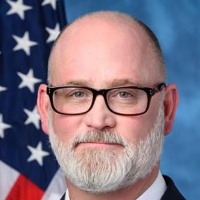
Legislative Activity
Track Derrick's sponsored bills, co-sponsored legislation, and voting record
This act establishes research grants and training programs to develop and implement PFAS-free, next-generation turnout gear to protect firefighters from occupational illness and injury.

Debbie Dingell
Representative
MI
Debbie Dingell
Representative
MI
The PFAS Alternatives Act aims to protect firefighters by funding research and development for next-generation turnout gear that eliminates harmful PFAS chemicals. The bill establishes grants through NIOSH to create safer, PFAS-free protective equipment and separate funding for training programs on the proper care of this new gear. Ultimately, this legislation seeks to reduce occupational illness and injury among fire and EMS personnel.
This bill establishes a point of order in the House to prevent reconciliation measures from reducing benefits for children, seniors, pregnant women, or disabled individuals under Medicaid or SNAP during the 119th Congress.
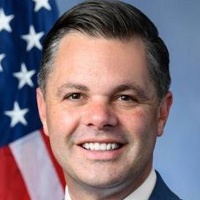
Zachary (Zach) Nunn
Representative
IA
Zachary (Zach) Nunn
Representative
IA
This bill establishes a point of order in the House of Representatives to prevent reconciliation measures from reducing benefits or eligibility for Medicaid or SNAP for protected groups, including children, seniors, pregnant women, and people with disabilities. This rule applies for the duration of the 119th Congress. However, provisions aimed at reducing fraud or improper payments are exempt from this restriction.
This Act establishes federal penalties for assaulting hospital personnel and creates a grant program to help medical facilities improve workforce safety.
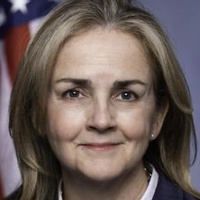
Madeleine Dean
Representative
PA
Madeleine Dean
Representative
PA
The Save Healthcare Workers Act aims to protect hospital personnel by making assault against them a federal crime with severe penalties. It also establishes a new federal grant program to help hospitals implement crucial safety measures, such as violence prevention training and physical security upgrades. This legislation seeks to reduce workplace violence in healthcare settings across the nation.
This Act establishes a grant program through the Department of Homeland Security to fund medical care for retired Federal working dogs living with their former handlers.
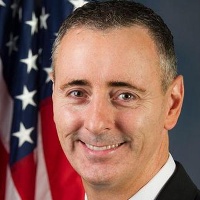
Brian Fitzpatrick
Representative
PA
Brian Fitzpatrick
Representative
PA
The Honoring our K9 Heroes Act establishes a new grant program administered by the Department of Homeland Security to help cover medical expenses for retired Federal working dogs. Eligible non-profit organizations with a history of supporting these retired K9s can apply for funding. This initiative is authorized with $1 million annually from Fiscal Year 2026 through 2030 to support dogs living with their former handlers.
The Shipbuilding and Harbor Infrastructure for Prosperity and Security for America Act of 2025 establishes a centralized maritime authority, creates a dedicated funding trust, strengthens sealift capability, mandates increased use of U.S.-flagged vessels, invests heavily in domestic shipbuilding, and enhances workforce development and tax incentives for the maritime industry.
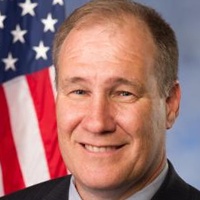
Trent Kelly
Representative
MS
Trent Kelly
Representative
MS
The **Shipbuilding and Harbor Infrastructure for Prosperity and Security for America Act of 2025** is a comprehensive bill designed to revitalize the U.S. maritime industry and secure critical supply chains. It establishes new centralized oversight for maritime policy, creates a dedicated Maritime Security Trust Fund financed by new vessel taxes, and mandates significant federal investment in domestic shipbuilding and workforce development. The legislation also imposes stricter cargo preference rules and tax incentives to ensure U.S.-flagged vessels dominate international commerce and defense sealift operations.
This resolution expresses support for designating May 2025 as Motorcycle Safety Awareness Month to promote rider education, safe practices, and mutual road awareness between motorcyclists and other drivers.
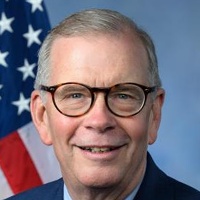
Tim Walberg
Representative
MI
Tim Walberg
Representative
MI
This resolution expresses the strong support of Congress for designating May 2025 as Motorcycle Safety Awareness Month. It acknowledges the significant role motorcyclists play in transportation while highlighting the critical need for increased safety awareness. The bill encourages proper rider training, the use of protective gear, and mutual road safety between motorcyclists and other drivers.
This resolution expresses support for designating May as "Fallen Heroes Memorial Month" to honor the more than 1.3 million service members who died protecting American liberty and requests a Presidential proclamation to encourage national remembrance.
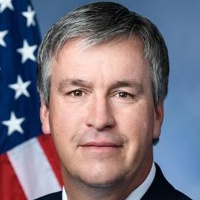
Barry Moore
Representative
AL
Barry Moore
Representative
AL
This resolution expresses strong support for designating the month of May as "Fallen Heroes Memorial Month." It honors the more than 1.3 million service members who have died protecting American liberty throughout history. Furthermore, the bill urges the President to issue a proclamation encouraging all Americans to reflect upon and honor the ultimate sacrifice made by these heroes.
This Act promotes private employee ownership by extending tax deferrals for S corporation ESOP sales, ensuring ESOP-owned businesses retain small business status, and establishing new Treasury and Labor offices to provide assistance and advocacy.
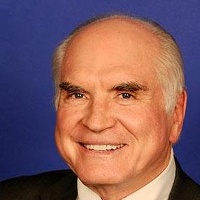
Mike Kelly
Representative
PA
Mike Kelly
Representative
PA
The Promotion and Expansion of Private Employee Ownership Act of 2025 aims to significantly boost employee ownership in S corporations through Employee Stock Ownership Plans (ESOPs). The bill extends key tax deferral benefits for stock sales to ESOPs and removes a major restriction on this tax treatment. Furthermore, it establishes new government offices and an Advocate for Employee Ownership to provide technical assistance and resolve disputes, while ensuring ESOP-owned businesses retain small business status for federal programs.
The BUILD Act of 2025 establishes federal grant programs through the DOJ and FEMA to fund facility upgrades and new construction for small, local police and fire departments serving communities under 50,000 residents.
Chris Pappas
Representative
NH
Chris Pappas
Representative
NH
The BUILD Act of 2025 establishes two new federal grant programs to fund facility upgrades and construction for local public safety agencies. These grants are specifically targeted toward police and fire departments serving communities with fewer than 50,000 residents. Funds must be used for projects directly related to improving emergency services, training, recruitment, or community safety. The legislation also mandates studies to assess the long-term infrastructure needs of these smaller departments.
This Act mandates the Department of Veterans Affairs to establish measurable standards and evaluation plans for all suicide prevention and mental health grant or pilot programs administered by the Veterans Health Administration.
Greg Landsman
Representative
OH
Greg Landsman
Representative
OH
The What Works for Preventing Veteran Suicide Act requires the Department of Veterans Affairs (VA) to establish standard operating procedures for all mental health and suicide prevention grant or pilot programs administered by the Veterans Health Administration. These procedures mandate clear, measurable goals and detailed evaluation plans for every program. The goal is to ensure all initiatives are rigorously assessed so that successful strategies can be identified and scaled up to better prevent veteran suicide.
The No Rogue Rulings Act of 2025 severely limits federal district courts from issuing injunctions that affect non-parties, with an exception for multi-state lawsuits against the executive branch heard by a randomly selected three-judge panel.
Darrell Issa
Representative
CA
Darrell Issa
Representative
CA
The No Rogue Rulings Act of 2025 significantly restricts federal district courts from issuing injunctions that affect parties not directly involved in a lawsuit. An exception allows a specially convened, randomly selected three-judge panel to issue broad injunctions in multi-state lawsuits against the executive branch. Decisions made by this panel regarding injunctions can be appealed directly to the Supreme Court or the relevant circuit court at the losing party's discretion.
This act prohibits the Federal Motor Carrier Safety Administration from mandating speed limiting devices on interstate commercial vehicles over 26,000 pounds.
Josh Brecheen
Representative
OK
Josh Brecheen
Representative
OK
The DRIVE Act prohibits the Federal Motor Carrier Safety Administration from mandating speed limiting devices on heavy commercial vehicles engaged in interstate commerce. This legislation removes any federal requirement for trucks over 26,000 pounds to have their top speed electronically capped. In essence, the bill deregulates restrictions concerning speed control technology for large, cross-state eighteen-wheelers.
The Bolstering Research And Innovation Now (BRAIN) Act aims to accelerate brain tumor research, improve patient access to clinical trials and specialized care, and enhance long-term survivor support through new funding, transparency requirements, and public awareness campaigns.
Brian Fitzpatrick
Representative
PA
Brian Fitzpatrick
Representative
PA
The Bolstering Research And Innovation Now (BRAIN) Act aims to significantly advance the fight against brain tumors by increasing research funding and improving patient access to care. This legislation establishes new networks for glioblastoma research, creates a public database for tracking biospecimens, and launches a national awareness campaign about clinical trials. Furthermore, the Act funds pilot programs to improve long-term care for survivors and directs the FDA to ensure brain tumor patients are not unfairly excluded from relevant clinical trials.
This Act establishes a specific P visa category for temporary workers employed by traveling carnivals, circuses, and associated concession providers, while subjecting them to existing H-2B temporary worker regulations.
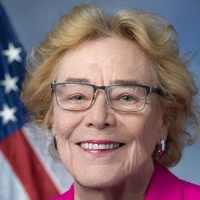
Zoe Lofgren
Representative
CA
Zoe Lofgren
Representative
CA
The Carnivals are Real Entertainment Act establishes a specific P visa pathway for temporary workers employed by traveling carnivals, circuses, and associated concession providers. This new classification ensures essential mobile entertainment staff can enter the U.S. while adhering to existing H-2B temporary worker program regulations. The law mandates that the Secretaries of Homeland Security and Labor develop and finalize the necessary rules within one year of enactment.
The End Kidney Deaths Act establishes a \$50,000 federal tax credit over five years for individuals who make non-directed living kidney donations between 2027 and 2036.
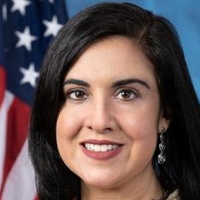
Nicole Malliotakis
Representative
NY
Nicole Malliotakis
Representative
NY
The End Kidney Deaths Act establishes a new federal tax credit for individuals who make non-directed living kidney donations. Eligible donors will receive an annual \$10,000 tax credit for five consecutive years, totaling a potential \$50,000 benefit. This provision is designed to incentivize altruistic donation while ensuring the credit is not considered payment for the organ.
The CBO Scoring Accountability Act mandates that the Congressional Budget Office produce annual reports for ten years tracking the actual financial impact of major legislation against its initial cost estimates.
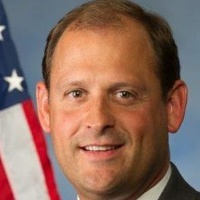
Garland Barr
Representative
KY
Garland Barr
Representative
KY
The CBO Scoring Accountability Act mandates that the Congressional Budget Office (CBO) produce annual reports for ten years following the enactment of any "major legislation." These reports must compare the actual financial impact of the law against the CBO's original estimates. If significant discrepancies occur, the CBO is required to explain the variance to Congress.
This Act establishes a federal registration, inspection, and record-keeping system for entities commercially dealing in human bodies or body parts donated for education or research, but not for transplantation.
Gus Bilirakis
Representative
FL
Gus Bilirakis
Representative
FL
The Consensual Donation and Research Integrity Act of 2025 establishes a mandatory federal registration system for entities that sell human bodies or body parts for education or research, but not for transplantation. Registrants must provide detailed operational information, submit to inspections, and maintain rigorous records documenting donor consent and the chain of custody. The Act also mandates strict labeling, packaging, and privacy standards to ensure integrity throughout the process until final disposition.
This bill raises the resource limits for Supplemental Security Income (SSI) eligibility starting in 2025 and ties future limits to inflation adjustments.
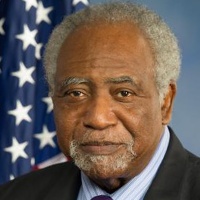
Danny Davis
Representative
IL
Danny Davis
Representative
IL
The SSI Savings Penalty Elimination Act significantly raises the resource limits for individuals and couples applying for Supplemental Security Income (SSI), starting in 2025. This legislation also mandates that these new resource limits will be automatically adjusted annually to keep pace with inflation. The goal is to allow SSI applicants to save more money without losing eligibility for benefits.
The EASE Act of 2025 mandates the testing of a new model to improve specialty healthcare access for rural and underserved Medicare and Medicaid beneficiaries using digital tools and coordinated care.
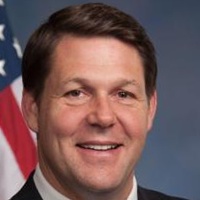
Jodey Arrington
Representative
TX
Jodey Arrington
Representative
TX
The EASE Act of 2025 mandates that the Center for Medicare and Medicaid Innovation (CMMI) test a new model to improve access to specialty health services. This "Specialty Health Care Services Access Model" will utilize digital tools, like telehealth, to connect eligible Medicare, Medicaid, and CHIP beneficiaries in rural or underserved areas with necessary specialty care. The model must be tested through a network of qualified, experienced, and primarily rural-based nonprofit providers.
This bill drastically tightens and expands U.S. sanctions against Iran across its leadership, military, and economy while severely restricting the President's authority to lift these restrictions.
Zachary (Zach) Nunn
Representative
IA
Zachary (Zach) Nunn
Representative
IA
The Maximum Pressure Act dramatically tightens and expands U.S. sanctions against Iran across its military, missile, and economic sectors, codifying existing restrictions and severely limiting the President's authority to grant sanctions relief. It mandates immediate sanctions on top Iranian officials and increases penalties for international parties aiding Iran's weapons programs. Furthermore, the bill enhances oversight by requiring numerous detailed reports to Congress regarding Iran's terrorism financing, nuclear timeline, and economic influence, while also redirecting certain frozen Iranian funds to victims of state-sponsored terrorism.