Legislative Activity
Track Derrick's sponsored bills, co-sponsored legislation, and voting record
This act permits the placement of a U.S. flag securely next to the grave of any service member or veteran, overriding existing flag code restrictions.
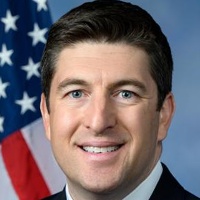
Bryan Steil
Representative
WI
Bryan Steil
Representative
WI
The American Flags to Honor Our Veterans Act of 2025 specifically authorizes the placement of the U.S. flag directly next to the gravesite of any individual who served in the Armed Forces or is a veteran. This provision ensures that flags can be displayed securely and upright next to individual graves, regardless of other existing flag display regulations.
This Act penalizes jurisdictions that restrict cooperation between local law enforcement and federal immigration officials by making them ineligible for certain federal development funds.
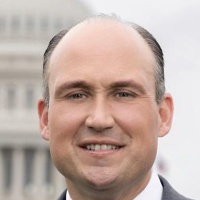
Nicholas Langworthy
Representative
NY
Nicholas Langworthy
Representative
NY
The Stop Dangerous Sanctuary Cities Act aims to penalize jurisdictions that limit cooperation with federal immigration enforcement. It defines "sanctuary jurisdictions" as those that refuse to honor detainer requests or share immigration information, with an exception for protecting crime victims and witnesses. Furthermore, the bill makes these designated sanctuary jurisdictions ineligible for specific federal development and community improvement funds, such as EDA grants and CDBG funds. Cooperating local officers are granted liability protection when honoring valid federal detainer requests.
This bill mandates the deportation and permanent inadmissibility of non-citizens who commit acts of violence against law enforcement or public property during civil unrest, with enhanced enforcement during declared emergencies.

Dan Crenshaw
Representative
TX
Dan Crenshaw
Representative
TX
The Returning Illegals over Turmoil Act establishes new grounds for the deportation and permanent inadmissibility of non-citizens who incite or participate in violent acts against law enforcement or public property during civil unrest. This legislation mandates strict enforcement during declared emergencies and grants the Secretary of Homeland Security expedited removal authority under those conditions. Furthermore, individuals removed under these provisions are permanently barred from receiving any form of immigration relief or future DACA eligibility.
The Community TEAMS Act of 2025 establishes grants for medical schools to partner with rural and underserved health facilities to expand community-based clinical training for medical students.
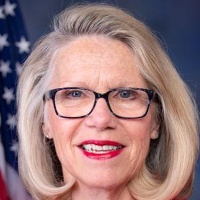
Carol Miller
Representative
WV
Carol Miller
Representative
WV
The Community TEAMS Act of 2025 establishes new federal grants to fund partnerships between medical schools and local health facilities in rural and medically underserved communities. These grants aim to expand clinical training opportunities for medical students in high-need areas. The ultimate goal is to encourage these students to establish long-term medical practices within those communities after graduation.
This bill authorizes the International Boundary and Water Commission to accept and use external funds for wastewater treatment and flood control projects, subject to specific limitations and reporting requirements.

Scott Peters
Representative
CA
Scott Peters
Representative
CA
This bill authorizes the International Boundary and Water Commission (IBWC) to accept external funds from various sources for projects related to wastewater treatment, water conservation, and flood control. These funds will be deposited into a dedicated, non-expiring Treasury account for authorized use. The legislation also establishes specific reporting requirements to Congress regarding the use of these accepted funds.
This bill officially renames the Department of Veterans Affairs women's health clinic in Milwaukee, Wisconsin, as the Anna Mae Robertson VA Well Woman Clinic.
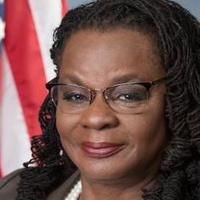
Gwen Moore
Representative
WI
Gwen Moore
Representative
WI
This bill officially renames the Department of Veterans Affairs women's health clinic in Milwaukee, Wisconsin. The clinic will now be known as the Anna Mae Robertson VA Well Woman Clinic. This change ensures all official records reflect the new designation.
This bill establishes the Border Operations Service Medal to honor military personnel and federal employees involved in designated national security operations along the U.S.-Mexico border starting January 1, 2025.
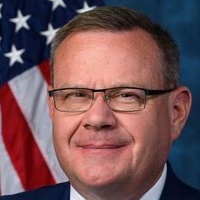
Tim Moore
Representative
NC
Tim Moore
Representative
NC
The Border Operations Service Medal Act establishes a new military decoration, the Border Operations Service Medal, to recognize service members and federal employees involved in designated national security operations along the U.S.-Mexico border starting January 2025. This medal will be awarded to active-duty, National Guard, and Reserve members who participated in these specific border security efforts. The Secretary of Defense is tasked with designing and implementing the medal within 60 days of the Act's enactment.
This bill increases the monthly housing stipend for veterans pursuing education solely through distance learning under the Post-9/11 Educational Assistance Program.
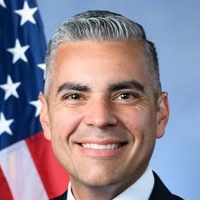
Juan Ciscomani
Representative
AZ
Juan Ciscomani
Representative
AZ
The Expanding Access for Online Veteran Students Act aims to increase financial support for veterans pursuing education entirely online. This bill eliminates the current 50% cap on the monthly housing stipend for eligible Post-9/11 GI Bill recipients enrolled more than half-time in distance learning programs. If enacted, this change would allow these students to receive the full monthly housing allowance rate, effective for terms beginning on or after August 1, 2025.
The HOME Act of 2025 improves VA guidance for lenders on veteran residual income, establishes a voluntary financial counseling option for VA loan recipients, creates a database of adapted housing for sale, and mandates outreach to veterans residing in U.S. Territories.
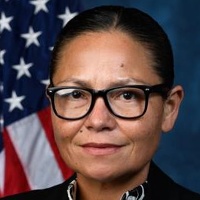
Kimberlyn King-Hinds
Representative
MP
Kimberlyn King-Hinds
Representative
MP
The Heroes Owning and Materializing Equity (HOME) Act of 2025 aims to improve VA home loan processes for veterans. It mandates clearer guidance for lenders on veteran residual income and establishes voluntary financial counseling options. Additionally, the bill requires the VA to create a database of pre-adapted homes for sale and mandates proactive outreach to veterans residing in U.S. Territories regarding their benefits.
This bill establishes a Select Committee to investigate alleged cover-ups regarding President Biden's cognitive and physical health, past cancer diagnosis, and related matters, with a final report due by December 31, 2025.
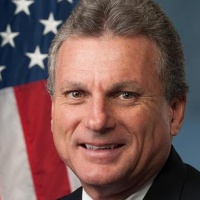
Earl Carter
Representative
GA
Earl Carter
Representative
GA
This bill establishes a Select Committee tasked with investigating allegations of a cover-up regarding President Biden's cognitive and physical health decline. The committee will examine the President's health status, past cancer diagnosis, the role of key individuals in any alleged concealment, and media influence. This investigative body has no legislative authority and must submit its final report, findings, and recommendations by December 31, 2025.
The Patriots Over Politics Act creates a special 90-day window for service members separated solely for refusing the COVID-19 vaccine between August 2021 and January 2023 to transfer their VA education benefits to an eligible dependent.
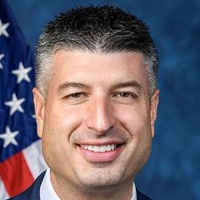
Tom Barrett
Representative
MI
Tom Barrett
Representative
MI
The Patriots Over Politics Act creates a special, limited window for certain service members separated for refusing the COVID-19 vaccine between August 2021 and January 2023 to transfer their unused VA education benefits to an eligible dependent. This transfer option is available for 90 days following the bill's enactment. If transferred to a child, the benefit use is contingent upon the service member having completed at least six years of service.
Connor's Law mandates that commercial motor vehicle operators must demonstrate the ability to read and speak English sufficiently to perform essential driving and reporting tasks, or face immediate out-of-service orders.
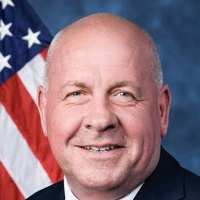
David Taylor
Representative
OH
David Taylor
Representative
OH
Connor's Law establishes a mandatory English language proficiency requirement for all commercial motor vehicle (CMV) operators seeking a Commercial Driver's License (CDL). This ensures drivers can effectively communicate, understand traffic signs, and complete necessary documentation in English. Failure to meet this standard will result in an immediate out-of-service order for the driver.
This Act establishes a pilot program for law enforcement to test drones equipped only with non-lethal tools for responding to active shooter situations.
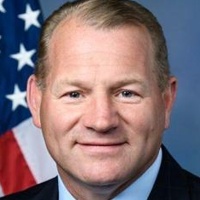
Troy Nehls
Representative
TX
Troy Nehls
Representative
TX
The Deescalation Drone Pilot Program Act of 2025 establishes a pilot program managed by the FAA for law enforcement to test drones equipped only with non-lethal tools during active shooter events. This initiative aims to assess the safety, training, and effectiveness of using these specialized drones to keep officers at a safer distance. Following the testing phase, the FAA must create a formal rulemaking process to allow agencies nationwide to seek approval for using these domestically manufactured, non-lethal drones.
This bill reauthorizes and expands federal funding for advanced nursing education, strengthens nursing school capacity with modern training tools and partnerships, and updates appropriations through fiscal year 2030.
David Joyce
Representative
OH
David Joyce
Representative
OH
The Title VIII Nursing Workforce Reauthorization Act of 2025 aims to strengthen the nursing workforce by expanding federal grant support for advanced nursing education programs, including nurse practitioners and nurse-midwives. The bill updates funding rules to cover more training costs and allows nursing schools to invest in modern educational tools like simulation and telehealth technology. Furthermore, it authorizes increased appropriations through fiscal year 2030 to support these critical educational and practice expansion efforts.
This act, also known as the COUNTER Act, updates the Department of Defense's authority and procedures for neutralizing drone threats to U.S. assets while ensuring related security information remains confidential.
August Pfluger
Representative
TX
August Pfluger
Representative
TX
The COUNTER Act enhances the Department of Defense's authority to neutralize threats from unmanned aircraft systems targeting U.S. assets. This legislation delegates specific response powers and updates mitigation rules for drone threats. Crucially, it exempts sensitive information regarding these counter-drone technologies and procedures from public disclosure under the Freedom of Information Act. The bill also adjusts several deadlines and clarifies the applicability of certain federal laws when operating overseas to counter these threats.
This Act mandates that health plans cover medically necessary treatment for congenital anomalies or birth defects affecting the eyes, ears, teeth, mouth, or jaw to restore normal function and appearance.
Neal Dunn
Representative
FL
Neal Dunn
Representative
FL
The Ensuring Lasting Smiles Act mandates that group health plans and insurance policies provide comprehensive coverage for medically necessary treatment related to congenital anomalies or birth defects affecting the eyes, ears, teeth, mouth, or jaw. This coverage must include services needed to restore normal function and appearance, including necessary dental and orthodontic support. Plans must apply cost-sharing rules no more restrictive than those for other medical benefits, excluding purely cosmetic procedures.
This bill mandates the death penalty or life imprisonment for inadmissible or deportable aliens convicted of first-degree murder, and life imprisonment for those convicted of second-degree murder under specified immigration grounds.
Morgan Luttrell
Representative
TX
Morgan Luttrell
Representative
TX
The Justice for Victims of Illegal Alien Murders Act establishes stricter penalties for certain non-citizens who commit murder in the United States. If an inadmissible or deportable alien is convicted of first-degree murder, they will face the death penalty or life imprisonment. Similar enhanced sentencing, including life imprisonment, applies to those convicted of second-degree murder under these specific immigration grounds.
The FARMER Act modifies premium support levels for whole-farm crop insurance plans and increases the government subsidy for the supplemental coverage option, while also mandating a study on expanding that supplemental coverage.
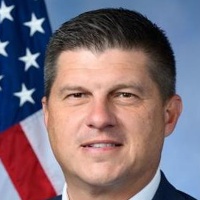
Brad Finstad
Representative
MN
Brad Finstad
Representative
MN
The FARMER Act adjusts federal premium support for certain whole-farm and enterprise-unit crop insurance plans, setting specific subsidy percentages for those options. It also increases the government's premium subsidy rate for the supplemental coverage option from 65% to 80%. Finally, the bill mandates a study on expanding the geographic scope of this supplemental coverage option.
This bill expands the definition of "law enforcement officer" for federal retirement purposes under FERS and CSRS to include specific IRS, Postal Inspection, and VA police employees, and establishes rules for how current employees can count prior service under the new designation.
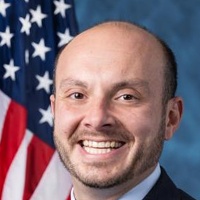
Andrew Garbarino
Representative
NY
Andrew Garbarino
Representative
NY
The Law Enforcement Officers Equity Act expands the definition of "law enforcement officer" for federal retirement purposes under both the Federal Employees Retirement System (FERS) and the Civil Service Retirement System (CSRS). This change adds specific IRS, Postal Inspection Service, and VA police roles to those eligible for enhanced retirement benefits. The bill also establishes procedures for current officers to elect to have their prior service counted under these new definitions, which may require a payment from the employee and their employing agency.
The CHOICE for Veterans Act of 2025 establishes new federal standards, oversight, and penalties for agents and attorneys who assist veterans in filing Department of Veterans Affairs benefit claims while extending certain pension payment limitations.
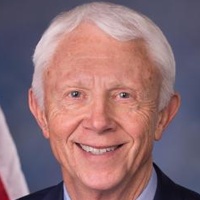
Jack Bergman
Representative
MI
Jack Bergman
Representative
MI
The CHOICE for Veterans Act of 2025 aims to overhaul how veterans receive assistance with their Department of Veterans Affairs (VA) benefit claims. It establishes new rules for the recognition, fees, and conduct of agents and attorneys who represent veterans. The bill also mandates increased transparency regarding available assistance and requires a review of the entire representative recognition process.