Legislative Activity
Track Jefferson's sponsored bills, co-sponsored legislation, and voting record
This act allows individuals to deduct all taxes and state-mandated surcharges included on their gas or electric utility bills.
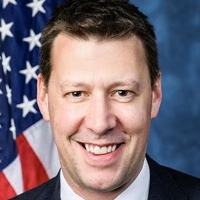
Josh Riley
Representative
NY
Josh Riley
Representative
NY
This bill, the "No Taxes on Utility Bills Act," allows individuals to deduct all federal, state, and local taxes, as well as state-mandated surcharges, that are included on their gas or electric utility bills. This change amends the Internal Revenue Code to treat these specific utility charges as deductible taxes for the taxpayer.
This bill mandates comprehensive safety upgrades for civilian and military aviation, focusing on collision avoidance technology, air traffic control training, and enhanced airspace transparency, particularly around high-traffic airports.
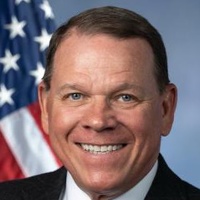
Sam Graves
Representative
MO
Sam Graves
Representative
MO
The Airspace Location and Enhanced Risk Transparency Act of 2026 mandates significant safety upgrades across both civilian and military aviation to prevent midair collisions. It requires the FAA to implement advanced collision avoidance systems and new air traffic controller training, while also compelling the Department of Defense to equip most military helicopters with transponders for increased visibility. The bill establishes new transparency measures, including public tracking of safety rule implementation and enhanced reporting on near-miss incidents, particularly around major airports like Reagan National.
This bill officially renames the United States Postal Service facility in Spring Lake, New Jersey, as the James J. Howard Post Office.
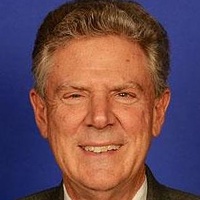
Frank Pallone
Representative
NJ
Frank Pallone
Representative
NJ
This bill officially renames the United States Postal Service facility located at 2407 State Route 71, Suite 1, in Spring Lake, New Jersey. The facility will now be known as the James J. Howard Post Office. This designation will apply to all future official federal references to the location.
The Save Money, Save Lives Act repeals the budget neutrality requirement for specific Medicaid demonstration projects and rescinds associated appropriations.
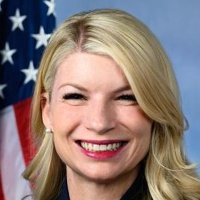
Brittany Pettersen
Representative
CO
Brittany Pettersen
Representative
CO
The "Save Money, Save Lives Act" repeals the budget neutrality requirements currently mandated for certain Medicaid demonstration projects under section 1115 of the Social Security Act. By removing these fiscal constraints, the bill aims to provide greater flexibility for these healthcare initiatives. Additionally, the legislation rescinds all funds previously appropriated to support the now-repealed budget neutrality provisions.
The FETCH Act of 2026 authorizes the use of Byrne Memorial Justice Assistance Grant funds to support the acquisition, training, care, and retirement of law enforcement canine units.
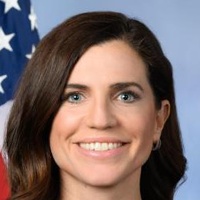
Nancy Mace
Representative
SC
Nancy Mace
Representative
SC
The FETCH Act of 2026 expands the use of federal Byrne Memorial Justice Assistance Grant (JAG) funds to support law enforcement K9 units. This legislation allows departments to utilize these grants for the acquisition, training, daily care, and veterinary needs of active police dogs, as well as the support of retired service animals.
This bill prohibits U.S. courts from enforcing foreign judgments or arbitral awards based on actions taken by persons complying with U.S. sanctions.
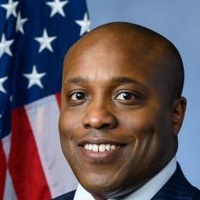
Wesley Hunt
Representative
TX
Wesley Hunt
Representative
TX
This bill, the Protecting Americans from Russian Litigation Act of 2025, aims to shield U.S. persons from lawsuits attempting to enforce foreign judgments or arbitral awards based on compliance with U.S. sanctions. It prohibits U.S. courts from recognizing or enforcing such foreign rulings when they stem from actions taken to adhere to U.S. sanctions or export controls. The legislation ensures that foreign entities cannot use U.S. courts to gain compensation when U.S. persons acted in good faith to comply with federal law.
The HOPE with Fertility Services Act amends ERISA to mandate comprehensive infertility and iatrogenic infertility coverage in employer-sponsored group health plans.
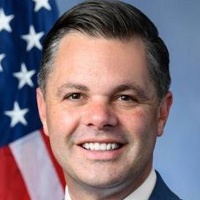
Zachary (Zach) Nunn
Representative
IA
Zachary (Zach) Nunn
Representative
IA
The HOPE with Fertility Services Act mandates that employer-sponsored group health plans providing obstetrical coverage must also include comprehensive coverage for infertility and iatrogenic infertility treatments. The bill establishes clear standards for these benefits, prohibits discriminatory plan practices, and requires rigorous oversight of utilization management tools. These requirements aim to improve patient access to essential reproductive care, with enforcement and reporting provisions effective for plan years beginning on or after January 1, 2027.
The Muhammad Ali American Boxing Revival Act of 2026 establishes unified boxing organizations and mandates enhanced safety, medical, anti-doping, and fair-contract standards to improve the well-being and professional opportunities of boxers.
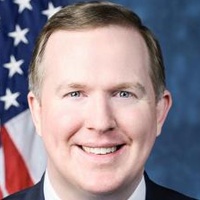
Brian Jack
Representative
GA
Brian Jack
Representative
GA
The Muhammad Ali American Boxing Revival Act of 2026 aims to modernize professional boxing by establishing "Unified Boxing Organizations" (UBOs) to provide boxers with improved safety standards, comprehensive medical support, and fair contract protections. The bill also mandates nationwide health and safety requirements, enforces stricter anti-doping protocols, and introduces measures to eliminate conflicts of interest within the sport. By standardizing regulations and championship titles, this legislation seeks to enhance boxer welfare and ensure greater accountability across the industry.
This Act establishes new federal standards and requirements for states issuing commercial driver's licenses (CDLs) to individuals who are not residents of that issuing state, particularly focusing on drivers from foreign countries and U.S. territories.
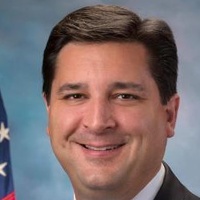
David Rouzer
Representative
NC
David Rouzer
Representative
NC
The Non-Domiciled CDL Integrity Act establishes new federal standards for states issuing Commercial Driver's Licenses (CDLs) to individuals who do not reside in that state. This bill sets specific, strict requirements for foreign nationals seeking a CDL, including proof of lawful status and job-related visas, while also outlining distinct procedures for applicants residing in U.S. territories. The legislation mandates enhanced record-keeping and reporting by states to the Secretary of Transportation regarding these non-domiciled licenses.
This bill exempts H-1B healthcare workers from a $100,000 entry fee to help address workforce shortages.
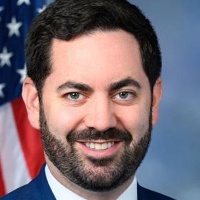
Michael Lawler
Representative
NY
Michael Lawler
Representative
NY
The H-1Bs for Physicians and the Healthcare Workforce Act exempts healthcare workers from a $100,000 entry fee requirement currently imposed on certain H-1B nonimmigrant visa petitions. This legislation aims to remove financial barriers for medical professionals, ensuring they are not subject to fees exceeding standard immigration costs.
The Enhanced Iran Sanctions Act of 2025 mandates broad economic and immigration sanctions on foreign individuals, entities, and financial institutions that support Iran’s nuclear, missile, drone, or terrorist activities, while specifically targeting the country's petroleum and petrochemical sectors.
Michael Lawler
Representative
NY
Michael Lawler
Representative
NY
The Enhanced Iran Sanctions Act of 2025 strengthens U.S. policy by imposing mandatory sanctions on foreign persons and financial institutions that support Iran’s nuclear, ballistic missile, drone, and terrorist activities. The bill specifically targets Iran’s petroleum and petrochemical sectors to cut off funding for these malign programs. Additionally, it expands the State Department’s "Rewards for Justice" program to incentivize the reporting of individuals who evade these sanctions.
The Infant Formula Safety Modernization Act of 2026 mandates stricter manufacturing testing, rapid pathogen reporting, and enhanced Congressional oversight to ensure the safety of infant formula.

Rosa DeLauro
Representative
CT
Rosa DeLauro
Representative
CT
The Infant Formula Safety Modernization Act of 2026 strengthens federal oversight by mandating rigorous pathogen testing, stricter manufacturing facility standards, and rapid reporting of contamination. The bill requires manufacturers to promptly notify the FDA of positive test results and ensures that Congress is kept informed of critical safety and inspection issues. These measures aim to enhance the safety and quality of infant formula products for all consumers.
This bill prohibits the use of federal health insurance innovation waiver funds to provide coverage or benefits to individuals who are not U.S. citizens or lawfully present in the United States.
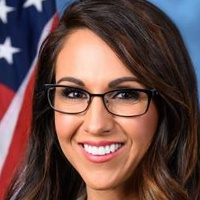
Lauren Boebert
Representative
CO
Lauren Boebert
Representative
CO
The "No Federal Tax Dollars for Illegal Aliens Health Insurance Act of 2026" prohibits the use of federal health insurance innovation waiver funds to provide coverage or benefits to individuals who are not U.S. citizens or lawfully present in the United States. Additionally, the bill mandates the rescission of any existing state waivers that do not comply with these new eligibility requirements.
The AI Fraud Accountability Act establishes federal criminal and civil penalties for using AI-generated digital impersonations to commit fraud while creating a collaborative framework to develop detection and prevention standards.
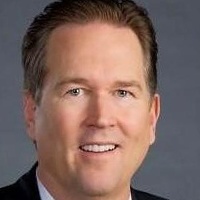
Vern Buchanan
Representative
FL
Vern Buchanan
Representative
FL
The AI Fraud Accountability Act establishes federal criminal penalties and FTC enforcement authority against the use of AI-generated digital impersonations to commit fraud. The bill also mandates the creation of a multi-sector working group to develop best practices for detecting and preventing such fraud. Additionally, it promotes international cooperation to combat cross-border digital impersonation schemes while explicitly protecting First Amendment rights, including parody and satire.
This bill prohibits federal agencies from providing funding or support for the creation or maintenance of state-level firearm ownership databases, with exceptions for records of lost or stolen weapons.

Paul Gosar
Representative
AZ
Paul Gosar
Representative
AZ
The Gun Owner Registration Information Protection Act prohibits federal agencies from providing funding or support for the creation and maintenance of state-level firearm ownership databases. This legislation ensures that federal resources cannot be used to track lawful gun owners, with a specific exception for databases tracking lost or stolen firearms.
The Enhanced Cybersecurity for SNAP Act of 2026 mandates a transition to secure chip-enabled EBT cards, strengthens digital fraud protections, and improves account management accessibility for SNAP beneficiaries.

Dan Goldman
Representative
NY
Dan Goldman
Representative
NY
The Enhanced Cybersecurity for SNAP Act of 2026 mandates a transition to secure, chip-enabled EBT cards to better protect Supplemental Nutrition Assistance Program (SNAP) benefits from fraud and skimming. The bill requires states to implement modernized digital account management tools, establishes new federal cybersecurity standards for online transactions, and prohibits fees for replacing compromised or malfunctioning cards. Additionally, it provides funding to help retailers upgrade to secure payment terminals and requires regular reporting to Congress on program security and benefit theft trends.
The Iran Human Rights, Internet Freedom, and Accountability Act of 2026 aims to support the Iranian people by expanding internet access, strengthening sanctions against regime officials, and establishing a Treasury initiative to combat Iranian government corruption and kleptocracy.
Michael Lawler
Representative
NY
Michael Lawler
Representative
NY
The Iran Human Rights, Internet Freedom, and Accountability Act of 2026 aims to support the Iranian people by expanding access to uncensored internet and communication technologies. The bill strengthens U.S. policy against regime repression by mandating investigations into human rights abuses and establishing a new Treasury initiative to combat corruption and money laundering by Iranian officials. Additionally, it enhances congressional oversight of sanctions and promotes independent media to counter state-sponsored censorship.
This Act establishes the Office of Men's Health within the Department of Health and Human Services and mandates a GAO study to address the growing national health crisis facing men.
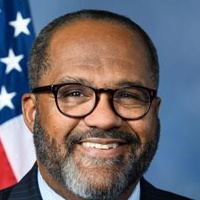
Troy Carter
Representative
LA
Troy Carter
Representative
LA
The State of Men's Health Act addresses the growing national health crisis among men, marked by shorter lifespans and higher mortality rates from leading causes of death. This legislation mandates a comprehensive study by the GAO to identify health disparities and recommend improvements. Furthermore, it establishes a dedicated Office of Men's Health within the Department of Health and Human Services to coordinate and promote programs focused on men's health education, screening, and research.
This bill exempts specific less-than-lethal projectile devices from federal firearm restrictions, excise taxes, and National Firearms Act regulations to promote de-escalation innovation in law enforcement.
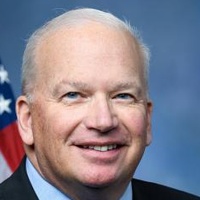
Scott Fitzgerald
Representative
WI
Scott Fitzgerald
Representative
WI
The Law-Enforcement Innovate to De-Escalate Act aims to promote de-escalation by exempting specific, clearly defined less-than-lethal projectile devices from federal firearm restrictions and excise taxes. This legislation provides a formal process for determining which devices qualify for these exemptions under both federal law and the National Firearms Act. The bill also modernizes tax regulations by exempting qualifying less-than-lethal devices and their ammunition from federal excise taxes.
The SAFE Act mandates a GAO study on "chameleon carriers" and requires the FMCSA to develop an advanced automated tool to detect them during the DOT registration process.
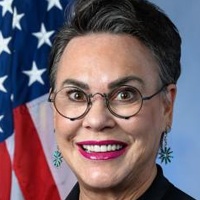
Harriet Hageman
Representative
WY
Harriet Hageman
Representative
WY
The Safety and Accountability in Freight Enforcement (SAFE) Act aims to combat "chameleon carriers" who evade safety regulations and enforcement actions. It mandates a GAO study on the prevalence and impact of these carriers and requires the FMCSA to develop an advanced automated tool to detect them during the DOT registration process. The bill ensures human oversight remains in final registration decisions and establishes reporting requirements on the tool's effectiveness.