
Legislative Activity
Track Chris's sponsored bills, co-sponsored legislation, and voting record
This Act mandates the National Park Service to establish and implement programs to reduce or eliminate the sale of disposable plastic products, such as single-use water bottles, across all park units.

Jeff Merkley
Senator
OR
Jeff Merkley
Senator
OR
The Reducing Waste in National Parks Act mandates the National Park Service (NPS) to establish a program to significantly reduce or eliminate the sale of disposable plastic products, including single-use water bottles, across all park units. Regional directors must implement these changes after assessing operational costs, infrastructure needs, and vendor contracts, while prioritizing visitor safety regarding water access. The NPS must also develop visitor education strategies and conduct biennial reviews to evaluate the program's effectiveness and impact on public health.
This resolution expresses support for designating June 6, 2025, as National Gun Violence Awareness Day and June 2025 as National Gun Violence Awareness Month to honor victims and promote safety.
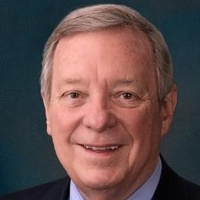
Richard Durbin
Senator
IL
Richard Durbin
Senator
IL
This resolution expresses strong support for designating June 6, 2025, as "National Gun Violence Awareness Day" and the entire month of June 2025 as "National Gun Violence Awareness Month." The designation aims to honor victims of gun violence and raise public awareness about the ongoing crisis. The measure encourages Americans to wear orange on that day and promote gun safety practices throughout the month.
This resolution formally honors the life, achievements, and legacy of former United States Senator Christopher "Kit" Bond of Missouri.
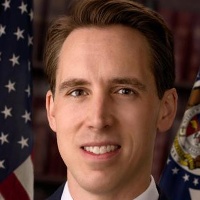
Joshua Hawley
Senator
MO
Joshua Hawley
Senator
MO
This resolution serves as a formal tribute honoring the life, achievements, and enduring legacy of former United States Senator Christopher "Kit" Bond of Missouri. It recognizes his decades of public service, including his terms as Missouri Governor and U.S. Senator, where he championed infrastructure, agriculture, and conservative values. The Senate expresses deep sadness over his passing and directs that official copies of this tribute be sent to his family.
The Vote at Home Act of 2025 mandates nationwide no-excuse mail-in voting for federal elections, provides free postage for ballots, and establishes automatic voter registration through state motor vehicle departments.
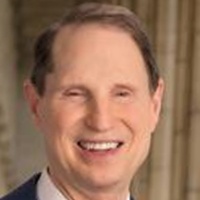
Ron Wyden
Senator
OR
Ron Wyden
Senator
OR
The Vote at Home Act of 2025 aims to modernize federal elections by establishing nationwide standards for voting by mail. It mandates that states mail ballots to all registered voters at least two weeks before federal elections and requires free postage for return ballots. Additionally, the bill overhauls voter registration by streamlining processes at the DMV and implementing automatic registration for eligible citizens who provide proof of citizenship when obtaining a driver's license.
This resolution officially recognizes Asian American, Native Hawaiian, and Pacific Islander Heritage Month to celebrate the community's significant contributions and acknowledge their ongoing challenges in U.S. history.

Mazie Hirono
Senator
HI
Mazie Hirono
Senator
HI
This resolution officially recognizes and celebrates Asian American, Native Hawaiian, and Pacific Islander (AANHPI) Heritage Month every May. It honors the significant and diverse contributions of AANHPI communities to the history and strength of the United States. The resolution also acknowledges the historical struggles and ongoing challenges faced by these communities. Ultimately, it reaffirms the importance of recognizing their achievements and ensuring their representation.
This Act extends the protections of the Occupational Safety and Health Act (OSHA) to all federal, state, and local public employees.
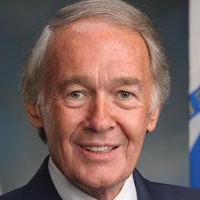
Edward Markey
Senator
MA
Edward Markey
Senator
MA
The Public Service Worker Protection Act expands the Occupational Safety and Health Act (OSHA) to explicitly cover federal, state, and local government employees. This ensures that public service workers are protected by federal workplace safety standards. The effective date varies depending on whether a state already has an approved OSHA plan.
This Act stabilizes the Crime Victims Fund by expanding its revenue sources to include certain non-conviction settlements and temporary deposits from False Claims Act recoveries.

Lisa Murkowski
Senator
AK
Lisa Murkowski
Senator
AK
The Crime Victims Fund Stabilization Act of 2025 aims to strengthen the Crime Victims Fund by expanding the sources of deposits. This includes allowing the Fund to receive money from certain legal settlements that do not result in a criminal conviction. Additionally, the bill temporarily allows certain recoveries from False Claims Act settlements to fund victim services through 2030, while protecting payments to whistleblowers and the government's direct recovery.
The College for All Act of 2025 establishes federal-state partnerships and grants to eliminate tuition and fees at public institutions, expands Pell Grants, and increases funding for minority-serving institutions and student success programs.
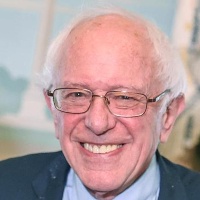
Bernard Sanders
Senator
VT
Bernard Sanders
Senator
VT
The College for All Act of 2025 establishes a federal-state partnership to eliminate tuition and required fees at public colleges for eligible students, while also creating grants to cover costs at private HBCUs and MSIs. The bill significantly increases funding for Federal Pell Grants, expands eligibility to include "Dreamer students," and introduces new grants to improve student success at underfunded institutions. Overall, this comprehensive legislation aims to make public higher education tuition-free and increase support for students at minority-serving institutions.
The SMART Prices Act accelerates Medicare drug price negotiation, expands the number of drugs subject to negotiation, and adjusts the maximum fair price ceilings for certain medications.

Amy Klobuchar
Senator
MN
Amy Klobuchar
Senator
MN
The SMART Prices Act aims to strengthen Medicare by significantly accelerating and expanding the number of drugs eligible for price negotiation. This bill lowers the time requirements for certain single-source drugs to qualify for negotiation and adjusts the maximum fair price ceilings for negotiated drugs starting in 2028. Overall, the legislation seeks to increase price competition and lower costs within the Medicare drug program.
The Supreme Court Ethics, Recusal, and Transparency Act of 2025 establishes a formal code of conduct, mandates stricter disclosure requirements for gifts and financial ties, and creates new procedures for judicial disqualification and complaint review.
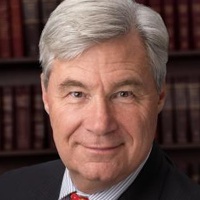
Sheldon Whitehouse
Senator
RI
Sheldon Whitehouse
Senator
RI
The Supreme Court Ethics, Recusal, and Transparency Act of 2025 establishes a formal, publicly accessible code of conduct for Supreme Court Justices and creates a judicial investigation panel to handle related ethics complaints. The bill also mandates stricter disclosure requirements for gifts and income received by Justices, and significantly expands the circumstances under which a federal judge must recuse themselves due to financial ties or lobbying influence. Finally, it institutes new disclosure rules for parties and *amici curiae* in cases before the Court, alongside studies to monitor judicial compliance.
This bill mandates new electronic, transparent, and timely prior authorization requirements for Medicare Advantage plans to improve seniors' access to care.

Roger Marshall
Senator
KS
Roger Marshall
Senator
KS
The Improving Seniors’ Timely Access to Care Act of 2025 aims to modernize and increase transparency in the prior authorization process for Medicare Advantage plans. This bill mandates the adoption of electronic prior authorization systems and requires plans to publicly report detailed data on their approval, denial, and appeal rates. Furthermore, it establishes new standards to protect enrollees and grants the Secretary authority to enforce faster decision timelines for care requests.
This bill, officially known as the DOGE BROS Act, significantly increases the maximum financial penalties for various federal offenses related to the misuse, unauthorized access, and wrongful disclosure of government data, including personal records, tax information, and census data.
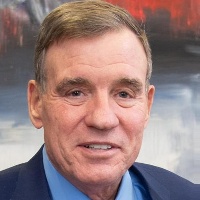
Mark Warner
Senator
VA
Mark Warner
Senator
VA
The DOGE BROS Act significantly increases the financial penalties for various federal offenses related to the misuse and unauthorized disclosure of sensitive government data. This bill raises maximum fines for misusing personal records, hacking government computers, and improperly sharing information held by the SSA, HHS, the IRS, and the Census Bureau. The overall goal is to bolster safeguards and increase accountability for protecting government electronic data.
This resolution demands the return of all abducted Ukrainian children before any final peace agreement is reached to end the war.
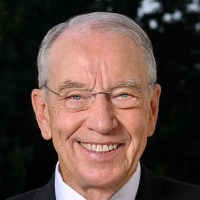
Charles Grassley
Senator
IA
Charles Grassley
Senator
IA
This resolution strongly condemns the Russian Federation for the abduction, forced transfer, and illegal deportation of Ukrainian children. It asserts that the return of all abducted children must be a prerequisite before finalizing any peace agreement to end the war. The bill highlights Russia's intent to erase Ukrainian identity through forced adoption and citizenship changes, actions deemed violations of international law and potential war crimes.
This resolution officially designates May 2, 2025, as United States Foreign Service Day to honor the service and sacrifices of current and past members of the U.S. Foreign Service.
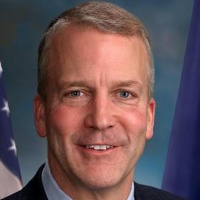
Dan Sullivan
Senator
AK
Dan Sullivan
Senator
AK
This resolution officially designates May 2, 2025, as "United States Foreign Service Day." It serves to recognize the vital work of current and former Foreign Service personnel who protect American interests abroad. The day also honors members of the Foreign Service who have made the ultimate sacrifice in the line of duty.
This joint resolution either blocks or approves a specific proposed foreign military sale of defense articles and services to the United Arab Emirates.

Christopher Murphy
Senator
CT
Christopher Murphy
Senator
CT
This joint resolution addresses two separate actions regarding foreign military sales. First, it formally blocks a proposed defense article and services sale to the United Arab Emirates. Second, it approves a different, specific sale of non-Major Defense Equipment, spare parts, and support services to the UAE, as detailed in Transmittal No. 2525.
This resolution officially recognizes the vital roles and contributions of United States teachers in building the nation's civic, cultural, and economic well-being, while encouraging recognition during National Teacher Appreciation Week.

Susan Collins
Senator
ME
Susan Collins
Senator
ME
This resolution officially recognizes the vital roles and significant contributions of teachers across the United States in strengthening the nation's civic, cultural, and economic well-being. It specifically designates National Teacher Appreciation Week, May 5–9, 2025, to raise public awareness and encourage greater respect for the teaching profession. Ultimately, this measure serves as a formal expression of gratitude from Congress to educators nationwide.
This joint resolution approves the proposed foreign military sale of defense articles and services to the United Arab Emirates for the continued support of their helicopter fleet.
Christopher Murphy
Senator
CT
Christopher Murphy
Senator
CT
This joint resolution provides for congressional disapproval of a proposed foreign military sale to the United Arab Emirates. However, the accompanying text indicates this resolution is actually **approving** the extension of spare parts and support for the UAE's existing helicopter fleet, including Apache, Black Hawk, and Chinook aircraft. It confirms Congress's acceptance of this specific logistics and maintenance sale renewal.
This joint resolution disapproves a proposed foreign military sale of defense articles, including Chinook helicopters and related equipment, to the United Arab Emirates.
Christopher Murphy
Senator
CT
Christopher Murphy
Senator
CT
This joint resolution disapproves of a proposed foreign military sale of defense articles and services to the United Arab Emirates (UAE). It specifically blocks the transfer of certain defense equipment, including Chinook helicopters and related support systems, that was previously planned for the UAE government. Congress is using its authority to halt this specific arms deal.
The Honoring Our Fallen Heroes Act of 2025 establishes a presumption that certain cancers leading to death or disability in public safety officers are the result of on-duty exposure to carcinogens.
Amy Klobuchar
Senator
MN
Amy Klobuchar
Senator
MN
The Honoring Our Fallen Heroes Act of 2025 establishes a presumption that certain cancers leading to death or disability in public safety officers were caused by on-duty exposure to recognized carcinogens. This law defines specific exposure-related cancers and sets conditions, such as five years of service, for the presumption to apply. It also updates review processes for adding new cancers to the list and grants retroactive application and filing extensions for eligible past and present claims.
This joint resolution disapproves of the proposed foreign military sale of defense articles, including drones and guided bombs, to the Government of Qatar.
Christopher Murphy
Senator
CT
Christopher Murphy
Senator
CT
This joint resolution expresses the disapproval of Congress regarding a proposed foreign military sale of defense articles and services to the Government of Qatar. Specifically, this action blocks the planned sale which includes MQ9B drones, guided bombs, and associated support equipment. Congress is utilizing this resolution to formally halt the specified arms transaction.