Legislative Activity
Track Jill's sponsored bills, co-sponsored legislation, and voting record
This resolution urgently calls for the immediate delivery of humanitarian aid to address the severe hunger crisis in Gaza and demands the administration use all diplomatic means to secure hostage release and end the fighting.

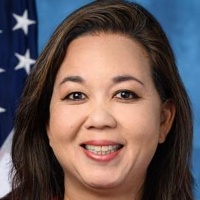
Pramila Jayapal
Representative
WA
Pramila Jayapal
Representative
WA
This resolution formally expresses the House of Representatives' grave concern over the severe humanitarian crisis and widespread suffering of civilians in Gaza, alongside the plight of hostages. It urgently calls on the Administration to use all diplomatic tools to secure the release of all hostages. Furthermore, the bill demands the immediate delivery and secure distribution of essential humanitarian aid to address the catastrophic hunger crisis in Gaza.
The Integrity in Government Act of 2025 establishes an Inspector General for the Executive Office of the President and strengthens job protections for most Inspectors General against removal without cause.
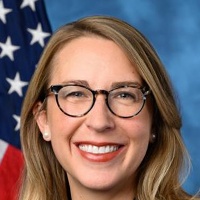
Hillary Scholten
Representative
MI
Hillary Scholten
Representative
MI
The Integrity in Government Act of 2025 aims to strengthen government oversight by establishing an Inspector General for the Executive Office of the President. This bill significantly reforms the system by implementing new protections to ensure Inspectors General can perform their duties without undue political interference. Specifically, it restricts the removal of most presidential appointees to instances of inefficiency, misconduct, or neglect of duty.
This bill authorizes the use of Emancipation Hall in the Capitol Visitor Center for an event celebrating the birthday of King Kamehameha I on June 8, 2025.
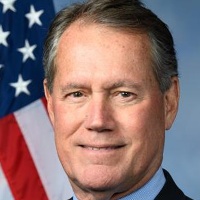
Ed Case
Representative
HI
Ed Case
Representative
HI
This bill authorizes the use of Emancipation Hall in the Capitol Visitor Center for an event celebrating the birthday of King Kamehameha I. The designated date for this celebration is June 8, 2025. Any necessary event preparations must adhere to the regulations established by the Architect of the Capitol.
This resolution condemns the illegal and damaging international practice of using "flags of convenience" for undermining U.S. security, economic rules, and labor standards while supporting the American maritime industry.
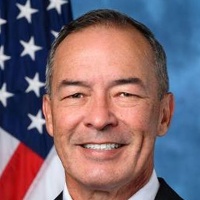
James (Jim) Moylan
Representative
GU
James (Jim) Moylan
Representative
GU
This resolution condemns the international practice of using "flags of convenience," where ships are registered in countries with lax regulations to avoid U.S. laws and standards. Congress asserts that this practice undermines national security by weakening the U.S. merchant marine fleet and enables illegal activities like illicit trafficking and environmental harm. The bill strongly supports the U.S. maritime industry while calling on international bodies to enforce higher global labor and safety standards for shipping.
This resolution expresses strong support for designating June 6, 2025, as National Gun Violence Awareness Day and June 2025 as National Gun Violence Awareness Month to honor victims and promote awareness.
Robin Kelly
Representative
IL
Robin Kelly
Representative
IL
This resolution expresses strong support for designating June 6, 2025, as "National Gun Violence Awareness Day" and June 2025 as "National Gun Violence Awareness Month." It highlights the devastating scale of gun violence in the U.S., recognizing the thousands of annual deaths and injuries across all demographics. The bill encourages Americans to wear orange on the designated day to honor victims and promote increased awareness and community action regarding gun safety.
The Menstrual Equity For All Act of 2025 mandates the provision of free menstrual products across schools, correctional facilities, federal buildings, and workplaces, while also expanding coverage under Medicaid and eliminating sales tax on these essential items.

Grace Meng
Representative
NY
Grace Meng
Representative
NY
The Menstrual Equity For All Act of 2025 aims to eliminate period poverty by ensuring access to free menstrual products across various sectors of society. This comprehensive bill mandates the availability of these essential supplies in K-12 schools, colleges, correctional facilities, federal buildings, and workplaces with over 100 employees. Furthermore, it expands coverage under Medicaid, allocates specific funding through social service block grants and TANF programs, and prohibits states from taxing menstrual products.
This Act establishes federal grants to fund unarmed mobile crisis response teams that divert nonviolent mental health and substance use calls away from police dispatch.
Adam Smith
Representative
WA
Adam Smith
Representative
WA
The 911 Community Crisis Responders Act of 2025 establishes a federal grant program to fund unarmed mobile crisis response teams across the nation. These teams will respond to nonviolent emergencies involving mental health, homelessness, or substance use, diverting calls away from law enforcement. Grantees must use funds for training, system upgrades, and reporting on program impact, including demographic data on those served. The goal is to ensure trained professionals provide appropriate, de-escalated care for individuals in crisis.
This act bans the interstate transportation of horses using vehicles with two or more stacked levels.

Steve Cohen
Representative
TN
Steve Cohen
Representative
TN
The Horse Transportation Safety Act of 2025 prohibits the interstate transport of horses using any truck or trailer with two or more stacked levels. This measure aims to enhance animal welfare during cross-state travel by banning multilevel transport configurations. Violators who knowingly break this rule face civil penalties ranging from $\$100$ to $\$500$ per violation.
This Act mandates the National Park Service to establish a program to reduce and eliminate the sale and distribution of disposable plastic products, like single-use water bottles and utensils, across all national park units.

Mike Quigley
Representative
IL
Mike Quigley
Representative
IL
The Reducing Waste in National Parks Act mandates the National Park Service (NPS) to establish a program to significantly reduce or eliminate the sale and distribution of disposable plastic products, including single-use water bottles, across all park units. Regional directors must implement these changes while considering operational costs, visitor safety regarding water access, and vendor contracts. The law also requires proactive visitor education and biennial reviews to assess the program's effectiveness and public impact.
This resolution supports recognizing May as "Sex Ed For All Month" to promote equitable access to comprehensive, medically accurate, and inclusive sexual health education for all young people.
Pramila Jayapal
Representative
WA
Pramila Jayapal
Representative
WA
This resolution officially recognizes May as "Sex Ed For All Month" to promote honest and inclusive sexual health education for all young people. It highlights the need to address current disparities and barriers that prevent youth from accessing vital health information. The bill urges federal, state, and local officials to support evidence-based, medically accurate sex education programs. Ultimately, it champions the right of every young person to receive comprehensive education necessary for making healthy decisions about their bodies and futures.
This Act mandates the inclusion of Asian American, Native Hawaiian, and Pacific Islander history across federally supported K-12 American history and civics education programs and assessments.
Grace Meng
Representative
NY
Grace Meng
Representative
NY
This Act mandates the inclusion of Asian American, Native Hawaiian, and Pacific Islander (AANHPI) history across federally supported K-12 American history and civics education programs. It recognizes the vital, yet often omitted, contributions of AANHPI communities while addressing historical exclusion and systemic racism. The legislation directs educational programs to partner with the Smithsonian's Asian Pacific American Center to develop accurate and comprehensive curricula. This ensures AANHPI history is integrated into national assessments and teacher training.
The College for All Act of 2025 establishes federal-state partnerships and grants to eliminate tuition and fees at public and tribal colleges, boosts Pell Grants, and increases funding for minority-serving institutions.
Pramila Jayapal
Representative
WA
Pramila Jayapal
Representative
WA
The College for All Act of 2025 establishes a Federal-State partnership to eliminate tuition and required fees at public and Tribal colleges for eligible students, while significantly increasing Federal Pell Grant maximum awards and expanding eligibility to include many "Dreamer students." The bill also creates new grant programs to cover tuition at private non-profit HBCUs and MSIs, and funds initiatives to improve student success and support for low-income and first-generation students. Finally, it increases overall appropriations for HBCUs, Tribal Colleges, and other Minority-Serving Institutions.
This bill establishes a grant program to fund nonprofit organizations providing free, on-site eye care services, including exams and glasses, to public school students.
Jahana Hayes
Representative
CT
Jahana Hayes
Representative
CT
The See the Board Act establishes a new federal grant program administered by the Secretary of Health and Human Services. This program aims to fund nonprofit organizations that provide free, on-site eye care services, including exams and glasses, directly to students in public elementary and secondary schools. The goal is to improve student access to necessary vision care through mobile or portable clinics.
This bill restricts the transfer of specific offensive military articles and defense services to Israel until Congress authorizes their use for specified purposes and Israel provides written assurances of compliance with international law.
Delia Ramirez
Representative
IL
Delia Ramirez
Representative
IL
This bill imposes significant restrictions on the transfer of specific defense articles and services to Israel. Transfers of listed military equipment, such as certain bombs and ammunition, are prohibited unless Congress first passes a law detailing their specific authorized use. Furthermore, Israel must provide satisfactory written assurances that the items will only be used for those stated purposes and in compliance with international law.
This resolution expresses strong support for designating May 2025 as Mental Health Awareness Month to highlight the national mental health crisis and encourage greater action and access to care.
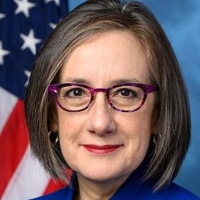
Andrea Salinas
Representative
OR
Andrea Salinas
Representative
OR
This resolution expresses strong support for designating May 2025 as Mental Health Awareness Month to combat a growing national crisis. It highlights alarming statistics regarding rising mental illness rates, significant barriers to accessing care, and disproportionate impacts on youth and marginalized communities. Ultimately, the bill declares mental health a national priority and encourages increased public awareness and support for mental health services.
This bill reauthorizes and increases mandatory funding for the Healthy Food Financing Initiative through fiscal year 2030 and beyond to support healthy food projects.

Shontel Brown
Representative
OH
Shontel Brown
Representative
OH
The Healthy Food Financing Initiative Reauthorization Act of 2025 ensures continued federal support for projects that improve access to healthy food options. This bill reauthorizes the initiative by significantly increasing mandatory funding levels, starting at \$25 million in FY 2026 and rising to \$50 million annually by FY 2030. These funds are drawn from the Commodity Credit Corporation to support healthy food infrastructure development.
This Act establishes mandatory ethics codes, recusal standards, and enhanced financial disclosure requirements for Supreme Court Justices and federal judges.

Henry Johnson
Representative
GA
Henry Johnson
Representative
GA
The Supreme Court Ethics, Recusal, and Transparency Act of 2025 establishes a mandatory, public code of conduct and a formal complaint process for Supreme Court Justices, modeled after procedures for lower federal judges. The bill also institutes stricter disclosure requirements for gifts and financial ties, and mandates judicial disqualification in cases involving recent lobbying contact or significant financial relationships with involved parties. Furthermore, it creates new review panels for disqualification motions and requires parties and *amici* to disclose financial supporters connected to the case.
This bill eliminates the requirement for small businesses awarded certain construction contracts to award subcontracts only to businesses located within the county or state of performance.

Nicholas Begich
Representative
AK
Nicholas Begich
Representative
AK
This bill amends the Small Business Act to eliminate the requirement that recipients of certain construction contracts must award subcontracts to businesses located within the county or state of performance. By repealing this outdated rule, the legislation removes a geographic restriction on subcontracting for small businesses awarded these contracts. This change aims to provide greater flexibility in awarding construction subcontracts.
This Act codifies the Six Assurances made to Taiwan and establishes a mandatory Congressional review process for any executive action that would alter U.S. policy regarding arms sales, mediation, or Taiwan's sovereignty status.
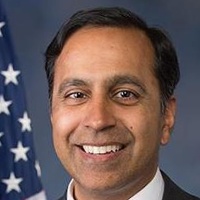
Raja Krishnamoorthi
Representative
IL
Raja Krishnamoorthi
Representative
IL
The Six Assurances to Taiwan Act codifies the historical U.S. commitments known as the Six Assurances, reinforcing the foundation of U.S. policy toward Taiwan. It explicitly states that the U.S. has not agreed to set a date for ending arms sales or to consult with Beijing on those sales. Furthermore, the Act establishes a mandatory Congressional review process before the President can pause arms sales or take actions that significantly alter the U.S. position on Taiwan's sovereignty. This legislation aims to ensure stability in the Taiwan Strait by upholding these long-standing policy guidelines.
The SNAP Administrator Retention Act of 2025 mandates that states align SNAP administrator pay with comparable federal wages in exchange for 100% federal funding of approved administrative staffing costs.
Jahana Hayes
Representative
CT
Jahana Hayes
Representative
CT
The SNAP Administrator Retention Act of 2025 aims to improve staffing and retention for the Supplemental Nutrition Assistance Program (SNAP) by setting new minimum pay standards for state administrators based on comparable federal salaries. If states adopt these standards and have their pay structure approved, the federal government will cover 100% of their administrative personnel costs. This increased federal funding must supplement, not replace, existing state spending on SNAP administration.