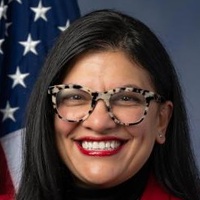
Legislative Activity
Track Rashida's sponsored bills, co-sponsored legislation, and voting record
The Sgt. Isaac Woodard, Jr. and Sgt. Joseph H. Maddox GI Bill Restoration Act of 2025 aims to restore GI Bill benefits to Black World War II veterans and their direct descendants who were denied them due to racial discrimination, and to address inequalities in benefits for female and minority veterans.
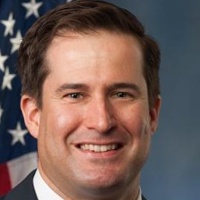
Seth Moulton
Representative
MA
Seth Moulton
Representative
MA
The Sgt. Isaac Woodard, Jr. and Sgt. Joseph H. Maddox GI Bill Restoration Act of 2025 aims to address historical inequities by extending housing and educational benefits to Black World War II veterans and their direct descendants who were previously denied these benefits due to racial discrimination. The bill amends Title 38 of the U.S. Code to include these veterans and their families in housing loan and educational assistance programs. It also establishes a panel to identify and recommend additional support for female and minority veterans.
This bill officially renames the Robert E. Lee Memorial as the Arlington House National Historic Site.
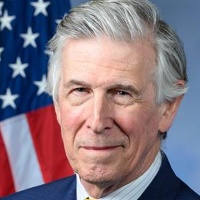
Donald Beyer
Representative
VA
Donald Beyer
Representative
VA
This bill officially redesignates the site currently known as the Robert E. Lee Memorial as the "Arlington House National Historic Site." It mandates that all official U.S. records, maps, and documents be updated to reflect this new name and repeals the previous joint resolutions that established the former designation.
This bill expands income-driven repayment options for parents who have federal student loans.

Maxine Waters
Representative
CA
Maxine Waters
Representative
CA
The "Affordable PLUS Repayment Options for Parents Act of 2025" expands income-contingent and income-based repayment options to parents who have taken out PLUS loans for their children's education. It removes restrictions that previously made PLUS loan borrowers ineligible for income-based repayment plans. The bill defines "partial financial hardship" based on a borrower's income and family size, ensuring more families can qualify for reduced payments. These changes apply to borrowers with outstanding PLUS loans or consolidation loans used to pay off PLUS loans, who are repaying their loans through income-driven repayment plans on or after the enactment date.
The HEIR Act of 2025 eases property ownership documentation for disaster relief applicants with heir properties through standardized affidavits and alternative verification methods.

Lizzie Fletcher
Representative
TX
Lizzie Fletcher
Representative
TX
The HEIR Act of 2025 amends regulations for Community Development Block Grant Disaster Recovery (CDBG-DR) and Mitigation (CDBG-MIT) programs to assist homeowners with heir properties or non-traditional documentation in proving property ownership after Presidentially declared disasters. It allows for the use of standardized affidavits and other forms of documentation to establish ownership. The Department of Housing and Urban Development is required to develop a standardized affidavit of ownership form for grantees to use.
The American Dream and Promise Act of 2025 provides a pathway to permanent residency for eligible individuals who came to the U.S. as children, or who have Temporary Protected Status (TPS) or Deferred Enforced Departure (DED) status.
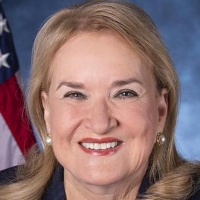
Sylvia Garcia
Representative
TX
Sylvia Garcia
Representative
TX
The American Dream and Promise Act of 2025 provides a pathway to permanent residency for eligible individuals who entered the United States as children and those with Temporary Protected Status (TPS) or Deferred Enforced Departure (DED). Title I, the Dream Act of 2025, establishes conditional permanent residency for eligible individuals who entered the U.S. as children. Title II, the American Promise Act of 2025, allows the Secretary of Homeland Security or the Attorney General to grant permanent resident status to eligible individuals from TPS or DED countries. Title III outlines general provisions, such as background checks, application processes, and fee exemptions, applicable to all seeking to adjust their status under this Act.
This bill would allow nurse practitioners and physician assistants to complete Medicare paperwork for covering certain shoes for people with diabetes.
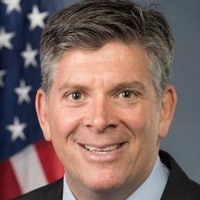
Darin LaHood
Representative
IL
Darin LaHood
Representative
IL
The "Promoting Access to Diabetic Shoes Act" allows nurse practitioners and physician assistants to complete Medicare paperwork for covering therapeutic shoes for people with diabetes, increasing access to this benefit.
The Compassion for Vulnerable and Struggling Workers Act allows involuntarily terminated civil service employees who meet specific criteria, such as being pregnant or having cancer, to enroll in a health benefits plan, with funding sourced from the United States DOGE Service savings.

Sheila Cherfilus-McCormick
Representative
FL
Sheila Cherfilus-McCormick
Representative
FL
The Compassion for Vulnerable and Struggling Workers Act allows civil service employees involuntarily terminated between January 20, 2025, and January 1, 2026, to enroll in a health benefits plan if they meet certain conditions. These conditions include being removed without cause, having a fully successful performance review, being pregnant at the time of removal, or being diagnosed with cancer in the 5 years before removal. Federal funds saved by the United States DOGE Service will cover the government and individual contributions for these health benefits.
The "Protect Veteran Jobs Act" allows wrongly terminated veteran civil service employees to be reinstated and requires executive agencies to report to Congress on veteran employee terminations.
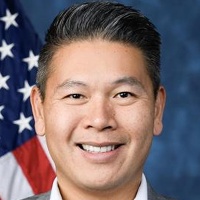
Derek Tran
Representative
CA
Derek Tran
Representative
CA
The Protect Veteran Jobs Act allows wrongly fired or dismissed veterans in civil service jobs between January 20, 2025, and the Act's enactment date to be reinstated to their previous position or a similar one. It mandates executive branch agencies to report to Congress every three months on all veteran employees who were fired or dismissed and the reasons for their termination, effective until January 20, 2029. The Act relies on existing U.S. Code definitions for key terms like "veteran" and "civil service."
The CROWN Act of 2025 prohibits discrimination based on hair texture and hairstyle in federally funded programs, housing, public accommodations, and employment.
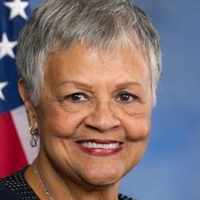
Bonnie Watson Coleman
Representative
NJ
Bonnie Watson Coleman
Representative
NJ
The CROWN Act of 2025 prohibits discrimination based on hair texture and hairstyle if that style is commonly associated with a particular race or national origin. This protection extends to federally funded programs, housing, public accommodations, and employment. The act aims to ensure equal opportunity and prevent discrimination based on hair, addressing historical biases and stereotypes. It clarifies that existing civil rights laws should be interpreted to include protection against hair-based discrimination.
To award a Congressional Gold Medal to the 761st Tank Battalion, the first Black soldiers to serve in an American armored unit, for their valor and crucial contributions to the Allied victory in Europe.
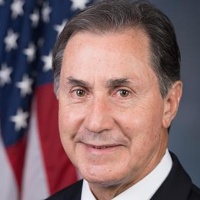
Gary Palmer
Representative
AL
Gary Palmer
Representative
AL
This bill authorizes the Speaker of the House and the President pro tempore of the Senate to award a Congressional Gold Medal to the 761st Tank Battalion, also known as the "Black Panthers," in recognition of their courageous service and crucial contributions during World War II. The medal will be given to the National Museum of African American History and Culture for display, honoring the 761st as the first Black soldiers to serve in an American armored unit and their significant role in the Allied victory in Europe. The bill also allows for the creation and sale of bronze duplicates of the medal to support the United States Mint Public Enterprise Fund.
The RAISE Act of 2025 introduces a refundable tax credit for eligible teachers and early childhood educators, increases the tax deduction for educator expenses, and provides mandatory funding to support local educational agencies that maintain or increase teacher salaries.

Jahana Hayes
Representative
CT
Jahana Hayes
Representative
CT
The RAISE Act of 2025 introduces a refundable tax credit for eligible teachers, offering $1,000 plus additional amounts for teachers in qualifying schools with high student poverty levels. It also increases the tax deduction for educators' expenses to $500 and expands eligibility to include early childhood educators. Additionally, the Act amends the Elementary and Secondary Education Act to provide mandatory funding to support local educational agencies that maintain or increase teacher salaries, with a portion reserved for teacher salary incentive grants. These grants can be used for various programs aimed at strengthening the teaching profession and improving educator skills.
The "Finn Sawyer Access to Cancer Testing Act" expands healthcare coverage under Medicare, Medicaid, and CHIP to include comprehensive cancer diagnostic and laboratory tests, while also establishing an education program on genomic testing for both healthcare providers and the public.

Doris Matsui
Representative
CA
Doris Matsui
Representative
CA
The "Finn Sawyer Access to Cancer Testing Act" expands healthcare coverage under Medicare, Medicaid, and CHIP to include comprehensive cancer diagnostic and laboratory tests, such as genomic sequencing, starting in 2027. It ensures coverage upon diagnosis, recurrence, and as needed for treatment planning. Additionally, the Act directs the Department of Health and Human Services to establish an education program to raise awareness among healthcare providers and the public about genomic testing and its applications in cancer care.
Ethan's Law establishes federal penalties for improperly storing firearms where minors or prohibited persons can access them and creates grant programs to incentivize states to adopt matching safe storage laws.

Rosa DeLauro
Representative
CT
Rosa DeLauro
Representative
CT
Ethan's Law establishes federal requirements for the secure storage of firearms to prevent unauthorized access by minors and prohibited persons, making improper storage a civil violation with escalating penalties if injury or death results. The bill also creates a federal grant program to incentivize states and Tribes to adopt matching safe storage laws. Furthermore, Congress declares that failing to comply with these storage requirements constitutes negligence and may be considered the direct cause of resulting firearm injuries.
The Empowering and Enforcing Environmental Justice Act of 2025 aims to address environmental injustices by establishing an Office of Environmental Justice, defining key terms, creating a Senior Advisory Council, and providing grants to state, local, and tribal governments for environmental law enforcement in disproportionately affected communities.

Nanette Barragán
Representative
CA
Nanette Barragán
Representative
CA
The Empowering and Enforcing Environmental Justice Act of 2025 aims to protect vulnerable communities by creating an Office of Environmental Justice within the Department of Justice, defining key environmental justice terms, and establishing a grant program to aid state, local, and tribal governments in enforcing environmental laws. The Office of Environmental Justice will be responsible for developing environmental justice strategies, coordinating related matters, and promoting public participation. A Senior Advisory Council will also be created to advise on environmental justice matters and recommend policies. The grant program will provide funding for training, staffing, and community engagement to help address disproportionate environmental and health impacts on low-income, Tribal, and Indigenous communities.
The "Taxpayer Funds Oversight and Accountability Act" enhances financial management and oversight in federal agencies by updating CFO responsibilities, mandating 4-year government-wide financial management plans, and requiring rigorous audits of internal controls.

Gerald Connolly
Representative
VA
Gerald Connolly
Representative
VA
The Taxpayer Funds Oversight and Accountability Act enhances financial management and transparency in federal agencies by updating the duties of Chief Financial Officers (CFOs) to include stronger oversight of financial reporting and internal controls. It replaces the government-wide 5-year financial management plan with a 4-year plan, requiring detailed strategies for improving financial management systems and workforce development. The Act also mandates annual financial management status reports to Congress and the Comptroller General, along with rigorous audits of internal controls to ensure effective financial management across the government.
The "DOC Access Act of 2025" aims to improve dental and vision care coverage by ensuring fair payment practices, protecting providers' choices, and upholding state regulatory authority.
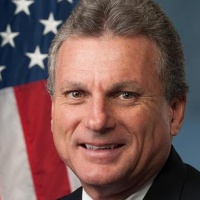
Earl Carter
Representative
GA
Earl Carter
Representative
GA
The "DOC Access Act of 2025" aims to enhance health care coverage under vision and dental plans by ensuring fair payment practices, protecting doctors' choices in labs and suppliers, and respecting state laws. It allows optometrists and dentists to charge their standard rate for non-covered services if the plan's payment is unreasonable, while ensuring they can only charge the contracted rate for dental cleanings. The bill also gives doctors more control over agreement extensions with limited benefit plans and allows them to opt out of certain provisions. Ultimately, this act seeks to balance federal guidelines with state oversight in regulating health insurance issuers and dental or vision benefit plans.
The Accountability in Government Efficiency Act mandates a report from the Comptroller General to Congress analyzing the impact and legal compliance of the Department of Government Efficiency's actions by December 31, 2025.

Suhas Subramanyam
Representative
VA
Suhas Subramanyam
Representative
VA
The Accountability in Government Efficiency Act requires the Comptroller General of the United States to report to Congress on the actions taken by the Department of Government Efficiency. This report will analyze the effects of the Department's actions on the long-term financial, public health, and safety interests of the United States, as well as the Department's compliance with certain sections of title 5, United States Code. The report must be submitted to Congress by December 31, 2025.
This resolution recognizes January 2025 as "National Mentoring Month" to highlight the vital role of mentorship in empowering youth and strengthening communities across the United States.

Mary Scanlon
Representative
PA
Mary Scanlon
Representative
PA
This resolution recognizes January 2025 as "National Mentoring Month" to highlight the vital role mentoring plays in fostering academic success, self-esteem, and career development for youth. It celebrates the contributions of mentors nationwide while calling for increased public and private collaboration to expand quality mentoring programs. Ultimately, the bill aims to close the "mentoring gap" to ensure all young people have the supportive adult connections necessary to reach their full potential.
This resolution designates February 24–28, 2025, as "Public Schools Week" to celebrate the vital role of public education and advocate for the continued support and funding of our nation's schools.
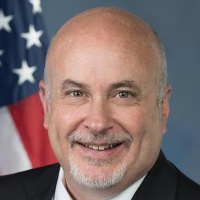
Mark Pocan
Representative
WI
Mark Pocan
Representative
WI
This resolution designates February 24–28, 2025, as "Public Schools Week" to celebrate the vital role public education plays in preparing students for the future. It reaffirms the commitment to providing every child with a high-quality, inclusive, and well-funded learning environment. Additionally, the bill calls on lawmakers to prioritize equitable resources and support services to ensure student success.
The "New Era of Preventing End-Stage Kidney Disease Act" aims to improve research, early intervention, and treatment for rare kidney diseases through centers of excellence, studies, and provider education initiatives.

Gus Bilirakis
Representative
FL
Gus Bilirakis
Representative
FL
The "New Era of Preventing End-Stage Kidney Disease Act" aims to improve the prevention, diagnosis, and treatment of rare kidney diseases through research, education, and increased public awareness. It establishes Centers of Excellence for Rare Kidney Disease Research, directs studies on testing and treatment approaches, and promotes provider education in nephrology. The Act prioritizes addressing disparities in affected populations and seeks to delay or eliminate the need for dialysis and transplant. It authorizes appropriations for these activities from 2026 through 2030.