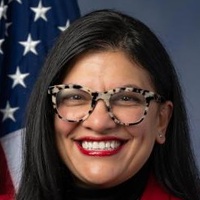
Legislative Activity
Track Rashida's sponsored bills, co-sponsored legislation, and voting record
This bill mandates electronic prior authorization, increases transparency through required data reporting, and establishes faster decision timelines for Medicare Advantage plans to improve timely access to care for seniors.

Mike Kelly
Representative
PA
Mike Kelly
Representative
PA
The Improving Seniors’ Timely Access to Care Act of 2025 aims to streamline and modernize the prior authorization process within Medicare Advantage plans. This bill mandates the adoption of electronic prior authorization systems and significantly increases transparency regarding approval rates and decision times starting in 2027. Furthermore, it establishes new enrollee protections and grants the Secretary authority to enforce faster decision timeframes for medical services.
The Advanced Coursework Equity Act establishes a federal grant program to expand access to advanced and STEM-focused coursework by promoting equitable enrollment practices, such as universal screening and open enrollment, in under-resourced schools.
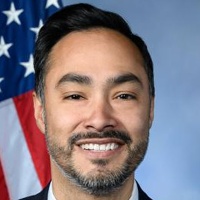
Joaquin Castro
Representative
TX
Joaquin Castro
Representative
TX
The Advanced Coursework Equity Act aims to close the opportunity gap by expanding access to advanced and STEM-related courses for historically underrepresented students. The bill establishes a federal grant program to help schools implement universal screening and open enrollment policies, ensuring that all qualified students have the chance to participate in rigorous academic programs. By providing funding for teacher training, student support services, and data-driven equity goals, the Act seeks to prepare more students for success in college and the modern workforce.
The Essential Caregivers Act of 2026 mandates that long-term care facilities allow residents to designate essential caregivers who maintain in-person visitation rights even during periods when regular visitation is suspended.

Claudia Tenney
Representative
NY
Claudia Tenney
Representative
NY
The Essential Caregivers Act of 2026 ensures that residents in long-term care facilities maintain access to designated essential caregivers, even when general visitation is suspended. The bill mandates that facilities allow residents to appoint up to two caregivers who can provide in-person support, provided they adhere to established safety protocols. It also prioritizes the investigation of access complaints and guarantees that these visitation rights cannot be waived during emergencies.
This resolution urges the United States to ratify the Rome Statute, join the International Criminal Court, and lift sanctions against the Court's personnel.

Ilhan Omar
Representative
MN
Ilhan Omar
Representative
MN
This resolution expresses the sense of the House of Representatives that the United States should ratify the Rome Statute and become a full member of the International Criminal Court. It advocates for lifting existing sanctions against Court personnel and encourages the U.S. to leverage its influence to promote global participation in the institution.
The Drug Deal Disclosure Act mandates the creation of a public, searchable database detailing federal agreements with drug manufacturers regarding pricing, special treatment, and import provisions.

Judy Chu
Representative
CA
Judy Chu
Representative
CA
The Drug Deal Disclosure Act requires the Secretary of Health and Human Services to create a public, searchable database of federal agreements with drug manufacturers regarding pricing and special treatment provisions. The bill mandates transparency for these agreements, prohibiting redactions based on political sensitivity or reputational harm. Additionally, it requires the CBO and GAO to conduct a joint analysis on the economic and budgetary impacts of these agreements on the U.S. healthcare system.
This resolution reaffirms the commitment to universal accessibility by advocating for the full implementation of disability-inclusive design standards across all federally funded infrastructure and public facilities.

Jahana Hayes
Representative
CT
Jahana Hayes
Representative
CT
This resolution reaffirms the federal commitment to ensuring equal access to public facilities and rights-of-way for all individuals, including the more than 70 million Americans living with disabilities. It supports the full implementation of accessibility guidelines for pedestrian infrastructure and pledges to prioritize universal, inclusive design in all future federal projects. By upholding the principles of the Americans with Disabilities Act, the bill aims to remove systemic barriers and guarantee that all citizens can engage fully and safely in society.
The Menopausal Workers’ Fairness Act of 2026 mandates that employers provide reasonable accommodations for employees experiencing menopause and its related symptoms to ensure workplace equity and prevent discrimination.

Debbie Dingell
Representative
MI
Debbie Dingell
Representative
MI
The Menopausal Workers’ Fairness Act of 2026 establishes federal protections to ensure employees experiencing menopause or the menopausal transition can access reasonable workplace accommodations. By requiring employers to provide support for symptoms—such as flexible breaks or environmental adjustments—the Act aims to reduce workplace stigma and prevent discrimination. Ultimately, this legislation seeks to promote inclusivity, improve employee retention, and ensure that workers can maintain their health and productivity throughout all stages of their careers.
The High Court Gift Ban Act prohibits federal judicial officers from accepting gifts exceeding $50 per instance or $100 annually from a single source, with specific exceptions and enforcement penalties.
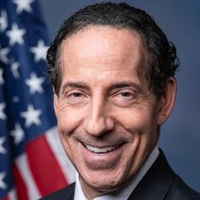
Jamie Raskin
Representative
MD
Jamie Raskin
Representative
MD
The High Court Gift Ban Act establishes strict limits on gifts accepted by federal judicial officers, prohibiting any gift valued over $50 or exceeding $100 in total annual value from a single source. The bill includes specific exemptions for personal hospitality, professional events, and family gifts, while mandating enforcement through the Judicial Conference and potential civil or criminal penalties for violations.
This resolution designates July 10th as Journeyman Lineworkers Recognition Day to honor the essential service and sacrifices of the professionals who maintain our nation’s power grid.

Linda Sánchez
Representative
CA
Linda Sánchez
Representative
CA
This resolution designates July 10th as Journeyman Lineworkers Recognition Day to honor the essential, high-risk work performed by these skilled professionals. It pays tribute to the lineworkers who provide critical service during emergencies and recognizes those who have made the ultimate sacrifice in the line of duty.
This resolution affirms reproductive justice as a fundamental human right and a pillar of American democracy, calling for universal access to comprehensive reproductive healthcare, family support, and protection from systemic discrimination.

Lateefah Simon
Representative
CA
Lateefah Simon
Representative
CA
This resolution affirms that reproductive justice—including the rights to have children, not have children, and raise families with dignity—is a fundamental human right and a pillar of American democracy. It calls for a national commitment to protect bodily autonomy, eliminate systemic barriers to healthcare, and ensure equitable access to the resources necessary for all families to thrive.
The **21st Century ROAD to Housing Act** aims to significantly increase housing supply and affordability through regulatory reforms, new financing tools, increased transparency, and restrictions on large institutional home purchases.

J. Hill
Representative
AR
J. Hill
Representative
AR
The **21st Century ROAD to Housing Act** is a comprehensive bill designed to significantly increase housing supply, improve affordability, and modernize federal housing programs. It tackles issues from streamlining construction regulations and incentivizing local zoning reform to restricting large corporate home purchases and enhancing financing for manufactured homes. Ultimately, the Act aims to create more pathways to homeownership and ensure safer, more stable rental conditions across the country.
The Voter Choice Act establishes a federal grant and technical assistance program to help state and local governments transition to ranked choice voting systems.
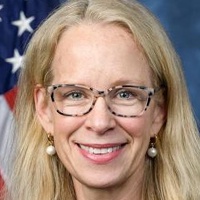
Kelly Morrison
Representative
MN
Kelly Morrison
Representative
MN
The Voter Choice Act establishes a new federal program to support state and local governments in transitioning to ranked choice voting systems. Through the Election Assistance Commission, the bill provides technical assistance and matching grants to help jurisdictions update voting equipment, design ballots, and conduct voter outreach. This initiative aims to modernize election administration by facilitating the adoption of systems that allow voters to rank candidates by preference.
The Extreme Temperatures Injustice in Prisons Act of 2026 mandates upgrades to HVAC systems, establishes strict temperature safety standards, and requires regular monitoring and oversight to protect incarcerated individuals and staff from extreme heat and cold in federal prisons.
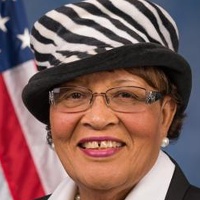
Alma Adams
Representative
NC
Alma Adams
Representative
NC
The Extreme Temperatures Injustice in Prisons Act of 2026 mandates that the Bureau of Prisons upgrade HVAC systems and implement strict temperature monitoring across all federal correctional facilities. The bill establishes enforceable standards to protect both incarcerated individuals and staff from extreme heat and cold while requiring the provision of essential mitigation supplies. Additionally, it mandates regular health reporting, oversight by the Inspector General, and specialized protections for medically vulnerable populations.
The HEIRS Act of 2025 establishes HUD grant programs and counseling requirements to help heirs property owners clear titles, resolve estate issues, and secure homeownership.
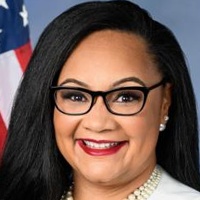
Nikema Williams
Representative
GA
Nikema Williams
Representative
GA
The HEIRS Act of 2025 establishes federal grant programs to help homeowners clear property titles and resolve complex estate issues associated with inherited land. By providing funding for legal assistance, title services, and housing counseling, the Act aims to help families secure their ownership rights and retain their homes. Additionally, the legislation integrates heirs property education into existing HUD-approved housing counseling services.
The Community Housing Act of 2026 provides comprehensive federal funding and policy reforms to expand the national housing supply, increase affordable rental options, and support pathways to homeownership for low-income and rural families.

Becca Balint
Representative
VT
Becca Balint
Representative
VT
The Community Housing Act of 2026 is a comprehensive legislative package designed to increase the nation’s housing supply and improve long-term affordability. The bill provides billions in federal funding for affordable housing construction, incentivizes local zoning reform, and expands support for rural homeownership and tenant protections. By streamlining financing and removing regulatory barriers, the act aims to create more housing options for low- and middle-income families across the country.
The Save MEDICARE Act of 2026 reforms Medicare Advantage by tightening payment accuracy, enhancing audit and enforcement authority, and requiring private insurers to reimburse the VA for veteran healthcare services.

Lloyd Doggett
Representative
TX
Lloyd Doggett
Representative
TX
The Save MEDICARE Act of 2026 aims to increase transparency and accountability within the Medicare Advantage program by reforming payment methodologies, tightening oversight of diagnosis coding, and accelerating audit processes. The bill also enhances the Department of Veterans Affairs' ability to recover healthcare costs from private insurers and empowers states to enforce federal requirements for Medicare Advantage plans. These measures are designed to ensure more accurate payments, reduce deceptive practices, and protect resources for all Medicare enrollees.
This resolution recognizes Michigan's history and celebrates the significant contributions of its citizens to the United States as the nation approaches its 250th anniversary.

John Moolenaar
Representative
MI
John Moolenaar
Representative
MI
This resolution recognizes Michigan's admission as the 26th state and celebrates the significant contributions of its people to the United States. It uses the upcoming 250th anniversary of the Declaration of Independence as an occasion to reflect on Michigan's lasting impact on the nation.
The Original LGBTQIA+ Pride Month Resolution of 2026 honors the history, contributions, and ongoing civil rights struggles of the LGBTQIA+ community while reaffirming Congress's commitment to equality and human rights.

Al Green
Representative
TX
Al Green
Representative
TX
The Original LGBTQIA+ Pride Month Resolution of 2026 honors the history, contributions, and ongoing struggles of the LGBTQIA+ community. The resolution reaffirms that LGBTQIA+ rights are human rights and emphasizes the necessity of ensuring equality for all citizens. By documenting key civil rights milestones and current challenges, it encourages the nation to celebrate Pride Month as a time to reflect on the progress made and the work still required to achieve full equality.
The Green Ribbon Act of 2026 establishes programs within the Department of Education and the Institute of Museum and Library Services to recognize and support schools and nonformal learning institutions in achieving environmental sustainability, health, and literacy goals, while also creating an Office of School Infrastructure and Sustainability.
Jahana Hayes
Representative
CT
Jahana Hayes
Representative
CT
The Green Ribbon Act of 2026 establishes a Department of Education program to recognize schools achieving excellence in environmental literacy, emission reductions, and positive health impacts. It also creates a parallel award program for non-formal learning institutions through the Institute of Museum and Library Services. Furthermore, the Act establishes a new Office of School Infrastructure and Sustainability within the Department of Education to provide technical assistance and oversee these initiatives.
This bill impeaches Secretary of Education Linda M. McMahon for high crimes and misdemeanors, citing unlawful transfers of departmental offices, misleading Congress, and disrupting federal education funding.

Suzanne Bonamici
Representative
OR
Suzanne Bonamici
Representative
OR
This bill impeaches Secretary of Education Linda M. McMahon for high crimes and misdemeanors related to her alleged unlawful transfer of departmental offices, willful non-compliance with federal law, and misleading Congress. The resolution cites her actions as a deliberate attempt to dismantle the Department of Education without congressional approval and a breach of her oath of office. These actions, including massive workforce reductions and the delayed disbursement of congressionally authorized funds, warrant her removal and disqualification from future office.