This bill significantly increases civil penalties across various federal labor laws, strengthens enforcement for health plan compliance, establishes penalties for employer unfair labor practices, and treats certain recordkeeping failures as continuing violations.
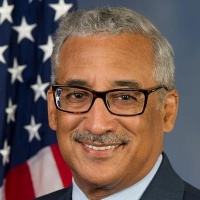
Robert "Bobby" Scott
Representative
VA-3
The Labor Enforcement to Securely Protect Workers (LETS Protect Workers) Act significantly increases civil penalties for violations across major federal labor laws, including child labor, wage and hour, and workplace safety standards. It strengthens enforcement mechanisms for mine safety violations and retaliation against miners, while also establishing new penalties for employer unfair labor practices under the National Labor Relations Act. Furthermore, the bill enhances enforcement for health plan parity and makes certain recordkeeping failures under OSHA and FLSA continuing violations.
LETS Protect Workers Act Quadruples OSHA Fines, Imposes $150K Penalty for Serious Child Labor Violations
The “LETS Protect Workers Act” (Labor Enforcement to Securely Protect Workers Act) is essentially a massive overhaul of the penalty structure for nearly every major federal labor and safety law. Think of it as the government deciding that a slap on the wrist for violating worker rights isn't working, so they’re replacing the wrist-slap with a significant financial hit. The core idea is simple: if the fine is high enough, companies will think twice before cutting corners on safety, wages, or employee rights. These new penalties apply to violations occurring on or after January 1, 2027.
The Cost of Cutting Corners: Safety and Wages
If you’re working a job—whether on a construction site or in an office—this bill dramatically changes the math for your employer when it comes to compliance. Under the Occupational Safety and Health Act (OSHA), the maximum penalty for a willful or repeated safety violation jumps from $70,000 to a staggering $800,000. Even a serious violation, like a missing guardrail that could lead to a fall, goes from a maximum of $7,000 to $80,000. For employees, this means a much stronger financial incentive for employers to fix hazards before an inspector shows up. For employers, the financial risk of non-compliance just became a potential business killer.
The bill also targets wage theft and child labor. Maximum civil penalties for basic wage and hour violations under the Fair Labor Standards Act (FLSA) are raised to $25,000. But the real hammer drops on child labor. The minimum penalty for a child labor violation is now $1,500 per affected employee, with a maximum of $150,000. If that violation results in the death or serious injury of a minor employee, the minimum penalty is $7,000, maxing out at $700,000. This is a clear signal that putting kids in dangerous work environments will carry severe financial consequences.
Mine Safety and the Closure Threat
For the mining industry, the bill introduces an immediate, hard-stop enforcement mechanism. If a mine operator fails to pay a final safety penalty within 180 days, the Secretary of Labor must issue a “withdrawal order,” which means the mine is shut down until the penalty is paid or a payment plan is established. This is a significant escalation of power, ensuring that safety fines aren't just treated as a cost of doing business. Furthermore, the penalty for retaliating against a miner who makes a safety complaint is now up to $100,000 for a first offense, protecting those who speak up.
New Fines for Union Busting and FMLA Violations
Perhaps the biggest structural shift is the introduction of civil monetary penalties for employers who commit unfair labor practices (ULPs) under the National Labor Relations Act (NLRA). Historically, the NLRA focused on remedies like back pay and reinstatement, not direct fines. Now, an employer committing a ULP could face a penalty of up to $50,000 per violation. If the violation involves discrimination against an employee for union activity or causes serious economic harm (like a wrongful termination), the penalty doubles to $100,000, especially if the employer has a similar violation within the last five years.
Crucially, the bill allows the National Labor Relations Board (NLRB) to assess these penalties against a director or officer personally if they directed the ULP, established the policy that caused it, or failed to prevent it despite having the authority and knowledge. This means the person making the bad call could be on the hook, not just the company.
Finally, the bill adds or increases fines for Family and Medical Leave Act (FMLA) violations. Interfering with an employee’s FMLA rights can now result in a civil penalty up to $25,000 per offense. This provides a needed enforcement tool for those who rely on FMLA to care for family or themselves.
The Fine Print: Health Plans and Perpetual Violations
The bill also tightens up enforcement in two other areas. First, it strengthens the Secretary of Labor’s ability to enforce rules under ERISA concerning mental health parity and the use of genetic information in group health plans. This means if your employer’s health plan fails to cover mental health treatment equally with physical health treatment, the government has a clearer path to fine them.
Second, the bill changes how certain recordkeeping violations are counted. For OSHA and FLSA violations where an employer fails to keep required records (like safety logs or accurate time sheets), the violation is now considered a continuing violation. Instead of being fined once for a missing record, the violation continues every day until the employer fixes it or the legal requirement expires. This eliminates the loophole where an employer might prefer to pay a small one-time fine rather than correct years of poor recordkeeping.