Legislative Activity
Track Suhas's sponsored bills, co-sponsored legislation, and voting record
The MARSHALS Act restructures the U.S. Marshals Service, moving its organization and leadership entirely under the judicial branch, overseen by the Chief Justice and a new Board.
Eric Swalwell
Representative
CA
Eric Swalwell
Representative
CA
The MARSHALS Act fundamentally restructures the United States Marshals Service (USMS), moving its organization entirely into the judicial branch. This bill establishes that the Director and all U.S. Marshals will be appointed by the Chief Justice, subject to oversight from a new Board. The legislation also clarifies the USMS's authority to protect federal judicial personnel and outlines specific conditions under which the Service can assist the Department of Justice.
This bill establishes a 25% tax credit for purchasing U.S.-made circuit boards and substrates while also creating a $3 billion federal incentive program to boost domestic manufacturing and research in these critical electronic components.
Blake Moore
Representative
UT
Blake Moore
Representative
UT
The Protecting Circuit Boards and Substrates Act establishes a 25% tax credit for purchasing U.S.-made printed circuit boards and integrated circuit substrates starting in 2026. It also creates a federal incentive program, managed by the Commerce Department, to provide up to $3 billion in funding to boost domestic manufacturing and research and development in these critical electronic components. The program prioritizes national security needs, workforce development, and supports for small and diverse-owned businesses.
This Act restricts the use of federal funds for a U.S. nuclear first strike unless the President deems it necessary and Congress is notified seven days prior, except in cases of declared war, prior nuclear attack, or launch-on-warning scenarios.
Scott Peters
Representative
CA
Scott Peters
Representative
CA
The Nuclear First-Strike Security Act of 2025 places strict limitations on the use of federal funds to initiate a nuclear attack. Under this Act, a first-use nuclear strike requires a presidential determination that it is in the U.S. best interest, followed by a mandatory seven-day notification to top Congressional leaders. This notification requirement is waived only in cases of a formal declaration of war, a prior nuclear attack on the U.S. or an ally, or during a confirmed launch-on-warning scenario.
This Act mandates the inclusion of Asian American, Native Hawaiian, and Pacific Islander history across federally supported K-12 American history and civics education programs and assessments.
Grace Meng
Representative
NY
Grace Meng
Representative
NY
This Act mandates the inclusion of Asian American, Native Hawaiian, and Pacific Islander (AANHPI) history across federally supported K-12 American history and civics education programs. It recognizes the vital, yet often omitted, contributions of AANHPI communities while addressing historical exclusion and systemic racism. The legislation directs educational programs to partner with the Smithsonian's Asian Pacific American Center to develop accurate and comprehensive curricula. This ensures AANHPI history is integrated into national assessments and teacher training.
The Fit to Serve Act prohibits discrimination against service members and recruits in the Armed Forces based on their gender identity.
Adam Smith
Representative
WA
Adam Smith
Representative
WA
The Fit to Serve Act prohibits the U.S. Armed Forces from discriminating against service members based on their gender identity. This means military branches cannot set different standards, involuntarily discharge personnel, or deny medically necessary healthcare due to a service member's gender identity. The bill ensures equal opportunity for joining, serving, and receiving care regardless of one's internal sense of self.
This act increases the penalty-free withdrawal limit from retirement accounts for first-time homebuyers from $\$10,000$ to $\$50,000$.
Beth Van Duyne
Representative
TX
Beth Van Duyne
Representative
TX
The Uplifting First-Time Homebuyers Act of 2025 significantly increases the penalty-free withdrawal limit from retirement accounts for first-time homebuyers. This legislation raises the maximum allowable distribution from $\$10,000$ to $\$50,000$. This change is designed to provide greater financial flexibility for individuals purchasing their first home, taking effect for tax years beginning after December 31, 2024.
The Global Fairness in Drug Pricing Act aims to lower U.S. prescription drug costs by establishing international price targets, facilitating safe importation, cracking down on anticompetitive behavior, and studying global pricing impacts.
Ro Khanna
Representative
CA
Ro Khanna
Representative
CA
The Global Fairness in Drug Pricing Act aims to significantly lower prescription drug costs for Americans. It directs the HHS to establish "most-favored-nation" price targets based on international rates and enhances safe importation options. Additionally, the bill mandates enforcement actions against anticompetitive drug manufacturer behavior and requires a study on global pricing discrimination.
This Act reinstates and extends the ability for taxpayers to deduct personal casualty losses from unexpected events like crimes, scams, and disasters without previous limitations.
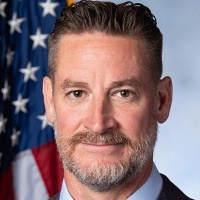
W. Steube
Representative
FL
W. Steube
Representative
FL
The Tax Relief for Victims of Crimes, Scams, and Disasters Act reinstates and removes limitations on the federal income tax deduction for personal casualty losses resulting from unexpected events like fires or floods. This legislation also extends the deadline for taxpayers to file claims for refunds related to these casualty loss deductions for past tax years. These changes apply to tax years beginning after December 31, 2017.
This act, also known as the COUNTER Act, updates the Department of Defense's authority and procedures for neutralizing drone threats to U.S. assets while ensuring related security information remains confidential.
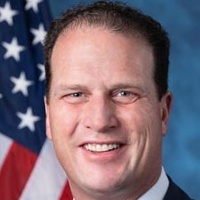
August Pfluger
Representative
TX
August Pfluger
Representative
TX
The COUNTER Act enhances the Department of Defense's authority to neutralize threats from unmanned aircraft systems targeting U.S. assets. This legislation delegates specific response powers and updates mitigation rules for drone threats. Crucially, it exempts sensitive information regarding these counter-drone technologies and procedures from public disclosure under the Freedom of Information Act. The bill also adjusts several deadlines and clarifies the applicability of certain federal laws when operating overseas to counter these threats.
This Act amends budget control laws to reinforce Congress's exclusive power of the purse, clarify when funds can be withheld, and establish legal remedies, including private lawsuits, for improper impoundments.
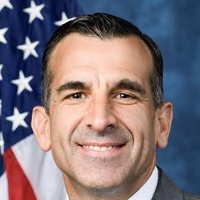
Sam Liccardo
Representative
CA
Sam Liccardo
Representative
CA
The Protecting Our Constitution and Communities Act aims to reassert Congress's exclusive constitutional authority over federal spending by clarifying that the President cannot unilaterally withhold appropriated funds. It strengthens the Comptroller General's oversight role and establishes new legal avenues for private citizens and governments to sue for damages if funds are improperly impounded. Furthermore, the bill tightens the definition of budgetary "contingencies" and ensures that judicial review of these spending disputes remains robust.
This bill prohibits the use of federal funds to implement Executive Order 14160, which sought to limit birthright citizenship guaranteed by the Fourteenth Amendment.
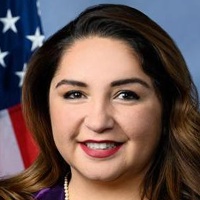
Delia Ramirez
Representative
IL
Delia Ramirez
Representative
IL
The Born in the USA Act of 2025 declares that Executive Order 14160, which attempted to restrict birthright citizenship, is unconstitutional and contrary to the 14th Amendment. This Act prohibits the use of any federal funds to implement or enforce that Executive Order. It affirms the established constitutional right to birthright citizenship for nearly everyone born on U.S. soil.
This resolution expresses the sense of the House of Representatives commending public servants and uniformed service members for their dedication throughout the year, particularly during Public Service Recognition Week.

Gerald Connolly
Representative
VA
Gerald Connolly
Representative
VA
This resolution expresses the sense of the House of Representatives commending public servants for their dedication and continued service to the United States. It officially designates the week of May 4 through May 10, 2025, as Public Service Recognition Week. The bill honors the vital contributions of federal, state, and local government employees and uniformed service members across the nation.
This Act increases federal Medicaid funding for states that expand intensive, community-based services for adults with serious mental illness while ensuring smooth care transitions for young adults.

Dan Goldman
Representative
NY
Dan Goldman
Representative
NY
The Strengthening Medicaid for Serious Mental Illness Act aims to increase federal funding for states that expand intensive, community-based services for adults with serious mental illness. This encourages states to provide robust support services, such as Assertive Community Treatment, to prevent unnecessary institutionalization. The bill also establishes increased federal matching rates based on the number of defined service categories a state offers. Finally, it ensures continuity of care for young adults aging out of certain Medicaid benefits.
This resolution officially recognizes and celebrates Asian American, Native Hawaiian, and Pacific Islander Heritage Month to honor their significant contributions to U.S. history while acknowledging past hardships and ongoing challenges.
Grace Meng
Representative
NY
Grace Meng
Representative
NY
This resolution officially recognizes and celebrates Asian American, Native Hawaiian, and Pacific Islander (AANHPI) Heritage Month every May. It highlights the significant historical contributions of these communities to the United States, while also acknowledging past hardships and ongoing challenges. The bill encourages the nation to observe this month to appreciate the diversity and strength AANHPI individuals bring to the country.
This Act mandates that health plans cover medically necessary treatment for congenital anomalies or birth defects affecting the eyes, ears, teeth, mouth, or jaw to restore normal function and appearance.
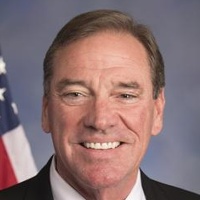
Neal Dunn
Representative
FL
Neal Dunn
Representative
FL
The Ensuring Lasting Smiles Act mandates that group health plans and insurance policies provide comprehensive coverage for medically necessary treatment related to congenital anomalies or birth defects affecting the eyes, ears, teeth, mouth, or jaw. This coverage must include services needed to restore normal function and appearance, including necessary dental and orthodontic support. Plans must apply cost-sharing rules no more restrictive than those for other medical benefits, excluding purely cosmetic procedures.
The VA Employee Fairness Act of 2025 streamlines collective bargaining rules for Veterans Health Administration employees by modifying existing statutes while preserving the Secretary's authority regarding incentive pay and expedited hiring.
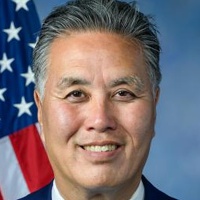
Mark Takano
Representative
CA
Mark Takano
Representative
CA
The VA Employee Fairness Act of 2025 modifies the collective bargaining rules for employees of the Veterans Health Administration (VHA) by streamlining existing statutes. This act removes outdated subsections related to bargaining and renumbers the remaining relevant section. Importantly, these changes do not affect the Secretary of Veterans Affairs' existing authority regarding incentive pay or expedited hiring processes.
This Act prohibits the advertising and provision of paid conversion therapy intended to change an individual's sexual orientation or gender identity, empowering the FTC and State Attorneys General to enforce these prohibitions.
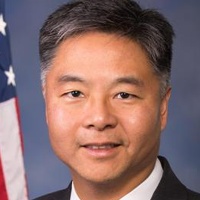
Ted Lieu
Representative
CA
Ted Lieu
Representative
CA
The Therapeutic Fraud Prevention Act of 2025 declares that practices attempting to change an individual's sexual orientation or gender identity for payment constitute an unfair and deceptive business practice. Citing professional consensus on the ineffectiveness and harm of such "conversion therapy," the bill prohibits its provision and advertising. Enforcement authority is granted to the Federal Trade Commission (FTC), and the law allows both the U.S. Attorney General and State Attorneys General to file civil actions against violators.
The BASIC Act increases the investment tax credit rate for advanced semiconductor manufacturing from 25% to 35% and extends the eligibility period through December 31, 2030.
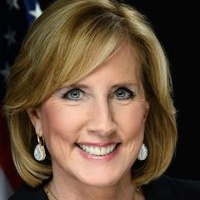
Claudia Tenney
Representative
NY
Claudia Tenney
Representative
NY
The Building Advanced Semiconductors Investment Credit Act (BASIC ACT) significantly boosts incentives for domestic semiconductor manufacturing. This bill increases the investment tax credit rate for advanced manufacturing from 25 percent to 35 percent. Furthermore, it extends the period during which this enhanced credit can be claimed, pushing the deadline from 2026 to December 31, 2030.
This act establishes research grants and training programs to develop and implement PFAS-free, next-generation turnout gear to protect firefighters from occupational illness and injury.

Debbie Dingell
Representative
MI
Debbie Dingell
Representative
MI
The PFAS Alternatives Act aims to protect firefighters by funding research and development for next-generation turnout gear that eliminates harmful PFAS chemicals. The bill establishes grants through NIOSH to create safer, PFAS-free protective equipment and separate funding for training programs on the proper care of this new gear. Ultimately, this legislation seeks to reduce occupational illness and injury among fire and EMS personnel.
This Act establishes a grant program through the Department of Homeland Security to fund medical care for retired Federal working dogs living with their former handlers.
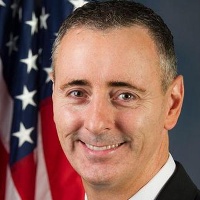
Brian Fitzpatrick
Representative
PA
Brian Fitzpatrick
Representative
PA
The Honoring our K9 Heroes Act establishes a new grant program administered by the Department of Homeland Security to help cover medical expenses for retired Federal working dogs. Eligible non-profit organizations with a history of supporting these retired K9s can apply for funding. This initiative is authorized with $1 million annually from Fiscal Year 2026 through 2030 to support dogs living with their former handlers.