Legislative Activity
Track Andrea's sponsored bills, co-sponsored legislation, and voting record
The Healthcare Workforce Resilience Act recaptures unused employment-based immigrant visas to provide 40,000 reserved visas for professional nurses and physicians, while also expediting their processing without charging premium processing fees.
Bradley Schneider
Representative
IL
Bradley Schneider
Representative
IL
The Healthcare Workforce Resilience Act aims to strengthen the U.S. healthcare system by recapturing unused employment-based immigrant visas from 1992 through 2024. This legislation specifically reserves up to 40,000 of these visas for professional nurses and physicians, ensuring they are not subject to annual country caps. The bill also mandates expedited processing for these healthcare professionals without imposing premium processing fees, while requiring employers to attest that hiring these workers will not displace U.S. employees.
This Act establishes sanctions against Pakistani officials undermining democracy and human rights, while urging the U.S. government to promote democratic institutions in Pakistan until September 30, 2030.
Bill Huizenga
Representative
MI
Bill Huizenga
Representative
MI
The Pakistan Freedom and Accountability Act expresses strong U.S. support for democracy and human rights in Pakistan, citing concerns over military influence and recent election interference. This legislation directs the President to identify and impose sanctions on Pakistani officials responsible for undermining democratic processes or committing serious human rights abuses. The Act emphasizes the need for civilian control over the military and sets an expiration date for its provisions in September 2030.
The PART Act establishes new federal requirements for marking catalytic converters, creates a grant program for VIN stamping, tightens record-keeping for used parts dealers, and increases criminal penalties for theft and trafficking of catalytic converters.
James Baird
Representative
IN
James Baird
Representative
IN
The PART Act aims to combat catalytic converter theft by requiring new vehicles to have traceable identifying markers on these parts. It establishes a federal grant program to help entities stamp identifying numbers onto existing converters. Furthermore, the bill imposes strict record-keeping requirements on businesses that buy used converters and creates new federal criminal penalties for stealing or trafficking stolen catalytic converters.
This act removes a federal payment limitation for certain state Medicaid home and community-based services (HCBS) waivers.
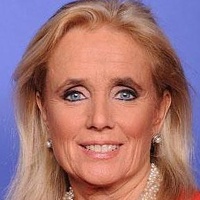
Debbie Dingell
Representative
MI
Debbie Dingell
Representative
MI
The HCBS Worker Protection Act of 2025 removes a federal payment limitation for certain home and community-based services (HCBS) waivers under Medicaid. This change grants states greater flexibility in receiving federal matching funds for these essential community services.
This act modifies the Family and Medical Leave Act (FMLA) to establish specific eligibility criteria and leave calculation methods for paraprofessionals and other essential education support staff.
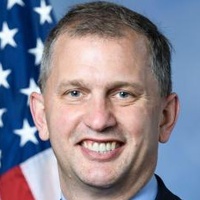
Sean Casten
Representative
IL
Sean Casten
Representative
IL
This bill, the ESP, Paraprofessional, and Education Support Staff Family Leave Act, updates eligibility requirements for certain school employees under the Family and Medical Leave Act (FMLA). It adjusts how paraprofessionals and education support staff meet the required hours of service by using a percentage of expected monthly hours worked during the school year. Furthermore, the bill mandates clear guidelines for calculating FMLA leave entitlement for these employees to account for non-standard school schedules.
This bill formally integrates Puerto Rico into the federal Supplemental Nutrition Assistance Program (SNAP) structure, outlining a transition plan away from its current block grant system.
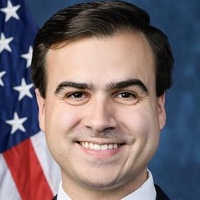
Pablo José Hernández Rivera
Representative
PR
Pablo José Hernández Rivera
Representative
PR
The Puerto Rico Nutrition Assistance Fairness Act aims to integrate Puerto Rico into the federal Supplemental Nutrition Assistance Program (SNAP) structure, aligning it with other territories like Guam. The bill mandates a transition period where Puerto Rico must submit a plan of operation to the Secretary of Agriculture for approval to join SNAP. During this transition, existing block grant funding may continue for up to five years while the territory moves toward full participation under federal SNAP rules.
This resolution affirms Congress's strong support for the Federal Reserve's independence from political interference, particularly from the Executive Branch.
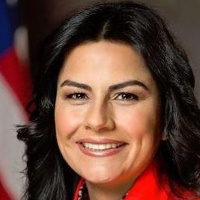
Nanette Barragán
Representative
CA
Nanette Barragán
Representative
CA
This resolution affirms strong Congressional support for the independence of the Federal Reserve System, its Chairman, and the Board of Governors. It emphasizes that the Fed must be free from political pressure to effectively manage monetary policy and maintain financial stability. The bill specifically warns against any executive interference that could undermine the Fed's integrity or global trust in the U.S. financial system.
This Act bans Members of Congress and their immediate families from trading or owning specific investments while in office, requiring divestment within 90 to 180 days or facing significant financial penalties.
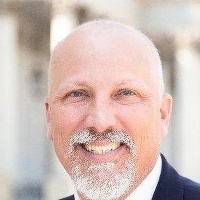
Chip Roy
Representative
TX
Chip Roy
Representative
TX
The Restore Trust in Congress Act establishes strict new rules prohibiting Members of Congress and their immediate families from owning or trading specific financial assets, referred to as "covered investments," while in office. Covered individuals must divest existing prohibited holdings within a set timeframe or face significant financial penalties, including fines and forfeiture of profits. The legislation aims to eliminate conflicts of interest arising from personal financial trading while serving in federal office.
The UNLOCK Act amends federal housing law to allow local governments to directly use certain federal funds for the construction of new low- and moderate-income housing.
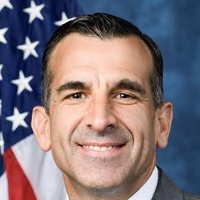
Sam Liccardo
Representative
CA
Sam Liccardo
Representative
CA
The UNLOCK Act amends the Housing and Community Development Act of 1974 to expand how federal housing funds can be used. This legislation now allows local entities to directly use these funds for the construction of new housing specifically for low- and moderate-income residents. The bill removes the requirement for these entities to partner with a nonprofit organization to carry out the new construction projects.
This Act establishes a comprehensive EPA program to research, guide, and assist in improving indoor air quality across all buildings, with a special focus on schools and childcare facilities.
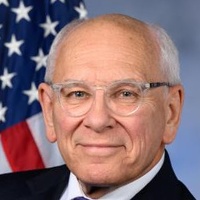
Paul Tonko
Representative
NY
Paul Tonko
Representative
NY
The Indoor Air Quality and Healthy Schools Act of 2025 establishes a comprehensive federal program, managed by the EPA Administrator, to assess, reduce, and prevent exposure to indoor air contaminants in all buildings, with a special focus on schools and childcare facilities. The Act mandates the creation of science-based guidelines for contaminants of concern and supports technical assistance, training, and voluntary "Healthy Building Certifications." It also directs the development of model building codes and a national assessment of air quality in educational settings to ensure healthier indoor environments nationwide.
The Tipped Worker Protection Act phases out the lower minimum wage for tipped employees, establishes stricter rules for tip retention and pooling via employee vote, and redefines what constitutes a tip.
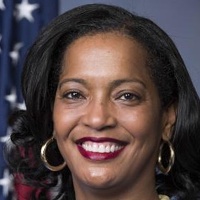
Jahana Hayes
Representative
CT
Jahana Hayes
Representative
CT
The Tipped Worker Protection Act aims to eliminate the lower minimum wage for tipped employees by phasing out the tip credit system, ensuring all workers eventually receive the standard federal minimum wage. The bill also establishes strict new rules regarding tip pooling, mandates employee voting to create or change pooling systems, and prohibits employers from keeping any portion of employee tips. Furthermore, it clarifies what constitutes a tip, including certain mandatory service charges, and updates penalties for illegal tip retention.
This bill establishes a USDA grant program to help specialty crop producers purchase and receive training for new automation and mechanization equipment.
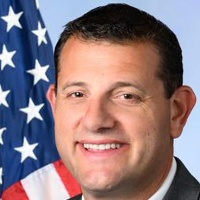
David Valadao
Representative
CA
David Valadao
Representative
CA
This bill establishes a new grant program administered by the Secretary of Agriculture to help specialty crop producers become more competitive. These grants will assist eligible entities in purchasing advanced mechanized or automated equipment and providing necessary training for its use. Recipients must provide matching funds equal to at least 50 percent of the total project cost. The covered technology ranges widely, including harvesting tools, sorting machinery, traceability systems, and advanced IoT and robotic equipment.
This bill provides hazard pay for federal employees carrying out prescribed burns and for smokejumpers.
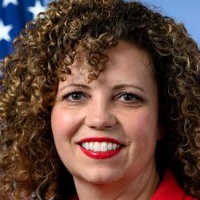
Celeste Maloy
Representative
UT
Celeste Maloy
Representative
UT
This bill seeks to amend federal law to provide hazard pay for federal employees carrying out prescribed burns and for smokejumpers. It officially recognizes that performing prescribed burns and parachute jumping for firefighting duties involve unusual physical hardship or hazard comparable to fighting active wildfires. The Office of Personnel Management is tasked with implementing the necessary regulations to ensure this hazard pay takes effect promptly.
The INFORM Act of 2025 mandates that Homeland Security must notify the immediate family of a transferred immigration detainee within 24 hours, providing details about the relocation and the new facility's contact information.
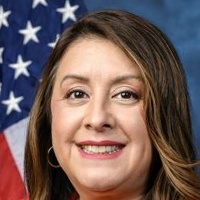
Luz Rivas
Representative
CA
Luz Rivas
Representative
CA
The INFORM Act of 2025 mandates that Homeland Security must notify the immediate family of any individual transferred between immigration detention facilities within 24 hours. This notification must include the reason for the transfer and contact information for the new location. The Act broadly defines "immediate family" to cover a wide range of relatives, including step- and foster-family members.
This Act mandates the phase-out and eventual ban of engine bleed air systems in new and existing aircraft designs to improve cabin air quality.
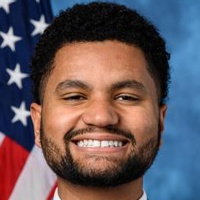
Maxwell Frost
Representative
FL
Maxwell Frost
Representative
FL
The Safe Air on Airplanes Act mandates the phase-out of "bleed air systems" in new aircraft designs to improve cabin air quality. This legislation requires the FAA to ban these systems in future aircraft designs within six months. For existing aircraft designs still in production, the bill requires the installation of specialized filters within seven years, followed by a 30-year timeline for completely eliminating bleed air systems from newly manufactured planes.
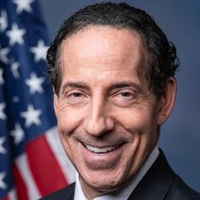
This resolution terminates the President's declared crime emergency in the District of Columbia, asserting that the emergency is unwarranted and the legal basis for federal MPD control is flawed.
Jamie Raskin
Representative
MD
Jamie Raskin
Representative
MD
This resolution terminates the President's August 11, 2025, declaration of a crime emergency in the District of Columbia. Congress asserts that the President lacks the legal authority under the D.C. Home Rule Act to take operational control of the Metropolitan Police Department. Furthermore, the bill notes that local violent crime rates have been declining significantly.
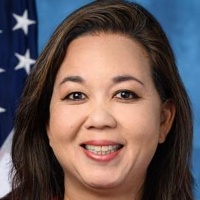
The Keep Seniors Fed Act amends the Food and Nutrition Act of 2008 to include Title II Social Security payments when calculating eligibility for food assistance benefits.
Jill Tokuda
Representative
HI
Jill Tokuda
Representative
HI
The Keep Seniors Fed Act makes technical amendments to the Food and Nutrition Act of 2008 regarding how income is calculated for food assistance eligibility. Specifically, it mandates that income received under Title II of the Social Security Act must now be counted when determining eligibility for benefits. These changes will take effect 90 days after the bill is signed into law.
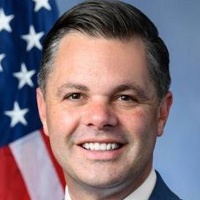
This Act establishes a multi-sector Task Force, led by the Treasury Secretary, to study, recommend strategies for, and report on preventing evolving electronic payment scams.
Zachary (Zach) Nunn
Representative
IA
Zachary (Zach) Nunn
Representative
IA
The Taskforce for Recognizing and Averting Payment Scams Act (TRAPS Act) establishes a new Task Force led by the Secretary of the Treasury. This diverse group, including federal agencies, industry experts, and consumer advocates, will study evolving payment scams. The Task Force is charged with developing cross-sector prevention strategies and submitting comprehensive recommendations for new laws and improved coordination to combat these fraudulent activities.
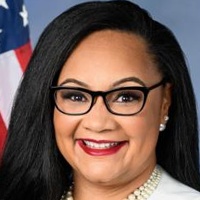
The People Over Long Lines Act mandates a maximum 30-minute wait time for federal elections, requires states to submit plans to ensure fair resource allocation, and establishes funding to prevent unreasonable voter delays.
Nikema Williams
Representative
GA
Nikema Williams
Representative
GA
The People Over Long Lines Act (POLL Act) aims to protect the fundamental right to vote by establishing a national standard that no eligible citizen should wait more than 30 minutes to cast a ballot in a federal election. To achieve this, the bill mandates that states submit plans detailing how they will ensure fair wait times and requires the Attorney General to set minimum standards for voting resources like poll workers and equipment. Furthermore, the Act authorizes federal funding to help states comply and creates a private right of action allowing citizens to sue over excessive wait times.
This Act secures and expands voting rights for unhoused citizens by prohibiting residency-based disenfranchisement, establishing new accessibility requirements, and creating federal grants to support local outreach efforts.
Nikema Williams
Representative
GA
Nikema Williams
Representative
GA
The Unhoused Voter Opportunity Through Elections Act aims to secure and expand the right to vote for citizens experiencing homelessness by prohibiting residency-based disenfranchisement. It mandates accessible registration methods, requires outreach from service providers, and establishes federal grants to help local governments implement these protections. Ultimately, this legislation seeks to ensure that where a person sleeps cannot be a barrier to their participation in federal elections.