Legislative Activity
Track Bryan's sponsored bills, co-sponsored legislation, and voting record
Dillon's Law updates federal guidelines to grant preference points to states that allow any trained personnel, not just school employees, to administer epinephrine delivery systems in schools.
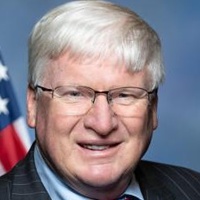
Glenn Grothman
Representative
WI
Glenn Grothman
Representative
WI
Dillon's Law amends federal guidelines to grant preference points to states that allow trained, non-school personnel to administer epinephrine in schools. This change broadens the definition of who can provide life-saving medication beyond just school employees. The law also updates terminology to cover a wider range of epinephrine delivery systems.
This Act prohibits the Federal Reserve from directly or indirectly issuing a Central Bank Digital Currency (CBDC) and bars the Fed from developing or using one for monetary policy without explicit Congressional authorization.
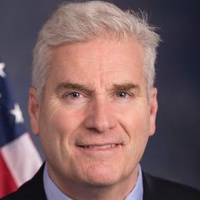
Tom Emmer
Representative
MN
Tom Emmer
Representative
MN
The Anti-CBDC Surveillance State Act strictly prohibits the Federal Reserve from directly or indirectly issuing a Central Bank Digital Currency (CBDC) to individuals. This legislation prevents the Fed from developing, testing, or implementing any digital currency that functions as a direct liability of the Federal Reserve. Furthermore, Congress asserts that any authority to create such a digital asset must explicitly come from Congress itself.
The Digital Asset Market Clarity Act establishes comprehensive regulatory frameworks for digital commodities under the CFTC and SEC, clarifies the status of digital assets, preserves self-custody rights, and explicitly prohibits the Federal Reserve from issuing a Central Bank Digital Currency (CBDC).

J. Hill
Representative
AR
J. Hill
Representative
AR
The Digital Asset Market Clarity Act establishes a comprehensive regulatory framework for digital assets, primarily focusing on defining and regulating "digital commodities" under the CFTC and SEC. It creates registration pathways for exchanges and intermediaries, clarifies rules for asset sales, protects individual self-custody rights, and explicitly prohibits the Federal Reserve from issuing a Central Bank Digital Currency (CBDC). Overall, the bill aims to bring clarity and consumer safeguards to the digital asset market while encouraging technological innovation.
This Act mandates that VA medical staff promptly certify the deaths of veterans who died from natural causes within 48 hours to expedite burial and survivor benefits.
Tom Emmer
Representative
MN
Tom Emmer
Representative
MN
The Veteran Burial Timeliness and Death Certificate Accountability Act addresses significant delays in obtaining death certificates for veterans who die from natural causes, often due to VA medical staff delays. This bill mandates that VA medical providers must certify a veteran's death within 48 hours or allow the local medical examiner to step in. Furthermore, the VA must annually report on its compliance with this new timely certification requirement.
This bill authorizes the creation and sale of commemorative coins for the 2028 Los Angeles and 2034 Salt Lake City Olympic and Paralympic Games to help fund the events, with all surcharges going to the respective organizing committees after covering production costs.
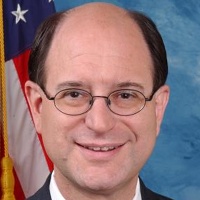
Brad Sherman
Representative
CA
Brad Sherman
Representative
CA
This Act authorizes the Secretary of the Treasury to mint and sell special commemorative coins for the 2028 Los Angeles Olympic and Paralympic Games and the 2034 Salt Lake City Winter Olympic and Paralympic Games. The coins will feature designs celebrating American athletes and the Games themselves. All surcharges collected from the sale of these coins will be directed to the respective organizing committees to help fund the events and related youth sports programs. The entire program must be conducted at no cost to the U.S. Government.
This Act allows certain investment companies to exclude the fees and expenses of underlying business development companies when reporting total acquired fund costs on their SEC registration statements.
Brad Sherman
Representative
CA
Brad Sherman
Representative
CA
The Access to Small Business Investor Capital Act amends SEC reporting requirements for certain investment companies. This change allows these companies to exclude the indirect fees and expenses incurred from investing in an Acquired Fund, provided that Acquired Fund is a business development company. This simplifies the calculation of total "Acquired Fund Fees and Expenses" disclosed on registration statements.
This bill officially renames the Department of Veterans Affairs women's health clinic in Milwaukee, Wisconsin, as the Anna Mae Robertson VA Well Woman Clinic.

Gwen Moore
Representative
WI
Gwen Moore
Representative
WI
This bill officially renames the Department of Veterans Affairs women's health clinic in Milwaukee, Wisconsin. The clinic will now be known as the Anna Mae Robertson VA Well Woman Clinic. This change ensures all official records reflect the new designation.
This act mandates the SEC to establish rules allowing covered financial entities to deliver required investment documents to investors electronically while ensuring investor choice and accessibility.
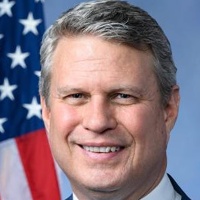
Bill Huizenga
Representative
MI
Bill Huizenga
Representative
MI
The Improving Disclosure for Investors Act of 2025 directs the SEC to establish new rules for allowing companies to deliver required investment documents to investors electronically rather than by mail. These rules must ensure investor choice, maintain readability, and protect personal information during the transition. The legislation only changes the method of delivery, not the content or timing requirements of the regulatory documents themselves.
This Act restricts federal subpoena power over insurance data, enhances confidentiality protections for data shared by the Federal Insurance Office, and limits the Office of Financial Research's ability to subpoena insurance companies while imposing new requirements on financial regulators when collecting data from them.
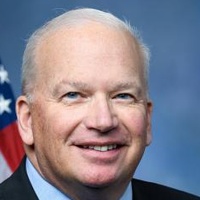
Scott Fitzgerald
Representative
WI
Scott Fitzgerald
Representative
WI
The Insurance Data Protection Act aims to adjust federal regulatory authority over insurance data by limiting the subpoena power of the Office of Financial Research against insurance companies. It also strengthens confidentiality protections for data shared with and held by the Federal Insurance Office and other financial regulators. Furthermore, the bill mandates that financial regulators must seek existing data from other sources before directly collecting information from insurance companies, ensuring data privacy is maintained.
This act mandates that Registered Nurses supervising Certified Nursing Assistant training in nursing facilities must have at least two years of general nursing experience.

Derrick Van Orden
Representative
WI
Derrick Van Orden
Representative
WI
The Certified Nursing Assistant Workforce Improvement Act updates federal regulations to enhance the quality of Certified Nursing Assistant (CNA) training. This bill mandates that Registered Nurses supervising CNA training must possess a minimum of two years of general nursing experience. This change aims to strengthen the qualifications of those overseeing the training of essential long-term care staff.
This resolution formally congratulates His Holiness Pope Leo XIV on his historic election as the first American pontiff of the Holy Roman Catholic Church.

Riley Moore
Representative
WV
Riley Moore
Representative
WV
This resolution formally congratulates His Holiness Pope Leo XIV on his historic election as the 267th pontiff of the Holy Roman Catholic Church. It celebrates the significance of him being the first American-born Pope in the Church's history. The measure also commends his lifelong service, missionary spirit, and dedication to truth and mercy. Finally, it offers prayers for his leadership as he begins his papacy.
The CHOICE for Veterans Act of 2025 establishes new federal standards, oversight, and penalties for agents and attorneys who assist veterans in filing Department of Veterans Affairs benefit claims while extending certain pension payment limitations.
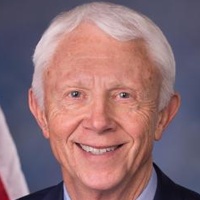
Jack Bergman
Representative
MI
Jack Bergman
Representative
MI
The CHOICE for Veterans Act of 2025 aims to overhaul how veterans receive assistance with their Department of Veterans Affairs (VA) benefit claims. It establishes new rules for the recognition, fees, and conduct of agents and attorneys who represent veterans. The bill also mandates increased transparency regarding available assistance and requires a review of the entire representative recognition process.
The Prove It Act establishes a formal process for small businesses to challenge agency claims about the economic impact of proposed rules and strengthens requirements for agencies to consider indirect costs on small entities.

Brad Finstad
Representative
MN
Brad Finstad
Representative
MN
The Prove It Act aims to strengthen protections for small businesses against burdensome federal regulations. It establishes a formal process for small entities to challenge agency claims that a proposed rule will not significantly impact them. The bill also expands the required analysis of indirect costs and imposes consequences if agencies fail to periodically review existing rules on time.
This act officially recognizes accounting education as part of a well-rounded curriculum to improve access to accounting programs, especially for underrepresented students.

Young Kim
Representative
CA
Young Kim
Representative
CA
The Accounting STEM Pursuit Act of 2025 officially recognizes accounting education as a vital component of a well-rounded K-12 curriculum. This legislation amends federal education law to ensure accounting is counted within core curriculum planning frameworks. The Act specifically directs states and districts to improve access to quality accounting programs, with a focus on increasing opportunities for underrepresented students.
This act permanently raises the income limits for the mortgage insurance premium tax deduction for middle-class homeowners.

Vern Buchanan
Representative
FL
Vern Buchanan
Representative
FL
The Middle Class Mortgage Insurance Premium Act of 2025 permanently extends the deduction for mortgage insurance premiums and significantly raises the income limits for eligibility. This change allows more middle-class taxpayers to deduct these costs on their federal income taxes. These provisions will apply to tax years beginning after December 31, 2025.
The Invest to Protect Act of 2025 establishes a Department of Justice grant program to fund training, mental health resources, and recruitment/retention bonuses for small local law enforcement agencies.
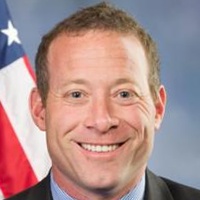
Josh Gottheimer
Representative
NJ
Josh Gottheimer
Representative
NJ
The Invest to Protect Act of 2025 establishes a new, streamlined grant program within the Department of Justice to support small local and Tribal law enforcement agencies (under 175 officers). These funds are specifically designated for officer training, mental health resources, and recruitment/retention bonuses. The law mandates a rapid application process and includes strict accountability measures, such as audits and public reporting of bonuses. Congress is authorized to appropriate up to $50 million annually for this program through fiscal year 2031.
The Religious Workforce Protection Act extends nonimmigrant status and provides job flexibility for religious workers caught in long green card backlogs, while also waiving the one-year foreign residence requirement for those who left due to the R-1 visa time limit.

Mike Carey
Representative
OH
Mike Carey
Representative
OH
The Religious Workforce Protection Act aims to support religious workers facing long green card backlogs by allowing extensions of their nonimmigrant status beyond the usual five-year limit until their permanent residency application is processed. It also modifies job flexibility rules for certain delayed applicants and exempts religious workers who left the U.S. due to the five-year R-1 visa limit from the mandatory one-year foreign residence requirement before reapplying.
This bill drastically tightens and expands U.S. sanctions against Iran across its leadership, military, and economy while severely restricting the President's authority to lift these restrictions.
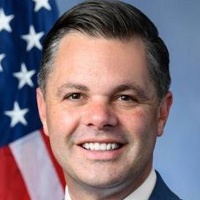
Zachary (Zach) Nunn
Representative
IA
Zachary (Zach) Nunn
Representative
IA
The Maximum Pressure Act dramatically tightens and expands U.S. sanctions against Iran across its military, missile, and economic sectors, codifying existing restrictions and severely limiting the President's authority to grant sanctions relief. It mandates immediate sanctions on top Iranian officials and increases penalties for international parties aiding Iran's weapons programs. Furthermore, the bill enhances oversight by requiring numerous detailed reports to Congress regarding Iran's terrorism financing, nuclear timeline, and economic influence, while also redirecting certain frozen Iranian funds to victims of state-sponsored terrorism.
The Secure Family Futures Act of 2025 modifies tax code provisions for applicable insurance companies by excluding certain debt from being treated as a capital asset and extending the capital loss carryover period to ten years for specific losses incurred after 2025.

Randy Feenstra
Representative
IA
Randy Feenstra
Representative
IA
The Secure Family Futures Act of 2025 modifies tax treatment for certain debt holdings of applicable insurance companies, excluding specific debt instruments from being treated as capital assets for tax purposes. Additionally, this Act extends the capital loss carryover period to 10 years for specified losses incurred by these insurance companies. These changes apply only to transactions occurring after December 31, 2025.
This bill rescinds specific financial waivers and licenses related to Iran and prohibits the President from reauthorizing similar permissions for accessing certain Iranian funds.
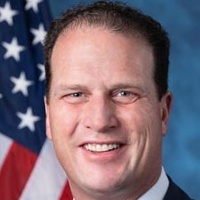
August Pfluger
Representative
TX
August Pfluger
Representative
TX
This bill mandates the immediate rescission of specific waivers and licenses that previously allowed certain international money transfers related to Iran. It explicitly prohibits the President from reissuing similar permissions or granting new licenses that would allow the Iranian government access to restricted financial accounts. In essence, this legislation closes specific financial pathways previously opened concerning Iran.