
Legislative Activity
Track Elise's sponsored bills, co-sponsored legislation, and voting record
The SAFE Act of 2025 amends existing law to include equines (horses) in the prohibition of slaughtering animals for human consumption.
Vern Buchanan
Representative
FL
Vern Buchanan
Representative
FL
The SAFE Act of 2025 amends existing legislation to explicitly prohibit the slaughter of horses for human consumption, reinforcing protections for these animals. This bill seeks to prevent the inhumane treatment of American equines by closing loopholes that allow their slaughter and export for human consumption.
The PLO and PA Terror Payments Accountability Act of 2025 imposes sanctions on foreign individuals, entities, and financial institutions that support terrorism through the Palestine Liberation Organization (PLO) and Palestinian Authority (PA) compensation systems.
Michael Lawler
Representative
NY
Michael Lawler
Representative
NY
The PLO and PA Terror Payments Accountability Act of 2025 aims to hold the Palestine Liberation Organization (PLO) and Palestinian Authority (PA) accountable for providing payments to terrorists and their families by mandating the President to impose sanctions on foreign individuals, entities, and financial institutions involved in facilitating these payments. These sanctions include blocking property, visa restrictions, and prohibiting U.S. bank accounts for foreign financial institutions. The Act will be terminated once the Secretary of State certifies that the PLO and PA have ceased these payments.
The "Grown in America Act of 2025" establishes a tax credit for businesses that use domestically produced agricultural commodities in their products, aiming to incentivize the use of American-grown ingredients.
David Kustoff
Representative
TN
David Kustoff
Representative
TN
The "Grown in America Act of 2025" introduces a tax credit for businesses that use domestic agricultural commodities in their products for human consumption. This credit, capped at $100,000,000, aims to incentivize the use of U.S.-produced agricultural inputs by offering a tax benefit based on the percentage of domestic agricultural commodities used. The percentage of domestic inputs required to receive the full credit increases over time, with the Secretary of Agriculture maintaining a list of agricultural commodities that cannot be produced domestically. These provisions will be effective for taxable years starting after December 31, 2025.
This resolution condemns the Iranian regime’s terrorism and human rights abuses while affirming support for the Iranian people’s right to establish a democratic, secular, and non-nuclear republic.
Tom McClintock
Representative
CA
Tom McClintock
Representative
CA
This resolution condemns the Iranian regime for its ongoing human rights abuses, state-sponsored terrorism, and regional instability. It expresses strong support for the Iranian people's struggle for a democratic, secular, and non-nuclear republic. Furthermore, the bill advocates for international accountability for the regime's crimes and calls for the protection of Iranian political refugees.
To award a Congressional Gold Medal to the 761st Tank Battalion, the first Black soldiers to serve in an American armored unit, for their valor and crucial contributions to the Allied victory in Europe.
Gary Palmer
Representative
AL
Gary Palmer
Representative
AL
This bill authorizes the Speaker of the House and the President pro tempore of the Senate to award a Congressional Gold Medal to the 761st Tank Battalion, also known as the "Black Panthers," in recognition of their courageous service and crucial contributions during World War II. The medal will be given to the National Museum of African American History and Culture for display, honoring the 761st as the first Black soldiers to serve in an American armored unit and their significant role in the Allied victory in Europe. The bill also allows for the creation and sale of bronze duplicates of the medal to support the United States Mint Public Enterprise Fund.
The "Protect and Serve Act of 2025" establishes federal penalties for intentionally causing serious harm or death to law enforcement officers because of their position, under certain circumstances, and requires Attorney General certification for federal prosecution in many cases.
John Rutherford
Representative
FL
John Rutherford
Representative
FL
The "Protect and Serve Act of 2025" creates federal offenses for intentionally causing serious injury or death to law enforcement officers because of their status as officers. It sets penalties including imprisonment and fines, with increased penalties if death results or if kidnapping or attempted killing is involved. Federal prosecution requires certification from the Attorney General, based on a request from the state or if it is in the public interest to ensure substantial justice. The act defines "law enforcement officer" and "State" for the purposes of the new offenses.
The "Erie Canal Bicentennial Commemorative Coin Act" directs the Treasury to mint coins in 2026 commemorating the Erie Canal, with surcharges benefiting the Erie Canalway Heritage Fund, Inc.
Claudia Tenney
Representative
NY
Claudia Tenney
Representative
NY
The "Erie Canal Bicentennial Commemorative Coin Act" directs the Department of Treasury to mint and issue gold, silver, and half-dollar coins to commemorate the bicentennial of the Erie Canal. These coins, which are legal tender, will be available in uncirculated and proof qualities for one year beginning January 1, 2026. Surcharges from the sale of these coins will be paid to the Erie Canalway Heritage Fund, Inc. to support the Erie Canalway National Heritage Corridor.
The "DOC Access Act of 2025" aims to improve dental and vision care coverage by ensuring fair payment practices, protecting providers' choices, and upholding state regulatory authority.
Earl Carter
Representative
GA
Earl Carter
Representative
GA
The "DOC Access Act of 2025" aims to enhance health care coverage under vision and dental plans by ensuring fair payment practices, protecting doctors' choices in labs and suppliers, and respecting state laws. It allows optometrists and dentists to charge their standard rate for non-covered services if the plan's payment is unreasonable, while ensuring they can only charge the contracted rate for dental cleanings. The bill also gives doctors more control over agreement extensions with limited benefit plans and allows them to opt out of certain provisions. Ultimately, this act seeks to balance federal guidelines with state oversight in regulating health insurance issuers and dental or vision benefit plans.
The Leveling the Playing Field 2.0 Act strengthens U.S. trade laws to counteract unfair trade practices like foreign subsidies, currency manipulation, and duty evasion, ensuring fair competition for American businesses.
Beth Van Duyne
Representative
TX
Beth Van Duyne
Representative
TX
The Leveling the Playing Field 2.0 Act aims to strengthen U.S. trade laws by addressing unfair subsidies, currency undervaluation, duty evasion, and circumvention of trade remedies. It refines the process for handling successive trade investigations, ensuring that the International Trade Commission considers prior findings and assesses cumulative effects on domestic industries. The act also empowers authorities to counteract cost distortions in foreign countries and prevent importers from avoiding duties. Additionally, it includes provisions related to trade with Canada and Mexico and sets effective dates for new regulations.
The American Victims of Terrorism Compensation Act amends the Justice for United States Victims of State Sponsored Terrorism Act to increase funding for victims of state-sponsored terrorism by redirecting forfeited assets and requiring annual payments to eligible claimants.
Michael Lawler
Representative
NY
Michael Lawler
Representative
NY
The American Victims of Terrorism Compensation Act amends the Justice for United States Victims of State Sponsored Terrorism Act to increase funding for victims of state-sponsored terrorism by redirecting forfeited assets and penalties into the United States Victims of State Sponsored Terrorism Fund. It mandates specific deposit timelines for forfeited funds, requires annual pro rata payments to eligible claimants beginning in 2026, and enhances transparency through detailed annual reports on fund activity. The Act also allows for the use of Department of Justice personnel to aid in the administration of the fund and ensures a supplemental payment to those already approved for fifth-round payments.
The "Validate Prior Learning to Accelerate Employment Act" promotes skills-based hiring by encouraging states to use competency-based assessments that measure an individual's skills and knowledge to help them gain credentials, receive education credit, and find employment.
Rick Allen
Representative
GA
Rick Allen
Representative
GA
The "Validate Prior Learning to Accelerate Employment Act" promotes skills-based hiring by encouraging states to use competency-based assessments that measure an individual's skills and knowledge. This allows individuals to earn credentials, receive educational credit, and develop employment plans based on their abilities. The act also supports employers in adopting skills-based hiring practices and integrates assessments into local training programs to help individuals find jobs and advance their careers. Ultimately, this bill aims to connect individuals with in-demand jobs by recognizing and validating their existing skills and experiences.
This bill authorizes the creation of a Congressional Gold Medal to honor the volunteers and communities involved with the North Platte Canteen during World War II.
Adrian Smith
Representative
NE
Adrian Smith
Representative
NE
The North Platte Canteen Congressional Gold Medal Act recognizes and honors the volunteers and donors of the North Platte Canteen in Nebraska during World War II with a Congressional Gold Medal. This medal will be presented by the Speaker of the House and the President pro tempore of the Senate, and then displayed at the Lincoln County Historical Museum. The Act also authorizes the creation and sale of bronze duplicates of the gold medal to cover production costs, with proceeds deposited into the Mint's Public Enterprise Fund.
The "Make American Flags in America Act of 2025" mandates that U.S. flags displayed on Federal property or bought by Federal agencies be made entirely in the U.S., and requires a study on country-of-origin labeling enforcement for flags.
Nicholas Langworthy
Representative
NY
Nicholas Langworthy
Representative
NY
The "Make American Flags in America Act of 2025" mandates that U.S. flags displayed on Federal property or bought by Federal agencies be entirely manufactured in the U.S. using 100% U.S.-made materials, in accordance with international agreements. It also directs the Federal Trade Commission to study and report on country-of-origin labeling enforcement for U.S. flags, aiming to improve enforcement and deter violations.
The bill modifies and extends funding for the World Trade Center Health Program, expands the types of healthcare providers who can certify mental health conditions, and requires a report to Congress on the program's budget.
Andrew Garbarino
Representative
NY
Andrew Garbarino
Representative
NY
The 9/11 Responder and Survivor Health Funding Correction Act of 2025 amends the Public Health Service Act to improve the World Trade Center (WTC) Health Program by expanding the types of healthcare providers who can conduct mental health evaluations, modifying provider credentialing, clarifying enrollment calculations, and extending the time frame for adding health conditions for WTC responders. The act adjusts the funding formula for fiscal years 2026 through 2090 and requires the Secretary of Health and Human Services to report to Congress on the program's budget, including projected needs through 2090 and recommendations for changes to the funding formula. It also stipulates that remaining funds in the Supplemental Fund, Special Fund, and Pentagon-Shanksville Fund will revert to the Treasury.
This resolution expresses Congressional opposition to imposing new performance fees or royalties on local radio stations and businesses for broadcasting or playing music.
Steve Womack
Representative
AR
Steve Womack
Representative
AR
The Local Radio Freedom Act expresses Congressional opposition to imposing new performance fees, taxes, or royalties on local radio stations and businesses for playing music. It argues that the current system of free airplay provides essential promotional value to artists and that new fees would threaten the financial viability of local broadcasters and the vital community services they provide.
This act authorizes the creation of the Smithsonian National Museum of the American Latino on the National Mall, ensuring diverse representation in its exhibits and programs.
Nicole Malliotakis
Representative
NY
Nicole Malliotakis
Representative
NY
The Smithsonian National Museum of the American Latino Act authorizes the creation of the Smithsonian National Museum of the American Latino on the National Mall. It ensures the museum's exhibits and programs accurately represent the diverse cultures, histories, events, and values of Hispanic and Latino communities, seeking guidance from diverse sources. The Act also mandates regular reports to Congress on the museum's efforts to meet these diversity requirements.
The "Death Tax Repeal Act" eliminates estate and generation-skipping transfer taxes, adjusts gift tax calculations, and sets a $10,000,000 lifetime gift exemption.
Randy Feenstra
Representative
IA
Randy Feenstra
Representative
IA
The "Death Tax Repeal Act" eliminates both estate and generation-skipping transfer taxes, effective from the date of enactment. It adjusts gift tax calculations by setting the lifetime gift exemption at $10,000,000, with inflation adjustments after 2011. The Act also includes transitional rules for applying certain sections of the Internal Revenue Code during the enactment year.
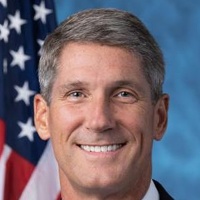
The "Ensuring Continuity in Veterans Health Act" amends the Veterans Community Care Program to prioritize continuous healthcare for veterans.
C. Franklin
Representative
FL
C. Franklin
Representative
FL
The "Ensuring Continuity in Veterans Health Act" prioritizes uninterrupted healthcare for veterans. It amends the Veterans Community Care Program to specifically consider continuity of care when making decisions about veterans' healthcare services. This ensures veterans can maintain consistent relationships with healthcare providers and receive seamless, ongoing treatment.
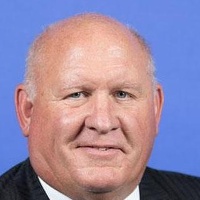
This Act allows schools participating in the National School Lunch Program to offer organic or non-organic whole milk alongside other options, while clarifying saturated fat accounting and restricting milk sourcing from China state-owned enterprises.
Glenn Thompson
Representative
PA
Glenn Thompson
Representative
PA
The Whole Milk for Healthy Kids Act of 2025 expands milk options available to students in the National School Lunch Program by allowing schools to offer organic or non-organic whole milk. This legislation provides greater flexibility for schools in providing fluid milk choices while maintaining accommodations for students with special dietary needs. Importantly, the saturated fat content of these offered milk options will not count toward the meal's overall saturated fat limits.
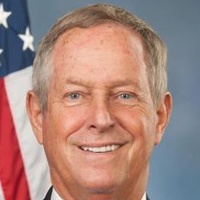
The United States-Israel Defense Partnership Act of 2025 bolsters defense cooperation between the U.S. and Israel through joint programs, funding increases, and extended authorities related to countering unmanned systems, anti-tunnel technology, emerging technologies, and war reserve stockpiles, while also exploring Israel's inclusion in the national technology and industrial base and assessing integrated air and missile defense in the CENTCOM region.
Joe Wilson
Representative
SC
Joe Wilson
Representative
SC
The United States-Israel Defense Partnership Act of 2025 seeks to bolster the defense relationship between the United States and Israel through joint initiatives and increased cooperation. It establishes programs to counter unmanned systems, extend anti-tunnel and counter-UAS cooperation, and promote collaboration in emerging technologies like AI and cybersecurity. The act also mandates the establishment of a Defense Innovation Unit office in Israel and assesses integrated air and missile defense in the U.S. Central Command region. Finally, it explores Israel's potential inclusion in the national technology and industrial base.