
Legislative Activity
Track Josh's sponsored bills, co-sponsored legislation, and voting record
The Telehealth Modernization Act extends key Medicare telehealth flexibilities, enhances program integrity for DME, and expands access to remote care options like hospital-at-home and cardiac rehabilitation.
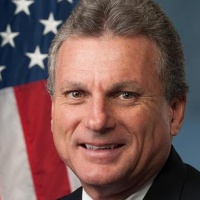
Earl Carter
Representative
GA
Earl Carter
Representative
GA
The Telehealth Modernization Act primarily extends critical Medicare telehealth flexibilities, such as location and audio-only options, through September 30, 2027. It also extends the "Hospital Care at Home" waiver until 2030 and mandates a comprehensive study comparing home-based versus traditional hospital care. Furthermore, the bill enhances program integrity for Durable Medical Equipment claims and requires new guidance to ensure telehealth services are accessible to individuals with limited English proficiency.
This Act updates the timeline for expanding middle mile internet infrastructure into rural areas from 2018-2023 to 2026-2031 under the Rural Electrification Act.
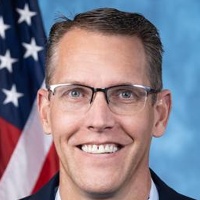
Randy Feenstra
Representative
IA
Randy Feenstra
Representative
IA
The Middle Mile for Rural America Act updates the timeline for expanding essential middle mile internet infrastructure into rural areas. This legislation shifts the designated period for these expansion projects under the Rural Electrification Act from 2018–2023 to the new timeframe of 2026 through 2031. This change ensures continued focus and potential funding for critical rural broadband development in the coming years.
This bill establishes a mandatory supply fee paid by Medicare drug plans to long-term care pharmacies for specific prescriptions in 2026 and 2027, while also mandating a GAO study on the financial sustainability of the current payment system.
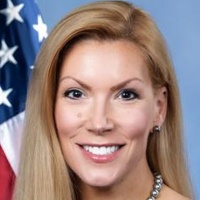
Beth Van Duyne
Representative
TX
Beth Van Duyne
Representative
TX
This Act establishes a mandatory supply fee for Medicare drug plans to pay long-term care pharmacies for specific prescriptions dispensed in 2026 and 2027. The bill mandates a $30 fee per prescription in 2026, increasing in 2027, with penalties for non-payment. Additionally, the GAO is required to study the financial sustainability of the current payment structure for these essential pharmacies. This legislation aims to ensure continued access to medications for patients in long-term care settings.
This Act establishes national, standardized phrases ("BEST If Used By" and "USE By") for voluntary quality and mandatory discard date labels on food packaging.

Chellie Pingree
Representative
ME
Chellie Pingree
Representative
ME
The Food Date Labeling Act of 2025 establishes national standards for food date labels, requiring manufacturers to use specific phrases like "**BEST If Used By**" for quality and "**USE By**" for discard dates, if they choose to include them. This legislation standardizes labeling language across different food products overseen by the USDA and FDA. The Act also ensures that non-compliant labeling is treated as misbranding under existing federal food laws. Manufacturers will have two years from enactment to comply with these new federal labeling requirements.
This Act directs the Departments of HUD and Agriculture to create a joint agreement to streamline environmental reviews and processes for housing projects funded by both agencies.
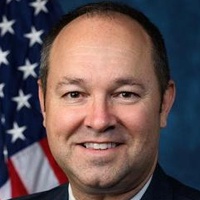
Marlin Stutzman
Representative
IN
Marlin Stutzman
Representative
IN
The Streamlining Rural Housing Act of 2025 mandates that the Departments of HUD and Agriculture create a joint agreement to speed up environmental reviews for federally funded rural housing projects. This partnership aims to designate a lead agency and streamline the acceptance of environmental documentation between the two departments. The Act also establishes an advisory group composed of diverse stakeholders to guide implementation and requires a final report to Congress suggesting further efficiency improvements without compromising resident safety or environmental standards.
This Act prohibits grocery stores from price gouging, using personal surveillance data to set individualized prices, and mandates disclosure of facial recognition use, while banning electronic shelf labels in larger stores.
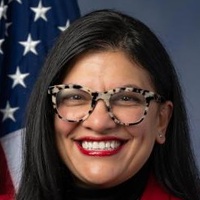
Rashida Tlaib
Representative
MI
Rashida Tlaib
Representative
MI
The Stop Price Gouging in Grocery Stores Act of 2025 aims to protect consumers by prohibiting grocery stores from charging "grossly excessive" prices for food items. The bill also bans stores from adjusting prices based on personal tracking data, such as facial recognition, and requires clear signage if facial recognition technology is used. Furthermore, it mandates that large physical grocery stores must use printed signs instead of electronic shelf labels for displaying prices.
The Rural Housing Service Reform Act of 2025 streamlines administrative processes, preserves existing rural rental housing, expands access to repair loans, establishes new community development grants, and mandates reporting to improve the efficiency and transparency of USDA rural housing programs.
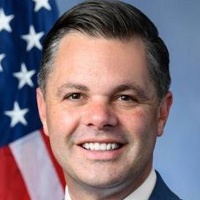
Zachary (Zach) Nunn
Representative
IA
Zachary (Zach) Nunn
Representative
IA
The Rural Housing Service Reform Act of 2025 aims to modernize and stabilize rural housing programs across the nation. It streamlines administrative processes, establishes permanent protections for existing affordable rental housing, and improves access to repair loans for low-income homeowners. Furthermore, the bill creates new grant opportunities for local development and mandates greater transparency and efficiency in the application review process.
This Act establishes a multi-sector Task Force, led by the Treasury Secretary, to study, recommend strategies for, and report on preventing evolving electronic payment scams.
Zachary (Zach) Nunn
Representative
IA
Zachary (Zach) Nunn
Representative
IA
The Taskforce for Recognizing and Averting Payment Scams Act (TRAPS Act) establishes a new Task Force led by the Secretary of the Treasury. This diverse group, including federal agencies, industry experts, and consumer advocates, will study evolving payment scams. The Task Force is charged with developing cross-sector prevention strategies and submitting comprehensive recommendations for new laws and improved coordination to combat these fraudulent activities.
This act mandates that the Department of Veterans Affairs must provide abortion care, counseling, and related services and medication to eligible veterans and certain other individuals.
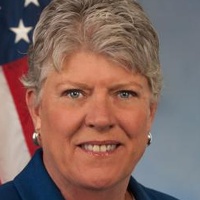
Julia Brownley
Representative
CA
Julia Brownley
Representative
CA
The Reproductive Freedom for Veterans Act mandates that the Department of Veterans Affairs (VA) must now provide abortion care, counseling, and related medication as part of the medical services offered to eligible veterans and certain other beneficiaries. This legislation formally amends existing VA health care provisions to include these reproductive health services.
The ETHICS Act mandates that Members of Congress and their families divest from or place specific stock holdings into qualified blind trusts, increases penalties for STOCK Act noncompliance, and requires publicly searchable online filing of financial disclosure forms.
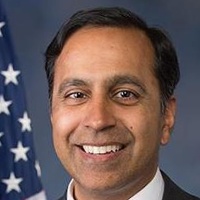
Raja Krishnamoorthi
Representative
IL
Raja Krishnamoorthi
Representative
IL
The Ending Trading and Holdings in Congressional Stocks (ETHICS) Act mandates that Members of Congress and their immediate families divest from or place specific stock holdings into qualified blind trusts to prevent conflicts of interest. The bill also establishes new civil penalties for failing to comply with existing stock trading disclosure laws (the STOCK Act). Furthermore, it requires that congressional financial disclosure forms be made publicly available online in a searchable, machine-readable format.
This bill repeals specific prior health reconciliation provisions and expands eligibility for the Premium Tax Credit by removing the 400% income cap and adjusting the subsidy calculation formula.
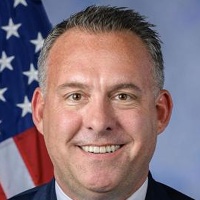
Adam Gray
Representative
CA
Adam Gray
Representative
CA
The Protecting Health Care and Lowering Costs Act of 2025 repeals specific prior reconciliation health provisions. This bill significantly expands eligibility for the Premium Tax Credit by eliminating the 400% Federal Poverty Level income cap. It also updates the subsidy calculation formula to ensure a smoother, linear adjustment of assistance across various income levels.
This Act establishes the "Local Farmers Feeding Our Communities" program to strengthen local food security by funding agreements that support local producers and distribute fresh food to communities.
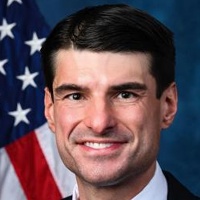
Robert Bresnahan
Representative
PA
Robert Bresnahan
Representative
PA
The Local Farmers Feeding our Communities Act establishes a new program to support local food producers and strengthen regional food security. This initiative requires the Secretary of Agriculture to fund agreements that ensure nutritious, locally sourced food is purchased and distributed widely, prioritizing small and beginning farmers. Funds must be used to buy minimally processed local products and provide technical assistance to producers. The program is backed by mandatory funding starting in Fiscal Year 2026.
This Act bans for-profit corporations from establishing separate segregated funds for political purposes, restricts solicitation to executive and administrative personnel, and requires existing non-nonprofit corporate funds to dissolve within one year.
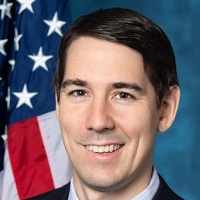
Josh Harder
Representative
CA
Josh Harder
Representative
CA
The Ban Corporate PACs Act restricts the ability of corporations to establish separate segregated funds for political purposes. Under this bill, only nonprofit corporations will be permitted to set up these political action committees. Furthermore, these funds will be prohibited from soliciting contributions from stockholders and their families. Existing non-nonprofit corporate political funds must dissolve within one year of the Act's enactment.
This Act establishes grant programs and a four-year phase-out schedule to transition employers away from paying sub-minimum wages to individuals with disabilities toward competitive integrated employment.
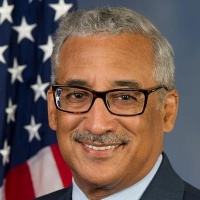
Robert Scott
Representative
VA
Robert Scott
Representative
VA
The Transformation to Competitive Integrated Employment Act aims to eliminate the practice of paying individuals with disabilities less than the minimum wage by phasing out special wage certificates over four years. It establishes federal and state grant programs to help employers and states transition to models of competitive integrated employment, where workers earn prevailing wages alongside non-disabled peers. The bill also funds technical assistance to guide businesses through this operational shift and mandates rigorous reporting to track employment outcomes.
This resolution expresses the sense of Congress in supporting the designation of July as Disability Pride Month to recognize the contributions of people with disabilities and combat discrimination.
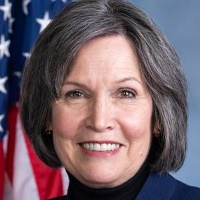
Betty McCollum
Representative
MN
Betty McCollum
Representative
MN
This resolution officially expresses the support of Congress for designating July as Disability Pride Month nationwide. It recognizes the significant contributions of people with disabilities while acknowledging ongoing discrimination. The bill encourages the public and organizations to observe the month through appropriate celebrations and by actively working to prevent exclusion.
This Act prioritizes federal research and development funding for controlling the invasive Spotted Lanternfly and extends key agricultural research programs through 2030.
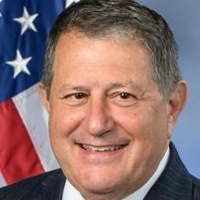
Joseph Morelle
Representative
NY
Joseph Morelle
Representative
NY
The Spotted Lanternfly Research and Development Act prioritizes federal funding for research and extension programs specifically aimed at controlling the invasive Spotted Lanternfly. This legislation ensures that developing effective tools and treatments against this pest becomes a high-priority initiative. Additionally, the Act extends the authorization for several existing high-priority agricultural research programs until 2030.
This bill establishes a new system for distributing up to 2,000 additional Medicare-funded residency positions annually from 2026 through 2032, prioritizing hospitals serving underserved areas, and mandates a study on strategies to increase workforce diversity.
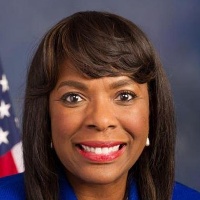
Terri Sewell
Representative
AL
Terri Sewell
Representative
AL
The Resident Physician Shortage Reduction Act of 2025 establishes a structured process for distributing up to 2,000 additional, federally funded residency positions annually between fiscal years 2026 and 2032. This distribution prioritizes hospitals serving in underserved areas, those already training above their limit, and those committed to primary care and general surgery training. The bill also mandates a study and report by the Comptroller General on effective strategies to increase diversity within the health professional workforce.
This act lowers the required farming experience for certain farm loan applicants from three years to one year, with provisions to waive that requirement entirely for qualified beginning farmers through relevant work experience or mentorship.
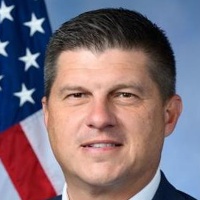
Brad Finstad
Representative
MN
Brad Finstad
Representative
MN
The Next Generation Farmer Act significantly lowers the experience requirement for certain farm loan applicants from three years to just one year. Furthermore, it allows the Secretary to waive this new one-year requirement for qualified beginning farmers who have relevant management experience as hired labor or who have secured a commitment from an approved mentor. This legislation aims to make federal farm loans more accessible to new agricultural producers.
This bill establishes the Agricultural and Rural Road Improvement Program to repair and upgrade local and rural roads crucial for farm access, safety, and economic efficiency.
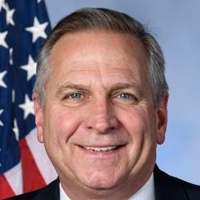
Mike Bost
Representative
IL
Mike Bost
Representative
IL
The Agricultural and Rural Road Improvement Program Act establishes a new federal program dedicated to repairing and improving critical local and rural roads essential for agriculture. This program aims to enhance access to farms and agricultural facilities, reduce weight-restricted bridges, and increase the safety and resilience of rural transportation networks. Federal funding for these projects will cover up to 90 percent of the total cost.
This Act prohibits insurance companies from discriminating against living organ donors when issuing life, disability, or long-term care policies and mandates the updating of educational materials regarding donation risks and insurance implications.
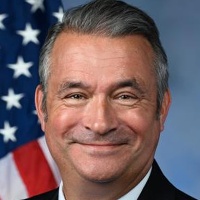
Don Bacon
Representative
NE
Don Bacon
Representative
NE
The Living Donor Protection Act of 2025 prohibits life, disability, and long-term care insurance companies from denying coverage or increasing premiums solely because an individual is a living organ donor. This legislation ensures that living donors are not financially penalized for their altruistic act. Additionally, the bill requires the Secretary of HHS to update educational materials to accurately reflect the insurance protections afforded to living donors.