Legislative Activity
Track Pete's sponsored bills, co-sponsored legislation, and voting record
Exempts family farms and small businesses from being considered as assets when calculating eligibility for federal financial aid.

Joni Ernst
Senator
IA
Joni Ernst
Senator
IA
The "Family Farm and Small Business Exemption Act" exempts family farms and small businesses from being considered as assets when calculating eligibility for federal financial aid under the Higher Education Act of 1965. This exemption applies to family farms where the family resides and small businesses with 100 or fewer employees that the family owns and controls. These changes will apply to financial aid award years starting after the enactment of this Act.
This bill prohibits tax deductions and credits for marijuana businesses trafficking in substances illegal under federal or state law.

James Lankford
Senator
OK
James Lankford
Senator
OK
The "No Deductions for Marijuana Businesses Act" amends the Internal Revenue Code to prohibit businesses involved in marijuana or controlled substance trafficking from claiming tax deductions or credits for business expenses. This applies regardless of whether such activities are illegal under federal or state law, impacting taxable years following the Act's enactment.
The "Retirement Fairness for Charities and Educational Institutions Act of 2025" modifies regulations to enhance 403(b) retirement plans for employees of charities and educational institutions by adjusting securities laws.
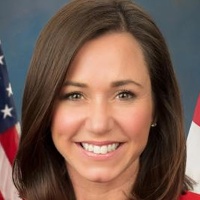
Katie Britt
Senator
AL
Katie Britt
Senator
AL
The "Retirement Fairness for Charities and Educational Institutions Act of 2025" modifies regulations for 403(b) plans under the Investment Company Act of 1940, the Securities Act of 1933, and the Securities Exchange Act of 1934. These modifications broaden exemptions from registration provisions for certain interests, participations, or securities related to 403(b) plans, especially those subject to Title I of the Employee Retirement Income Security Act of 1974, or where the employer acts as a fiduciary, or are governmental plans as defined in section 414. The goal is to expand the types of trusts, plans, and accounts that are excluded from being defined as investment companies. It also updates a section regarding exemptions from registration requirements for securities, adding a reference to plans described in section 3(a)(12)(C)(iv) of the Act.
This Act mandates that new passenger vehicles sold in the U.S. must include standard equipment capable of receiving AM broadcast radio signals for emergency alerts and programming.
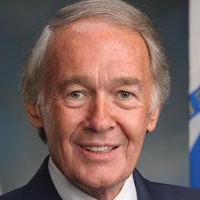
Edward Markey
Senator
MA
Edward Markey
Senator
MA
The AM Radio for Every Vehicle Act of 2025 mandates that new passenger vehicles sold in the U.S. must include standard equipment capable of receiving AM broadcast signals within a few years of the law's enactment. This requirement aims to ensure drivers retain access to crucial emergency alerts, overriding conflicting state or local laws. The bill also directs the GAO to study the reliability of AM radio versus other emergency alert technologies in vehicles.
The TAILOR Act of 2025 requires federal financial regulators to tailor regulations to the risk profile and business model of financial institutions, reducing the regulatory burden on lower-risk institutions.
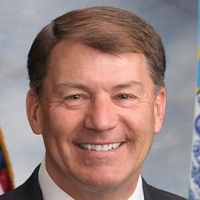
Mike Rounds
Senator
SD
Mike Rounds
Senator
SD
The TAILOR Act of 2025 aims to tailor financial regulations to the risk profile and business models of financial institutions, reducing the regulatory burden on lower-risk institutions. It requires agencies to consider the impact of regulations, disclose their decision-making process, and report to Congress annually. The act also mandates simpler reporting rules for community banks and a report on modernizing bank supervision.
The "American Beef Labeling Act of 2025" mandates country-of-origin labeling for beef and ground beef, tasking the USTR and Secretary of Agriculture with establishing a WTO-compliant labeling system within one year.
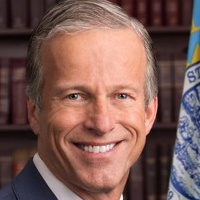
John Thune
Senator
SD
John Thune
Senator
SD
The American Beef Labeling Act of 2025 amends the Agricultural Marketing Act of 1946 to mandate country-of-origin labeling (MCOOL) for beef and ground beef. It requires the United States Trade Representative, in consultation with the Secretary of Agriculture, to find a way to reinstate MCOOL for beef in compliance with World Trade Organization rules. The changes to beef labeling will take effect within one year of enactment.
This joint resolution seeks to nullify the EPA’s rule regarding waste emissions charges for petroleum and natural gas systems.
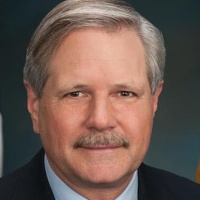
John Hoeven
Senator
ND
John Hoeven
Senator
ND
This joint resolution seeks to exercise congressional disapproval of the EPA’s "Waste Emissions Charge for Petroleum and Natural Gas Systems" rule. If passed, the resolution would nullify the rule, rendering it without force or effect.
The JOBS Act of 2025 expands Federal Pell Grant eligibility to students enrolled in high-quality, short-term career and technical education programs that lead to recognized industry credentials.
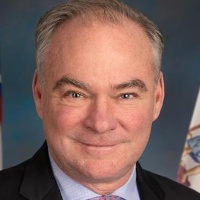
Timothy Kaine
Senator
VA
Timothy Kaine
Senator
VA
The JOBS Act of 2025 expands Federal Pell Grant eligibility to include students enrolled in high-quality, short-term career and technical education programs. By supporting training that leads to industry-recognized credentials, the bill aims to better align postsecondary education with the needs of high-demand job sectors. Additionally, the legislation lowers the minimum Pell Grant threshold to increase financial aid accessibility for students pursuing these career-focused pathways.
The Fair Access to Banking Act aims to prevent financial institutions from denying services to individuals or businesses based on subjective or political reasons, ensuring fair and impartial access to financial services.

Kevin Cramer
Senator
ND
Kevin Cramer
Senator
ND
The Fair Access to Banking Act aims to ensure equal access to financial services by preventing banks and credit unions from denying services to individuals or entities engaged in lawful activities based on subjective or politically motivated reasons. It sets requirements for banks with over $10 billion in assets, prohibiting them from denying services based on reputational risk and requiring them to justify denials with documented, risk-based standards. The act also allows individuals to sue financial institutions that violate these requirements, with the potential for treble damages and attorney fees awarded to successful plaintiffs. Furthermore, it restricts access to Federal Reserve lending programs and the Automated Clearing House Network for institutions that fail to comply with the Act.
This bill mandates periodic reviews of Servicemembers' and Veterans' Group Life Insurance coverage amounts to ensure they keep pace with inflation.
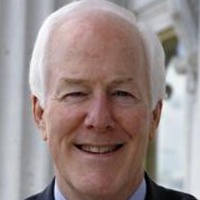
John Cornyn
Senator
TX
John Cornyn
Senator
TX
The Fairness for Servicemembers and their Families Act of 2025 mandates that the Secretary of Veterans Affairs conduct periodic reviews of the maximum coverage amounts for Servicemembers’ and Veterans’ Group Life Insurance. Beginning in 2026, these reviews must occur every five years to compare current coverage against inflation-adjusted benchmarks. The findings will be reported to Congress to help ensure that life insurance benefits remain aligned with economic changes for military families.
The STOP MADNESS Act authorizes the President to impose economic sanctions on foreign governments and individuals that facilitate unlawful immigration or refuse to cooperate with U.S. repatriation efforts.

Tim Scott
Senator
SC
Tim Scott
Senator
SC
The STOP MADNESS Act authorizes the President to impose economic sanctions on foreign governments that refuse to accept the repatriation of their citizens who have entered the United States unlawfully. Additionally, the bill targets foreign governments and individuals that knowingly facilitate unlawful immigration by blocking their access to the U.S. financial system. The legislation also establishes reporting requirements for the executive branch regarding the implementation and enforcement of these sanctions.
The "Commission to Relocate the Federal Bureaucracy Act" establishes a commission to study and recommend the relocation of federal agencies outside of the Washington, D.C., area, focusing on cost savings, infrastructure, and community input, with a goal of moving at least 100,000 employees.

Marsha Blackburn
Senator
TN
Marsha Blackburn
Senator
TN
The "Commission to Relocate the Federal Bureaucracy Act" establishes a commission to study and recommend the relocation of certain federal agencies from the Washington, D.C., area to other parts of the United States. The commission will evaluate potential relocation sites based on factors such as financial efficiency, existing infrastructure, and community input, with the goal of transferring at least 100,000 employees of covered agencies. A report of the commission's findings and recommendations must be submitted to Congress within one year.
This bill removes silencers from special tax and registration requirements under the National Firearms Act while imposing a new 10% excise tax and new federal marking standards on manufacturers.

Michael Crapo
Senator
ID
Michael Crapo
Senator
ID
The Hearing Protection Act seeks to remove silencers from special regulation under federal tax law, treating them similarly to standard firearms components. This bill preempts state and local governments from imposing special taxes or registration requirements on silencers involved in interstate commerce. Furthermore, it mandates the destruction of existing federal records identifying silencer owners and establishes new serial number marking requirements for manufacturers.
The SHOW UP Act of 2025 mandates that federal executive agencies reinstate pre-pandemic telework policies and requires rigorous certification before any future expansion of remote work can be implemented.
Marsha Blackburn
Senator
TN
Marsha Blackburn
Senator
TN
The SHOW UP Act of 2025 requires federal executive agencies to reinstate the telework policies and practices that were in effect on December 31, 2019. To expand telework beyond those pre-pandemic levels, agencies must conduct a comprehensive impact study and obtain certification from the Office of Personnel Management proving that such changes will improve mission performance and reduce operational costs.
The Federal Employee Performance and Accountability Act of 2025 establishes a five-year pilot program to implement a performance-based pay structure for select federal employees, featuring tiered salary adjustments based on productivity, quality, and timeliness metrics.
Marsha Blackburn
Senator
TN
Marsha Blackburn
Senator
TN
The Federal Employee Performance and Accountability Act of 2025 establishes a five-year pilot program to implement a performance-based pay structure for select federal employees. Participating agencies will utilize objective metrics to evaluate productivity, quality, and timeliness, resulting in tiered salary adjustments of 15% for top performers or those who fail to meet standards. The program aims to increase government efficiency and accountability through rigorous oversight and annual reporting to Congress.
The Homeowner Energy Freedom Act repeals federal high-efficiency electric home rebate programs and rescinds all associated unobligated funding.
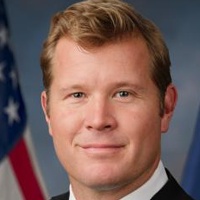
Tim Sheehy
Senator
MT
Tim Sheehy
Senator
MT
The Homeowner Energy Freedom Act proposes the repeal of several federal high-efficiency electric home rebate programs established under Public Law 117-169. Additionally, the bill mandates the rescission of all unobligated funds previously allocated to these specific energy initiatives.
The SHUSH Act removes firearm silencers from the National Firearms Act, eliminating federal taxes, registration requirements, and state-level restrictions on their ownership and use.
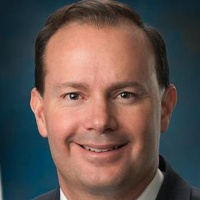
Mike Lee
Senator
UT
Mike Lee
Senator
UT
The SHUSH Act (Silencers Help Us Save Hearing Act) removes firearm silencers from the definition of "firearms" under federal law, effectively eliminating the associated $200 tax, registration requirements, and federal oversight. The bill also preempts state and local laws that impose taxes or registration on silencers and removes existing sentencing enhancements for their use in crimes.
The American Values Act permanently prohibits the use of federal foreign assistance and Peace Corps funding for abortion services, involuntary sterilization, and related lobbying or research activities.

James Risch
Senator
ID
James Risch
Senator
ID
The American Values Act permanently prohibits the use of federal foreign assistance and Peace Corps funding for abortion services, involuntary sterilizations, and related lobbying or research activities. This legislation codifies long-standing restrictions to ensure that U.S. taxpayer dollars are not utilized to support or promote these practices internationally.
The Educational Choice for Children Act of 2025 establishes a federal tax credit for donations to scholarship-granting organizations to help eligible students cover a wide range of K-12 educational expenses while protecting the autonomy of participating schools and families.
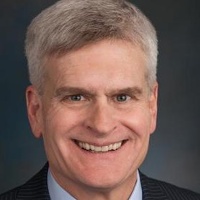
Bill Cassidy
Senator
LA
Bill Cassidy
Senator
LA
The Educational Choice for Children Act of 2025 establishes a federal tax credit for individuals and corporations that donate to scholarship-granting organizations. These organizations provide scholarships to help eligible students cover a wide range of K-12 educational expenses, including private school tuition, tutoring, and educational therapies. The bill includes a $10 billion annual volume cap on these credits and contains robust protections to ensure the autonomy of participating schools and the rights of parents to direct their children's education.
The Charitable Act allows individuals who do not itemize their taxes to claim a charitable contribution deduction of up to one-third of their standard deduction for the 2026 and 2027 tax years.
James Lankford
Senator
OK
James Lankford
Senator
OK
The Charitable Act renews and expands tax incentives for charitable giving by allowing individuals who do not itemize deductions to claim a deduction for charitable contributions during the 2026 and 2027 tax years. Under this provision, non-itemizers can deduct contributions up to one-third of their standard deduction amount. Additionally, the bill removes specific accuracy-related penalties associated with these deductions.