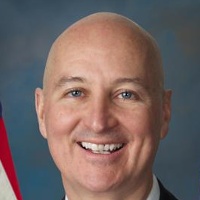
Legislative Activity
Track Pete's sponsored bills, co-sponsored legislation, and voting record
This bill directs the Department of Education to consider the International Holocaust Remembrance Alliance's definition of antisemitism when evaluating discrimination complaints under Title VI of the Civil Rights Act of 1964.

Tim Scott
Senator
SC
Tim Scott
Senator
SC
The Antisemitism Awareness Act of 2025 requires the Department of Education to consider the International Holocaust Remembrance Alliance (IHRA) definition of antisemitism when evaluating discrimination complaints under Title VI of the Civil Rights Act of 1964, ensuring consistent enforcement against antisemitism in federally funded programs. This bill aims to increase awareness and improve the safety of Jewish communities by codifying the use of the IHRA definition. The Act does not expand the Department of Education's authority, change harassment standards, reduce existing rights, or diminish First Amendment rights.
The "Death Tax Repeal Act of 2025" eliminates estate and generation-skipping transfer taxes, modifies gift tax calculations, and adjusts lifetime gift exemptions.
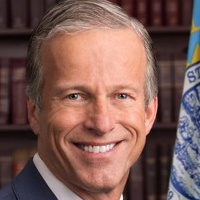
John Thune
Senator
SD
John Thune
Senator
SD
The "Death Tax Repeal Act of 2025" eliminates both estate and generation-skipping transfer taxes, while also modifying gift tax laws. It adjusts gift tax calculations, addresses transfers in trust, sets an initial $10,000,000 amount for calculating tentative tax, and adjusts for inflation. These changes apply to estates of decedents dying, generation-skipping transfers occurring, and gifts made on or after the enactment date of this Act.
The "Nationwide Consumer and Fuel Retailer Choice Act of 2025" modifies Clean Air Act regulations regarding ethanol waivers, Reid Vapor Pressure limits for fuel blends, and allows for the return of certain small refinery credits.

Deb Fischer
Senator
NE
Deb Fischer
Senator
NE
The "Nationwide Consumer and Fuel Retailer Choice Act of 2025" amends the Clean Air Act, modifying the process for ethanol waivers and Reid Vapor Pressure limitations, allowing for higher ethanol blends during high ozone season. It also permits small refineries to reclaim certain retired credits from 2016-2018 for future use, under specific conditions related to prior exemption petitions.
The EAGLES Act of 2025 reauthorizes and expands the National Threat Assessment Center to prevent targeted violence through research, training, and collaboration, particularly in schools.

Charles Grassley
Senator
IA
Charles Grassley
Senator
IA
The EAGLES Act of 2025 would reauthorize and expand the National Threat Assessment Center (NTAC) within the Department of Homeland Security. The NTAC would be responsible for training, consultation, research, and information sharing related to threat assessment and targeted violence prevention, with a new focus on school violence prevention. The bill authorizes \$10,000,000 annually from 2026-2030 for these activities and requires a report to Congress on its implementation. The goal of the act is to standardize threat assessments and proactively prevent targeted violence through early intervention and support.
The "Expanding Access to Capital for Rural Job Creators Act" broadens the focus of the Advocate for Small Business Capital Formation to include rural-area small businesses, ensuring they receive assistance and outreach similar to women-owned small businesses.

John Kennedy
Senator
LA
John Kennedy
Senator
LA
The "Expanding Access to Capital for Rural Job Creators Act" amends the Securities Exchange Act of 1934 to include rural-area small businesses in the list of entities the Advocate for Small Business Capital Formation should focus on. This ensures that the Advocate identifies problems and provides assistance to these businesses, as well as conducts outreach activities to support them.
This resolution commends the personnel and organizations responsible for the successful planning and execution of the 2025 Presidential Inauguration.
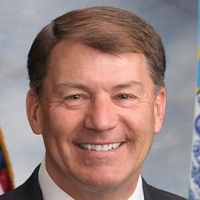
Mike Rounds
Senator
SD
Mike Rounds
Senator
SD
This resolution formally expresses the Senate’s gratitude to the Joint Congressional Committee on Inaugural Ceremonies, law enforcement, and all personnel involved in the January 20, 2025, Presidential Inauguration. It commends these groups for their professionalism, resilience, and dedication in ensuring a safe and successful event despite unexpected logistical challenges.
This bill repeals the requirement for financial institutions to collect and report data on small business loans under the Equal Credit Opportunity Act.
John Kennedy
Senator
LA
John Kennedy
Senator
LA
The "1071 Repeal to Protect Small Business Lending Act" repeals Section 704B of the Equal Credit Opportunity Act, which mandated data collection on small business loans. This repeal aims to reduce compliance costs for financial institutions, especially smaller ones, and improve small businesses' access to credit by removing regulatory barriers. The act also makes related amendments to the Equal Credit Opportunity Act and the Dodd-Frank Wall Street Reform and Consumer Protection Act.
The United States-Israel Defense Partnership Act of 2025 enhances defense cooperation between the U.S. and Israel through programs focused on countering unmanned systems, anti-tunnel technology, emerging technologies, and integrated air and missile defense, while also extending existing cooperative agreements and establishing a Defense Innovation Unit office in Israel.
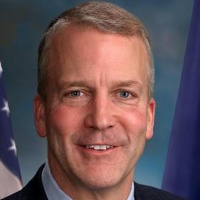
Dan Sullivan
Senator
AK
Dan Sullivan
Senator
AK
The United States-Israel Defense Partnership Act of 2025 seeks to enhance the defense partnership between the United States and Israel through various initiatives. This includes establishing programs to counter unmanned systems, extend anti-tunnel and counter-unmanned aerial systems cooperation, and promote collaboration in emerging technologies. The act also directs the establishment of a Defense Innovation Unit office in Israel and assesses integrated air and missile defense in the United States Central Command region. Finally, it explores Israel's potential inclusion in the national technology and industrial base.
This bill prevents the Department of Interior and Agriculture from banning lead ammunition and tackle on federal land unless the state approves the ban.
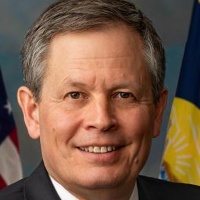
Steve Daines
Senator
MT
Steve Daines
Senator
MT
The "Protecting Access for Hunters and Anglers Act of 2025" prevents the Department of Interior and Department of Agriculture from banning or regulating lead ammunition and fishing tackle on federal lands and waters open to hunting and fishing. An exception is allowed in specific areas where lead is scientifically proven to be the primary cause of wildlife population decline, but any restrictions must align with state laws or have the approval of the state's fish and wildlife department. The reasoning for any such prohibition or regulation must be published in the Federal Register.
The "National Right-to-Work Act" prohibits mandatory union membership as a condition of employment, protecting employees' rights to choose whether or not to join or support a labor union.

Rand Paul
Senator
KY
Rand Paul
Senator
KY
The "National Right-to-Work Act" aims to protect individual employees' rights to choose whether or not to join or support a labor union. It amends the National Labor Relations Act and the Railway Labor Act to eliminate mandatory union membership or fees as a condition of employment. This ensures that employees cannot be forced to join or contribute to a union against their will. The changes apply to agreements made or renewed after the Act's enactment.
The "Eliminate Lavish Incentives To Electric Vehicles Act" repeals tax credits for new and used clean vehicles, commercial clean vehicles, and excludes electric vehicle recharging property from alternative fuel vehicle refueling property credits.
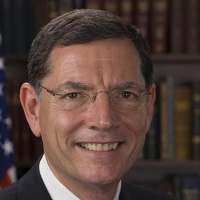
John Barrasso
Senator
WY
John Barrasso
Senator
WY
The "Eliminate Lavish Incentives To Electric Vehicles Act" repeals several clean energy tax credits, including those for new and used clean vehicles, qualified commercial clean vehicles, and excludes electric vehicle recharging property from the alternative fuel vehicle refueling property credit. These changes would take effect for vehicles or property purchased (or under binding contract) more than 30 days after the Act's enactment.
The Enhanced Iran Sanctions Act of 2025 imposes sanctions on those involved in logistical transactions with Iran's energy sector and establishes an interagency working group to coordinate and enforce these sanctions.
Dan Sullivan
Senator
AK
Dan Sullivan
Senator
AK
The Enhanced Iran Sanctions Act of 2025 aims to prevent Iran from obtaining nuclear weapons and countering its support for terrorism by imposing sanctions on those involved in logistical transactions of Iranian oil, gas, and petrochemical products. It mandates the President to block the property of sanctioned individuals and entities within the U.S. and deny them U.S. visas, with potential waivers based on national interest. The Act also establishes an Interagency Working Group to coordinate and enhance the enforcement of sanctions against Iran, and encourages the formation of a multilateral contact group with similar countries to coordinate international enforcement of sanctions against Iran. Finally, the Act amends the State Department Basic Authorities Act of 1956 to include identifying individuals or entities involved in activities that violate or evade sanctions under the Enhanced Iran Sanctions Act of 2025.
The "Fair SHARE Act of 2025" taxes electric vehicles and heavy battery modules to support the Highway Trust Fund.
Deb Fischer
Senator
NE
Deb Fischer
Senator
NE
The "Fair SHARE Act of 2025" introduces a tax on electric vehicles and heavy battery modules to support the Highway Trust Fund. Effective January 1, 2026, the act levies a $1,000 tax on each electric vehicle and a $550 tax on battery modules exceeding 1,000 pounds. Revenue generated will be allocated to the Highway Trust Fund. The bill aims to ensure that electric vehicle users contribute to the maintenance and improvement of the nation's road infrastructure.
The "Protect Small Businesses from Excessive Paperwork Act of 2025" extends the filing deadline to January 1, 2026, for pre-existing reporting companies formed before January 1, 2024.
Tim Scott
Senator
SC
Tim Scott
Senator
SC
The "Protect Small Businesses from Excessive Paperwork Act of 2025" amends the filing deadline for pre-existing reporting companies. Companies in existence before January 1, 2024, now have until January 1, 2026, to file their reports.
The "Financing Our Energy Future Act" modifies the definition of "qualifying income" for publicly traded partnerships involved in green energy, expanding the scope of qualifying activities and technologies.

Jerry Moran
Senator
KS
Jerry Moran
Senator
KS
The "Financing Our Energy Future Act" amends the Internal Revenue Code to expand the definition of "qualifying income" for publicly traded partnerships involved in green energy projects. This expansion includes income from various renewable energy activities, such as generating and storing power from renewable sources, processing biomass, utilizing carbon capture technologies, and producing renewable chemicals. These changes aim to incentivize investment in and development of green energy technologies by allowing more green energy companies to qualify for PTP status. The amendments will take effect for taxable years starting after December 31, 2025.
The "Credit Union Board Modernization Act" amends the Federal Credit Union Act to reduce the frequency of required board meetings for well-managed federal credit unions from monthly to at least six times per year after the first five years of operation.
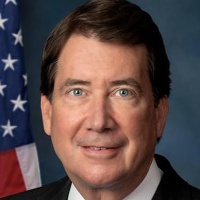
Bill Hagerty
Senator
TN
Bill Hagerty
Senator
TN
The "Credit Union Board Modernization Act" amends the Federal Credit Union Act to reduce the frequency of board of directors meetings for well-managed federal credit unions. New federal credit unions are required to meet monthly for the first five years, while those with strong ratings must meet at least six times annually after the initial period. Credit unions with lower ratings will still be required to meet monthly.
This bill removes federal overreach by allowing state and local eviction moratoriums to proceed without conflicting with the CARES Act.

Cindy Hyde-Smith
Senator
MS
Cindy Hyde-Smith
Senator
MS
The "Respect State Housing Laws Act" repeals a provision in the CARES Act that restricted states' abilities to enforce their own eviction moratoriums. This change clarifies that state laws regarding evictions should be respected.
Permanently extends the New Markets Tax Credit, adjusts it for inflation, and provides alternative minimum tax relief for qualified equity investments made after 2024.
Steve Daines
Senator
MT
Steve Daines
Senator
MT
The New Markets Tax Credit Extension Act of 2025 permanently extends the New Markets Tax Credit, originally set to expire after 2025, to encourage investment in low-income communities. The bill also adjusts the credit amount for inflation after 2025 and provides alternative minimum tax relief for credits on qualified equity investments made after December 31, 2024. These changes aim to incentivize ongoing investment in economically distressed areas.
Prohibits the Department of Veterans Affairs from sending veterans' personal information to the national instant criminal background check system based only on the fact that the veteran requires assistance managing their benefits, unless a court determines the veteran is a danger to themselves or others.
John Kennedy
Senator
LA
John Kennedy
Senator
LA
The "Veterans 2nd Amendment Protection Act of 2025" prevents the Department of Veterans Affairs from sharing veterans' personal information with the national instant criminal background check system (NICS) based solely on the appointment of a fiduciary to manage their benefits. Information can only be shared if a judicial authority determines the veteran poses a danger to themselves or others.
This bill extends eligibility for E-1 nonimmigrant trader visas to Czech citizens, contingent on reciprocal treatment for U.S. nationals in Czechia.
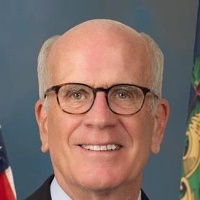
Peter Welch
Senator
VT
Peter Welch
Senator
VT
This bill amends existing regulations to include Czechia in the list of countries whose citizens are eligible for admission into the United States as E-1 nonimmigrant traders, under the condition that the Czech government provides similar trade benefits to U.S. citizens. This change would allow Czech citizens to enter the U.S. for trade purposes if U.S. citizens are afforded the same opportunities in Czechia.