Legislative Activity
Track Pete's sponsored bills, co-sponsored legislation, and voting record
The SHORT Act modifies federal firearms definitions, eliminates disparate treatment and state preemption for certain short-barreled rifles and shotguns, and mandates the destruction of related registration records.

Roger Marshall
Senator
KS
Roger Marshall
Senator
KS
The SHORT Act aims to revise federal firearms tax definitions and eliminate disparate federal treatment of short-barreled rifles and shotguns used for lawful purposes. It also preempts state and local governments from imposing special taxes or registration requirements on these specific weapons if they are involved in interstate commerce. Finally, the bill mandates the destruction of existing federal records related to the registration and transfer of these firearms.
The MEGOBARI Act suspends the U.S.-Georgia Strategic Partnership Commission until Georgia reverses democratic backsliding, supports sanctions against Russia, and commits to its Euro-Atlantic path, while also authorizing targeted sanctions against corrupt officials.
Jeanne Shaheen
Senator
NH
Jeanne Shaheen
Senator
NH
The MEGOBARI Act expresses Congressional concern over Georgia's democratic backsliding and reaffirms U.S. support for its Euro-Atlantic integration. The bill directs the Secretary of State to suspend the U.S.-Georgia Strategic Partnership Commission until Georgia upholds democratic commitments. Furthermore, it mandates reports on Russian influence and establishes a framework for imposing targeted sanctions on individuals undermining Georgia's stability or democratic progress. This entire Act is set to expire five years after enactment unless renewed.
This act excludes certain student loan repayments received through programs designed to increase veterinary services in rural areas from taxable income.

Michael Crapo
Senator
ID
Michael Crapo
Senator
ID
The Rural Veterinary Workforce Act makes student loan repayment or forgiveness amounts received by veterinarians participating in state-based programs tax-free. This exclusion applies to funds received through programs designed to increase veterinary services in underserved areas. This tax benefit will take effect for amounts received in taxable years beginning after December 31, 2025.
This resolution expresses the Senate's view that UN Resolution 2758 only addressed UN representation and does not validate the People's Republic of China's "One China Principle" regarding Taiwan's status.
James Risch
Senator
ID
James Risch
Senator
ID
This Senate resolution clarifies that United Nations General Assembly Resolution 2758 only addressed the PRC's representation at the UN and does not endorse China's "One China Principle" regarding Taiwan's sovereignty. The resolution strongly opposes the People's Republic of China's efforts to misuse this vote to isolate Taiwan internationally. It reaffirms the U.S. position that the issue of Taiwan's final status remains unsettled and supports Taiwan's meaningful participation in global organizations.
This bill establishes a national registry to track Korean American families separated by the Korean War and mandates that the U.S. prioritize family reunions in diplomatic discussions with North Korea.
Timothy Kaine
Senator
VA
Timothy Kaine
Senator
VA
This bill establishes a national registry, managed by the Secretary of State, to track Korean American families separated by the Korean War who wish to reunite with relatives in North Korea. It mandates that U.S. diplomatic efforts with North Korea prioritize making progress on these family reunions. Furthermore, the Special Envoy on North Korean Human Rights Issues must report annually on the registry's status and North Korea's cooperation.
This Act mandates regular, comprehensive five-year reviews and updated reporting to Congress on all Department of State guidelines concerning U.S. relations with Taiwan.

John Cornyn
Senator
TX
John Cornyn
Senator
TX
The Taiwan Assurance Implementation Act mandates that the Department of State regularly review and update its official guidelines governing U.S. relations with Taiwan. This process requires a comprehensive review every five years, followed by the reissuance of updated guidance to all relevant executive agencies. The Secretary of State must then report these updates to Congress, detailing how the new guidance supports U.S. objectives and noting any relaxed restrictions on relations.
This resolution honors the life, distinguished public service, and enduring legacy of former Wyoming Senator Alan K. Simpson.
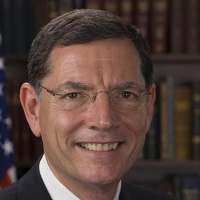
John Barrasso
Senator
WY
John Barrasso
Senator
WY
This resolution formally honors the life and distinguished public service career of the Honorable Alan K. Simpson, former U.S. Senator for Wyoming. It celebrates his extensive tenure in both state and federal government, highlighting his focus on fiscal responsibility and support for veterans. The Senate expresses its deep sorrow at his passing and directs that the day's adjournment serve as a final tribute to his memory.
This Act establishes that federal law must define "male" and "female" strictly based on biological sex determined at conception, prohibiting the recognition of "gender identity" as a substitute for sex.
Roger Marshall
Senator
KS
Roger Marshall
Senator
KS
The Defining Male and Female Act of 2025 establishes fixed, biological definitions for "male" and "female" based on reproductive function at conception for all federal law interpretations. This Act mandates that the federal government must use these biological definitions when defining sex, man, woman, and parental roles. Furthermore, it explicitly states that "gender identity" shall not be recognized as a substitute for biological sex in federal statutes or regulations.
This Act limits the FCC's authority to stop state and federal correctional facilities from using approved, localized cellphone jamming systems to block contraband communications, provided they meet specific operational and notification requirements.
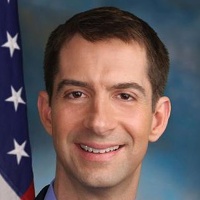
Tom Cotton
Senator
AR
Tom Cotton
Senator
AR
The Cellphone Jamming Reform Act of 2025 limits the FCC's authority to prohibit state and federal correctional facilities from using signal jamming systems within their housing areas. This legislation permits prisons to deploy jammers specifically to block communications involving contraband devices or incarcerated individuals. Any facility choosing to use this technology must adhere to strict operational rules, including location limitations and pre-approval notification to local public safety officials and the Bureau of Prisons.
This resolution recognizes the 204th anniversary of Greek independence while celebrating the enduring strategic partnership and shared democratic values between Greece and the United States.
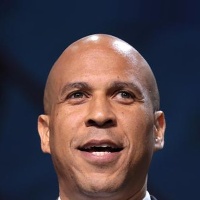
Cory Booker
Senator
NJ
Cory Booker
Senator
NJ
This resolution celebrates the 204th anniversary of Greek independence and reaffirms the deep, shared commitment to democracy between the United States and Greece. It recognizes the historical ties, ongoing strategic partnership in security and energy, and the contributions of the Greek-American community. The bill ultimately honors Greece as a vital NATO ally and friend.
This Act mandates an annual, AI-driven review of the Code of Federal Regulations to identify and expedite the removal or updating of redundant and outdated rules.
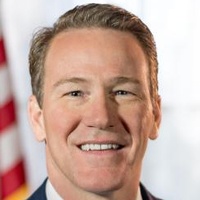
Jon Husted
Senator
OH
Jon Husted
Senator
OH
This Act mandates an annual review of the Code of Federal Regulations using artificial intelligence systems developed in partnership with NIST to identify redundant or outdated rules. If an agency confirms an AI-flagged regulation is unnecessary, it must be removed or updated within 30 days using an expedited process. This legislation aims to rapidly streamline federal regulations by leveraging technology to eliminate obsolete requirements.
The WATCH Act mandates quarterly inspections and certification for foreign laboratories receiving U.S. federal funding for animal research to ensure compliance with animal welfare standards.
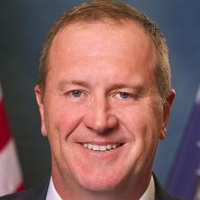
Eric Schmitt
Senator
MO
Eric Schmitt
Senator
MO
The WATCH Act establishes new federal oversight for foreign laboratories receiving U.S. funding for animal research, primarily from the NIH. These labs must now undergo mandatory quarterly inspections to ensure compliance with established animal welfare standards. Failure to pass these inspections and correct deficiencies can result in the suspension or revocation of federal funding.
This bill eliminates California's authority and that of other states to set their own emission standards for off-road engines and prevents other states from adopting California's motor vehicle emission standards.
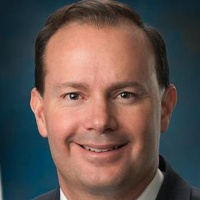
Mike Lee
Senator
UT
Mike Lee
Senator
UT
The Stop CARB Act of 2025 aims to centralize federal control over emission standards for off-road engines and vehicles by immediately repealing all state authority to set or enforce their own rules in this area. This legislation also eliminates the ability for other states to adopt California's stricter new motor vehicle emission standards. In essence, the bill strips states of their power to create pollution regulations that exceed federal requirements for specific engine types and vehicles.
This Act expands the Work Opportunity Tax Credit to include employers who hire military spouses.
Timothy Kaine
Senator
VA
Timothy Kaine
Senator
VA
The Military Spouse Hiring Act amends the Work Opportunity Tax Credit (WOTC) to include military spouses as eligible hires. This allows employers to claim the tax credit for hiring individuals certified as spouses of active-duty military personnel. The provision applies to wages paid for individuals hired after the Act's enactment date.
The Financial Integrity and Regulation Management Act prohibits federal banking agencies from using "reputational risk" as a factor in the supervision, examination, or rating of depository institutions.

Tim Scott
Senator
SC
Tim Scott
Senator
SC
The Financial Integrity and Regulation Management (FIRM) Act mandates that federal banking agencies must cease using "reputational risk" as a factor in the supervision, examination, or rating of depository institutions. This legislation aims to ensure regulators focus solely on a bank's financial safety and soundness, rather than public perception or political pressure. The Act requires all relevant agencies to remove references to reputational risk from their guidance and policies within 180 days of enactment.
The PARTS Act of 2025 redefines "firearm silencer" and "firearm muffler" in federal law to include both complete sound-reducing devices and the main housing components intended for attachment to a portable firearm.
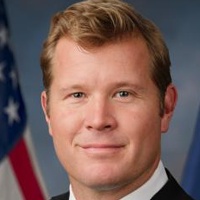
Tim Sheehy
Senator
MT
Tim Sheehy
Senator
MT
The PARTS Act of 2025, or Protecting Americans Right To Silence Act, updates the federal definition of a "firearm silencer" or "firearm muffler." This legislation clarifies that both complete sound-reducing devices and the main housing component of such a device are legally considered silencers if designed to attach to a portable firearm. This change ensures that the core components intended for noise reduction are regulated under existing federal law.
The FIGHT China Act of 2025 imposes sanctions, restricts U.S. investments in sensitive Chinese technology sectors, and mandates reporting requirements concerning Chinese military-industrial complex companies.
John Cornyn
Senator
TX
John Cornyn
Senator
TX
The FIGHT China Act of 2025 establishes new government powers to safeguard U.S. national security against risks posed by the People's Republic of China. The bill imposes sanctions on specific foreign persons and prohibits U.S. investment in certain high-technology sectors involving entities from the "country of concern." Furthermore, it mandates reporting requirements and strengthens restrictions on U.S. persons holding securities in Chinese military-industrial complex companies.
The Major Richard Star Act allows veterans with combat-related disabilities to receive both military retired pay and veteran's disability compensation without reduction.
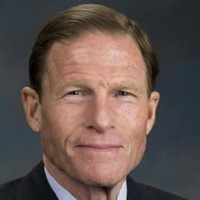
Richard Blumenthal
Senator
CT
Richard Blumenthal
Senator
CT
The Major Richard Star Act allows veterans with combat-related disabilities to receive both veteran's disability compensation and military retired pay concurrently, without reduction. This act amends Title 10 of the United States Code to ensure that disability retirees with combat-related disabilities are not subject to reductions in retired pay due to receiving veteran's disability compensation. These changes will take effect the first day of the month following the enactment of the Act.
This Act mandates that colleges update their security reporting to detail plans for responding to civil disturbances and requires accrediting agencies to monitor compliance with these new rules.
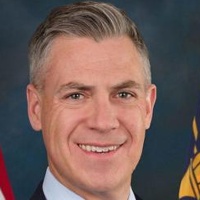
Jim Banks
Senator
IN
Jim Banks
Senator
IN
The No Tax Dollars for College Encampments Act of 2025 amends the Higher Education Act to require colleges to specifically detail their law enforcement coordination plans for handling campus civil disturbances in annual security reports. Furthermore, the bill mandates that accrediting agencies must monitor whether institutions are complying with these updated campus security reporting requirements.
This bill repeals the EPA's recent multi-pollutant emissions standards and prohibits the EPA from issuing tailpipe regulations that mandate specific vehicle technologies or limit the availability of new motor vehicles based on engine type.
Michael Crapo
Senator
ID
Michael Crapo
Senator
ID
The Choice in Automobile Retail Sales Act of 2025 repeals the EPA's recent multi-pollutant emissions standards for light-duty and medium-duty vehicles. Furthermore, this Act prohibits the EPA from issuing future tailpipe emission regulations that mandate specific technologies or limit the availability of new motor vehicles based on engine type. The EPA must update existing rules within 24 months to comply with these new restrictions.