Legislative Activity
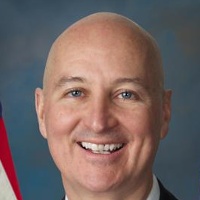
Track Pete's sponsored bills, co-sponsored legislation, and voting record
The PELL Act of 2025 establishes the Workforce Pell Grant to provide federal aid for short-term, high-demand training programs that align with state workforce needs and lead to further education.
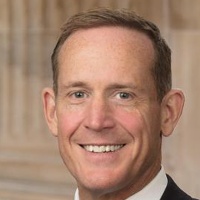
Ted Budd
Senator
NC
Ted Budd
Senator
NC
The PELL Act of 2025 establishes the new Workforce Pell Grant to provide federal aid for short-term, high-demand workforce training programs. To qualify, these programs must be approved by the Governor and meet strict criteria regarding length, employer alignment, credentialing, and performance metrics. This new grant aims to support students pursuing credentials that lead directly to employment while ensuring credits are transferable to further education.
This Act establishes the killing or attempted killing of a U.S. citizen by an alien illegally present in the United States as a new aggravating factor for the federal death penalty.
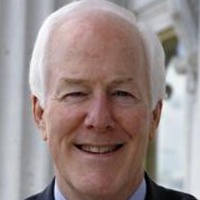
John Cornyn
Senator
TX
John Cornyn
Senator
TX
The Justice for American Victims of Illegal Aliens Act introduces a new aggravating factor for federal death penalty consideration. This factor applies when an individual who is illegally present in the U.S. is convicted of killing, attempting to kill, or conspiring to kill a United States citizen. This measure aims to provide justice for victims of crimes committed by unauthorized immigrants.
The Chip Security Act mandates security mechanisms on advanced integrated circuit products exported from the U.S. to protect national security and prevent unauthorized use.
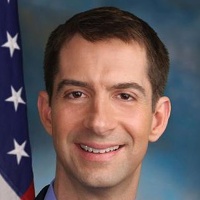
Tom Cotton
Senator
AR
Tom Cotton
Senator
AR
The Chip Security Act mandates the implementation of security mechanisms on advanced integrated circuit products before they are exported to protect U.S. national security interests. This requires the Secretary of Commerce to ensure chips include features verifying location and reporting unauthorized use or tampering. Furthermore, the Act calls for an assessment and potential rollout of secondary security features to enhance export control compliance and prevent misuse by adversaries. The goal is to maintain the U.S. competitive edge by securing sensitive hardware sent to allies and partners.
The American Innovation and Jobs Act restores immediate expensing for business R&D investments and expands refundable research tax credits for new and small businesses.

Todd Young
Senator
IN
Todd Young
Senator
IN
The American Innovation and Jobs Act aims to boost U.S. competitiveness by restoring immediate expensing for most business research and development (R&D) investments. It also significantly expands the refundable R&D tax credit for new and small businesses, increasing the maximum refund amount and raising eligibility thresholds. Furthermore, the bill makes technical adjustments to the R&D credit calculation to make it more accessible for startups. These provisions are designed to incentivize domestic innovation and job creation starting in tax years after 2021 and 2024, respectively.
This bill restricts the Palestine Liberation Organization's status within UN agencies and limits the United States' membership status in the UN, while explicitly excluding Taiwan from its provisions.
James Risch
Senator
ID
James Risch
Senator
ID
The No Official Palestine Entry Act of 2025 restricts the Palestine Liberation Organization (PLO) from holding any status beyond observer in United Nations agencies. This legislation also modifies the U.S. standing in the UN, prohibiting full membership and capping participation at a level above observer status. Importantly, the Act explicitly states that none of its provisions apply to Taiwan.
The MOMS Act establishes a federal resource website for pregnant women, expands access to prenatal/postnatal care through grants and telehealth, and allows states to enforce child support for unborn children upon the mother's request.

Katie Britt
Senator
AL
Katie Britt
Senator
AL
The MOMS Act aims to support mothers and unborn children through three main areas: establishing a federal resource website, Pregnancy.gov, to connect expecting and new mothers with local services. It also creates grant programs to fund organizations that support carrying pregnancies to term and expand access to prenatal/postnatal telehealth care. Finally, the Act mandates that states establish and enforce child support obligations on behalf of unborn children upon the mother's request.
This Act creates a new federal income tax deduction, capped at \$10,000, for qualifying overtime wages earned after 2025.

Roger Marshall
Senator
KS
Roger Marshall
Senator
KS
The Overtime Wages Tax Relief Act introduces a new federal income tax deduction of up to $\$10,000$ for qualifying overtime compensation earned by workers. This deduction is available to both itemizers and non-itemizers, though it phases out for taxpayers with a Modified Adjusted Gross Income (MAGI) exceeding $\$100,000$. The changes, which require updates to tax forms and withholding procedures, will take effect for tax years beginning after December 31, 2025.
This bill prohibits federal subsidies, tax deductions, Medicaid, CHIP, and Medicare funding for gender transition procedures, and excludes them from essential health benefits.
Roger Marshall
Senator
KS
Roger Marshall
Senator
KS
This Act prohibits the use of federal funds for gender transition procedures across several major programs. It specifically denies federal Medicaid, CHIP for minors, and Medicare funding for these procedures. Furthermore, the bill prevents individuals from claiming medical expense tax deductions for gender transition procedures.
This Act restricts government subpoena power, enhances confidentiality protections for data shared with the Federal Insurance Office, and limits the Office of Financial Research's ability to subpoena insurance companies while establishing strict data-sharing and confidentiality rules for other financial regulators collecting information from insurers.
Katie Britt
Senator
AL
Katie Britt
Senator
AL
The Insurance Data Protection Act aims to revise how federal agencies interact with insurance company data. This bill removes certain government subpoena powers and strengthens confidentiality protections when the Federal Insurance Office shares sensitive information. Furthermore, it limits the Office of Financial Research's ability to subpoena insurance companies directly and requires financial regulators to coordinate data collection to avoid duplication.
This bill prohibits U.S. funding for any United Nations entity that takes action to expel, suspend, or otherwise restrict Israel's full and equal participation.
James Risch
Senator
ID
James Risch
Senator
ID
The Stand with Israel Act prohibits the U.S. government from contributing funds to any United Nations entity that takes action to expel, suspend, or otherwise restrict Israel's full and equal participation. This measure ensures U.S. financial support is withheld from UN bodies that discriminate against Israel.
The Affordable Housing Credit Improvement Act of 2025 overhauls state allocation formulas, reforms tenant eligibility and credit determination rules, and enhances assistance for Native American and rural housing projects under the Low-Income Housing Tax Credit program.
Todd Young
Senator
IN
Todd Young
Senator
IN
The Affordable Housing Credit Improvement Act of 2025 comprehensively reforms the Low-Income Housing Tax Credit program by updating state allocation formulas based on population and inflation, and by modifying tenant eligibility rules to protect vulnerable residents. The bill also introduces significant changes for property owners regarding casualty loss, acquisition costs, and incentives for serving extremely low-income households. Finally, it directs efforts toward increasing program transparency and encouraging local governments to reform restrictive housing policies.
The BE GONE Act expands the definition of aggravated felonies under immigration law to specifically include sexual assault and aggravated sexual violence.

Joni Ernst
Senator
IA
Joni Ernst
Senator
IA
The BE GONE Act, or Better Enforcement of Grievous Offenses by unNaturalized Emigrants Act, amends the Immigration and Nationality Act to expand the list of crimes considered "aggravated felonies." Specifically, this bill adds "sexual assault and aggravated sexual violence" to the list of offenses that trigger severe immigration consequences. This change broadens the scope of crimes that can lead to deportation or inadmissibility for non-citizens.
The Investment Accelerator Act of 2025 establishes a new Department of Commerce office to streamline regulations and facilitate large-scale domestic and foreign investments over one billion dollars.

Marsha Blackburn
Senator
TN
Marsha Blackburn
Senator
TN
The Investment Accelerator Act of 2025 establishes a new office within the Department of Commerce designed to streamline regulatory processes for large-scale domestic and foreign investments exceeding \$1 billion. This Accelerator will focus on cutting red tape, fostering collaboration with national labs, and coordinating with state governments to boost investment. The Executive Director must provide annual reports to Congress detailing the office's efforts to facilitate major deals and identify legal opportunities.
This resolution supports National Fentanyl Awareness Day in 2025 to increase public awareness about the deadly impact of counterfeit fentanyl pills, especially on young people.
Charles Grassley
Senator
IA
Charles Grassley
Senator
IA
This resolution officially supports the mission of National Fentanyl Awareness Day in 2025 to combat the deadly counterfeit pill crisis. It highlights the severe danger posed by fake pills containing lethal doses of fentanyl, which are increasingly accessible to young people. The bill aims to increase public awareness regarding this threat and applauds law enforcement efforts to stop the spread of illicit drugs.
This bill establishes that distributing fentanyl, under specific quantity thresholds, which results in death can be prosecuted as first-degree murder, punishable by the death penalty or life imprisonment.
Joni Ernst
Senator
IA
Joni Ernst
Senator
IA
The Felony Murder for Deadly Fentanyl Distribution Act of 2025 amends federal law to classify the distribution of fentanyl that results in death as first-degree murder. This severe charge applies when an individual distributes at least two grams of a fentanyl mixture (or half a gram of an analogue) and that distribution is the cause of death. Convictions under this provision carry a penalty of either the death penalty or life imprisonment without parole.
This resolution formally celebrates the 153rd anniversary of Arbor Day, recognizing its importance in promoting tree planting, sustainable forestry, and community greening efforts.
James Risch
Senator
ID
James Risch
Senator
ID
This resolution formally celebrates the 153rd anniversary of Arbor Day, recognizing its historical importance in encouraging tree planting and civic engagement. It highlights the value of sustainable forestry practices in combating climate change and supporting biodiversity. The resolution encourages all Americans to participate in activities marking National Arbor Day, observed annually on the last Friday of April.
This bill strengthens federal law enforcement tools and establishes a new coordination center to combat organized retail and supply chain crime.
Charles Grassley
Senator
IA
Charles Grassley
Senator
IA
The Combating Organized Retail Crime Act aims to combat sophisticated criminal gangs engaged in large-scale retail and supply chain theft. This bill strengthens federal law by updating money laundering and stolen property statutes, including establishing a $5,000 aggregate value threshold for certain offenses. Crucially, it mandates the creation of a specialized federal Coordination Center within Homeland Security to unify efforts across all levels of law enforcement and private industry against these transnational criminal organizations.
The LIABLE Act creates an exception to the jurisdictional immunity of international organizations, allowing lawsuits against them in U.S. courts for personal injury or death caused by their officials or agents through specific acts of terrorism under certain conditions.
Ted Cruz
Senator
TX
Ted Cruz
Senator
TX
The LIABLE Act creates a new exception to the general immunity shielding international organizations from lawsuits in U.S. courts when terrorism is involved. This allows individuals to sue an international organization if an employee caused death or injury through specific terrorist acts while working for the organization. Lawsuits are permitted only if the organization materially supported a designated foreign terrorist organization and the claimant or victim had a connection to the U.S. or if the organization has a significant U.S. presence. Claims must be filed within 20 years of the injury or death.
The Farmer First Fuel Incentives Act mandates that clean fuel production tax credits require U.S.-grown feedstocks, excludes indirect land use emissions from emissions rate determinations, and extends the credit's availability through 2034.
Roger Marshall
Senator
KS
Roger Marshall
Senator
KS
The Farmer First Fuel Incentives Act modifies the clean fuel production tax credit by requiring that qualifying fuel be made from feedstocks grown in the United States starting in 2025. The bill also extends the availability of this credit until 2034 and adjusts how emissions rates are calculated by excluding indirect land use changes for future tax years. These changes aim to incentivize domestic production and alter the environmental metrics used for the tax incentive.
This resolution officially designates the week of April 19 through April 27, 2025, as "National Park Week" to celebrate the history, value, and importance of the National Park System.
Steve Daines
Senator
MT
Steve Daines
Senator
MT
This resolution officially designates the week of April 19 through April 27, 2025, as "National Park Week." It recognizes the historical significance and vital mission of the National Park Service in preserving America's natural and cultural treasures. The bill encourages the public to visit, experience, and support these cherished sites during this designated week.