Legislative Activity
Track Chip's sponsored bills, co-sponsored legislation, and voting record
This bill repeals the requirement for Senate offices to be notified regarding legal processes seeking the disclosure of Senate data.
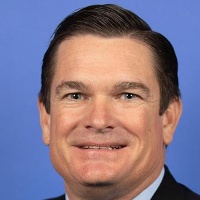
Austin Scott
Representative
GA
Austin Scott
Representative
GA
This bill repeals specific requirements for notifying Senate offices when legal processes seek the disclosure of Senate data. Essentially, it removes existing notification mandates related to legal requests for Senate information.
The CLEAN DC Act of 2025 largely repeals the Comprehensive Policing and Justice Reform Amendment Act of 2022, restoring prior law except for two specific subtitles.
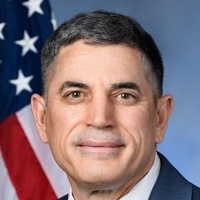
Andrew Clyde
Representative
GA
Andrew Clyde
Representative
GA
The CLEAN DC Act of 2025 aims to repeal most provisions of the Comprehensive Policing and Justice Reform Amendment Act of 2022, effectively reverting policing and justice laws to their pre-2022 status. This legislation seeks to undo the majority of changes made by the previous act. However, it specifically preserves the effects of two distinct subtitles from the 2022 Act.
This bill expands the expedited removal and mandatory detention of noncitizens convicted of specific crimes or affiliated with criminal gangs and terrorist organizations, while restricting their eligibility for asylum and other forms of immigration relief.
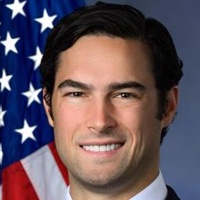
Brandon Gill
Representative
TX
Brandon Gill
Representative
TX
The Expedited Removal of Criminal Aliens Act expands the authority of the Department of Homeland Security to streamline the removal of noncitizens convicted of specific crimes or associated with criminal gangs and terrorist organizations. The bill mandates the detention of these individuals, restricts their eligibility for asylum and other forms of immigration relief, and creates new exceptions to existing protections against removal to countries where they may face persecution.
This bill prohibits the use of federal funds to cover any expenses related to abortion services for individuals unlawfully present in the United States.
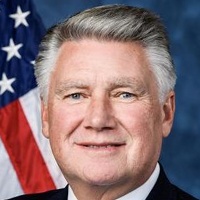
Mark Harris
Representative
NC
Mark Harris
Representative
NC
This bill, the "No Taxpayer Funded Abortion Travel for Illegal Aliens Act," prohibits the use of federal funds to cover any expenses related to abortion services for individuals unlawfully present in the United States. These prohibited expenses include travel, lodging, meals, and related support services. The legislation specifically targets federal funding for aiding unlawful immigrants in accessing abortion care.
This resolution censures Delegate Stacey Plaskett and removes her from the House Intelligence Committee for allegedly colluding with convicted sex offender Jeffrey Epstein during a congressional hearing.
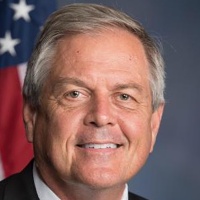
Ralph Norman
Representative
SC
Ralph Norman
Representative
SC
This resolution censures and condemns Delegate Stacey Plaskett for allegedly colluding with convicted sex offender Jeffrey Epstein during a 2019 congressional hearing. It cites evidence suggesting Plaskett coordinated her line of questioning with Epstein in real-time via text message. Consequently, the bill removes Delegate Plaskett from the House Permanent Select Committee on Intelligence and directs an ethics investigation into her conduct.
This bill expands the grounds for deportability to include any alien convicted of a felony or two misdemeanors under state or federal law.
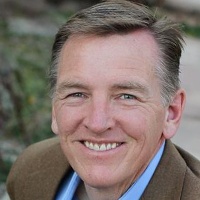
Paul Gosar
Representative
AZ
Paul Gosar
Representative
AZ
The Criminal Alien Removal Clarification Act of 2025 amends immigration law to establish new, clear grounds for deportability. This bill mandates that any alien convicted of a single felony or two misdemeanors, under either state or federal law, after admission to the U.S. is subject to removal.
This Act repeals firearm-related provisions of the Bipartisan Safer Communities Act to restore constitutional protections under the Second Amendment.
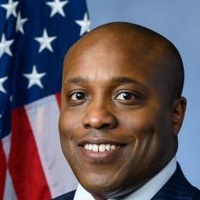
Wesley Hunt
Representative
TX
Wesley Hunt
Representative
TX
The Second Amendment Restoration Act of 2025 seeks to repeal firearm-related provisions enacted by the Bipartisan Safer Communities Act. This legislation asserts that those prior provisions placed unnecessary burdens on the Second Amendment rights of law-abiding citizens. By restoring prior federal statutes, the bill aims to refocus federal efforts on addressing the root causes of violence rather than restricting gun ownership.
This act mandates that military service academies accept the Classic Learning Test (CLT) for admissions and requires DoDEA and BIE schools to administer the CLT to eleventh graders.
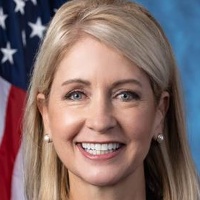
Mary Miller
Representative
IL
Mary Miller
Representative
IL
The Promoting Classical Learning Act of 2025 mandates that all U.S. Military Service Academies accept the Classic Learning Test (CLT) as an admissions option alongside the SAT and ACT. Furthermore, the bill requires the Department of Defense Education Activity (DoDEA) and the Bureau of Indian Education (BIE) to administer the CLT to all eleventh-grade students in their respective schools. This legislation aims to broaden testing options for prospective service members and introduce classical assessments in federal secondary education.
This bill impeaches Chief Judge James E. Boasberg for allegedly authorizing improper nondisclosure orders that infringed upon the legislative duties of several Members of Congress.
Brandon Gill
Representative
TX
Brandon Gill
Representative
TX
This resolution initiates impeachment proceedings against Chief Judge James E. Boasberg of the U.S. District Court for the District of Columbia for high crimes and misdemeanors. The core allegation is that Judge Boasberg improperly authorized nondisclosure orders related to an FBI investigation that covered Members of Congress acting under their legislative duties. These actions are cited as compromising the separation of powers and violating existing federal statute regarding notification of legal process. The resolution calls for the judge's removal from office based on these alleged improprieties.
This resolution expresses the sense of the House to accept and prominently display a statue honoring Charles "Charlie" James Kirk for his legacy of free expression and civic leadership.
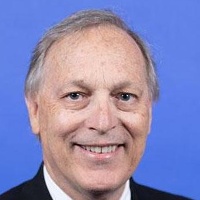
Andy Biggs
Representative
AZ
Andy Biggs
Representative
AZ
This resolution expresses the sense of the House of Representatives that a statue honoring Charles "Charlie" Kirk should be accepted and permanently displayed in the U.S. Capitol. It recognizes Mr. Kirk for founding Turning Point USA and promoting principles of free expression, civic leadership, and limited government. The bill mandates that the statue be accepted by the Fine Arts Board no later than January 2, 2027, to commemorate his legacy.
This Act adjusts the Federal Medical Assistance Percentage (FMAP) for the District of Columbia's Medicaid program, setting a temporary phase-down schedule until 2030 before reverting to the standard calculation.
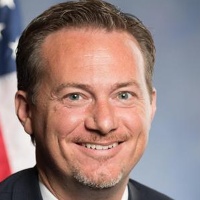
Michael Cloud
Representative
TX
Michael Cloud
Representative
TX
The District of Columbia Medicaid Fairness Act adjusts the Federal Medical Assistance Percentage (FMAP) used for calculating D.C.'s Medicaid funding. The bill establishes a temporary, declining federal matching rate for D.C. between 70% and 55% through fiscal year 2029. After 2029, D.C.'s FMAP will revert to the standard calculation method.
This Act restores the "first-to-invent" patent system, abolishes administrative patent reviews, strengthens patent property rights, and ensures full funding for the USPTO.
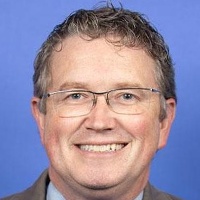
Thomas Massie
Representative
KY
Thomas Massie
Representative
KY
The Restoring America’s Leadership in Innovation Act of 2025 aims to significantly strengthen the U.S. patent system by reverting to a "first-to-invent" standard and eliminating administrative patent review boards. This legislation seeks to re-establish patents as fundamental private property rights, clarifying patentability for software and scientific discoveries. Furthermore, it ensures the USPTO is fully funded by its collected fees and prevents the automatic public release of pending patent applications.
This bill strengthens and enforces mandatory country of origin labeling requirements specifically for beef, protecting the authority to enforce these standards against international trade challenges.
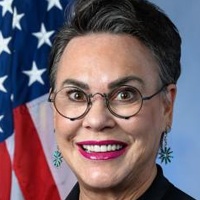
Harriet Hageman
Representative
WY
Harriet Hageman
Representative
WY
The Country of Origin Labeling Enforcement Act of 2025 updates existing agricultural law to specifically clarify and strengthen country of origin labeling requirements for beef. This bill ensures that beef labeling rules mirror those currently applied to lamb and venison, including for ground products. Furthermore, it explicitly protects the Secretary of Agriculture's authority to enforce these beef labeling standards against any conflicting international trade rulings.
This bill repeals the Smith-Mundt Modernization Act of 2013, restricting the domestic distribution of U.S. government-produced international information materials and imposing a 20-year waiting period for public access via the National Archives.
Thomas Massie
Representative
KY
Thomas Massie
Representative
KY
This bill repeals the Smith-Mundt Modernization Act of 2013 and significantly restricts the domestic distribution of U.S. government-produced international information materials. It mandates that materials created for foreign audiences must be archived and generally withheld from the U.S. public for a period of 20 years. Furthermore, the legislation explicitly bans the use of appropriated funds by the State Department or USAGM to influence domestic public opinion.
This bill prohibits the EPA from reallocating the renewable fuel obligations of small refineries granted exemptions, ensuring those volumes remain tied to the exempt facility while still counting toward the parent company's overall production for compliance calculations.
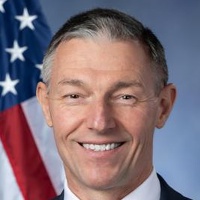
Mike Kennedy
Representative
UT
Mike Kennedy
Representative
UT
The Protect Consumers from Reallocation Costs Act of 2025 prohibits the EPA from reallocating the renewable fuel volume obligations of small refineries that receive exemption extensions. This ensures that the volume remains tied to the exempt refinery rather than being shifted to other obligated parties. Furthermore, the bill requires the EPA to count the fuel produced by an exempt small refinery when calculating the overall production obligations for its parent company.
This Act prohibits federal crime-fighting grants to state and local jurisdictions that restrict cash bail for serious offenses or have cut police budgets without a justifiable, across-the-board shortfall.
Mark Harris
Representative
NC
Mark Harris
Representative
NC
The No Funding for Lawless Jurisdictions Act restricts federal crime-fighting grants to state and local governments that limit cash bail for serious offenses or release convicted felons on personal recognizance. Furthermore, jurisdictions that cut their police budgets in the preceding year are ineligible for these funds, unless the cut was part of a fair, government-wide budget reduction. This legislation aims to ensure federal support only goes to jurisdictions maintaining traditional public safety and law enforcement funding standards.
This resolution honors the life and legacy of Charles "Charlie" James Kirk, condemns his assassination as political violence, and calls for a renewed commitment to civil discourse and American founding principles.
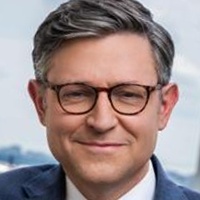
Mike Johnson
Representative
LA
Mike Johnson
Representative
LA
This resolution honors the life and legacy of Charles "Charlie" James Kirk, founder of Turning Point USA. It strongly condemns his assassination as an act of political violence. The bill calls for a renewed national commitment to civil discourse and the founding principles of the United States.
This Act prohibits U.S. courts and arbitrators from enforcing any foreign law, including Sharia law, if doing so would violate fundamental rights guaranteed by the U.S. or State Constitutions.
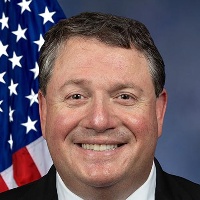
Randall Fine
Representative
FL
Randall Fine
Representative
FL
The No Shari’a Act ensures that U.S. courts rely exclusively on Federal and State laws when making decisions. This legislation prohibits courts and arbitrators from enforcing any foreign law, including Sharia law, if doing so would violate fundamental constitutional rights. The Act is designed to prevent foreign legal codes from undermining the established constitutional protections guaranteed to all Americans.
The Chloe Cole Act prohibits healthcare professionals from performing chemical or surgical mutilation on minors by linking the prohibition to interstate commerce and establishes a private right of action for victims to sue.
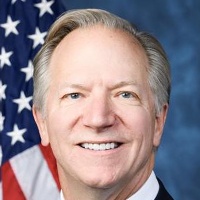
Robert Onder
Representative
MO
Robert Onder
Representative
MO
The Chloe Cole Act prohibits healthcare professionals from engaging in chemical or surgical mutilation of minors, defined as specific medical interventions intended to alter appearance or biological function related to sex. This prohibition is enforced through federal jurisdiction when interstate commerce is involved in the procedure. The bill also establishes a private right of action, allowing individuals subjected to these procedures as minors to sue participating providers, and sets strict liability standards for future violations.
This Act mandates that new passenger motor vehicles sold in the U.S. must include standard equipment capable of receiving AM broadcast radio signals.
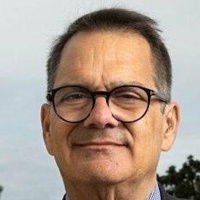
Gus Bilirakis
Representative
FL
Gus Bilirakis
Representative
FL
The AM Radio for Every Vehicle Act of 2025 mandates that the Secretary of Transportation establish a rule requiring AM broadcast radio receivers to be installed as standard equipment in new passenger motor vehicles. This requirement aims to ensure public access to AM radio signals, which are often used for emergency alerts. The bill also directs a GAO study on the effectiveness of AM radio within the national emergency alert system compared to other technologies. Finally, the Act preempts state and local laws on this matter and includes a sunset provision eight years after enactment.