
Legislative Activity
Track Stacey's sponsored bills, co-sponsored legislation, and voting record
This resolution demands the President provide the House with information regarding recent operational changes at the Social Security Administration, including the cessation of phone applications, office closures, and staffing reductions.
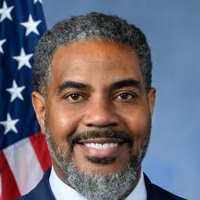
Steven Horsford
Representative
NV
Steven Horsford
Representative
NV
This resolution is an official request from the House of Representatives demanding the President provide specific information regarding recent operational changes at the Social Security Administration (SSA). Congress seeks documents detailing the cessation of phone applications for benefits, any SSA office closures or mergers, and information concerning recent staffing reductions. The inquiry also specifically requests details about the Department of Government Efficiency's access to SSA operations and data.
This bill establishes the American Family Act, which revamps the Child Tax Credit into a system of refundable monthly advance payments for qualifying children and a separate credit for other dependents.

Rosa DeLauro
Representative
CT
Rosa DeLauro
Representative
CT
The American Family Act fundamentally overhauls the Child Tax Credit by replacing the annual lump sum with a system of advance, refundable monthly payments delivered directly to families. These monthly allowances vary based on the child's age, with higher amounts provided for younger children. The bill also establishes a separate, smaller credit for other dependents and outlines procedures for annual renewal and reconciliation of advance payments when filing taxes.
This resolution demands the President and HHS Secretary provide Congress with documents regarding the "Department of Government Efficiency's" access to sensitive taxpayer and child privacy data from federal hiring and locator services.

Danny Davis
Representative
IL
Danny Davis
Representative
IL
This resolution is an official request demanding the President and the Secretary of Health and Human Services immediately provide Congress with documents concerning the seizure of legally-protected taxpayer and child privacy data by the "Department of Government Efficiency" (DOGE). Specifically, it seeks records detailing DOGE's access to sensitive worker and financial data stored in the National Directory of New Hires and the Federal Parent Locator Service. The inquiry focuses on the legality, security protocols, and scope of these large-scale data requests, particularly those exceeding 40 million records.
This resolution demands the President and key Secretaries provide documents detailing the local economic impact of federal job reductions and newly imposed tariffs.
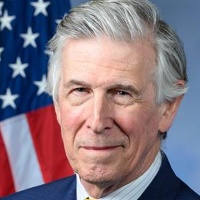
Donald Beyer
Representative
VA
Donald Beyer
Representative
VA
This resolution of inquiry formally requests the President and the Secretaries of the Treasury and Labor to provide the House of Representatives with specific documents. These documents must detail the economic impact of recent federal workforce reductions, particularly those stemming from the Department of Government Efficiency (DOGE), on local economies and unemployment rates. Additionally, Congress seeks information regarding the effect of newly imposed tariffs on the cost of imported goods.
The TAKE IT DOWN Act establishes federal criminal penalties for sharing nonconsensual intimate images (real or digitally forged) and mandates that covered online platforms remove such content within 48 hours of receiving a valid request.

Maria Salazar
Representative
FL
Maria Salazar
Representative
FL
The TAKE IT DOWN Act establishes federal criminal penalties for the intentional sharing of both real and digitally forged nonconsensual intimate images, with stricter penalties for images involving minors. It mandates that covered online platforms create a clear process for victims to request the removal of such content within 48 hours. Failure by platforms to reasonably comply with these removal requests will be treated as an unfair or deceptive practice enforced by the Federal Trade Commission (FTC).
This Act allows employees to fully deduct union dues above the line and restores the itemized deduction for certain other job-related business expenses.

Brendan Boyle
Representative
PA
Brendan Boyle
Representative
PA
The Tax Fairness for Workers Act restores key federal tax deductions for employees, effective after 2024. This legislation makes union dues fully deductible "above the line," meaning they reduce Adjusted Gross Income without itemizing. Additionally, it allows itemizers to deduct certain other job-related business expenses that were previously limited.
The Building Child Care for a Better Future Act dramatically increases federal funding for state child care entitlements and establishes a new annual $\$5$ billion grant program to specifically address workforce, supply, quality, and access in high-need areas.
Danny Davis
Representative
IL
Danny Davis
Representative
IL
The Building Child Care for a Better Future Act dramatically increases federal funding for state child care entitlements and establishes a new \$5 billion annual grant program to address critical shortages in the child care workforce, supply, and quality in identified high-need areas. These funds are intended to supplement existing spending and support providers through facility improvements, workforce training, and ensuring living wages for staff. The legislation also sets specific requirements for planning, reporting, and evaluation to track the impact of these investments.
This Act establishes a 20% federal tax credit for converting eligible commercial buildings into affordable housing units, subject to state allocation and specific income restrictions.

Mike Carey
Representative
OH
Mike Carey
Representative
OH
The Revitalizing Downtowns and Main Streets Act establishes a new 20% federal tax credit for converting eligible, older commercial buildings into affordable housing. This incentive aims to increase housing supply by requiring that at least 20% of the converted units remain rent-restricted for low-income residents for 30 years. State agencies will allocate these credits, which are subject to a national cap of $12 billion, based on approved plans prioritizing financially necessary projects.
The Paycheck Fairness Act strengthens equal pay enforcement by tightening defenses against pay discrimination, expanding protections against retaliation, increasing penalties for violations, and requiring comprehensive data collection and training initiatives.
Rosa DeLauro
Representative
CT
Rosa DeLauro
Representative
CT
The Paycheck Fairness Act significantly strengthens federal equal pay protections by broadening definitions of sex discrimination, tightening employer defenses against pay disparities, and increasing penalties for violations. It also prohibits employers from using salary history in hiring decisions and mandates new data collection by the EEOC to better enforce anti-discrimination laws. Furthermore, the bill establishes new training and outreach programs to combat systemic wage bias.
This bill officially ratifies the Equal Rights Amendment, validating its inclusion in the Constitution regardless of any prior ratification deadlines.

Ayanna Pressley
Representative
MA
Ayanna Pressley
Representative
MA
This bill officially ratifies the Equal Rights Amendment, declaring it a valid part of the U.S. Constitution. It specifically removes any previously imposed deadlines for state ratification. If three-fourths of the states have approved the amendment, this law confirms its official status regardless of past time constraints.
This Act establishes the authority to create trusted trade agreements to diversify and strengthen the U.S. medical supply chain against future crises.

Nicole Malliotakis
Representative
NY
Nicole Malliotakis
Representative
NY
The Medical Supply Chain Resiliency Act aims to secure the U.S. supply of critical medical goods by diversifying trade relationships and reducing reliance on high-risk sources. It authorizes the President to enter into special "trusted trade partner agreements" that lower trade barriers with reliable allies. These agreements focus on regulatory cooperation, intellectual property protection, and ensuring supply chain stability during public health emergencies. The bill also establishes strict reporting and oversight mechanisms for Congress before any such agreement can take effect.
This Act expands eligibility for certain SNAP benefits for veterans based on specific disability ratings or pension status, effective October 1, 2030.

Jahana Hayes
Representative
CT
Jahana Hayes
Representative
CT
The Feed Hungry Veterans Act of 2025 expands eligibility for certain food assistance benefits for veterans. It updates the criteria for veterans based on service-connected disability ratings and adds specific categories of disabled or pensioned veterans who will now qualify. These changes are scheduled to take effect on October 1, 2030.
Demands the President to provide information to the House regarding the Social Security Administration's operations post-January 20, 2025, including details on the Department of Government Efficiency's access and compliance with specific executive orders.

John Larson
Representative
CT
John Larson
Representative
CT
This resolution requests the President to provide the House of Representatives with information regarding the Social Security Administration's operations after January 20, 2025. The request includes details on the Department of Government Efficiency's access to the Social Security Administration, compliance with specific Executive Orders, call and visitor statistics, office closures, and staff reductions. The President is required to furnish the requested documents and information within 14 days of the resolution's adoption.
Demands the President and Treasury Secretary to release documents regarding the Department of Government Efficiency's access to Treasury payment systems and taxpayer data.

Lloyd Doggett
Representative
TX
Lloyd Doggett
Representative
TX
This resolution requests the President and Secretary of the Treasury to submit documents to the House of Representatives regarding the Department of Government Efficiency's (DOGE) access to Treasury payment systems and taxpayer information. The request includes communications and documents related to DOGE, Elon Musk, or his team's access to these systems, as well as any screenshots of Treasury payment systems data. The information must be provided within 14 days of the resolution's adoption.
The Caring for Survivors Act of 2025 increases dependency and indemnity compensation for surviving spouses and lowers the required period of total disability rating before death for survivors to qualify for certain benefits.
Jahana Hayes
Representative
CT
Jahana Hayes
Representative
CT
The Caring for Survivors Act of 2025 aims to increase financial support for surviving spouses of veterans. This bill raises the monthly Dependency and Indemnity Compensation (DIC) payment rate for surviving spouses. Additionally, it lowers the required duration of total disability rating before death from ten years to five years for survivors to qualify for certain DIC benefits. If the disability period was between five and ten years, the benefit amount will be proportionally adjusted.
This bill allows investors to defer taxes on capital gain dividends from mutual funds when those dividends are automatically reinvested until the shares are sold or the investor passes away.

Beth Van Duyne
Representative
TX
Beth Van Duyne
Representative
TX
This bill, the Generating Retirement Ownership through Long-Term Holding Act, allows individual investors to defer paying taxes on capital gain dividends from mutual funds if those dividends are automatically reinvested into more fund shares. Taxes on these deferred gains are only due when the investor sells the shares or upon death. This provision aims to encourage long-term investment in mutual funds by providing immediate tax relief on reinvested earnings.
This Act eliminates the waiting periods for Social Security disability benefits and Medicare coverage for individuals diagnosed with metastatic breast cancer.

Andrew Garbarino
Representative
NY
Andrew Garbarino
Representative
NY
The Metastatic Breast Cancer Access to Care Act aims to improve support for individuals diagnosed with metastatic breast cancer. This bill eliminates the standard waiting period for receiving Social Security disability insurance benefits and waives the 24-month waiting period for Medicare coverage. These changes ensure immediate access to crucial financial and healthcare support upon diagnosis.
The Richard L. Trumka Protecting the Right to Organize Act of 2025 strengthens protections for workers' rights to organize and collectively bargain by modernizing labor laws, addressing unfair labor practices, and enhancing enforcement mechanisms.
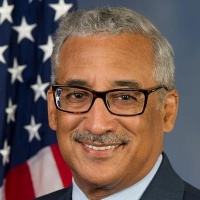
Robert Scott
Representative
VA
Robert Scott
Representative
VA
This bill, the Richard L. Trumka Protecting the Right to Organize Act of 2025, seeks to amend the National Labor Relations Act and other labor laws to strengthen protections for workers' rights to organize and collectively bargain. It aims to modernize labor regulations by clarifying definitions, addressing unfair labor practices, enhancing enforcement, and increasing transparency in labor-management relations. The bill introduces measures such as electronic voting in union elections, strengthens whistleblower protections, and mandates studies on collective bargaining practices. Ultimately, the goal is to ensure fair treatment of workers and promote equitable labor practices.
The "Keeping Our Field Offices Open Act" prevents the Social Security Administration from closing or limiting access to field offices, hearing offices, and resident stations, ensuring continued service availability for the public.
John Larson
Representative
CT
John Larson
Representative
CT
The "Keeping Our Field Offices Open Act" prevents the Social Security Administration (SSA) from closing or consolidating field offices, hearing offices, and resident stations, ensuring continued access to services. It requires the SSA Commissioner to justify any planned closures to Congress with detailed analysis and cost-benefit assessments, considering the impact on vulnerable populations. The bill mandates public notice, hearings, and a final report to Congress before any changes, allowing appeals and maintaining the number of offices at or above the January 20, 2025 level, excluding temporary emergency closures.
This bill restricts political appointees and special government employees from accessing Social Security data, establishes civil damages for unauthorized access, mandates Inspector General investigations, and requires a GAO study on the changes.
John Larson
Representative
CT
John Larson
Representative
CT
The Protecting Americans’ Social Security Data Act restricts political appointees and special government employees from accessing sensitive Social Security beneficiary data systems. It establishes a right for individuals to sue the government or responsible parties for unauthorized access or disclosure of their private Social Security information, including specified minimum damages. Furthermore, the bill mandates the Inspector General to investigate such violations and report findings to Congress within 30 days. Finally, it requires the GAO to conduct a comprehensive study on the impact of these new privacy and enforcement measures.